 6:45
A look at the iKey-Audio M-10s powered bass cab
Contents of the video
0:01 Loads of people have asked me about powered bass cabs
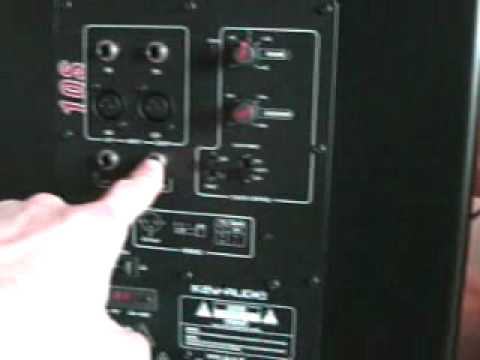
All right, folks. Loads of people have asked me about powered bass cabs. So we're going to have a look at this guy here. It's from iKey Audio. It's known as the 10S. It's a powered bass cab. Powered means it's actually got an amplifier inside it and the amplifier is the part of the unit that will make it loud and hopefully shake buildings. So I'll pause the camera and I'll show you back here where all the knobbly bits are. Hold tight. So here you go. Here are the knobbly bits. The only reason I call them knobbly bits is because they're all sticky out. So anyway, jokes aside, this area here is your input area. You can either go in via some jacks or in via Canon or sometimes they're known as XLR. Loads of people say what do they look like? Well there you go. That's what they look like and that is the one that will go into there. Now this part is very important as your output.
Two things you can do with your output. One is you can go out of here into another powered speaker. So, what happens is the signal from your mixer goes in here, then it just transfers the signal to here. Now, it's exactly the same. So, the signal will go out of here into a powered speaker, amplifiers inside of here that will actually power the speakers. A word of advice, if you go out of here into a non-powered speaker, you won't get any sound at all. That's very important. So, two ways of doing it. One, out of here into a powered speaker or the other one is out of here into an external amplifier. That then will make that signal get very loud and then what happens, you'll go out of that external amplifier into
2:22 It will work, but just be wary
A set of non-powered speakers, that's very important. Now up here, if I just get a little bit closer to this area and put my hand there so it's focused, not a fantastic, well the camera's pretty good but it's not one of these fantastic top of the range quality ones. Alright, there you've got something called peak and there's a little red dot there. You've got here volume and crossover, that's what we'll look at at the moment. Now what happens when you turn this on, it's all plugged in and it's working quite nicely. If that is shining red all the time, it means that you're starting to overpower the amplifier that's inside here. It will work, but just be wary. Don't expect it to be working fantastically for the next six years if you've always got this on peak and that red light is shining continually. Ideally, what you need to do is you need to have that just flashing.
And on your mixer, you've got those little LED lights. Well, all of a sudden, if you're continually in the red, it's exactly the same as having that continually in the red. It's not a good idea. So ideally, you just need to have that either not shining at all or just flashing occasionally. Now this guy here, crossover. Now what I'm going to do is try and explain this. What happens and how it works. Now, if you imagine you're sitting in your front room drinking a cup of coffee or a cup of tea, reading the newspaper, and all of a sudden you hear this really deep rumbly sound. And let's say, for example, it's thunder from like 20 miles away. Well, if you set this to 50 hertz, that's almost the sort of sound you would hear. A very low, deep rumbling sound. Now, as you move this higher...
4:09 Serial number, positive negative, tiny
Here, auto power. What does that mean? When that switch is set to on, it means that if you turn this unit on via that little switch there and you leave it at on and at on, even if you walk away from this unit, it will stay on continually. If on the other hand you're the sort of person people are always phoning you up or you're just disappearing, you're leaving your kit, if you set that to auto then what happens is after 45 minutes this will automatically shut down but as soon as you come back to your mixer Start playing your latest hot track, then it will just start again. Off is basically off. Here, phase. What this does, it actually turns the polarity around. So if you imagine positive and negative like so, and it's plugged in positive and negative, if you turn that, that turns around to negative and positive. So what we've got here, we've got power on off, and that area there, I suggest you don't touch it.
But what you can do is I will actually link in the description underneath this video the two other videos I did on these guys here, the 606. And in one of those videos I described what this guy is about. Now ideally that will be set for your specific country. So it's probably a good idea not to touch that at all. Now something that not many people consider, can you see here, this area here? Right, now that is your serial number. Now what I suggest is you write down your serial number. Now for example, put on a piece of paper, 10S, bass cab, you could put iKey audio and then you could put your serial number. The reason being because sadly in this day and age we've got people out there who like to have what you've got. So if you've got the serial number of your item then guess what?
At least you know it's yours. And also, maybe just somewhere around some... Hold on, if I just go out a tiny bit. Just on the underside of your bass cab, maybe just put your postcode or your zip code. Just with a pen or something like that. You don't have to put in huge writing, tiny, tiny writing. So, it just means that it's just got that slight individuality. In other words... You know it's yours. Alright, so a little insight there into the S10. It's from a company called IQ Audio and it's a powered bass cab. Practice and enjoy.
This transcript was produced automatically from the audio of the video and may contain mistakes.





