 9:00
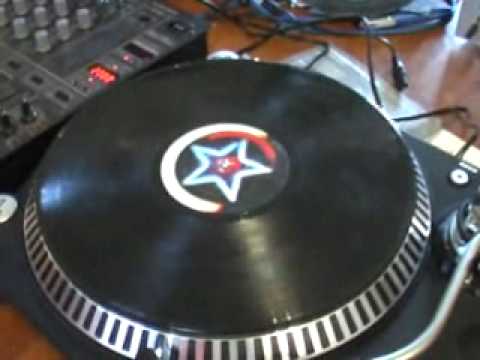
A look at the Kam DDX4500 USB turntable Part Two.
Contents of the video
0:00 Plus minus, something cool
Right, first off, I don't know if you can see, but it's on pieces of paper. The reason being is because those feet are so damn sticky, if you put it on a surface like that, you've literally got to pull the deck off. Now, I'd say that's quite a good point because it means that you can't knock the damn thing over, which is quite cool. And also, there's quite a good feel to it. You've got here, you've got basically 33, if I just wang it a little bit closer, let's have a look. There you go. You've got 33, you've got 45, you press them both together and you've got 78. Now also you've got reverse and here with regards to the pitch you can have plus or minus 10. So in other words if it's on 10 and you go to the plus you get plus 10, minus 10, likewise 20, plus 20, minus 20 and 50. Plus or minus 50, you've got quartz lock here but what's quite interesting about the 50, you can actually fit that to 75.
You can hit it at 50 and if I turn that now and then I increase the speed like so, that's going rather fast. So that could be quite interesting. No need for even spin backs, just press buttons and whatnot. So let's put that back there and let's wang it out a little bit and stop it. It's got the nice tone arm and there's one feature I do like is this area here. Okay, yes, I know it's where the arm is housed, but it's just... how can I put it? There's a nice feel to it. It's not tacky. It's not as though it's going to fall apart. And there's something nice about it. I like that as well. That's quite cool. I mean, again, that reminds me of the gear stick on a Ferrari or something like that, which is quite cool. It does the usual that, you know, the Technics will do, and that is it'll lift, height will go down as well.
2:28 Half motor, record
And if I just wing the camera out again a little bit more, with regards to the actual platter, if we take the record off. Oh yeah, there's one thing I want to show you as well. I'm just, I've got a, because I'm looking at a tiny little blinking screen. I really do like this slip mat, because it's like a piece of cardboard actually. I have never seen any slip mats like this before, but it's really, really thin and it's, how can I put it? It just spins really nicely, so it's irrelevant of the blinking name on the top there. I would highly recommend you get slick mounts like that because they are the dog's doo-doo, seriously.
Right let's take the platter off and you can see there, sorry I'm just moving the actual screen so I can see what I'm doing as well. That is half of the motor and then inside there is the other half of the motor and this is the best type Connect this into your PC, which is quite cool. Now there's a program on the internet called Audacity and I would say I get asked this particular question 20 if not 30 or 40 times every week. I want to record my set on the computer, how can I do it? You go on the internet, you download Audacity, it's a free program, free software, and then you can basically go from your mixer into your PC and you can record your set.
5:04 Of course, when those lig
But the difference is with this guy, if I press off and unplug, should really put the volume down, like that, I'll just secure the arm. In the back of it as well, you've got, you can't really see it, I don't think so, hold on, where are we? That's it. You can see there which is basically USB. So what you can do with this, you've got your normal phono, you've got your phono line switch,
You've got your plug for power and you've got your on-off button which is quite good because it's internal so you haven't got the leads poking out which is a bit of a pain in the arse sometimes especially if you want to get your decks quite close to your mixer. You've got your USB there so what you can actually do with this is if you've got some really expensive vinyl and you know you want to keep your vinyl but you still want to play it well of course All you have to do is you can plug that deck straight into your PC and you can watch television, you can do what you want, and when the record's finished, you can stop it and record another one. So that's not bad. Also, you see, what's happened now is because people are thinking, oh, I want a slice of the cake of the Technics business as it were. They're just making decks slightly different and giving different designs and whatnot.
6:36 Reverse, so if we go
I mean, this one is, I don't know if it's slightly smaller than the Technics, but it's rounded on this side here, if you can see. And they've made it, I suppose, so it's quite good for turntablers. Again, you've got the added bonus of being able to put it, wang it against the mixer like that, if you can see. And what I do like, you've got your two starts and stops. Let's have a look, what else? And again, little features, quite a few people are doing this now, is the actual cue light. Because with the Technics SL, the older models, I'm not too sure about the new ones. Of course, when those lights go, it's a pain in the arse to open them up and get a new one in. But of course these things, if they do go, the LEDs, you just fit a new one on. Bear with me a second. When they actually came, I noticed that they had some rather dodgy styli on the end needles. And I thought, oh my god. But they're not actually that bad.
And one point I do like about them is, it's only a tiny thing. Again, you know, little things sometimes make it. And that is that the cartridge and stylight were fitted so you haven't got to mess around fiddling about with these things. Because, I mean, I know certain people, they've had a set of decks and they've gone, oh, where's the cartridge and stylight? And they've chucked it away in the box. Duh. So what we'll do, we'll put that on there.
So you can see it's not like jumping all over the place, which is quite cool. That area there is where you've got all your bits and bobs. 33, 45, put them together, 78. Reverse, so if we go... And then also there, if we do the 10, plus and minus 10, and then 20, 50, and then of course quartz lock. That can be done anywhere on the actual slider. So if you're in trouble and you're on plus 50 and think, oh sugar, just wang it into court slot and you're away. Another small point, and I do get questions about this here. It's like, what is it for? You know, some people think, oh, is it just an extra sort of earring or, you know, you put a pencil through the middle to try and get it smaller. Well, believe it or not, that fits on there like that. And they're still thinking, what the heck's it for? Because you put your 12-inch single on the top of that and you put your needle on the record and it's bouncing all over the place. Well, believe it or not, in the 50s, 60s, 70s and early 80s...
A lot of jukeboxes used to have these guys in which are known as the 7-inch singles, but the difference between this sort of 7-inch and the one put in a jukebox was the middle wasn't there. So of course they'd cut the middle out, put it in a jukebox and then bingo, it would play quite nicely in a jukebox. But the difference is if you put, let's say for example the hole there is a lot bigger, in fact just imagine the hole is that size, if you put that on your particular turntable... It would be all over the place, so the idea is you wang that on there and then you put your 7-inch single with a rather large hole in it on, or should I say around that centrepiece and then bingo, you can play 7-inch singles. So there you go, so for a turntablist or a club DJ or really anybody, it's highly unlikely you're going to start playing those unless you've got some of your classic cuts. That's Tom Jones and it's not unusual. Alright, hope that's been a bit of a help.
Bit of a look into the DDX-4500 USB. Nice bit of kit, practice and enjoy.
This transcript was produced automatically from the audio of the video and may contain mistakes.





