 3:54
A look inside the KAM LED JAVELIN light.
Contents of the video
0:00 An actual LED light looks like
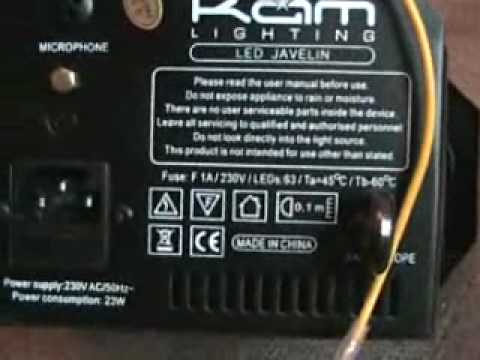
Alright folks, in this video I'm going to show you what an actual LED light looks like inside. So without further ado, let's have a look. There's the light in question. It's from a company called Cam and if we have a look it's known as the LED Javelin. So without further ado, I'm going to take the top off. Very quickly, two factors. One, do not do this yourself. Two reasons. One is because you could electrocute yourself. Number two, you could void your warranty. In other words, if you open it up, even if it's working perfectly, have a fiddle about, do something wrong so it stops working, then you think, oh dear. You send it back or you take it back to the shop and then if they open it up and see that you've messed around with it, basically they could legally say, sorry, you've opened it up and therefore your warranty is up the spout and you're left with a piece of kit that probably doesn't work. So, don't open it up.
0:54 What they will do, they will increase the light intensity from the LED
Watch videos. There you go. Alright, that guy there and that guy there, they're known as the lenses. What they will do, they will increase the light intensity from the LEDs. There's a set of LEDs there and one there. Right, if we have a look at the back here of one of the sets of LEDs, we've got this green area here and we've got lots of knobbly bits and stuff. So that there is known as the circuit board. Theoretically, that's like the brains of the unit. That piece of kit there will tell The LEDs, how to flash, what to flash and when to flash, etc. That there is the microphone. Now what happens, these guys are basically sound to light. All you've got to do is plug them in and leave them. That's it. Period. So what happens is as the music plays, the microphone picks up the signal from the music, transfers that into the circuit board and then the circuit board takes up those signals enabling these guys to flash on and off.
2:22 LEDs, what are they all about?
That's known as the actual transformer. That will convert the power going in from, in the UK it's anything from 220 to 240, that will convert the power maybe down to 12, 24 volts, enabling this unit to work. Alright, LEDs. What's about, you know, what's the score with LEDs? By the way, very quickly, that there is the earth cable and that was actually attached to the top plate so I'm going to put that back in before I start. Putting it together. Alright, LEDs, what are they all about? Well, LEDs have been around for absolutely ages, but it's only recently they've started getting really bright. And of course, if they're bright, then at the end of the day, why not put them in disco lights? Alright, so why do a lot of people use LEDs now? Well, one thing, they don't get hot. Another thing, they've got one heck of a good long lifespan, which is quite cool. Another thing, they don't take much power. Very, very little power. So, for example...
A light like this, say that was made 10 years ago, that would have two, say, bulbs in, 200, say 250 watt halogen bulbs, would take, you know, if you think about it, you've got two bulbs, 250 watts. That's 500 watts of power. Now, that's a lot of power coming into this unit, plus the fact those particular bulbs were prone to just stop working. All of a sudden, you know, the actual filament would break and that's it. A basic video showing the internal workings. Now theoretically, once this is set up and working It's going to last one hell of a long time. Alright, thank you very much for watching and as ever, practice and enjoy.
This transcript was produced automatically from the audio of the video and may contain mistakes.





