 9:55
Allen & Heath Xone 62 DJ Mixer Is It One of the Best of All Time?
Contents of the video
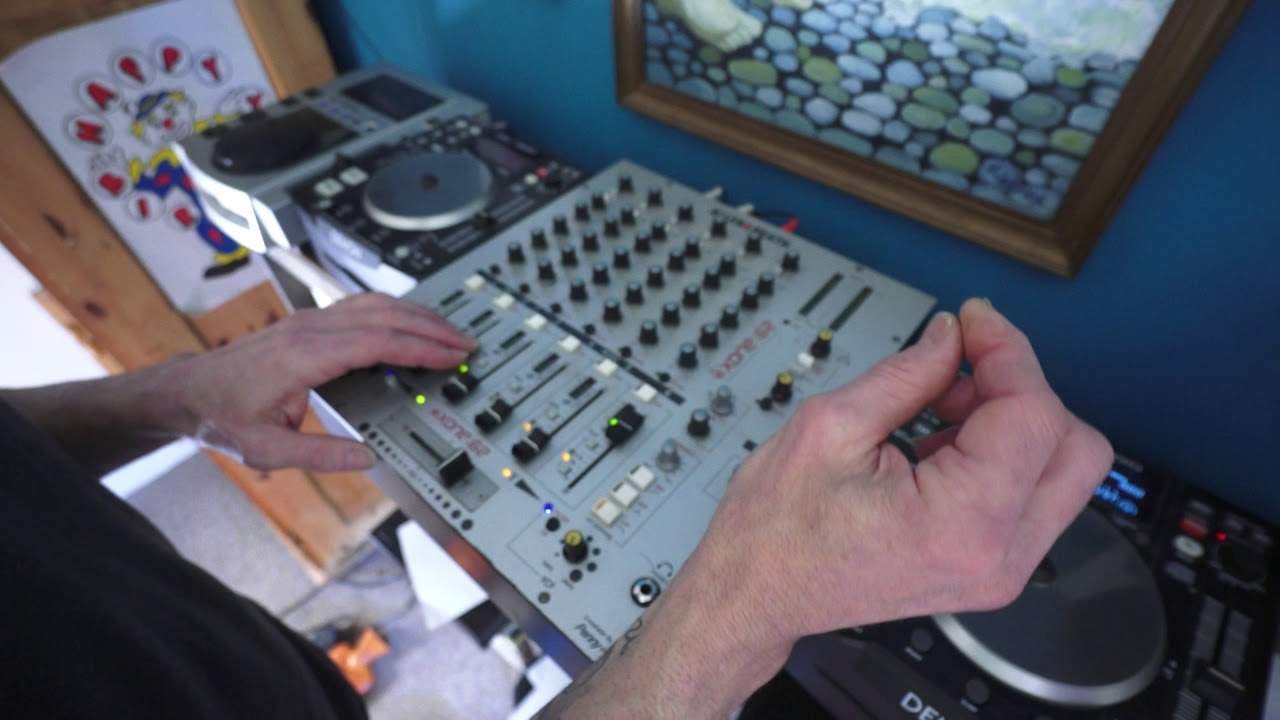
0:00 You're looking at possibly one of the daddies of all mixers
Right, you're looking at possibly one of the daddies of all mixers. A little bit like the Technics SL-1200 Mark II. This is the Allen & Heath Zone 62. When this was made, very few people used CD... Well, a few people did use CD players, but mainly if you saw a Zone 62, it would have a Technics either side. If you've got a set of Technics SL-1200 Mark II, the original 1200s from Technics, their daddy of all turntables and you've got the Zone 62, I recommend you keep the Zone 62 because it's not going to skyrocket in price. It's a classic mixer and it's the sort of piece of kit that will hold its current value so long as it's in good working order. Don't expect... All of a sudden to go on eBay and find they're going for thousands of pounds. On the other hand, don't expect to go to eBay and buy one for about 50 quid. It's not going to happen unless it's completely knackered. In that case, if it is, someone would have already bought it for parts. So what makes a mixer like this that's relatively old school so special? Firstly, you have some great filter effects.
Thirdly as well, which is a great feature, you don't just have low, mid and high. You have low, mid, mid and high. And no, I didn't repeat myself twice. I didn't repeat myself twice. I did then though. You have two mids. Now for copyright reasons, I'm just using a very dodgy loop that isn't even a loop, but it will give you an idea of the effects you can get. So put the volume up. Filter.
1:51 The filter works from 100 hertz to 20 kilohertz
Now the filter works from 100 hertz to 20 kilohertz. Now your 20 kilohertz is the high frequency, that's the top end, that's like what your CD horn compression driver or tweeter will make, whereas the 100 hertz is sort of getting into the realms of bass. So if we can hear that... We can still hear that thud sound as though you're walking outside towards a nightclub and you can just hear the bass sound. So what's happening here is the effect is letting 100 Hz and below bleed through into the speakers as we move the dial up. We're now getting more bass, so we're getting some more mid-bass. To higher bass, to mid-high, to high and then to as top as you can get. The very tippy top. Right, so what's this low, mid 1 and mid 2 and high got to do with it? Well, with a lot of mixers today, you just have low, mid and high. That's it. But with the Zone 62, what they did is thought, hold on a minute, let's just add another element to...
The EQ for the DJ. Now, if you're familiar with, maybe you're not, I will explain something called a graphic equalizer. They used to be found many years ago. You'd get them 19-inch rack mount or ask your mum and dad to have a look at their old school stereo pictures. And you may see this sort of part on the hi-fi with weird kind of lines on it. And something stuck in the middle of each line that you can move up and down. Now, believe it or not, I know that was a really weird description, I do apologise, but that is called a graphic equaliser. What the graphic equaliser would do, it would let you set certain volumes of certain frequencies in the whole sound spectrum. So for example, you could have, let's say, some graphic equalisers that would have, say,
Sliders. Some would have 5, some 10. There are graphics out there that are 31 and 32 band EQ so you can separate the tiniest of sounds and increase or decrease certain frequencies to your liking or to the room that you're in. Now in a way what the Zone 62 did is instead of just saying we're just going to give the DJ low, mid and high They thought, let's give the DJ low, which is bass, and then mid-bass, which is slightly higher sort of frequency than the bass, and then a mid-high, which is getting in more to the realms of high, and then of course your high frequency, which is the top. Now I'm not sure exactly with the cutoff frequencies here where the low stops. And then the low-mid starts and stops. And then when that stops, the mid to high stops. And when that stops, the high stops. But I can give you a demonstration now. So this is the low. Take that off. Minus 26 decibels. Then the low-mid. Do you know, I like that sound because we've also almost got this sort of toneful sort of feel to the music now. And then the high-mid.
5:38 Take away the high, there
Take away the high, there. Now if you could only hear this properly, that sort of sound is just like a massive nightclub where you've got loads of bottom end, you've got a nice crisp kind of mid and a wonderful high frequency. You haven't got that sort of rumbling, rambling kind of mid bass that seems to squash everything else out of the sound spectrum. So bye! Utilising your EQ, turning the filter down but increasing the low mid. So I've got both low mid and upper mid on. I'm now going to turn the filter back up. Now this is just a part of this mixer. There is so much more to this than meets the eye. I've always said you need to watch what you buy second hand. Find certain old school items at a good price. It's well worth investing in them because they're still going. I suppose a good way of looking at this is if you go on eBay and you look for secondhand DJ kit, have a look and see what's not.
7:24 Something like this, Allen & Heath Zone 62
For sale now. Something like this, Allen & Heath Zone 62. You will find them and they will hold their price because A, they're good quality, B, they were built to last, and C, they are classic items that so long as you look after them will last forever. Exactly like Kia. The DNS-1200 from Denon, that is a rock solid CD player. And over there I've got a CDJ-100S from Pioneer and that still works, it still runs. I mean, it looks good, it ticks all the boxes, so if for example you're a new DJ and you're just starting out and you haven't got big bucks, if you look at kit like this and invest in it so long as it works, you can't go wrong. But my big advice here is if you're going to be buying off Facebook Swap Shop, off eBay or anything like that, test before you hand over your money. This is so important, all right? This is like the number one priority. Don't rely heavily on feedback or anything like that. You need to test it, okay? You need to make sure all the functions work. For example, here, this mixer.
I have to admit, some of the sliders are a little bit worn away. I can feel that. But I don't mind spending the money and maybe changing them over time because I know I've got something here that will... It's not about holding its price. I don't want to like buy this now and sell it in 10 years' time and make thousands. That's not going to happen. But I want to have old school stuff that I know does work and will continue to work. Thank you for watching.
This transcript was produced automatically from the audio of the video and may contain mistakes.





