 5:31
Set construction, the advanced version
On YouTube this video is called Constructing a DJ Set , Advanced Tutorial
What this lesson teaches
The most technical lesson in this course, and it is a method rather than a principle.
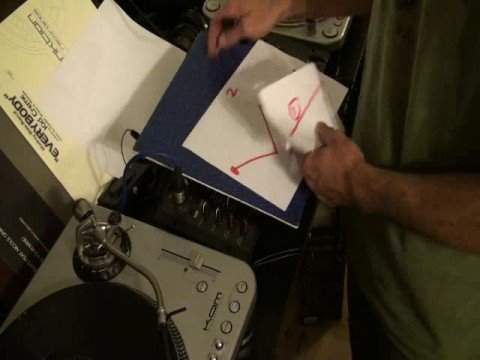
Drawing a track
Every record has a shape over its length.
Some are flat - a trance or techno track that starts, chugs, and finishes without much happening. A straight line.
Some have contour - it starts, lifts, dips, lifts again, comes down. A line with hills in it.
He draws both, and the drawing is the tool.
Measuring it
Then he puts numbers on the sections, in bars: this part is 128, this is 64, this bit is 8, this stretch is 32.
That is the step most people skip, and it is what makes the method work. A shape without lengths is a feeling; a shape with lengths is something you can line up against another shape.
Fitting two together
The purpose. With both tracks drawn and measured, you can see where one's dip coincides with the other's rise - and that is where the mix goes.
A record that drops to just drums for thirty-two bars is a thirty-two-bar hole. A record with a thirty-two-bar build is something to put in it. Lay the two drawings next to each other and the join is obvious in a way it never is while listening.
That is also why the lengths have to be in bars rather than minutes: the two have to be counted in the same units as the music, or they will not align.
Doing it yourself
Take four records you play constantly and draw each one on a sheet of paper - the shape across the top, the bar counts underneath.
It takes about fifteen minutes a record the first time and much less afterwards, and the result is a set of maps you can lay side by side. People who do this find mix points they had never considered, because they had only ever heard the records in sequence rather than seen them in parallel.
Contents of the video
0:01 Another tutorial for you on how to construct a set
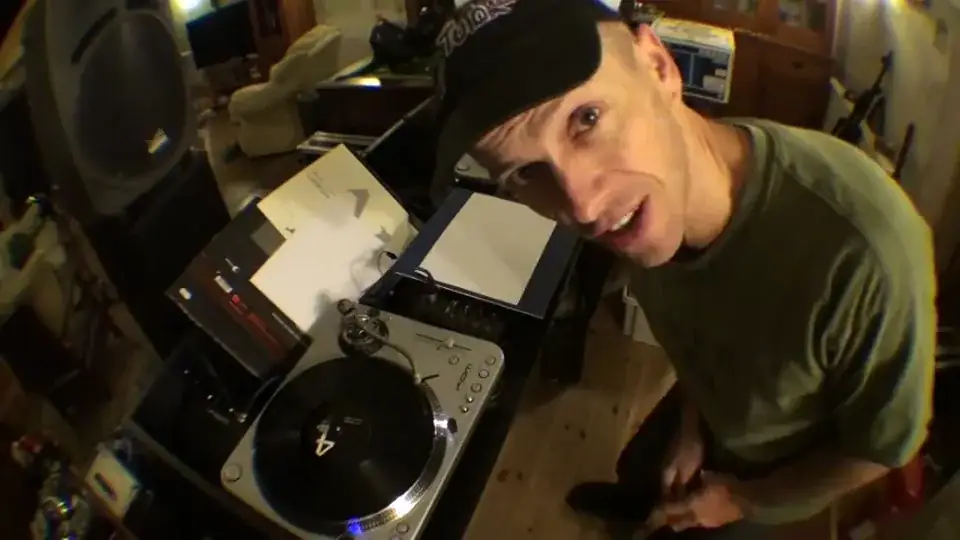
Alright folks, another tutorial for you on how to construct a set. Now let's imagine that we've got a tune, a record, CD, PC program, that manner. Starts here and it finishes here. In fact what I'll do, I'll take that off the camera. So there you go, right. Each track takes the listener on a journey. That's the whole emphasis. You know, it starts... And the journey could be, it could just go like that. It could just be a straight chugging track, like a techno track, sorry, a trance track. It starts and it finishes and not much happens. But maybe it's slightly different. Maybe it starts, it lifts, it dips, it takes you on a bit of a journey like so. and down. Now, let's say this is track number one, okay? Track number one. And let's say we've got, and you have to bear with me here and follow me. Let's say this is track number two. Okay, starts here and finishes here. Track number two, for example, will, I don't know, do something like this. It'll dip, then it'll go up, and then it'll come down a tiny bit and go across.
1:54 Follow me on this and hopefully you'll understand
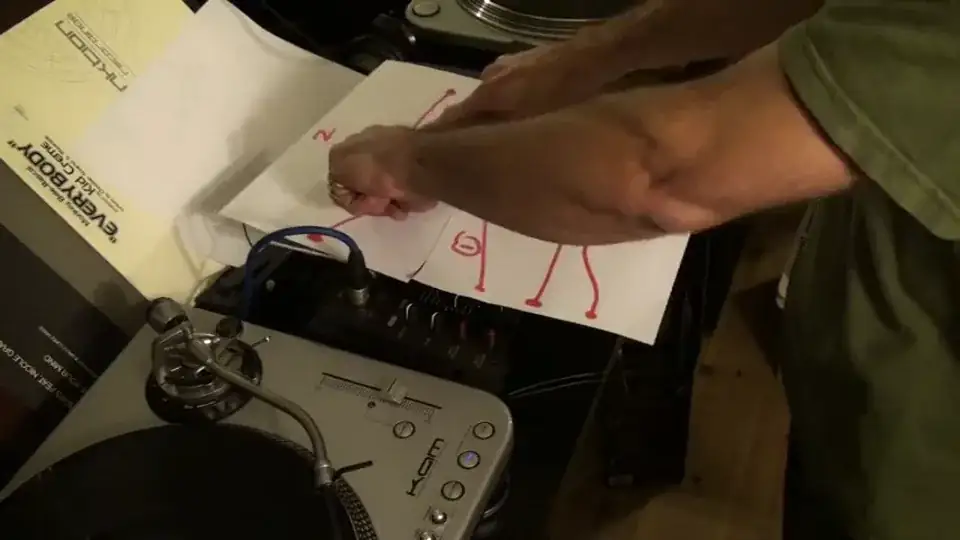
Now what we've got to consider here with most dance music is of course bars, phrases etc. So we're looking on the principle of say a bar is a count of 4, 1, 2, 3, 4. So for example let's say we take 4 bars or we take 8, 16, 32, 64, 128. Let's say that's 128 and that's 128. Let's say that is 64, that's 64, that tiny bit there is 8 and over here is 32. Now when we're constructing a set what we could do, let's say for example these two tracks work really well together. Now follow me on this and hopefully you'll understand. What I could do, I could start to mix track 2 in about here. Do you see where I'm coming from there? Also, I could possibly start mixing in track two there. Now, a lot of things are happening here. One is I'm now choosing a different place to mix the second track in with the first track but also because I'm mixing it, mixing the track in at a different place, I'm making the mix itself sound differently because
3:28 They're going to bring in that part of track two
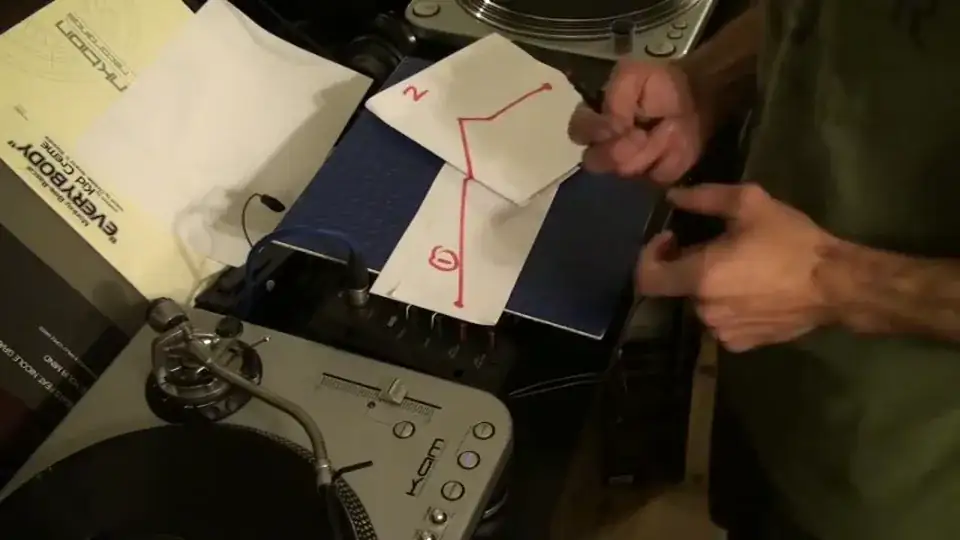
In track 1 we've got a lift, then we've got say a dip. Now here in track 2 we have a dip, then we have a lift. So if you think about it, if I mix in track 2 at this lift and I mix track 2 in at the lift of track 1, then instead of just going up high and down, we're going high and then we're going higher. Now this is what a DJ will do in their set. They can find the right place to bring in the second track according to how they want the crowd to feel. In other words, if they want the crowd at this point to go higher and higher, they're going to do that. They're going to bring in that part of track two. If they want, let's say, the crowd to just mellow out, Then maybe, if the two tracks work well together, they'll take that part of track 2 and put it there. You see, right I'll put the fisheye back on the camera. You see mixing sometimes is all about finding the right place in the right tune to mix at the right time. So, two tracks you don't necessarily have to mix.
Beginning, end, beginning, end, beginning, end, beginning, end. You can mix beginning halfway through, bung the next one in. The next one starts playing a quarter of the way through, you could bring in the third. And then when you're playing the third, maybe you might want to play the entire song because the crowd are liking it, they're buzzing off it, and then you mix in the fourth and so on. So this is how intricate it can be, but to someone who's used to doing this, It's relatively easy. This is what the top DJs will do. They will not just track, track, track, track. They'll look and think, ah right, they need to be lifted. At the point where there's a good lift in the track, they may find the next record and there could be an even higher lift. So, they'll join the lift of this one with the high lift of the other and take the crowd on an exceedingly wacky journey. That's what happens.
I'm not going to play any tunes, practice and enjoy. Thank you.
This transcript was produced automatically from the audio of the video and may contain mistakes.