 18:24
DJ Demonstration and TENMINMIX info HOW TO GET YOUR PROFILE SEEN MORE!
Contents of the video
0:02 One is we're utilising an acapella
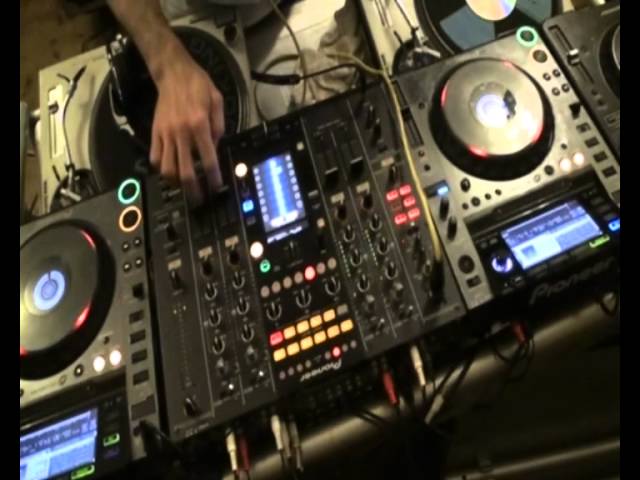
Alright guys, in this demonstration tutorial, first of all I'm going directly from the mixer to the mic input on the camera so you've got proper audio or should I say stereo sound. There's a good reason for this because you'll hear the difference by utilising this sort of idea I'm going to show you. If you then take that to the next level and what you're hearing is on sort of a big PA system, it takes your mix to a whole new level. So quite a lot going on here. One is we're utilising an acapella. Number two, I'm going to show you what I class as the double tap. And number three, which is the most important part, and this is the whole reason why I've got it directly into the camera, is we're taking a four channel mixer and we're making it into a two channel mixer. And we do that very simply. And also something to take into consideration is, I love this, is that you don't have to have any effects. Even if you've got a mixer that's got absolutely...
No effects, I nearly said bugger all then. Oops. No effects whatsoever. Even if it's something like from the 70s, all it's got is low and high. You can still get some form of effects from it. So I will explain in as great a detail as possible so people can follow and just, I mean you should be able to understand this, alright? Your CD player on your right, remember... 4, 3, 2, 1. From the right through to the left we have channel 4, channel 3, channel 2 and then channel 1. So CD player on the right... Yeah, shut up. CD player on the right, I've gone from the right output into channel 4 right input. From the CD player I've gone the left output RCA into channel 3 left input. Then... The CD player on the left, I've gone from the right output into the right input on channel two. And then from the CD player on my left, I've gone from the left output into the left input on channel one. So I'm going to give you a demonstration of what that sounds like. The two tracks I'm using is Tori Amos' Professional Widow over on the left and Madonna
2:49 We'll press play on the player to my left
On the right, we've got the acapella of Madonna on the right. So first we'll have a listen. So that's with the right channel up, left down. And now the left up and right down. And then if we have a listen to Tori Amos, right side and left side. Okay, what I'm going to do now is I'm going to... No, in fact, I'm going to try and keep the microphone up so I can talk through what I'm doing at the same time. I'm going to have to use one hand, but if you think about it, if you're in the mix, you would have two hands then to mess around with the EQ as well as maybe forming some loops etc. So we'll press play on the player to my left. What I've got now is I've just got the right hand side up for the acapella. I'm going to stop it there for a second. The main reason I'm using Madonna is because of time and time is the operative word here.
A lot of people when they start bringing a track in the mix, which is really what you should do, you should bring it in of course on the count of one. But if you do it correctly, you can actually bring anything in, especially acapellas, on the offbeat. Because there's no actual beat with the track, what it means is that you can have a good bit of fun and mess around with the acapella itself. Now again, if we listen and we think about... The likes of a bar. We have 1, 2, 3 and 4. 1, 2, 3 and 4. This particular track here, this acapella starts time, time in the count of one. If we have a listen. Alright, now have a listen to this. What I'm doing, I'm double tapping it, but it's not on the count of one. Now I'll utilise that with the beat and let's see the difference in sound we get. Here we go.
5:54 I was pressing it on the offbeat
Okay, so what was happening is I wasn't just pressing that on the count of one continually. I was pressing it on the offbeat. Therefore, we're getting a completely different feel to this acapella. Now, earlier on, I said that I'd got the right side in this in channel four and the left in channel three. What I'm going to do now is utilize the low, the mid and the high whilst the Acapella is going on and I want you to listen and feel the colour of the difference with the low, mid and high but of course from a stereo point of view. So of course you won't be able to appreciate this if you haven't got true stereo so here we go. A little bit but you get the general idea. What we can do here, and this is using, let's say, hypothetically we're using a mixer that has got no effects whatsoever at all. But now again, if you have got a mixer that does have effects, normally if you have a track in, oh sorry, a...
7:43 Bring that back up, let's press play
A music source in one of the channels, that means when you're using an effect on that one channel, you're using the full effect only on that one channel. But of course on the left and the right, using this type of idea, you can have an effect just on the right side or an effect just on the left side. What I'm going to do now is do something like that, let's say with the likes of the echo. So bring that back up, let's press play. Also what I did there was I did the double tap. I don't know if you noticed that. This is my terminology of what the double tap is. It's got nothing to do with shooting someone in the head twice, because that's not a very good idea, because you get blood all over you. Right, let's press play on this guy here. It's just that camera actually. There we go. I have mentioned this before. Now, if I want to start this particular track again from the beginning, if I hit cue, it stops it. If I hit cue again...
10:23 It gives you a whole bunch more time
It starts here from the beginning, but of course if I hit cue on the count of one, what will happen is then when I hit cue again, it will be on the offbeat and it won't be in time. I'll give a demonstration of that. One, two, four, now we're offbeat. But if I hit cue before the count of one and then again on the count of one, we are still... In time and also the continuity of the music will carry on, even though there's maybe a slight gap. But to be quite honest, if you do this really quickly, the punters out there, and the terminology of punters by the way in the UK is the public. The people out there won't know the difference. A good way or a good reason for using this, let's say, for example, the track is finishing and you haven't got your next song ready. Doing something like this means that you can go right back to the beginning of the track. It gives you a whole bunch more time. Alternatively, of course, you could just use some hot cues. Very simple. So, press play, and then press play all the way again. Now, if you think about it as well, we've got the acapella going. Also what we can do is now we've got right side and left side moving.
What I'm going to do now is we're going to have a mix of the track and the acapella, but we're going to swap sides with them both. So I'll just put the microphone down. Okay, went slightly off there, but there you go. Alright, a very simple idea about changing a four channel mixer into a two channel. If you are concerned about, you know, having to go with the up-faders too like so, in other words, you're going to be thinking, well, you need to push two up-faders up as opposed to just one. Of course, what you can do, if you can assign your crossfade, then all you need to do is assign the left side to A and the right side to B, and then you use your crossfade. So now, with all channels up, all you've got to do is move the crossfade over from right
12:57 Their kit, do a mix
To left. I'm going to pause the camera now, and I just want to explain something about something called a 10 minute mix. Hold on. Right, here we go. Blaze is going to help me with this part of the video. Quite a few years ago, I had a great idea of doing something called a 3 minute mix. And the idea was that DJ around the world would do a mix, say where they're from, not, you know, the street, the house number, just say like... I'm a DJ from, I don't know, Warwickshire or Buckinghamshire or Kazakhstan. Talk about their kit, do a mix and that was it. So other DJs around the world could see other DJs and look at kit music and see if there was, which I'm sure there is someone out there like them. And then of course I thought well why don't we do a 10 minute mix where other DJs around
Show other people, other DJs how good they are or bad or whatever at mixing. So of course if you think about it not only can you get tips and tricks from watching 10 minute mixes but there could be promoters out there who could watch your mix and book you and it has happened. Believe me if there's anything you can think of about a 10 minute mix it's happened. People have been booked, people have been booed, people have been hoorayed. People have looked at kit because they've seen how the kit works, they've gone and bought it etc. Now the likes of the 10 minute mix is still going on. I will put a lickable clink down in the description that will take you to the 10 minute mix video I made years ago. So if you're not familiar with the 10 minute mix, I will explain. It's still happening now. It's 24-7. It's a competition. It's a worldwide competition. Anyone can enter. All you need...
This is a video camera and you need to be able to upload your 10 minute mix to the web. The rules are relatively simple, the mix itself has to be anything from nine and a half minutes to ten and a half minutes long. We have to see you doing the mix. There's no point editing it or just maybe looking at a deck or at night where we can't see much but we can see some wonderful flashing lights. The whole idea is to see you and the kit doing the mix. Now, think about this. Let's say, for example, you want to promote yourself. If you think you're good enough to work in a nightclub, the boss doesn't want to see flashing lights and editing. The boss wants to see a clean-cut, precise video of you mixing. No wacky camera angles and whatnot, just a good view
15:40 Am I boring you?
The DJ Tutor is the master of the kit and you, doing the mix with the audio. Now it does not have to be pro quality audio, it could even be audio picked up from the microphone of your camera. Alright once you've done your 10 minute mix then you need to respond it to the video underneath here. This has been going on for a very long time and there are people who've been featured in magazines, there are people who got work in nightclubs, and there are people out there now who are very well known around the world. Seriously. So it's something where you can be seen. So if you do have mixes and you're thinking no one's watching them, then respond to the 10 minute mix video and enter the comp... Am I boring you? Bless you.
My god, he's got a life. Haven't you mate? He can have lots of dap-daps and stuff. You're dribbling. Can you see yourself there? Who's that? Who's that? Who's that? Okay, so what you've got to do is you've got to upload your mix to YouTube and put it as a video response to the video underneath here. It's only one entry per month, per person. There are prizes. There are CDs from CDPool. DJ Hot Gear, I'll get the names right but it's all in the description of the 10 minute mix video. There is downloads from DJ Download as well. Now also if you are a company out there and you feel as though you would like to play a part in the 10 minute mix competition and give some prizes away then please contact a lady called Angela. Her email is comps at djtutor.com. I'll bung that underneath here and ask her.
If there are any questions relating to the 10 minute mix, contact Angela as well. So it's very simple. If you want to be seen, if you want to be heard, upload a mix. Anything from 9 and a half minutes to 10 and a half minutes. If it's any shorter or longer, you won't be able to enter it. You'll be able to respond it into the competition but it will be disqualified. That's one of the main rules. The main rule is we need to see you doing the mix. At the end of the day, there's no point in it being edited because when it's edited, it could be like, you could be halfway through, it could be a dodgy mix and you think, oh, edit quickly and go back into it. You know, so you may have done it 10 times and you may have chopped up three of the videos and put them together. The whole idea is one video, one mix, so we can see you do a complete 10 minute mix.
And that's the way of getting seen around the world. And also, link it to your Facebook, your MySpace and goodness knows what. So that's enough of me waffling. Hope it's been a help. And Blaze, say practice and enjoy. Say practice and enjoy. There you go. Practice and enjoy. Thank you.
This transcript was produced automatically from the audio of the video and may contain mistakes.
Related videos
-
How to Get a Better Fee for Your Mobile DJ Services
He disclaims it as not financial advice and notes that everything depends on where you are. Taken as a checklist of what justifies a higher…