 9:34
Mixing in key, demonstrated
On YouTube this video is called DJ Demonstration, Tutorial on Mixing in Key
What this lesson teaches
This one opens with what he calls a Basil Fawlty moment, at length, and it is worth describing because it tells you what these videos are.
The lightbulb
He had set up the lights, got the camera ready, and a light stand went over. Bulb on the floor, glass everywhere. He hoovered it up, took the remains into the kitchen to get the broken bulb out of the fitting with pliers, and broke more glass across the kitchen floor. So he hoovered that too.
Then he made the video.
Why that stays in
Because nothing here is produced. There is no edit, no second take, and no pretence that the person teaching you has a studio and a crew.
He says it himself: people watch and think he just starts the video and finishes it, and there are Basil Fawlty moments before, during and after. The videos are made in a house with a baby asleep upstairs, between other things, and the teaching is better for the absence of polish - you are watching somebody do it rather than present it.
The demonstration
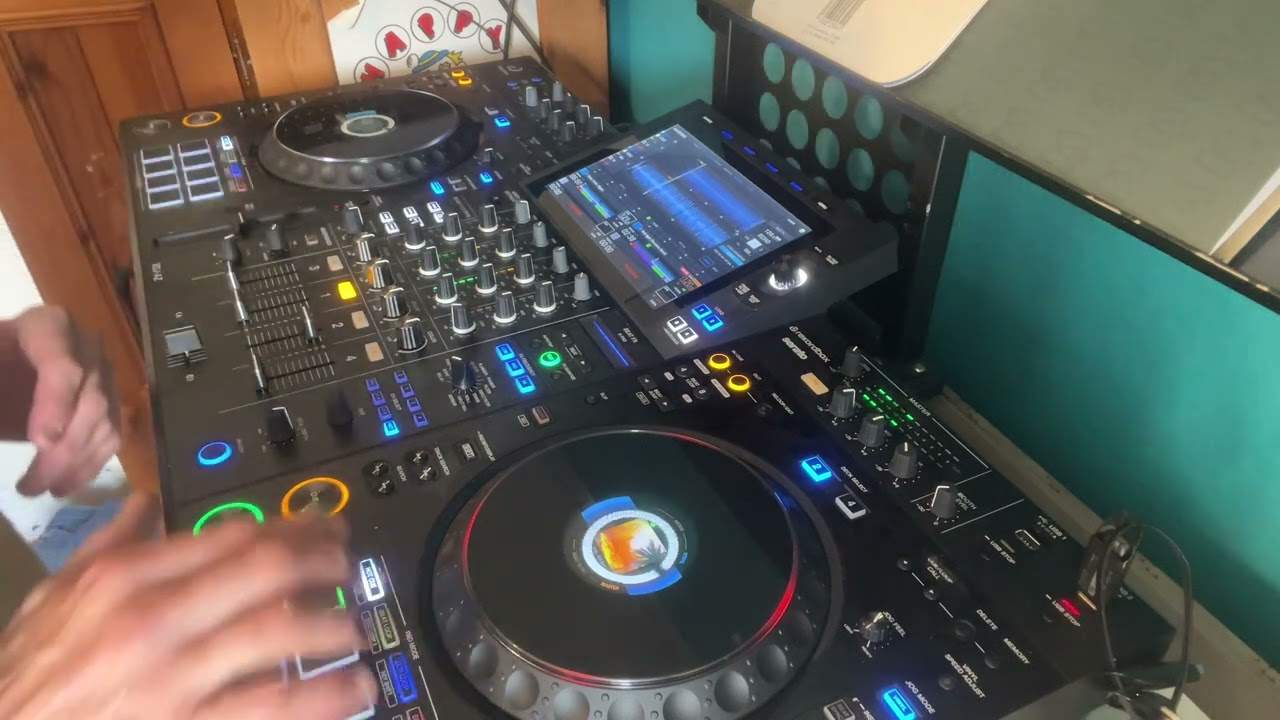
When it starts, it is the standard method from this course: two tracks whose keys are known to be compatible, beatmatched, and mixed - with attention to what the combination sounds like rather than only to whether the beats agree.
The thing to listen for is the one this whole stage is training: not whether it is in time, but whether the two pieces of music agree. A compatible pair sounds like one piece of music with more in it. An incompatible pair sounds like two records, and you will hear it as a vague wrongness rather than as a specific fault.
Use it as an ear test
The best way to take something from a demonstration like this is to listen to the overlap twice - once asking whether it is in time, and once asking whether it sounds right.
Those are different questions, and learning to ask the second one separately is most of what harmonic mixing is.
Contents of the video
0:01 Another demo stroke tutorial for you
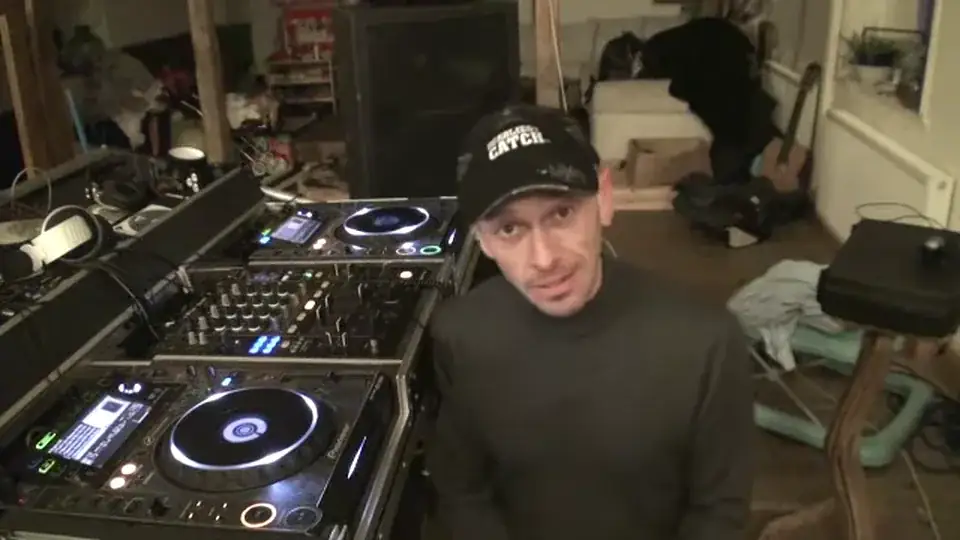
Alright guys, another demo stroke tutorial for you. Before we do anything on the decks, I did have a basal faulty moment earlier on. Let me explain. There's not many lights in here and I had one of these without the flashy bit at the top and a lightbulb on it. I mean, people watch this and they think I'm happy, happy and here I do. I start the video and finish it and that's it. But believe me, there are many basal faulty moments before, during and after. This one was before. So I had one of these. It's a different one though. It's exactly the same but it's another one. It was over there. And partially my fault. I sort of put it in an awkward position. And of course, when you've got a small baby and everything's, you know, they're asleep and you've done everything, you can then concentrate on doing something.
So there's something like this. So it's like, yes, I've got some time to do something like this. So I had everything set up. It was like camera action and the other light stand went, lightbulb on the floor. That doesn't matter. It's the fact there's glass everywhere. So you have to pick the glass up. So I was hoovering the glass trying to get it because it goes everywhere, doesn't it? And then I take it into the kitchen and I think, right, what I'll do, I'll try and get the remainder of the lightbulb off and I get some pliers and clink and more glass goes on the floor in the kitchen. So then I have to get the kitchen, the floor, not the kitchen, I have to get the glass up in the kitchen. And then that's when I had my basil fault. I said, right, you bastard! I took this and I went, right, not this one, the other one. I said, right, outside, you'll go in. So I opened the window and checked it out. Right, keys. When we're mixing lots of things,
2:20 There's a very good chance it'll work because it's the same kind of ke
In fact, there's a thousand and one million things to take into consideration. One of the most important is keys. Now, how can I explain this so you'll understand? I'll do it in my way, which is punk and hopefully very easy to understand. Let's say we've got a key that's like this here. There it is. And we've got another one that's like that. If we put those two together, they look the same, don't they? Roughly. So theoretically, they'll work. They should work because they're the same. If all of a sudden I've got a key like that and I try and mix in a key like that, nothing in it, by the way, shame, then they're not going to work because they don't really look the same. Now, let's imagine I've got a key like that. But all of a sudden we get a child's hand that's maybe a little bit smaller and we put it together. There's a very good chance it'll work because it's the same kind of key. It's not exactly the same, but it's
Similar. Let's say, for example, I get a huge, humongous ogre's hand with hairs grippling all over the place. Put it next to mine. It's not the same, but it's similar. So there's a very good chance that will work. So when we try and mix with keys, we need to take into consideration, will they or won't they work? How do they sound? How do they look next to each other? All right, we can't see them, but we can hear them. Now, we have major and minor keys. The minor keys will, when you listen to them and they're mixed, the sounds, the tunes are mixed correctly, all in the minor keys, they will give a sort of a low vibe. They'll make almost the mix feel kind of low, but not meaning to contradict myself, if you keep them in the minor key and you slowly go up through the key scale,
You can actually lift the vibe, even though you're playing minor keys. If on the other hand, all of a sudden you play a key that's in the major scale, something that's very, very uplifting, a lot of gospel music is in the major key, then you will definitely lift that kind of vibe. Now what I'm going to do here, I've got a track in the minor key and a track over there in the major key, and they're both near enough exactly the same. So I'll give you an example, because we all like a bit of a mix, don't we? By the way, see you out there BPM show, NEC 2012, very soon in fact. And by the way, I'll be on the DJ Cheetah Stroke light console stand, because I've been given the opportunity to let people try and put together one of the, well you can't actually see it, but it's one of the XPRS light consoles. And during the course of the show,
You can come along to the DJ Cheetah light console stand, and you can give it a go at trying to put one of these together. And if you're the fastest one, you will win, not one of these, you'll actually win a punked up styling. In other words, it's going to be pimped up big time. So you can win one, free gratis and for nothing. I'm pretty sure you won't get it on the day, but it will be sent to you. Right, so what we'll do, let's tune here. This one here, by the way, is moving and shaking, that one there. Shake Your Foundation Mix, Jackson Lowe. This one here is that one there. It's, hold on, move it again. It's KY's Groove KZR unreleased version, HT0 featuring KRC. Sorry, my reading is atrocious and my
Reading is atrocious as well. I can't be able to save my wife. Done that one before, haven't I? So this one here, minor key, sounds uplifting. It is uplifting. But what we're going to do, we're going to mix something in the major key, exactly the same key near it. Well, it's the same key, but the difference is one is minor, this one, the other one is major. So a lot more uplifting.
6:22 Aren't they called mix CDs?
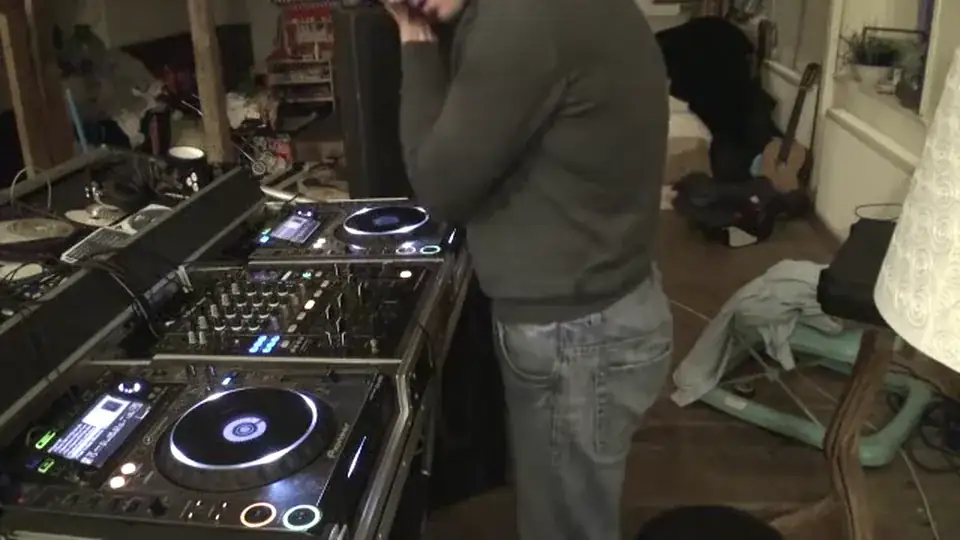
That would have been very good if I'd have spent more time on it. But again, for all the people out there who do that, don't give a monkey's, you know what? Because this is punk and this is where I like it. If you want it absolutely perfect, then what I suggest you do is go and watch someone else who will possibly spend hours on a PC. Aren't they called mix CDs? Anyway, right, so that is almost like a smooth translation-ish. Smooth-ish transition from one minor key to a major key. So you hear about some people talking about a jump. What is it? Now that's naughty, come on. No, a jump from one key to another is where we have a bit of a gap. So what we need, we need to actually sort of play one track that could be down here and then we go up to somewhere like that. Now it's of course depending on the keys.
When we do a jump, we can do a good mix and then we can mix from one track to the other. Smooth mix but there's still a jumping key. If we do too much of a separation of keys, that's when we need to do almost a cross from one bang straight to the other. Now I'm going to do that in another video because we've already done 9 minutes and 15 seconds wasted of your life. I do apologise. But we will do that in another video, alright? So practice and enjoy. Have some fun. And remember, you have got it in you as well to inspire and teach. We've all got it. Practice and enjoy.
This transcript was produced automatically from the audio of the video and may contain mistakes.