 10:42
DJ LESSON Changing the vibe of the mix from Club to Underground or Underground to Club
Contents of the video
0:01 Another demonstration stroke tutorial
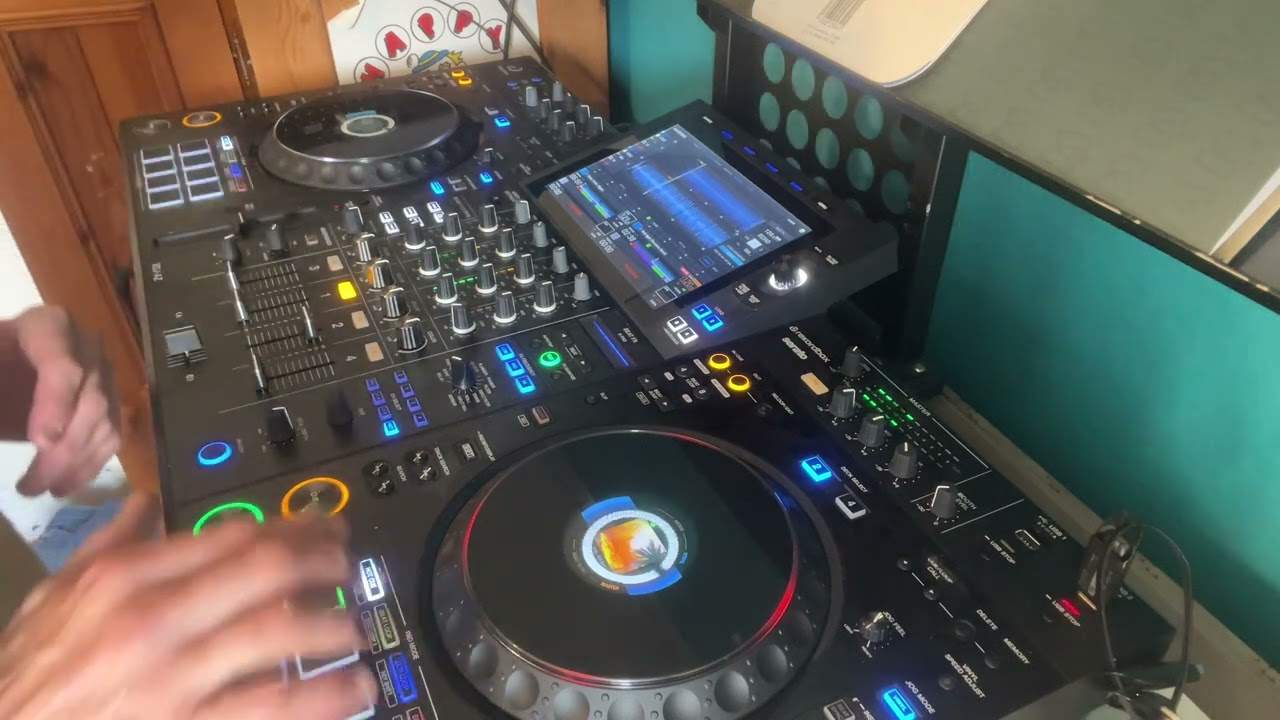
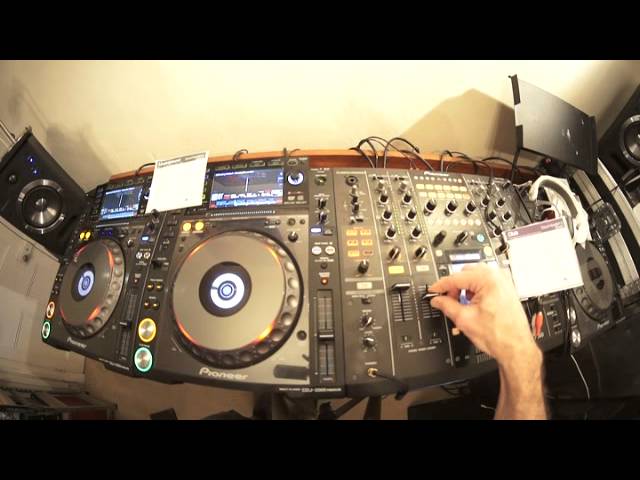
Alright guys, another demonstration stroke tutorial. In this video what we're doing is we have an underground tune. That is the one on the left hand turntable. It's from the underground releases December 2013, track 1, disc 1. Follow the link in the description, it'll take you to the information on this CD. Also, we're going to use one from the club releases from CDPool December 2013. Again, track 1 from disc 1. And that is the Monkey Safari tune. On the right hand side, left hand side is Nina Kravitz. Now, I'm not going to use any headphones. It's mainly a demonstration. And even though I'm going to give you one or two demonstrations on mixing these two together, there's probably a million and one ways of doing it anyway.
So, take your time. Take this in, take it to the next level, jump about a bit and do your thing. So let's have a listen to the underground tune first. Nina Kravitz.
Got a bit of an effect going on there. Turn that off.
Now one of the main reasons I'm using this track over that one is because there's not much going on here. There's a lot going on with the club tune. So what we can do, we could almost do a mashup of the two tracks together. If you do this kind of a mashup, one big no-no is vocal. One big no-no is vocals over vocals. Unless, of course, they're talking to each other. What do I mean by that? Well, hello, how are you today? Oh, fine, thank you very much. How are you? Oh, I'm not too bad. You're looking a bit handy. Well, you know, you're a bit handy yourself, aren't you? It's because of my bloody hand, you fool. Right, that's fine. What isn't very good is... In other words, there's too much going on. Too many vocals over vocals doesn't work.
So, there's a tiny bit of vocals in here. There's quite a bit in the club tune, which is... This one here.
2:14 Tapping minus, likely hear, less likely
Right, what I'll do as well, if I move a little bit more over here, hopefully now you can see the LED. And I'm tapping into... Well, I'm actually in minus 3 dB.
Now, what I don't want to do, OK, for demonstrations mainly, even though it does happen sometimes, but maybe as well with you, if you think about it. If you have got everything like banging in the red and the amber, there's a very good possibility that when you do, if you want to, your own recording of your mix, there's a good possibility of the mix being a little bit too overpowering. Also, when you do start to add effects or bring another track in, you're less likely to hear the effects well and less likely to hear the mix correctly because there's too much going on. So, at all times, if you're doing some form... of recording, try and keep the LEDs tapping 0 dB, minus 1 or plus 1. So this is... Bloody hell, that was loud.
Let's turn it down a bit.
Right, so this is the Monkey Safari tune coming down.
Right, what I'm first going to do is I'm going to start the two together and I've got them set up.
I mean, again, you know, if you look at the LEDs, that's tapping in 2, 0 dB. And that one is... Even though they're at the same level, pretty much the same level, this one does seem to be a little more overpowering. That's because there's more going on. There is more music involved with this one. That one over there is just sort of an underground back... There is a melody there, but it's in the back of the tune. It's not all the way in your face like this one here.
So, start them both together. Take the mid out of the one on the right. Okay, we'll turn it up a bit.
5:02 Vocals from the underground tune
Vocals from the underground tune. Got my low-frequency filter pass.
Okay, so what happened there? We had the beginning of the vocals or the actual spoken word near enough from the underground tune. And then as soon as the vocals came in on the club tune, we wang that one out. And again, if you're not sure about where a track is going to come in or go out, 99% of the time, just count your bars, count your phrases and you'll be quite... It's more than likely... That at the beginning or the end of a bar, that is the time when the vocals will finish or start.
You see they're still sort of running quite nicely together. But if I did want to bring the two tracks in together all the time, I'd have to make sure like I said earlier, no vocals over vocals.
Alright, that's pretty much the first part of the video. The next part is... And I've delved on this subject a couple of times before and I'll carry on doing it because the more information there is out there, the better. Alright, underground clubby. So let's go from an underground kind of vibe into a clubby feel. So, of course, what we'd have to do is play the latter part of the Nina Kravis tune. So we'll do that now.
Wang it forward.
Now, I don't know if you heard earlier on, but I did use the low-pass filter. Also, what happened is as I started to use the filter... Just pause that. We did have an increase in the LEDs. So by increase... The increase there... On the LEDs tells me that there's going to be more audio power going out of the mixer. So what I did and what I need to do whenever this happens is to bring the volume down because I'm counteracting, of course, LEDs going up, more output going out. So bring the volume down, which means hopefully we'll still have some level kind of volume. For example, the LEDs on the left track could be at zero. The LEDs on the right track could be plus three, plus four with the volumes both... As high as they can go.
I've got a couple of options. One is I can bring the volume down on the side with the LEDs higher. Alternatively, what I can do if I want to keep the volumes up on the mixer, I can turn the trim down on that side. So right, carry on playing that. So what I'm going to do now is I've got my low-pass filter about one o'clock, press play and here we go.
7:59 It's almost like we've got it in the background
It's almost like we've got it in the background. Increase low-pass. I'm still watching my LEDs, if I bring the volume up too high too soon, it's going to overpower it. Face out on the underground tune. Pretty much it. Okay, how about if we do it the other way around? We have the club tune playing and then we bring in the underground. So we're going to do near enough exactly the same. We'll go to the latter part of the club tune. Bit of a break here. Right, so we've got a break with no beat. How about we start the underground tune at that perspective? At that precise point where the beat stops and we just have the break. Let's see what happens. Slowly decrease now, the low on the club tune because I want the emphasis more to be on the track that's coming in.
Opposite now to before. My filter. Because I've brought the low frequency out, I don't have to worry too much about the up-bader because I've brought a lot of the EQ out on the bass. If suddenly you forgive me. Okay. There was quite a bit more of an abrupt finish there because there wasn't that much left on the club tune. So another way of doing this is maybe to go back another eight or 16 bars and then start this track. So that's another idea again, like I said earlier, there's so many different ways of doing this kind of mix you wouldn't believe it. I could probably do another thousand videos just on this but you get exceedingly bored. Right, don't forget if you want any info on the CD Paul releases, check out the link in the description and I'll say practice and enjoy.
Thank you.
This transcript was produced automatically from the audio of the video and may contain mistakes.