 10:13
Twelve-inch, seven-inch, and what each was for
On YouTube this video is called DJ Let's Talk About Old School Vinyl Back in the Day 12" and 7" Singles
What this lesson teaches
He starts with a joke about kitchen flooring and then makes a point that is easy to dismiss as nostalgia and is actually about how you build a record collection.
What the record shop did
The old process was: go to a shop, flick through, pick twenty things to hear, listen to them, and leave with four or five.
Notice the shape of that. You heard everything before you owned it, and you owned very little. Every record you carried out had survived a decision made with your ears, standing up, in public, with your own money on the line.
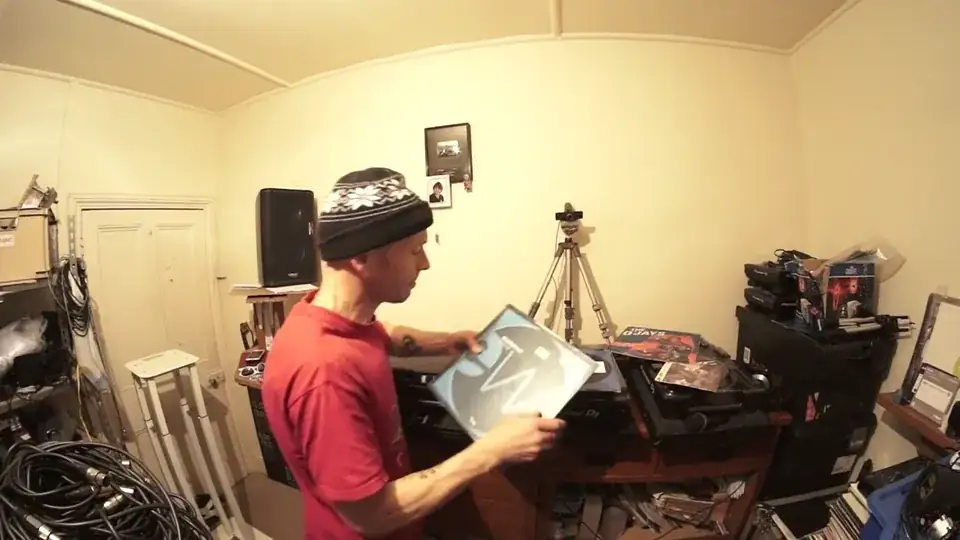
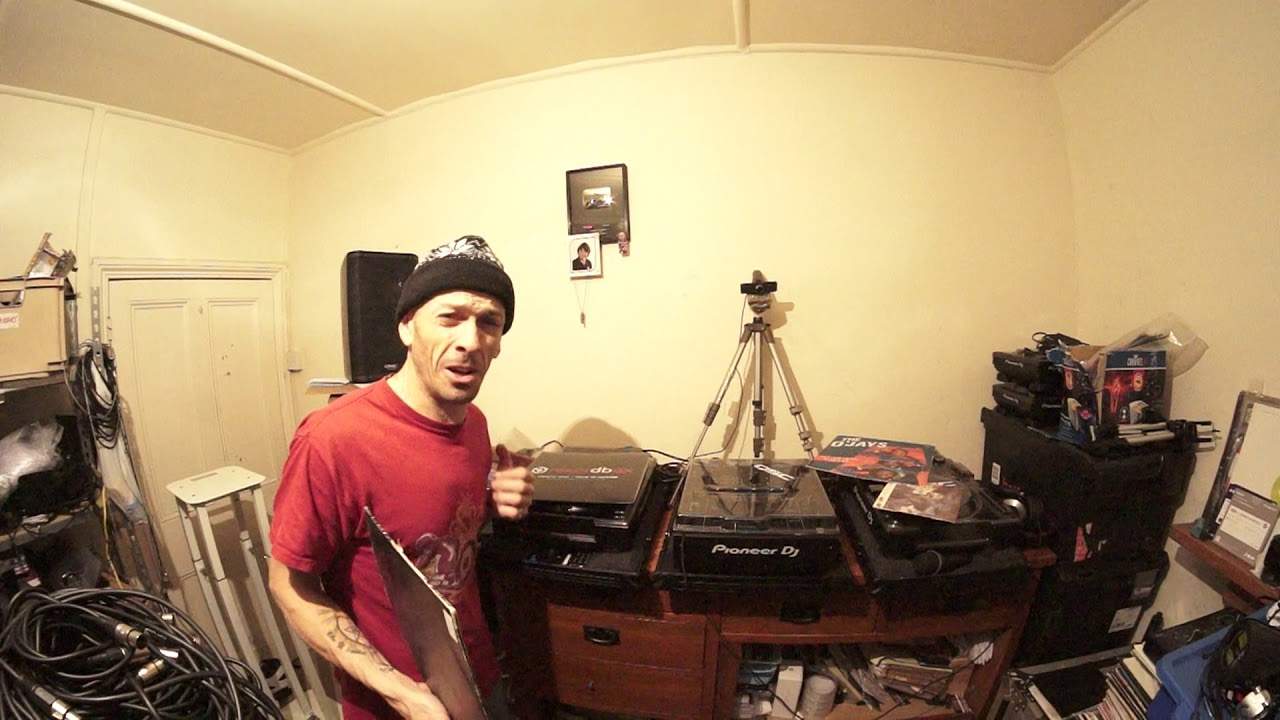
The modern process inverts it. You acquire first - a hundred tracks in an evening if you like - and audition later, if at all. His own description of it is blunter than that, and he is describing something real: you end up with far more music and far less relationship with any of it.
He is honest about the downside
This is what makes the video worth watching rather than eye-rolling at. He holds up a 32 GB thumb drive, points at a wall of records, and says three of those sticks would hold all of it and more, in his pocket.
Carrying vinyl was, in his words, an absolute pain. Boxes of it. A bad back and a car boot full of crates. He does not pretend otherwise.
But the box was a filter as well as a burden. Twelve 12-inches is twelve decisions. Nobody carried a record they were not fairly sure about, because the weight was the price of being wrong.
The things themselves
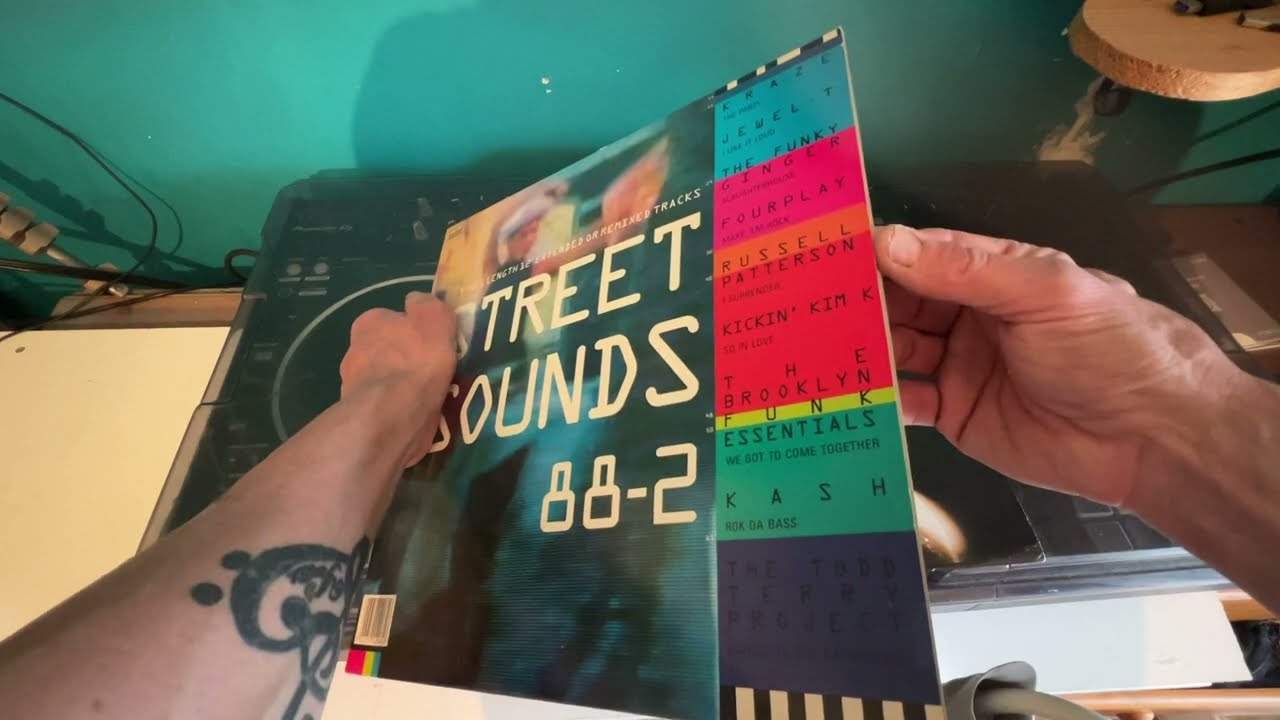
The middle of the video is him going through his shelves, and the artefacts are genuinely interesting:
A promo of a Blackstreet record with its reaction form still inside - release date, a box for what you thought, which mix you preferred. Record companies were polling DJs and using the answers.
Label design as navigation. You knew a Positiva record across a shop by the blue and black, before you could read a word of it. Flicking through a rack was a visual skill.
New Order's Blue Monday, with a sleeve designed as a die-cut imitation of a floppy disk, and nothing on it. A record you can still drop today and watch a room react.
What to take from it if you have never owned a record
The filter is the transferable part, and you can reinstate it deliberately.
Listen to a track properly before it goes in your library, not after. Keep a shortlist small enough that you know every item in it. Make yourself delete things. The constraint that vinyl imposed physically is one you can choose to impose on a folder, and the result is the same: a smaller collection you actually know.
And if you want the format itself without a decade of buying, DVS is the bridge - a control record with a timecode on it instead of music, so your library follows the needle.
Contents of the video
0:00 Let's talk about vinyl
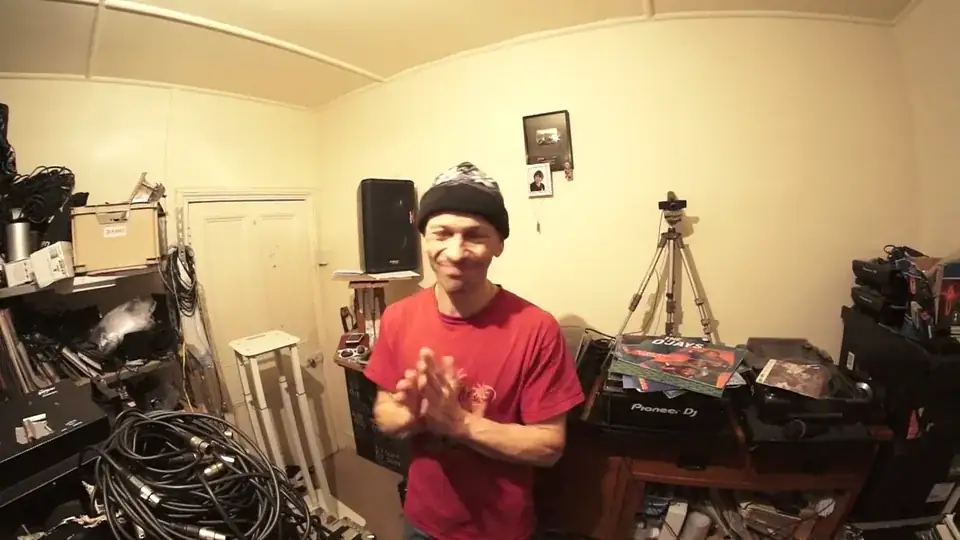
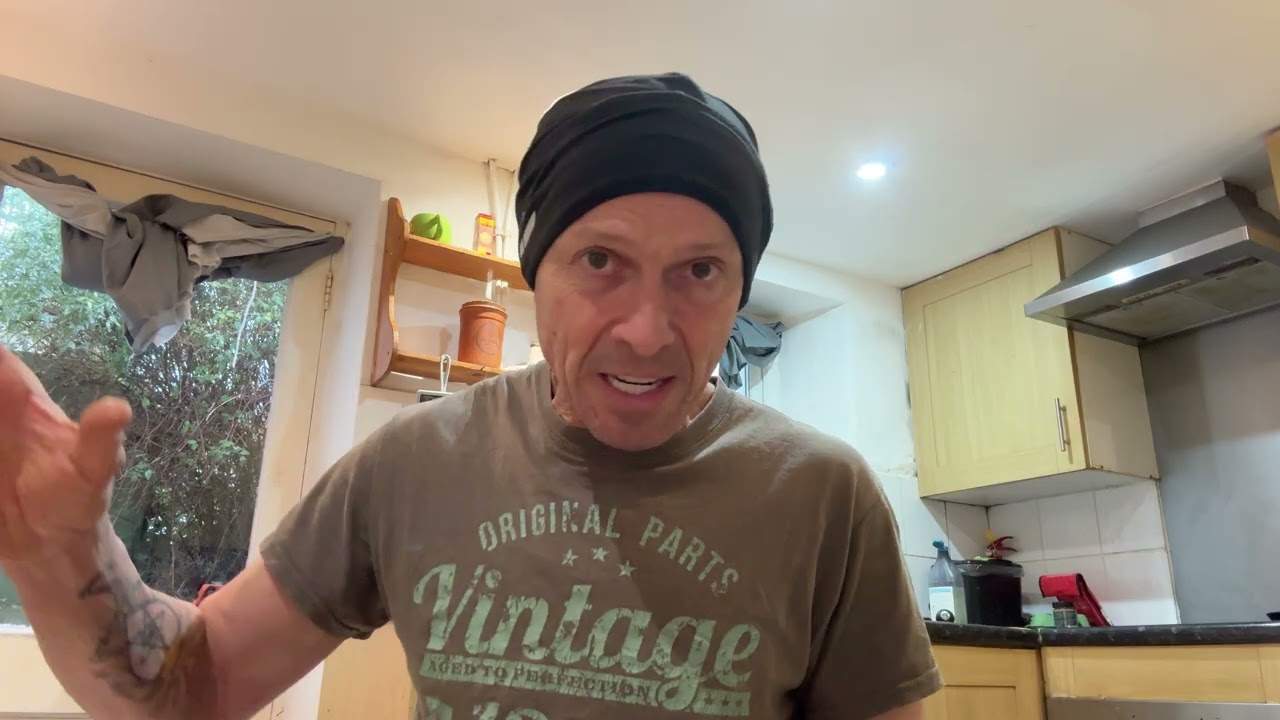
Alright, let's talk about vinyl. You've probably got it in your kitchen, maybe in your bathroom, maybe you've gone out with your mum and dad or maybe your wife and you've gone, should we have the red or the green? No, it won't work with the tiles, maybe we should have the orange or maybe let's go for a checkered kind of vinyl. That's not the vinyl I'm on about. And what about this stuff here? This. No, alright, there's no vinyl in there at the moment but I relate to old school DJing, back in the day to how it was. When a DJ would go to a store, a shop and you'd be able to skip through tracks, you'd be able to look. At the music. You would be able to touch the music, feel it. Now you may think, well yeah, you know, that music touches your heart and you feel the vibe but it's a sad thing to say but today's DJing is about getting it as fast as you can from some download site, getting on your thumb drive.
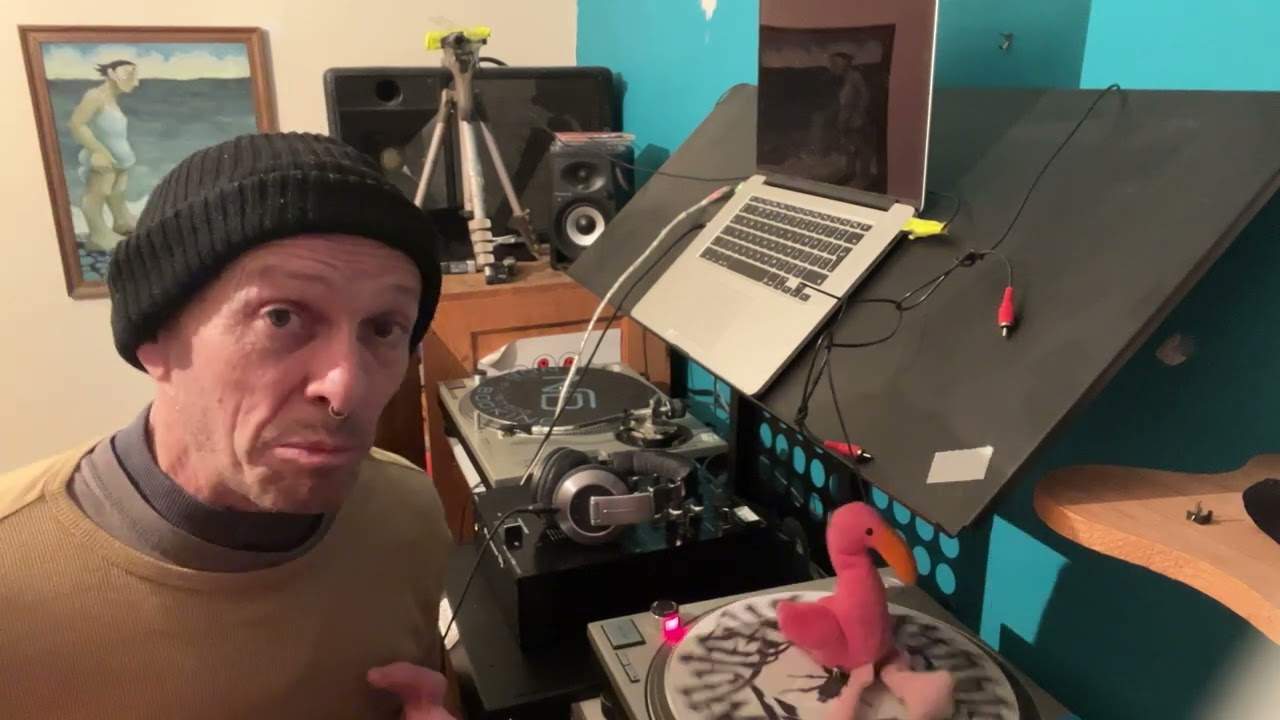
And away you go. I mean, you know, that is a thumb drive, 32 bloody gigs. Now behind you, in fact, I'll turn the camera, is a bunch of tunes. Look at that, that's vinyl. Now, I would hazard a guess to say that if I had, say, three of those, 32 gigs, I could get all of that vinyl and more on a drum kit. Three items I could put in my bloody pocket. Yeah, years ago if I had to carry that amount of vinyl around, apart from the fact I just looked like a complete idiot, I'd break me back. Now, that's like the downside to vinyl is carrying it around.
2:21 They didn't just go, oh, download, download, download, download and le
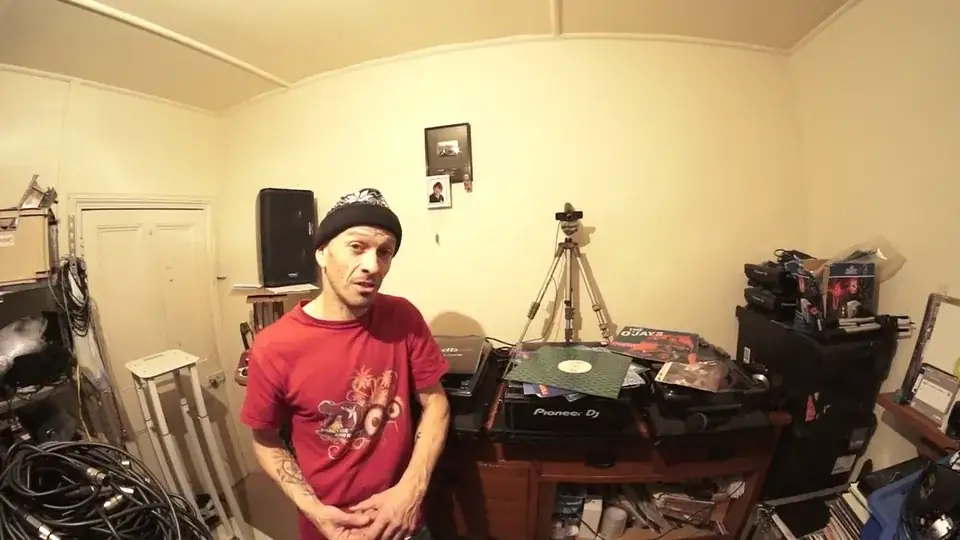
It was an absolute pain in the frigging ass to carry boxes and boxes of vinyl. But when you saw a DJ carry boxes and boxes of vinyl, you also saw passion. You saw the love of the music because, and this is a fact, this is a fact, because when they carried that box of say 112 inch, each one of those pieces of vinyl was handpicked. They didn't just go, oh, download, download, download, download and let's have a listen. Don't really like them. Oh, I like five out of the 20 I've just downloaded. But you actually liked every single one of them completely because these tunes had passion for you. When you went into that store, that record shop and you sift through a bunch of tunes, you would say, for example, right, for example here, you'd, which is what I'm saying.
You'd say, well, this is my favorite piece of vinyl. This is my favourite piece of vinyl. This is my favorite piece of vinyl. This is what I used to do. You'd go, I'll try that, that, that, that, that. And then you'd listen to like 20 tunes and maybe out of those 20, you'd pick four or five, but you'd picked them. You'd chosen them. There was a passion involved in choosing those tracks. And DJs today, the passion's going. It's gone because it's just like download as much fucking shit as you can and hope to God a few of the tracks you liked. Now, let me show you a few things here. This is a 12-inch single from a company called Champion. There it is. And this here, need I say more? Motown. Standing at the top, The Temptations featuring Rick James from 1982.
5:10 You would be giving feedback based on the reaction from people who wer
My God. Look at that. Blackstreet. On East West Recordings. Now that is a promotional record. So nowadays, if someone sends you a promotional tune, it's an MP3, you download it and away you go. Then back in the day, there it is. And look inside here, we have this, which was the information release date, the 1st of the 8th 1994. How about that? And you had to fill in a form, you had to say what you liked about it. You had to also then, if you worked in a nightclub or that time I worked in a radio station, we used to say, yeah, I played it two or three times and the people liked it, got a few phone calls from it. You would be giving feedback based on the reaction from people who were listening. Nowadays when you buy a tune, most people don't give a shit really do they?
It's just like buy it. It's almost like throw it away. But there was passion about the music on vinyl. Here we go, wisdom off the wall, Positiva. Now again, when you went into a vinyl shop, a record shop, you would notice straightaway the imagery from the 12-inch cover. You'd flick through and you'd go that's Positiva because you knew the blue and the black and the cross and all school DJs out there know where I'm coming from. You understood it. Now, I'm going to show you here a cover of a 12-inch single. You've probably already seen it anyway. And I will explain to the partially sighted that was, I believe, quote me if I'm wrong, it was the first ever single in the world that was only released, like on 12-inch.
I mean, it's mad. But it was a hit. It was a monster cut. Look at that. That's New Order Blue Monday. Now check that out. The cover is black. That's it. And all you've got is a little bit of colour on the one side and you bring the vinyl out and the vinyl is very, very simple. Blue Monday published by Bee Music. 1983. But you play that today practically anywhere. People go nuts. So, 12-inch single. How about that? That's a little cheeky number, isn't it? Madness. That is a 7-inch single. Now that's the equivalent of what they play on the radio today. Look at that. The sun and the rain by Madness. And there they are on the back. Now also, with vinyl, it was tactile. You were holding the music. You were physically holding something.
It had a smell. As soon as you opened it up and you had a dust cover inside, sometimes you had to pull the vinyl out. It was that virgin...
7:46 That was static
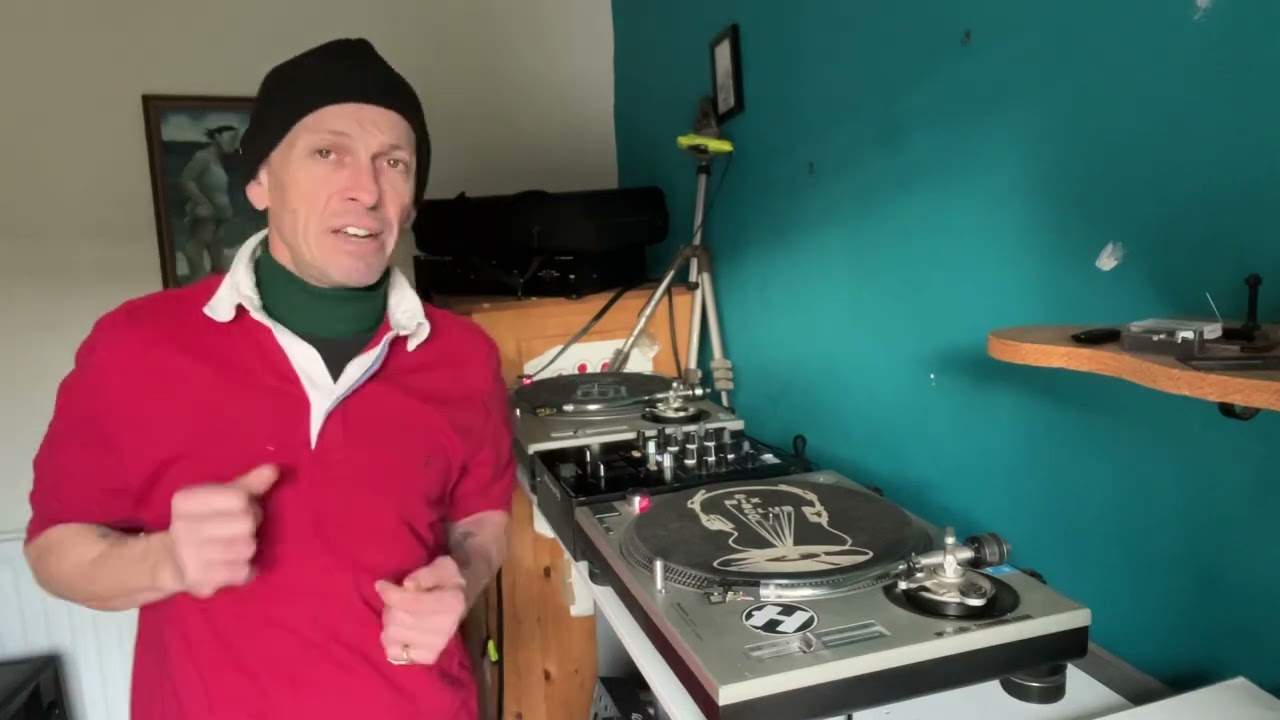
Stop there. It was... It was that first opening. It was... It was that first, like... Get it out. How can I word this without... It was the first time you took the vinyl out and played it that it... You had to pull it out because it was the first time you played it with a dust cover that was static and... Sorry. Anyway, right. Okay, sorry. I better stop there, aren't I? Now, today of course we can still use vinyl because we have something like this. This is known as DVS, virtual vinyl. So what is virtual vinyl? Well, it's a piece of vinyl. There it is. This is from Pioneer DJ. This is for their record box. It's called Control Vinyl and it's exactly the same. It's a 12-inch and there are grooves but instead of there being music on here
It's like a tone. It's like a... It's a whistle sound. So I don't know the exact workings of how it works but... To be quite honest, I haven't got bloody foggish. But what virtual vinyl does today it will enable the new DJ or someone who does not have any vinyl at all to play vinyl. Not only that of course you can play the virtual vinyl but if you've got the correct kit you can switch from virtual vinyl off your laptop so MP3, laptop, mixer, turntables to taking the virtual vinyl off pressing a few buttons and playing original vinyl. So there you go. So this is my like random kind of thing on vinyl. Now people keep on saying oh it's coming back oh it's dead it's coming back it's dead To be quite honest vinyl has never ever died.
It's always been around and it always will be. So if you are a new DJ and all you've got is a little controller check out some scratch turntablist videos watch people using real vinyl and you will be amazed. Practice and enjoy. Thank you very much.
This transcript was produced automatically from the audio of the video and may contain mistakes.
This video is part of
Related videos
-
WHY Vinyl and WHY Is Now the Time to Go Old School
He admits at the start that this one might annoy people, and some of it should be argued with. The practical half is excellent. The claim…