 9:33
Being random on purpose, to get noticed
On YouTube this video is called DJ Mix Tutorial. Be random to get noticed!
What this lesson teaches
An exercise in deliberately abandoning the plan, and it is the natural partner to the lesson before it.
The exercise
Two CDs of the same sort of music, one in each player.
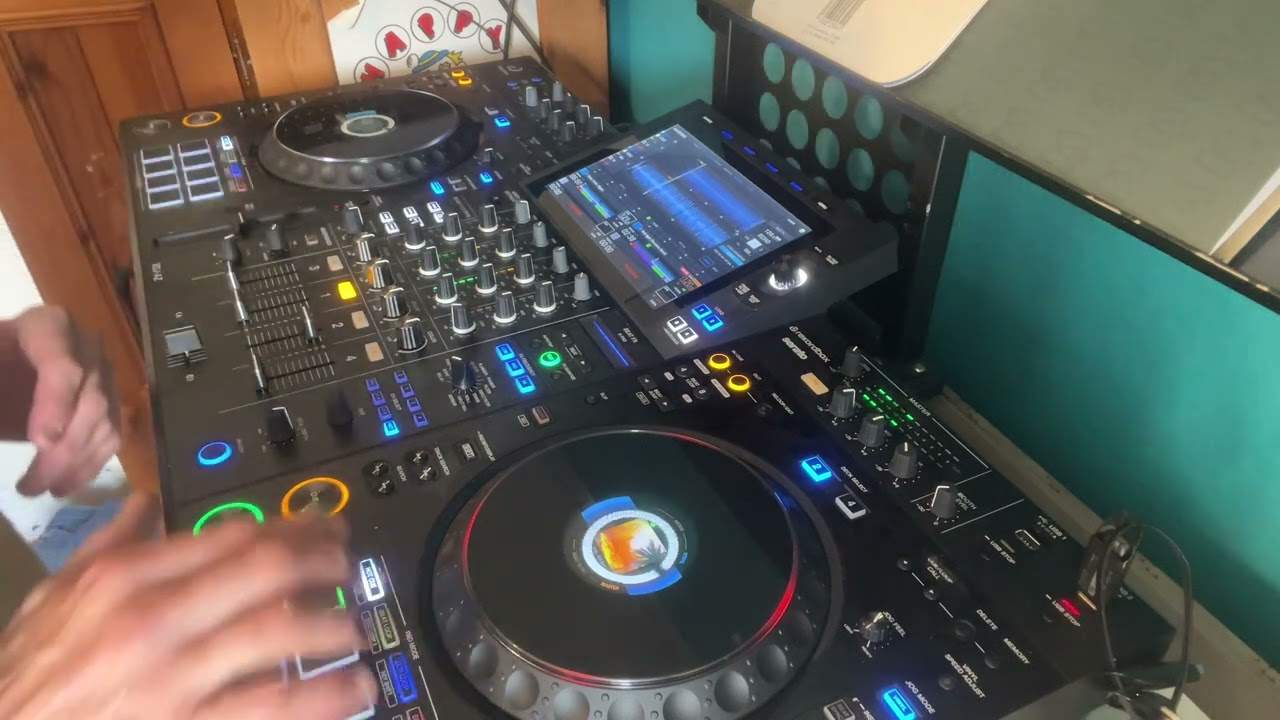
Flick to a track on one. Then flick through the other, listening for something that sounds right against it. Then go further: find a cue point at random and have a mess around.
And cover the readouts, so you cannot see the BPM or anything else. All you have is the sound.
What it is correcting
The habit he names: mix the second track in with the end of the first, play the second, wait for its end, mix the third into it. Root one, every time.
That is the same complaint as the "next level" lesson, approached from the opposite direction. There it was argued against on musical grounds; here it is simply interrupted by making the normal approach impossible.
Why randomness is productive
Because your taste is a filter, and filters exclude things you would have liked.
Left to choose, you will pick combinations resembling ones that worked before. That is sensible and it means you will never discover the pairs you would not have thought of - and those are the ones that make a set sound like nobody else's.
A random cue point in a random track removes the filter for an hour. Most of what comes out is useless. Some of it is not, and the some-of-it-is-not is the entire return.
Why covering the displays matters
Because with numbers visible you will reject pairs on arithmetic before hearing them. Four BPM apart, so no.
With the readouts covered you have to listen, and sometimes the answer is that it works anyway. You can find out whether it is beatmatchable afterwards.
And it is a good way to spend an evening
Which is not nothing. A practice session that is enjoyable gets repeated, and the hours are what make the difference.
Contents of the video
0:01 Another tutorial for you, but this one is on random mixing
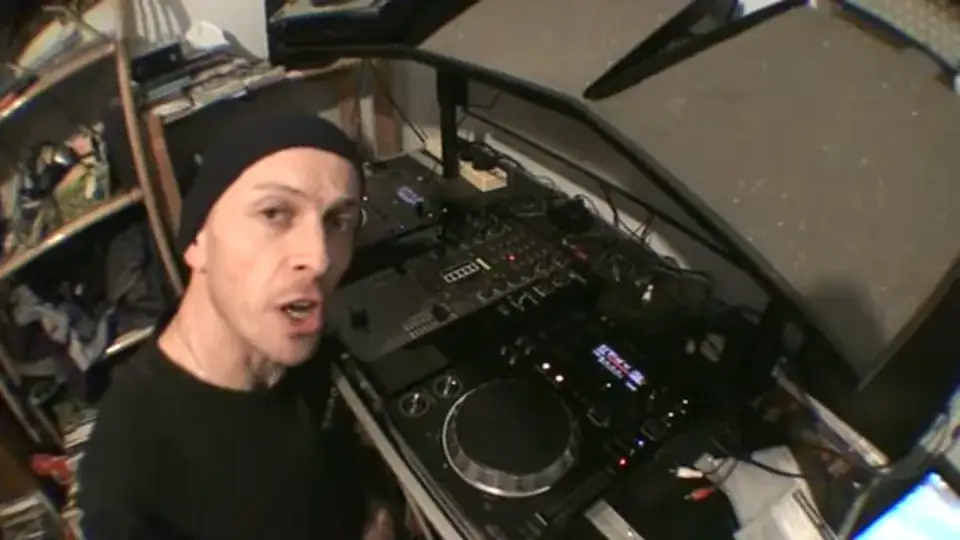
Right guys, another tutorial for you, but this one is on random mixing. Now, this particular video is completely random because, first of all, what I was doing is I just put a CD on in here, one on the other side, and the first thing that I want you to do is to do exactly that. Just get two CDs, preferably the same sort of genre for this. Put one in there, one in there, and just flick to a track on one CD. And then flick through the other tracks on the other CD, and just see what sounds right, what you think sounds right with the one that's playing. And then we go even more random. We just find a cue point and we have a mess around. Now, a lot of people seem to think that it's all random. Now, a lot of people seem to think that you have to mix the second track in with the end of the first track, and then you play the second track, and you wait until the end of the second track, and then you mix the beginning of the third track in with the second track.
In other words, you just do the root... forget it. Be random. And experiment. So, what I'll do here is I'll cover the top of the readouts. So, I can't... I can't see anything. So, all I can hear is... You see, I like that, and I also like this.
1:36 Medium-start electronic sound here, but also it's got that 80s vibe
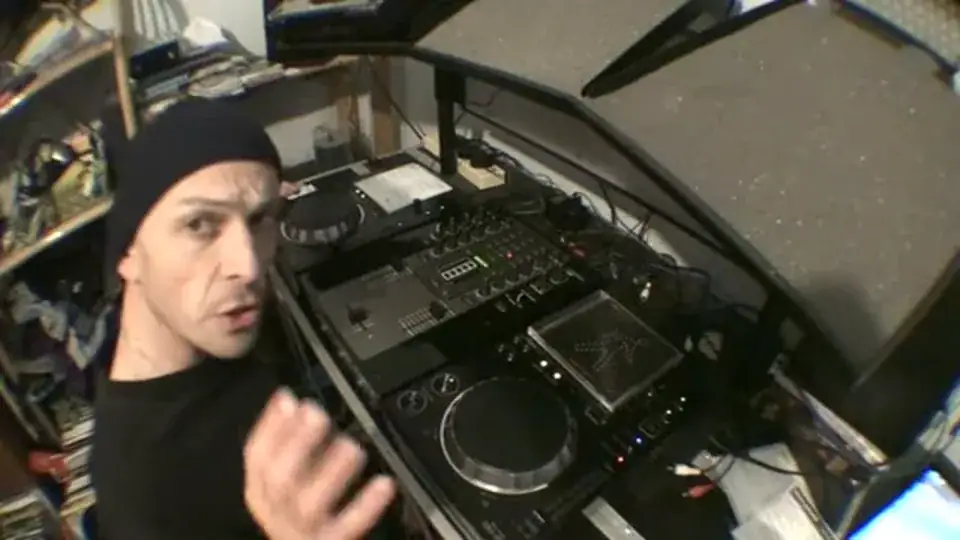
A very sort of electro... well, medium-start electronic sound here, but also it's got that 80s vibe.
Sort of new age type... sort of vibe.
Now, again, first of all, we're delving into hundreds of different realms here, because this guy here does not start on the count of one. Listen. One, two, three, four, one, two... Listen. One, two, three, four, one, two... Sorry, I'll start again. One, two, three, four, one, two, three, four, one, two, three, four, one, two, three... Alright, so it doesn't start on the count of one. So, straight away, we've got a bit of a hurdle. But, if you can actually imagine that... You know, jiggling about in your head, and you try and listen to that sound itself with... With... A beat. Now, again, for a lot of people, that's very, very difficult. But, for some, you pick it up straight away. For others, it's sort of... you play it two, three times, you don't get it.
And then, maybe two or three times after that, you still don't get it. But, maybe you walk away, you make yourself a cup of tea, and you bang your head against a brick wall and go... I know! Do-do-do-do-do-do... Chat-a-dee-chat-a-dee-chat... I'll explain. Start. Listen. Now, if I play this on the one... Two, three, four, one... Listen. Alright, so we've already worked out that those two tracks sound really good together. But also, this is like not on the one. You have to bring it in slightly afterwards. So, the whole idea of this particular tutorial is to show you that messing around with two tracks... And having some sort of randomness about your form of mixing or your style of mixing can take it to the next level.
In other words, you know, don't just think, I've got to play this. Here or there, or I've got to start it here or there. You haven't got to do anything. You don't have to copy someone else. You don't have to be like the top DJ. In fact, here's the irony. It's good to aspire to become like the top DJs to a certain degree. But then again, it's also a very good idea to look at them, watch what they do... But then take into consideration your own style. Because your own style could be better. Maybe it's not as good. But if you incorporate... Incorporate your own style into how you would... How, you know, you want to be up here. You want to be like them. But take your style with you. Don't take their style and forget yours.
Because you will lose your identity. You need to keep it. Right, so, here we go. Listen.
4:46 I've had some sound effects now
Mess around.
I've had some sound effects now. Right. Let's imagine this. Excuse me. I had a track playing here. I let this one play. I don't know. Beginning, middle, end. Doesn't matter. One bar, two bars. You know, where you bring the next track in is entirely up to you. Do not follow anyone else. Yeah, you've got to follow certain things like bars, time and key, etc. But, so I'm playing this one. I mix this one in. Now, we've got a beautiful sound there. Who's to say I might just mess around with that particular sound? All the way through that track. What's stopping me? So, I only use that part of that particular... the track through that track, but what I have to consider is this track is going to finish some time. So we always have to get the next one ready.
So, this is at the beginning of this track here. Now, let's move it on a bit.
6:37 Sorry, I went to track three
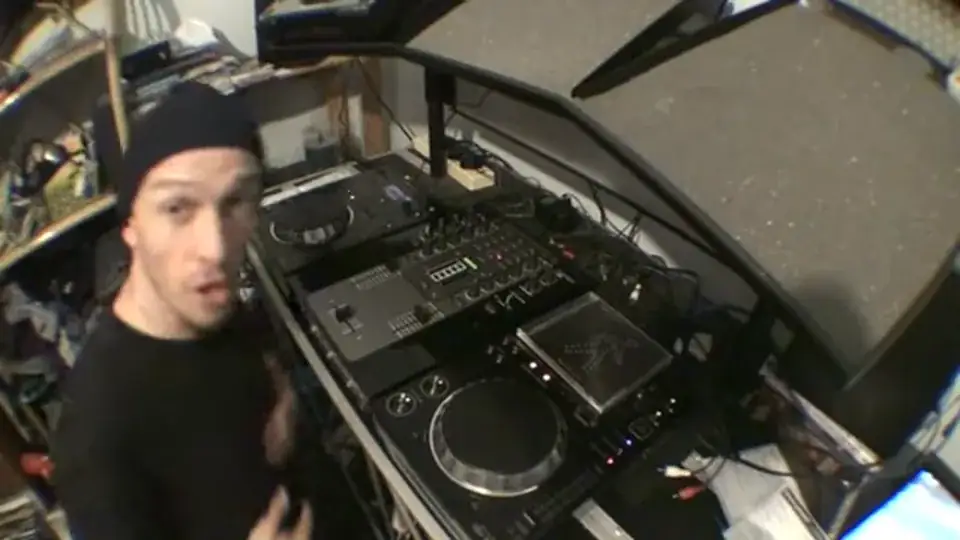
Typical, isn't it?
Sorry, I went to track three.
Now, what I'm doing now, straight away, I'm thinking... Now, bearing in mind your headphones, I'm thinking this one starts, you know...
Maybe I just want to bring you in that... Listen. Come on, break it to me, but feel it, I'm a s**t. Madness all over the place. But, again, bearing in mind, I'm by myself, no one else is around, so you know what? I can do exactly what I want and get away with it. Which is, of course, practising, enjoying, having some fun and messing around. So, what have we learnt from this one here? Here's a box. Imagine that is a cube. There you go. Most people... ...have to concentrate inside the cube continually, because that's where 90% of the DJs are. They're inside this box, because they want to be like 90% of the DJs. But you know what? Possibly, in fact, quite probably, the 10% who are making it out there in the world...
...are the ones who aren't inside here, they're the ones outside the box. Because guess what? That's very small. Around here is rather large. You be like that. Practise and enjoy. There you go. There you go.
This transcript was produced automatically from the audio of the video and may contain mistakes.