 49:03
DJ Mixing Lesson a Trip to London to Meet CD Pool Underground and Club New Tunes June 2017
Contents of the video
0:01 This mixer, we're going to have
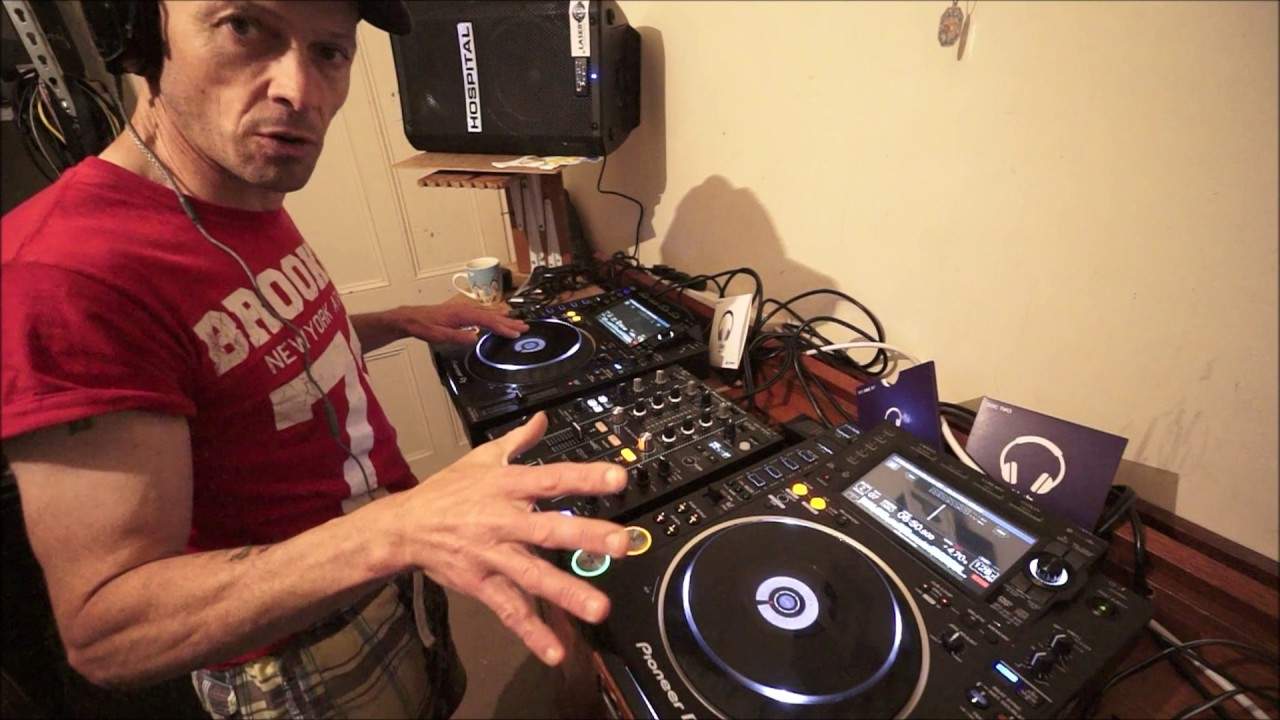
Alright ladies and gentlemen, welcome to another mad video from myself, Jonathan Ellaskins, The DJ Tutor. We're looking at some CDPool tunes for the club releases for June 2017. This one here is track number 1 from disc number 1 and I have in front of me the DJM450. So we're going to have a look at this mixer, we're going to have a little bit of a go with it, give it a run for its money. Also at the end of this video there'll be some clips. A bit of an interview and also a look inside the CD4 HQ in London. So there's going to be a lot going on in this video, it's probably going to be quite a long video as well because I'm also going to be having a look at some of the underground releases for June 2017 as well. So, DJM450, is it a toy? No it isn't. I'm going to get straight to the point here, there's one feature.
I don't like. You're probably thinking, my God, Jonathan doesn't like something on a mixer. It's not a big deal. It isn't a big deal at all. It's just my dislike. It's got a power supply to it. Now, I do personally like just wiring in a mains lead. That's it. The power supply, I'm not too keen on because if you forget the power supply... Then you're stuffed, really. But, of course, you don't forget the power supply, do you? You're not that stupid, unlike me. So, that's the only downside to it. Now, it's not the mixer. The mixer itself is very robust. It's good quality, loads of good features. It's just that bit, which, in a way, has got bugger all to do with the mixer because it's... It's actually outside of the mix, it's got nothing to do with the internal workings. So anyway, very quickly we've got track one here, I'm going to rewind this a little bit. Track one from disc number one, I'm going to bring in track one from disc number two. I'm going to go to the break. Okay, there, bring it in there. 50, I love it. It does, it almost takes away parts of the track. It's a little bit like, um, I don't know, getting a piece of paper.
4:18 Diss number, thumb forefinger, crossfade
I like that a lot. Okay, this is DJ-licious, I Hear You Calling, and we're going to find another tune from track, sorry, from CD number one. So again, with the 450, very similar to the other mixes, cue, We have our effects on the right hand side, and then on the left hand side we have a few more effects. We've got sweep, dub echo, noise and filter. And two rather large knobs there for your filter and for your colour effects on the left hand side, so you can give it a really good twist and a turn. Also they've got the new crossfade feature, the MagVal fader, which is... Very, very smooth. And what they've done I think with the 450 is they've made it. It's almost like it's great for the DJ who likes to just do a nice long transition but also because you have crossfade reverse it's ideal for a turntablist as well and the feel
On this crossfade is amazing. You know, some crossfades, when you do this kind of move, now what I'm doing for the partially sighted as well, I've got my thumb and forefinger and I'm bouncing the crossfade dial in between the thumb and forefinger. Now normally when you do that kind of move, the crossfade would move from one side to the other and that's pretty much it. What's actually happening... It's got its own little movement in there as well, it's bouncing, which means that there's very little friction there. It's a free play, it's just moving naturally, which of course in turn means that if you are a turntablist, you can wang that over and you can do some wonderful crabbing moves. And if you're not a DJ, know they do not have to go to the doctor with crabs.
All fishing for that matter. Right, let's find something. Diss number... Sorry, diss number one. Okay, yeah. Alright, we'll go straight to track number two. No, we won't actually. No, I'm not going to do that. I don't think that'll work. Again, we have to always try to make sure it's harmonically matched. No? Track number seven in diss number one is I went into... I went in one phrase. So in other words, I didn't bother playing the first This is the first part of the track, so if we have a listen. And again, these videos aren't just about showing you the new releases, it's also about a few tips and tricks. Let's have a listen to the beginning of track 7 from the first kick. Okay? What I did is I started just after the first short break. Here. There. Because in Coldplay, some think just like. So...
8:09 I'm not going to play that one, sorry
Okay, let's find something from disc number two. Track 3 is good. Let's make you mine. I'm not going to play that one, sorry. Okay, let's have a look. Yeah, track 7. When you're mixing harmonically, you've just got to like, it's almost as if you just listen to one tiny part of the track and you go, no. No, no, no, no, no, actually, no, no, no, not the different tracks. Oh, yes, this one here. Yeah. I'm going to go back a little bit, so about five seconds there. Alright, I'm going to try it now. I haven't done this transition before, but I've got a feeling it'll probably work. So, I'm on track number seven, Chainsmokers Coldplay's Something Just Like. I'm at the last 53 seconds of set. Trim up to right on deck, watch my levels. I'm coming in disc two. Find something else from disc number one. This side we have track seven, Almost Mine.
11:36 This is Make It Hot, the club mix
This is Make It Hot, the club mix. Right, okay. Now again, this is the wonderful thing about doing mixes, is that you can, pay attention, this is really important, you can have a track playing on the left hand side and you could be listening to a track on the right hand side and think, it's not going to work, it just isn't right. But that's possibly because you are listening to the beginning of the track on the left-hand side and the beginning of the track on the right-hand side. Whereas, if you let the track on the left-hand side play to the middle and then you listened to the beginning of the track on the right-hand side, you may think that'll work there, but it didn't work where you listened to them at the beginning.
So, what I'm trying to say here is sometimes you can be listening to a track on your headphones and you're listening to the track that's playing through the PA system and you think, nah, it's not going to work, there's something wrong. But then if you listened to the track through the PA later on and then listened to the one that you're listening to through the headphones, you may find that, what a great point to bring it in. Testing the water, it's trial and error. And also, very important, in fact, the pinnacle of importancy, it's knowing your tunes. So, let's go back a little bit. I'm going to form a loop here now. Not there. Not there. You'll see what I mean. One, two, three, four. One, two, three, four.
Also, I'm going to put a link to my Facebook page Thursday. Tomorrow's Friday. And at the moment, quite close to the top of my page, you should see some info on how you potentially can get a whole bunch of CDs from CDPool for free. The only criteria is that you have to be living in Europe and the competition will finish by midday GMT this Friday. This video hasn't been set up, oh I'm in the red there, I need to move down. It's like, my shit's random mate. Too slow maybe.
21:06 Couple of clips from the CDs
Also, I mean, I say this every time, but there's always new people watching these videos, alright? I show you a couple of clips from the CDs, but if you're interested in listening to all the tracks, go to the website, go to the relevant page, and there'll be a soundbite on each of the tracks. So you can have a listen to all of them, at your leisure. Bit of a test. Keep track going here, track four, this is number one, two, sorry. A bit of soul, but also what's slamming bass lines, that sort of grimy kind of oomph, then Lowstepper is a producer to look out to. By the way, I salute you my friend. Anyone knows Lowstepper? Tell him. About this video, so we can laugh at it. No, but, man, you're a genius at what you do. You're like the new version of Kerry Chaos Chandler with some more bass. Yeah. Track 7, disc number 2, is of course The Underground for June 2017. Now, the video hasn't stopped yet because I was at the CD4 HQ yesterday and the day before, had a nice chat with everyone, and the rest of the video is a little bit of an insight
28:43 New CDs there, all bare, all the single discs, double discs, all aroun
There is a lot more that happens than you expect that goes on. There are people busily working to make sure you get the tunes defined. I'm going to finish off with practice and enjoy, and let's go and have a look. And also don't forget, go and check out their Facebook page, and also my Facebook page, because you could be in with getting some... Ladies and gentlemen, we're at the CDpool HQ and I am with... Sean. Sean. And Scott. And Scott. Right, Sean, so we are down in the depths of CDpool and I believe this is where you keep all the stock, is that right? Yes, so we have some, so we have all the brand new stuff, so any... New CDs there, all bare, all the single discs, double discs, all around there. Then you've got going all the way back, back 2000 and... So you've got 16 here, 14 here, 14 down there, these loads of even older ones down there, 2010. And then these go all the way back, you've got all your classics and your essentials down here, and then some of these go way back, that's our 10th issue of Old Club Beats.
Yeah, second edition there. So yeah, we have stock of quite a lot. And can people still buy those? So all of these ones... Sorry, can people still buy the club beats and whatnot? These, I mean, we can probably work out some sort of deal on some of them, but we don't have them all kept on our website at the moment. Right. Just because, you know, they're going back 20 years, some of them. Sure, yeah. Got you. Okay, and you were about to say? No, no, that's it. No, that's it. Okay, so, right. Now we will broach the subject later on in this video, but you do good selections of like old school tunes, don't you? Like the classics. Yes, so we have our, yeah, the classics collection and I can grab you a pile of one here. Yeah, good. We'll have a look. And again, if you are, excuse me, if you're a new DJ or for that matter even if you're an old DJ and you want to let's say get...
A good selection of old school tunes in one place. Then, something like this. So we have three different club beats collections. So you've got all your track listings here. But then, discs after discs after discs. Okay, let's stop there, let's have a look. Okay, Coonle Abraham's Music is the Answer. Absolute track. Bjork, Some Crazy Woman from Iceland, I believe. Leffield. Tom Novy, I Rock, FBI Project, Rich in Paradise. I mean, what an absolute classic. Jamara Choir as well. He's coming back in now. De La Soul, Break Dawn, Funky Green Dogs. I remember one of their tunes, Fired Up, that was very good. Prince of the Revolution is all pop life, like it. Laurel, Mellow Mellow. So something like that, Laurel, is a very sort of like old school 70s tune and that sample...
Bam, bam, bam. That's been sampled so many times. So this is what you can expect to get on the Classic Series. And how many folders are there in the entire series? So within the Classics, there is three different folders. Okay. And then we also have our Essentials, which is basically everything you'd need for a wedding, parties, all those kind of things. There's four different collections of them. Okay. So they're available individually or as a set-through. Okay, let me clarify as well. The latest CDs you do, you know, the Dance, the Urban... The club and the global. They're only available for people in the UK or Europe, but can anyone around the world purchase those box sets? I'd have to check on that, but no. No, it's Europe as well. It is only Europe as well, fine. Alright, I just needed to make sure we understand that. Alright guys, let's have a look in here. I believe this is where some of the mastering is done, is that right?
32:45 We tidy up all the audio because not everything is perfect
Yes. Alright, can you, because there are going to be people who watch this video who the only thing they know about the word mastering would be master as in someone at school. So can you explain what mastering is? It's kind of like Jamie and Andy, our label managers, are kind of working away all the time. You know, talking to labels, getting masters and permission to use it. But once they have all of that, we kind of have to put it into a final kind of finished product. Right. So it goes through our kind of mastering process which is taking all those tunes for a disc, downloading them from the server which is how we communicate with the label, not the labels, the label managers. Yeah. And then we kind of put it all together into a track list. We tidy up all the audio because not everything is perfect. Some have a bit of silence on the end. Obviously, we don't want DJs kind of playing, you know, wasting their time with that. Even more importantly, silence at the beginning if they're trying to beatmatch. Yeah, you want to like cue it in and it's back there. And if it's got like 5-10 seconds of silence on the start, it's...
Yeah, yeah. So really it's... The equivalent, I suppose, if someone watching this now has got Serato or Traktor and when you look at your laptop you've got those squiggly wavy lines, that's what you look at as well, isn't it? Yeah, it is, yeah. And it's also because some of the volumes from one Traktor to the next can be completely different and we want to make sure it's consistent across the discs so you're not having to change things constantly. Got you, got you. Okay, cool. On the whole though, everything is usually pretty tight. Yeah, yeah, no, it is. The liberals are very good at... So, what can we have a look? There's a couple of tracks in that folder. Let's have a look at the Jack Wins track. Like I say, it's not too interesting because most of the stuff, you know, the guys that make these tunes are pretty on it. And, you know, look at this guy. Super tight at the start. We don't have to touch this. And then just a really great fade out on the end already so there's no messing about there.
Yeah. So something like that we won't touch at all. But one of the things that we do kind of really get into the nuts and bolts down here is the expletive editing for the mobile DJ pack, you know, the radio stuff. And that's because we always try and attain the clean master. Yeah. But sometimes that's not always our version of clean. You know, the labels, they're a bit more loose with the... So there may be like a shit or something in there which wouldn't be that good for Jimmy's 8th birthday party. And most of the time it's just drug references, not street names and that kind of stuff. So would you edit that out or would you cut it out or would you overdub it with something? Alright, let's say for example you've got shit in the audio, how would you get rid of that?
Pretty much all the time we will spend most of our time trying to actually talk to the label and attain a totally clean master. That's what we spend most of the time doing, but there are times when that's not always possible. When that does happen, a clean master doesn't exist. So we do have to go in there. There's a few techniques that we use to hide it. The same kind of things that the radio stations do, because we're always in the same position as them. They'll be getting things and they'll be like, oh, this is not good for radio play. And the radio stations, they do the little reverses. Sometimes if it's clean, you can cut it out clean. But yeah, we do a few different things. Sometimes we just splice over. You just do a repeat. So for a lot of artists these days that are...
36:48 As well, what do you do
I've had a chat with the powers that be. And very soon there could be some tutorials on mastering from here as well. But enough said at the moment, alright? Alright, gentlemen, thank you very much, it's been very interesting. Thank you very much indeed. You get your safe. Right, what's your name sir? My name is Jamie Topham. And you are part of CDPool, so just... Explain as well, what do you do for CDPool? Right, so I'm a label manager and I compile four of the discs. Well, I do three and I co-compile one with the other label manager, Andy Wetson. I do the Urban, Underground and the Global discs and I co-compile the Club discs. Nice one. Alright, so... Alright, let me just... I'm going to sit over here because people know me, my sort of footage is like pretty random anyway. So, a bit of history about you, like, because...
You know, you're a bit of an old-timer like me, been in the industry for quite a while. Where did you start? What happened? Okay, I got myself into music early age. You know, my mum and dad loved their music, my dad loved his jazz, and I lived in North London. Yeah. I was lucky enough to be living close to a club called The Royalty, and we used to have some great DJs there like Froggy and Chris Hill and Greg Edwards and Jeff Young, and we used to go there a lot, and I think it kind of... I started to work in circles, working in clubs as well as mobile DJing and then getting connections with some record label people. So my first proper job in the UK Music industry was working for the UK office of Sleeping Bag Records. Right, I remember that label. Which was the hip-hop kind of house label from New York. And shortly after that I started contributing to Blues and Soul magazine. And that lasted on and off for about 13 years. Did you do anything with Record Mirror?
No, I never worked with records. I used to send lots of charts to Record Mirror, my DJ top 20s. As we all did, but never had anything back. Yeah, so then I kind of came out of the music a little bit for a while and then went back and worked for Arista Records in 1996 and we had a promo label called Word of Mouth which used to do a lot of the US black music labels so Arista's kind of... The DJ Tutor has been working with many artists including Donnell Jones, Puff Daddy, Whitney Houston and TLC. Until 2005, which became Sony BMG, and I was still doing club promotions, working labels like New Life and Deconstruction. So that was that, and now I've become more or less a sole trader, independent sort of consultant, and in 2006 I started working for CDPool. Yeah, and you enjoy it, yeah? I love it, I think it's good, I've kept my hand in with a lot of my DJ kind of...
...associates that I've built up over the years. I still do odd events for... I do a big charity event in North London each year called Summer Solstice. DJ tutorial by Ellaskins, For a new DJ, in the industry as we are today, what would they be? To maybe get the new DJ instated, maybe get them a little bit more recognition, you know, what sort of information would you give them? It's tough, isn't it? It is tough. It is tough. It's tough to stand out. I'd just do something that would make you stand out, that little bit. It could be anything. It could be how you, when you play your sets, it could be something like that. It could be something how you portray yourself, when you're branding yourself.
41:20 Sometimes I think the softly, softly approach works
As a DJ, as an up-and-coming DJ, I wouldn't try to over-impress, if you know what I mean. Sometimes I think the softly, softly approach works. Certainly if you're trying to get a hook in with sort of the higher level of the UK music industry, I think there's a lot of egos going on. You know, all DJs have a lot of testosterone. There is a lot of testosterone. Yeah, yeah. Well, I think, you know, it's an industry that you're... It's an entertainment industry, you know, at the end of the day. And you're in it to provide that entertainment, to give people a good time, you know, and it's not really always about the DJ themselves. So you have to kind of have that all encapsulating kind of level to it.
I think, you know, nurture the skills that you're best at. So whether that's if you're a mixed DJ, whether you're a personality DJ, you know, but you still have to have a certain level of knowledge about the music you're playing. Of course, yeah. So it's basics really, but it's just something, just makes you stand out from the crowd. To be different. Yeah, to be different. To be different. If I could tell you... Because it works for different people. Everything works for different people. If you're more of a serious person and you study things a bit more, then maybe that's the way you go down. If you're a little bit more open-minded or you're a funny guy or a funny girl, use that. Use your strengths that you have. You mentioned name drop now, Jeff Young. Very quickly, if you're not familiar with Jeff Young.
Most DJs now from the past over 20 years will know Pete Tong, but prior to Pete Tong there was a guy called Jeff Young and he took over from Robbie Vincent who started off on Radio 1 doing, what was it called, If It Moves Funk It. That's right. Thank you for watching. Tell me if I'm right or wrong here. He was asked to do a more dancey show but he refused, is that right? I think that's correct, yes. Yeah, he refused and then so he stopped going on Radio 1 and then Jeff Young took over. So Jeff Young really, and I'm very sure this is correct, was the first DJ to do a proper dance show on Radio 1 which was like towards the latter part of the 80s. He lasted for a couple of years. Three years, I think. Three years, right. And I remember his jingle. He had the Mary Jane Girls. All night young, big beat show. That's right. It was amazing. But you mentioned Geoff Young. Did you actually work with him? Well, I have worked with Geoff. He was obviously one of those, the soul mafia DJs from back in the day. And I've been fortunate to... And I know Geoff quite well now and he's a lovely guy despite supporting Chelsea. He's still a nice guy.
45:08 Yeah, well, nothing's changed
I don't do full harmony. But I first met him, strangely enough, in Wales, in Swansea. Did he eventually become an AR person or something like that? Yes, yeah, Phonogram and MCA, I think. He told me it was just after he handed that show over to Pete Tom. Right. He was basically getting, which is obviously in the days of vinyl. Yeah. And he was getting probably that much sent to him. I did a show, a radio show, dance show for ten years and I mean I used to get maybe in between five and 15-12 inch every week. And I'll be honest with you, 14 of them were shit. Yeah, well, nothing's changed. It's just more digitally now. So yeah, I have worked with Jeff and he ended up working more on the sort of production and mastering side of things. Because certainly when I worked at BMG we did a lot of work with him, sort of remastering and reproduction stuff.
So yeah, and I still see Jeff to this day because he's a DJ at the event I mentioned earlier. Yeah, nice. Well again, we're at CDPool. Tell us a little bit more maybe about CDPool. Again... The compiling of the CDs, you know, what happens? You know, for example, do you have people just turn up with loads of music and say, put this on the dance or put this on the... For example, you do global. I do global, yes. So, right. So let's imagine now we're at day one, the beginning of the month. How do you start compiling that global twin CD? I get music sent to me, obviously digitally now. I may get the odd sort of CD through the post, but it's generally digitally through a lot of the well-known services that you have out there. Obviously I'm on a few specialists and a few tastemaker lists from labels directly. So I start to build up, as soon as I finish a disc I'll be starting to build up the following months and maybe the subsequent months because sometimes I get stuff.
2-3 months ahead of release and obviously we have to play the same. To the same plans as the label. Yeah, so they would specify you can have this CD or this track but it must not be released. Yeah, certainly with pre-release. We now obviously sometimes feature on the disc tracks that maybe have not quite hit general release but may have an exclusive or not an exclusive but it may have been released on another sort of portal. So we try to be as upfront as we can. So that's how I do it. The DJ Tutor, the DJ Tutor. Great. The last week's always a rush, though. I suppose it's just... Well, you obviously have to get approvals. That's the key. We're not putting on tracks despite all the PPL and PRS licenses you have. I like to build a relationship with labels. It's that trust, isn't it? Yeah, I've worked for a label and I know what it's like and you don't want someone just throwing a curveball at you saying, well...
Thank you John. Nice one, thank you very much. Great.
This transcript was produced automatically from the audio of the video and may contain mistakes.
Related videos
-
How to Get a Better Fee for Your Mobile DJ Services
He disclaims it as not financial advice and notes that everything depends on where you are. Taken as a checklist of what justifies a higher…