 18:29
DJ Questions Answered Video 2 Week One January 2023
Contents of the video
0:00 This is video number two on DJ related questions answered
Right, ladies and gentlemen, this is video number two on DJ related questions answered. Now again, previously I did video number one, and of course I did the answers to some of the questions. I did video number two, and now this is the answers to some of those questions from video number two, and of course I'm going to do three and four for let's see how long this goes. So I'm going to do this sort of video content once a week. Anyway, let's get on with the first question. Quite a good one, actually. I like it. And it is from, let's have a look, Rutrio, spelt R-U-T-E-Y-O. In the 90s, Sven Vanth had like 16 hour sets and more. I remember right in the German club Omen. If you do such long sets or even shorter ones, how to choose the right music over the time?
Now, a lot of ways of looking at this. One of them, of course, which is the important one for any DJ out there who's worth their salt. That's an old saying. I think that goes back anyway, is about playing what the crowd wants. Now, again, a lot of people seem to think that you can go home and you compile this wonderful, wicked set. At your leisure, you know, in your bedroom, in your studio, take it out there and play it in front of the crowd and they'll love it. Well, it's highly likely they probably will. But the trouble is, if you compile a set without having the crowd in front of you and they're not digging the vibe halfway through or something goes wrong, then, of course, you may be stuck because now if you are stuck with your set, you can't move away from that set or it's very difficult to.
Whereas if you just do a random set on the fly. Then you're more in tune with the crowd and you can work with that energy. But how do people do such long sets? Well, probably back in the day when they were using vinyl, they did just that. They would play to the crowd. Now again, a 16 hour set, you probably will get certain members of the public who'll stay for the complete duration of that set. But then again, it's more likely that you have maybe people coming and going in that case then. Your set needs to take the people on an even longer journey. So whereas if you're doing an hour, you know, you can maybe sort of start to progress and take people higher and higher within the first 10-15 minutes and then bring them down.
2:46 Instead of like taking
You've got an hour to do that. Whereas a 16 hour set, you may be more likely to just spend one or two hours on a nice sort of stroll in the country. What do I mean by that? Well, instead of like taking. People up euphorically within two or three tracks, you may play seven or eight or 10 or 20 tracks just slowly creeping up and bringing the energy higher and higher. So again, you don't have to wait while you don't have to in case you don't have to. You don't want to wear yourself out. A 16 hour set is a long time to play. So really, in a nutshell, it's about you looking after yourself as a DJ and making sure that. You can stand the test of time. Also, a great idea again, as I'm sure they did in the past, is to make sure you've got a very good selection of music for the style you're playing.
So if needs be, if a certain sort of feel doesn't work, you can flip over and start playing another kind of field. But anyway, I take my hat off to people who can play 16 hour sets because that in itself must be exhausting. Okay? Next one here. There's a couple of questions in a question, but I don't mind it's Numsk, which is spelt N-U-N-S-C. Do you prefer vinyl or newer formats? MP3 wave, et cetera. Well, they've all got the pros and cons. I like vinyl because of the feel, the tactile, the usability, and also the organic sound. Whereas with WAV, you do get a better quality sound and MP3. So putting WAV and MP3 side by side. They are relatively easier to use from an actual physical carrying point of view, because if you look back in the day, if you worked abroad and you were, say, a DJ that had a summer season somewhere, you know, the vinyl you took with you was the vinyl you had.
That was all the music you had, whereas nowadays you could pretty much jump on an aeroplane with, you know, a T-shirt and a pair of shorts. Jeans on, you know, your backpack with all your luggage is in the hold and you turn up, you take out your back pocket, half a dozen thumb drives. That's your entire collection. So it is easier. So basically old school vinyl great for the feel, the rumbly sound, the organic kind of vibe, whereas modern day MP3 and WAV is easy for more so for transportation, which area do you enjoy the most as a DJ? The vinyl era or now? Now, again, I like both really because the vinyl era was great simply because of the sound and the feel and opening the vinyl. Something that was new as it was exciting.
If you got a piece of vinyl, all right, another DJ would have had that vinyl. If you have a white label or a dub plate, it's less likely that other DJs or many DJs have got that. Whereas nowadays an MP3 or some download. It's going to be downloaded 1001 times. You can be rest assured of that. So I hope that's helped there. Okay, so let's have a look.
6:00 Are you able to give an update to the VR DJ scene?
Sam or something like that. Let's have a look. I'm going to go through these. Okay. Yeah, Savvy Symbiont. I think that is. Ella Skins. Are you able to give an update to the VR DJ scene? Is it still a thing that is developing? Yes, it is. And I'm going to be collaborating with them very soon. Again, the company known as Tribe and they've got a virtual DJ set up. And if you don't know about this, you need to go and check it out. It is absolutely amazing. So basically you go through Oculus, you have your virtual reality headset on. You can have your hand controllers, your headset. I think now as well there's a system where you just have to have a headset. You don't even need a computer, a laptop and you run through virtual reality.
Now back in the day two or three years ago when I started working with them, they had a set of CD players, virtual CD players, of course, and a mixer. Now the sky's the limit. There is so much involved. You can live stream to YouTube, to Twitch. You can invite other people. You can invite other people to play with you from anywhere around the world. You can do sessions there. They're also doing tutorials, so I'm going to be doing more tutorials there. They're now working with Pioneer. So you can have a choice of the DJ and Nexus series. Even the 3000s, you can play with them. Now admittedly, you're only using virtual turntables. But if you consider the fact that you're going to be spending, you know, quite a few thousand pounds, euros, dollars on high end Pioneer kits.
7:55 I think was Nick
That's even if you can get it at the moment because of supply chain issues. And then if you go into Tribe, you get to use it for a few dollars and I'm looking forward to using that stuff. Okay. Anyway, I hope that's helped. Right. So let's have a look. So the next one I think was Nick. So go up here. Right. Nick Coletti. Is any work available? Sorry, I'll start again. Is any work available work in the early years of DJing? Example, if you like house music, but the gig is family orientated and wants to hear modern day pop, et cetera, and I think I get the general gist of that question. So back in the day, most DJs love to play dance music. We always did. Of course, you did have the mobile DJ who would only play.
Pop music, and they love playing pop. They didn't want to play sort of underground house or rave or anything like that. But generally again, I've always been a mobile DJ. I've worked in nightclubs as well. But what I found back in the day is that it hasn't really changed. You always used to play popular music then, and you always play popular music now. One of the main differences I found, and please let me know if you agree or disagree with me here, if you're a mobile DJ especially is I'm finding more so now that I don't seem to be playing much modern day pop music because it's not very good. I'll be honest with you. If you go back in the day, say 20, 30 years ago, you'd be playing as a mobile DJ quite a few of the tracks out of the charts because people requested them.
10:30 Jay, we've done that
They wanted to hear them. Whereas now I'm finding there aren't that many good tracks to play. In fact, if you took the chance now and say chose one or two tracks and played them a year from now, people would be wondering why on earth you're playing this rubbish. Maybe I'm being biased, but it doesn't really seem to be the vibe and energy. But sort of going back to the question, what I used to do back in the day is I would tend to to begin with the start of the night, play very charty poppy sort of tracks that were in Vogue at that time you play some old school as well. And then during the latter part of the evening when people have had a few drinks and they've heard all of the Motown, the Northern Soul, your 50s, 60s, 70s, your poppy, your 90s.
Then I would start playing more underground house music because then you sort of got more into a clubby kind of vibe. So hope that helps. Right, Jay, we've done that. Let's have a look, Jay Rags Soul Fiesta. How do DJs get connected to booking agents or companies? It seems like such a secret it is and it isn't. Now there are many levels of DJ booking agencies. The top one is pretty much the cream of the crop where you've got your superstar DJs there. And it always begs the question, how come we always seem to have the same big DJs booked in at the same nightclubs or the same big DJs on the same rotor? It always seems to be like this top ten, 20 DJs. Well, if you just look at pure logic, it's about the slice of the cake.
Now, if you've got a pie and there's ten of you and you know that if you share that pie between the ten of you, then you'll always get a tenth of that pie. But in the other room, there's another 20 or 30 people who desperately want a piece of that pie. But the trouble is, if you let them in, you've now got less of that pie and you don't want to share it. You want to keep it yourselves. That's how the top part of the DJ industry works. That's pretty much it. But how do you get in to the other side? So, for example, you're a mobile DJ. You want to get more gigs. It's very simple. Just look online and search for agencies or DJ or entertainment agents, phone them up, say who you are, give them an idea of what you do,
13:16 See the venue, the client and so on
Send them links to your YouTube videos, maybe your website and so on. And then it's very likely you may get work from them because it's for their best interest to find you work and to get you bookings, because of course they're going to make money from you. They will get their percentage. So basically what will happen is when you work with an agent, the agent will be the middleman or lady and find work for you. It's up to them to do all the contract side for the booking. Find out the fees. See the venue, the client and so on. So all you will do is you'll get a phone call or maybe an email or maybe a letter with the contract from the agent saying this is the date. This is the venue. This is the client. This is the amount you will get.
You turn up, you do the gig and that's it. Okay. And it's pretty much the same with your sort of mid style agents that let's say the sort of agent. We'll book DJs into medium to big nightclubs, et cetera. But this is the key here, guys. This is the big key. They're not going to contact you. It's up to you to contact them and do the research. Okay. And if you don't ask, you don't get so if you don't inquire, if you're sat there in your room and you're one of the world's best bedroom DJs, you're less likely to get found out by just sitting there. And doing nothing. Instead, why don't you put your name out there? Contact the agents and then you never know they could go. Yeah, we like what you sound like. Just send us the details and we'll get you some work.
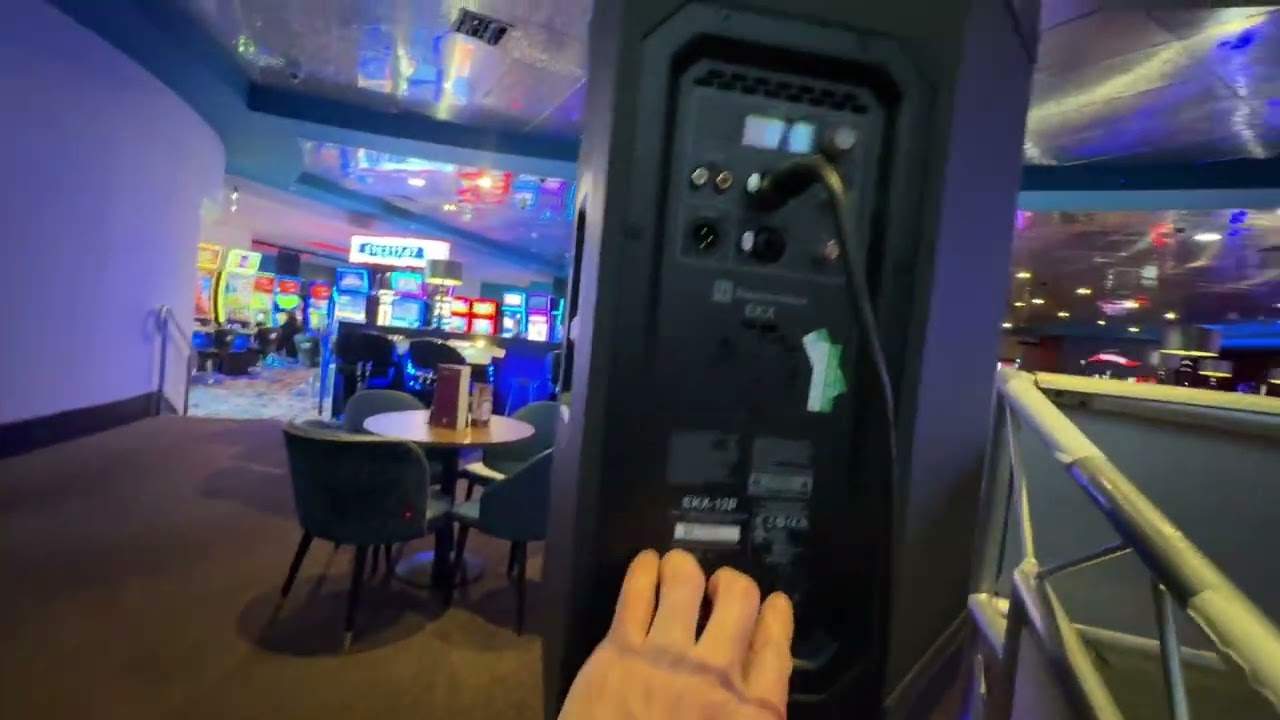
Okay, so let's have a look. I think there was one more Jimmy Hill. Is it possible to mount moving heads horizontally on the side of my speaker stands or will it damage the motor? Thanks. Okay. Now all right, bit of a random sort of question here, but it's all relevant. Now moving heads are made to sit horizontally vertically at an angle any direction really, but I would have thought logically if you're going to have them head height facing down, they're going to work relatively well. If you're going to have them on the floor facing up, they're going to work relatively well. If you start having them say horizontally, I don't know, just maybe if you fit them on the side of a speaker, there could be a little bit more wear over time.
15:46 Really what we've got here is this conundrum
Now again, a lot of it is to do with the quality of the moving head. I mean, I think it's the same with anything in life. You can go and buy a brand new car for two or 3000. Well, maybe three or £4000 euros a dollar small car, by the way, very, very small car. But maybe it's not going to last as long as something where you spend a great deal of money. But again, the trouble is it's like anything. The more money you spend when it goes wrong, the more you have to spend to get it fixed. So really what we've got here is this conundrum. Do you buy cheap product knowing that it's not going to be as good a quality? It's not going to last as long as the high end stuff. But if it goes wrong within the year, then you have your legal right to go and take it back to where you bought it from.
They either fix it or exchange it within 12 months. Alternatively, if it's something that's very expensive, theoretically, it should last for a lot longer. But if it does break after a certain amount of time or something goes wrong and it's out of that guarantee, then it's highly likely it's going to cost you more to get it fixed. Okay. Now, personally, with moving heads, I'd make sure they're either head height facing down or on the floor facing up. If I'm going to put them side to side, I don't think I would want to do that. But also fitting them again. I'll finish this on, I suppose, the key here, fitting them on speakers or speaker stands could be a bit iffy because the thing is, with the moving head, it moves and if it's
Fitted on something that moves as well, then the movement of the moving head is going to move where it's fitted and you're going to have a counter action of movements here that's not good because any moving head, as soon as you fit it onto something that has got to be rock solid. That's the key here. If that moves, then when the moving head moves and it moves whatever it's sat on, you're not going to get the true movement of the moving head. And also it's going to wear away at the motors a lot quicker. Now, I hope that does make sense as well. But again, you've just got to work on pure logic here anyway. I hope that's been a help. Again, this is video number two. Thank you for all the questions and I will do a video three next week that will be
Sending some more questions and again, these videos should be taken for entertainment purposes only or I don't take anything I've said in this video as absolute godsend. Stay on. All right, I'm no expert. All I'm doing is trying to give a bit of advice. Practice and enjoy. Thank you.
This transcript was produced automatically from the audio of the video and may contain mistakes.
Related videos
-
How to Get a Better Fee for Your Mobile DJ Services
He disclaims it as not financial advice and notes that everything depends on where you are. Taken as a checklist of what justifies a higher…