13:58
DJ Tutorial on Keeping Your Mix Organic BY Ellaskins the DJ Tutor
Contents of the video
0:00 Another demonstration stroke tutorial on getting that smooth mix, smoo
All right, ladies and gentlemen, another demonstration stroke tutorial on getting that smooth mix, smooth transition. Before we go into the demonstration, I want to talk to you a little bit about how you need to set up your PA system or your monitor system for your room. Now, first and foremost, you don't have to have huge, massive speakers. Secondly, you don't have to have the best quality in the world. But it is important to maybe invest in something that has got a bit of a name and will work correctly, but will also sound good because when you are putting together your mix, the last thing you want is to have a boxy sound. You don't really want to hear something that sounds as though it's coming from a cardboard box.
That used to hold baked beans. It's not really a good idea. Another way of looking at it, if you're going to invest in good quality kit, so let's say you get good headphones, you get a good mixer or controller, you get a top of the range laptop or MacBook Pro and you've got good quality XLR cables and a good amplifier, what's the bloody point then in thinking, well, I haven't got much more money now, I just get some really cheap monitor speakers. You know that you normally say would plug into a cheap PC because you're defeating the object of spending all that money on the good kit and then ending up with the crap. You know, if you're going to start good, you've got to end up good. If you're going to start medium, then think about it. You know, all right. Yes, it's still good idea to get good speakers, but it's a chain, isn't it? The it's the weakest link. You're only as good as the weakest link. So if you do, it's
2:23 On the walls, haven't you?
You invest not so much money in, you know, rubbish speakers, then just well actually simple to doing it. You've got to look at the end product. Well, that's the thing that matters. No. Also, I did a Skype lesson a while ago and while the chap was just poking the camera around, I was trying to make note of where the kit is and whatnot. And the first thing I said to him won't mention any names, but I said, you've got your monitors on the walls, haven't you? He said, yes. I said, well, look, that's silly. That's stupid. It's not stupid. I mean, it's just it's not a good idea because what's happening is when you're having your mix, when you're doing your mix, you need the speakers not as close as possible, but you need them relatively close. Why? Well, firstly, you don't want to get any echo because believe it or not, even if your speakers are four or five meters away from you, there will be a tiny, tiny amount of delay. So when
You're doing that fine tune on a mix, you've got your headphone here, you've got your headphone on your ear and you're listening to the other, to the mix, to the track that's playing. There will be a very, very tiny bit of delay that could possibly be heard in the end mix. So two facts or two key points. One is try and make sure that the speakers are, I would say, rule of thumb within arm's distance from you. If you can touch them, then fine. The other one is to make sure that they're about head height. So you can see I've got this cab. It doesn't have to be as big as that. Believe me. I mean, the way I see it is you can turn big speakers up, but you can't turn little. Sorry, I'll start again. You could. Yeah, you can turn big PA. Sorry, you can turn. You can turn a big PA. I shouldn't have done that. You can turn a big PA down, but you can't turn a little PA up. That's what I meant to say. So I've got the speaker here right slap down.
11:16 Volume down cross fade over either way
Bang next to me there. There it is. I like it there. Okay. Now also, I have got it head height, so it's facing me. All right. This speaker over here isn't at the moment. It's just sort of shoved in the corner, but this one here is facing me. Now I've got that at a 45 degree angle, so it is positioned so it is slap bang next to me and all the sound is coming towards me. It's not that way, that way or that way or down that way. It's coming towards me. If you cannot get the speaker, in front of you to the side of you, so it's facing you, then have it positioned at an angle. So if that safe speaker, for example, was a lot smaller and it was on the on savings down here, I would do my very best to make sure that it's angled towards me. I need that bright sound facing me. That is the key. Now also, the closer the PA is to you, the more you can turn it down.
5:10 They will do to begin
The further it is away, the more you seem to tend to turn it up. The more you turn a PA system up, the more the PA system has got to work. Therefore, you could be losing the fidelity of the speaker by turning it up. If you talk to any producer, anyone, I don't care who they are when they do their mix, it's highly likely that they will have the audio at such a good level that you can hear people talk in the room. They want to hear every single sound. The last thing they will do to begin with is turn it up and blast it because they want to hear the mix. They want to hear how they have produced that song. They do not want to just, Oh, I've just produced it. Turn it blasted up. They do that eventually once they've mastered it and you know,
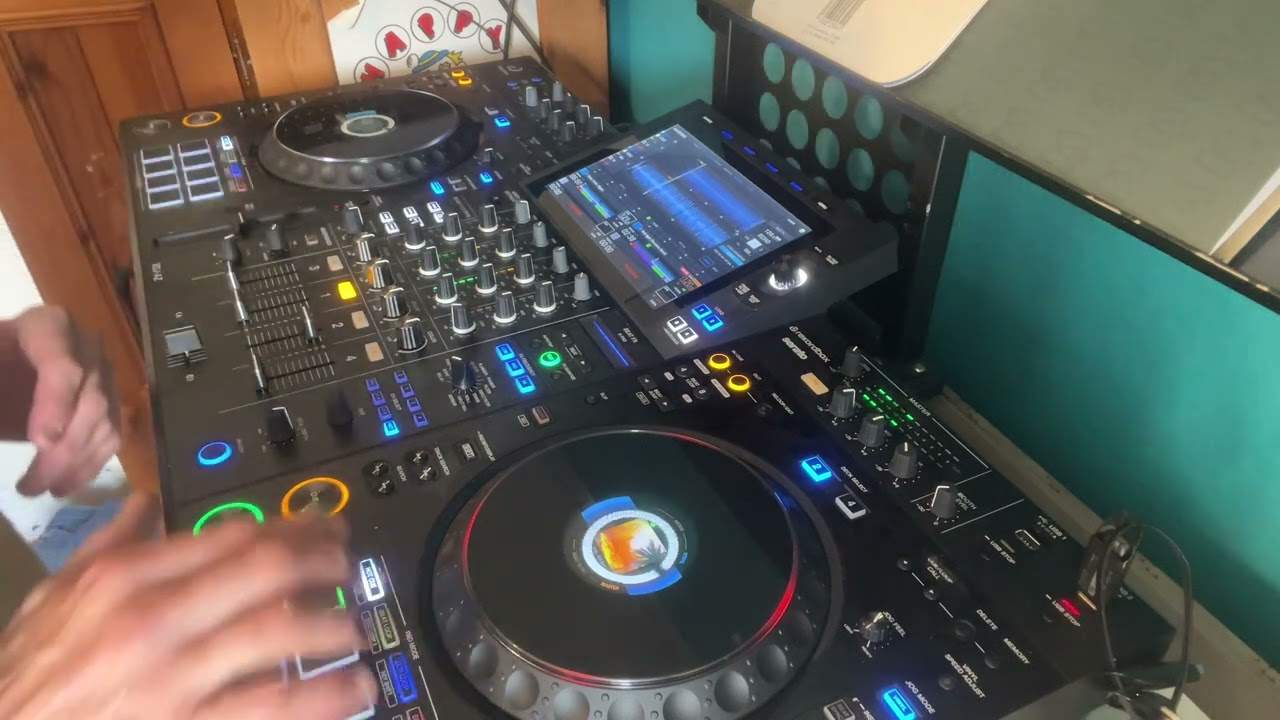
And they know exactly where all the levels should be and whether how high the hi hat should be the beat, the bass line, the melody, the vocals. Then they'll turn it up. But prior to that, they have it relatively low so they can hear everything. The two tunes I'm using by the way is from Karmic Power Records. Mr Lenny Fontana. I love you. Thank you very much. What we're going to do here is we're going to form a transition. I have taken this track here on the right hand side Sister House. It's the original mix. This one on the left is Carl Traeger, a track entitled Reason. It's the brutal mix. So let's have a listen to the beginning of Sister House first. Now one important one, like just a must when doing a transition.
It has to be at the same BPM BPM. It has to some people say well can you mix something that's 120 into 122 BPM? The answer is no, you can't maybe the first kick will be in time, but after that the kicks will slowly go out of time, but then they will come back in time and when they come back in time, listen, to me very important. Don't think it's now in time because it isn't what's happened is it's jump to beat and it will carry on jumping those beats indefinitely till you realize you're out of time. 120 into 120, 122 into 122, 120 into 160, 120 into 240 double or half time works perfectly. 120 into 121 forget it. You're wasting your time right now. What I've done here is I've set a cue point. At this point just after this break.
Okay,
Now can you hear that melody?
That's good. I like that. What I'm going to do is I'm going to isolate the EQ which means that when I turn either the bass mid or and or treble to the zero position on a mixer that is at 7 o'clock. We won't hear any of those sounds. So I'm not going to do just that to them all to the seven o'clock position. Turn it up and we don't hear anything because I put the isolator on. Let's turn the bass up. There you go. Now, the mid
Now the treble bring it down and pause that up. Right? Let's have a listen to the other track. The Carl Trager track Carl Trager track. Okay. Now what I've done is I set a cue point here towards the end of the track. Now this is pretty much the well, I class it as I know say this is the magical minute. Pretty much the last minute in every single dance track. It does of course, depend on the BPM. It's more or less depending on if it the BPM is faster or slower right about the last minute you have got the last 32 bars. So if all of a sudden you're coming towards the last minute and hear a change then it's highly likely that is the last 32 bars are more often than not with dance tracks EDM music you get a defined change after 16 and then after the last 16 finish everyone goes home lights.
That and you go to bed and have a drink of whiskey and stuff.
Hmm, so right? So from a there let's go back a little bit. That is the point where I'm going to bring in the next track. Now this is what I would hope to be a nice smooth kind of transition. And let's just have a listen as well.
9:31 There's still a bass line going on in the background there
There's still a bass line going on in the background there. That's why I needed to have the isolator on on the EQ because we have a bass line going on there. Now, I don't want that bass line to begin with what I want is I just want that melody to slowly come into the mix.
Now at this point if I was to do this transition just bung it straight in we'd have this abrupt bump straight in with this track with the sister house. I don't want that to happen. I want to slowly bring this track in now. The transition itself may only last for 16 bars. It may last for 14 bars. Now,
This is where the genius of yourself comes in because you do not have to bring this in the last 32 bars. Bring it in straight away. So you like a machine in 32 bars out. That's it. What you can do. You can slowly bring it in. It's not teasing the crowd. This is it's almost as though your if you imagine this you're walking to a bar a nightclub and you can hear that melody in the background. You just slowly walking towards it. At your own speed. No one's telling you how fast or slow to walk. You are walking at your own speed. That's what I'm going to do with this transition. No, it's telling me I should bring it in here there. Take it out. Whatever. No, I'm going to do this. So go back. We'll play this one here.
What I'm going to do is just move it back a little bit to about there and press play.
Okay.
Okay. So volume down cross fade over either way. Faders or crossfade doesn't really matter. I prefer personally to use the up faders. So now at this point even prior to the track coming in, you can just press on your cue have a mess around with it. Make sure it's in time. Maybe move the pitch bit more to forward or back. You know, it's about just practicing. This is why you see loads of DJs messing around to begin with. Here we go. I'm going to leave it there.
So I was in control of that. I was the one who decided when to bring the mix in and when to bring the mix out. Now, I would say too many people nowadays are too clinical. The two bloody anal about it's going to be in out in out. Let's go back. Let's go back to the not orgasmic organic style of organic style of mixing how it used to be with vinyl where it was slightly rough around the edges. If it was a chocolate cake, it would it would be a mishmash of chocolate. It would just be all over the place. But you know, once you taste it. It you would just you just melt because it was chocolate. That's how a mix should be. It should be organic. It should be real and it should be natural practice and enjoy. Thank you.
Don't get lost wrong button.
This transcript was produced automatically from the audio of the video and may contain mistakes.