 8:36
DJ You Must Mix in Key This Is the Number One Priority Above All
Contents of the video
0:00 I mean, you know, you've got a whole bunch of tracks
So, why mix in key? What's the point? Why should you mix in key? I mean, you know, you've got a whole bunch of tracks. They're all maybe like Deep House or maybe Psy Trance or maybe Hip Hop and you just love every single one. And you just want to mix them all into each other and just, you just like what's happening with your set. You know, they may be in beat and in phrase and you're thinking, whatever to key mixing. They're not interested in that. Why should I bother? Well, let's go back to the 80s and a DJ playing vinyl. You'd play a piece of vinyl, you'd bring in another one and you'd form some kind of transition. There were many ways of mixing then. You could either mix in time, in beat, in phrase, in key or you could just do some kind of very strange blend with this wish-washy sound in the middle that some people would look at you and have to say, well, what the hell are you doing?
It was a lot difficult then. It was more difficult then because you didn't have something called master tempo or key lock. Now, what that is and that I still swear... To this day is probably the best bit of technology a DJ has got because with master tempo, pretty much the same as key lock, it will keep the key of the track no matter how much you slow it down or speed it up. So for example, if you've got two tracks dip completely different BPM but they seem to be in the same key or keys that work, if you then try to get them to match in beat, you would with an old school say vinyl turntable. They would eventually match in beat because you've matched them using the pitch controls but they quite possibly could be out of key then because one's gone here and the other is going up.
So why is it important to mix in key? What's the big deal? Now, I want you to close your eyes and imagine it seriously, seriously, seriously. Close your eyes. Now, imagine you're out in the country with your family, your friends or just by yourself. You've got your bottle of water. It's a lovely sunny day and you're going for a lovely walk along the hills. These hills are nice flowing hills and you can smell the grass. The birds are tweeting, butterflies all over the place, a bit of a dog barking in the background, trees and just a nice kind of breeze. Now, that journey is going to take you on a nice kind of relaxing journey. Now, let's imagine this. You're now on a different journey. It's a rocky journey and you're climbing and you're falling.
3:04 Let's take that analogy and put that to music
You're going down these crevasses and you're having to climb back up and then eventually you do get on a nice kind of mellow sort of journey as in, you know, a nice kind of pathway but then the pathway dips and falls and you fall on your arse and you... In other words, it's not a very nice experience. Well, let's take that analogy and put that to music. Well, when you're constructing, when you're doing a live mix and you're putting your tunes together, you're going to have a lot of fun. But when you're putting your tunes together and your tunes are in key, that's the first journey. That is the experience the listener is getting, okay? You are giving that experience to the listener because I gave that to you.
I put that into your mind to take you on that journey. You see? Exactly the same. On the other hand, the second journey I took you on is a mix that's not in key because you're playing one track and then the other. Now, think about it. The journey, okay, is you're walking so you're not all of a sudden... You haven't got this huge gap and you can't get to the next place. You're still taking your journey but your journey is making you fall and get up and so it's not a nice experience. Now that is about mixing out of key because music has a vibe. The track, your favourite track gives you a feeling. It gives you a kind of... It's a warm sort of feeling and the whole objective of mixing in key is to find another track that gives that same kind of warm feeling.
And if you can match the two together, then the listener is listening to that one feeling and taking the next feeling, putting it together, joining those two feelings together. Now this is a lot about mixing in key. If you mix out of key, you have one feeling and all of a sudden you bring in the next track with a completely different feeling. Bang! You've fallen flat on your arse and you've gone down a crevasse, all right? Which is not what you want to do. Now there are many ways of mixing in key but the old school DJ from many, many years ago on vinyl, we had to mix using our ears. We had to have some form of musical influence. We had to have this melodic kind of feel like does that tune work with this tune?
5:15 How about the next one?
No. Does the tune that I want to bring in work with the tune that's playing? No, it doesn't. How about the next one? No. How about the next one? Yeah, it sort of does because they matched. It was almost as though there was a nice kind of feeling between those two tunes and that's what you used to have to do, all right? It didn't matter if you were playing one track and it's, oh, I love that one as well, put it on. No, it didn't work that way. You were playing a track and you're, oh, I love that one, but I can't play those because they're not... They're not in key. They will not give the listener this beautiful journey that we want to take them on. So you had to find a track that did continue that beautiful journey.
Now, of course, today we have something called the Camelot Wheel. If you're not familiar with that, go and Google it. It's a circle, same as a clock, and you've got two lots of areas. You've got A and B. A. You have your minor keys, and B. You have your major keys. So to give you an idea of how to use the Camelot Wheel, you can go from A1 to A2, A2 to A3, A3 to A4, and so on. Just go all the way around, but that would be a very boring mix. Another good way is to jump around the Camelot Wheel. For example, you could go, say, from A1 to B1. You could go from B1 to B3. You've got to be a little bit more careful because some of the notes might not match, but it's a good way of jumping around and changing the vibe in a mix.
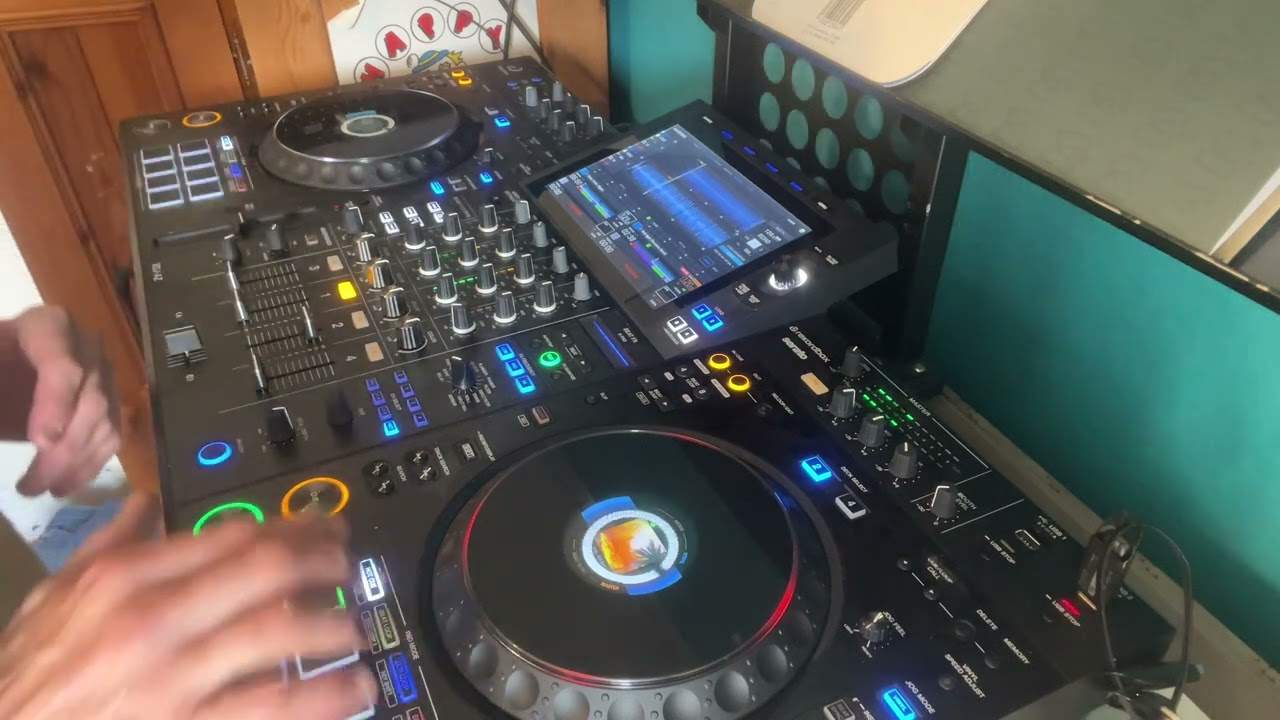
But mixing in key is a must. Now, a lot of programs out there, the likes of Serato, Traktor, Rekordbox, Virtual DJ, will give you the keys of the tracks. So gone are the days now of you having to use your ears. Now a lot of software will help you make the right choice. But, this is still the big but. It's still down to the DJ to choose the right track. Now again, the software can give you 20 tracks in the same key and you'll think you can play 1-2, 2-3, 3-4, 4-5, and so on. But a good DJ... No, a bad DJ would see a list of 20 tracks and just play your 1-2, 2-3, or 3-2, 4-3, and so on. A good DJ, on the other hand, a very good DJ... And this is what I want you to do. A very good DJ would look at those 20 tracks and go
Track 2 actually... Track 5 will go brilliantly into track 2 and track 19 will go just amazingly into track 5 but the middle of track 5. And track 1 is just... It's meant they were like sisters to go into track 19 towards the end. And then... Track 9... No, 7! Track 7 is the one that needs to go into track 1. It's a must because they were made for each other. Also, they're made by the same producer. And so on and so on. That's a good DJ. Alright? So I hope this has been a help and don't forget Mix In Key Practice and enjoy. Namaste.
This transcript was produced automatically from the audio of the video and may contain mistakes.