 12:53
First Mobile Tutor Day October 2009
Contents of the video
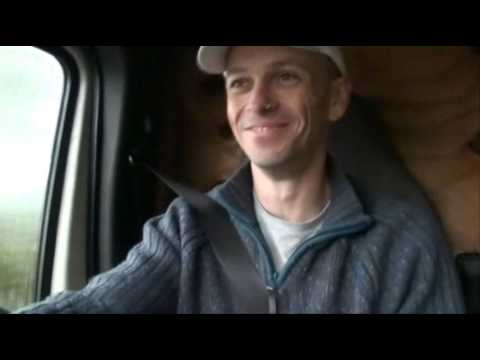
0:05 Here we are in the dodgy van and a slight difference to today
Alright, here we are in the dodgy van and a slight difference to today. It's not a gig log, it's a tutorial log and today possibly personal on the web, who cares? But, right, a lot of people have been asking for me to go and shit large lorry coming towards me in the middle of the road. God for that. A lot of people have been asking me to teach them private lessons etc but shovelies you know. It's a little bit awkward when you live in Japan because it's like a long way and I can't swim. So, on the odd occasion you get someone local. Now, again, I don't know if I'm going to be putting this on the web because the guy might not want me to put this on the web. And if I do put it on the web, I will not give any names or places because I appreciate people's privacy. But what I would like to do, if the person doesn't mind, is just sort of just do a little bit of videoing of what's going on and etc. Maybe talk to them.
Etc, etc. And take it from there. So again, you see a lot of people are saying, oh, you know, are you making any money from this? Well, not a great deal. Make a little bit. But it would be nice to know. So I've got the camera on a Bob the Builder blanket. I'm not kidding. Right. It'd be nice to be able to make a few quid out of this. So in a sense, by doing something like this could enable me to make sort of a certain amount of money Which in turn will enable me to carry on doing what I'm doing, if you get what I mean. Because 99.9% of the videos you see that I've made are free. No one said, here's some money, make me a video. That's it, they're all for free. So this is a way of trying to explain myself, which is a bit silly. Right, I'm going to pause the camera. Right, there we go. It does bring me actually onto a subject of tutorials. And in a sense, life is a lesson. You know, you're born...
And you start to learn. There you are, sucking at your old mummy's titty and thinking, how do I suck? What's the best way of sucking? And then when you're older, you... Right, so tutorials, alright, like I've said before. I mean, you know, it was just the titty thing that got to me. Where was I? Right, OK. Do you do your own tutorials? Now, I've asked many a time. This blanket thing isn't that good, actually. I've asked many a time before, if you do do your own tutorials, then let's see them. And, you know, anything. It could be on anything. It could be on Ableton, it could be on Traktor, it could be on Touch, it could be on a turntable, a CD player, anything. Just do tutorials and put them underneath here, alright? Anyway, right, so I'm going to go to this guy's house. A day of tutorials. He wants to know how to use, not necessarily how to use the gear he's got, but just go over a few points of him.
3:09 We'll see what happens
We'll see what happens. Don't get a dodgy van, because I tell you what, there's more noises in here than you expect in a nightclub. Right, excuse me. Right, here we are. What was your name again, sir? Martin. Martin. Right, like I said, I did ask the gentleman and he said, yeah, it's fine to video, but of course, we're not going to say where he is, where he lives, that kind of stuff, because he doesn't want fan mail, do you? I don't want. Alright, now basically, right, I should have brought me pie trod, but what I'm going to do is, right, I'll leave the camera there. Right, what Maya wants to know is a bit of info, and hopefully it'll help you guys as well, about mixing old school disco and stuff like that. Now we've both realised that old school disco, we haven't got a steady sort of BPM. It fluctuates, doesn't it? Absolutely. So again, with reference to mixing the likes of old school disco, if you imagine you feel it's difficult mixing your house track or your drum and bass track, well imagine timing that by 100.
And then you're halfway there. The reason being is because old school disco, quite often it used real people playing real instruments. And the BPM would fluctuate maybe from let's say if it started at 118 it may be then to 118 and a half, 120, it may go down to 117, maybe even 115 at the instrumental break, up and downs all over the place. So in a sense, the only places to mix the likes of old school disco in is at the instrumental break Or let's say at the outro, now this is what you need to do, is you need to find the instrumental break of the track that is playing and then find the appropriate part of say the track you want to bring in and that part of the track you want to bring in, you need to make sure it works with the instrumental break if you follow. And then again this is where you do need to construct the mix, it's not as easy as
5:33 Track instrumental, speed slow, position
House track, second house track, third track, fourth track, as in play that track, bring the intro with the outro and carry on. What you need to do more so with the likes of old school disco etc is put pen to paper and start to construct your mix, work out right down where to bring the next track in. So for example, the track is playing on that deck over there. You want to bring in this one here. What I would do, I would first of all play that one, get the instrumental break ready. Find a decent place to bring this one in, and then I would at that point start to mix in and find the position of the pitch here in relation to this area where I'm mixing into this track which will be the instrumental break. Now the reason I'm saying that is because the beginning of that track could have been say 120, but the instrumental break could be say 120.5.
So it's slightly faster. So by finding the place, the instrumental break, and mixing this one in, you know that's at 120.5. You know then you've set the pitch according to mixing it in at that point. Also, this particular record, you would have found out the optimum place where this one should be mixed in, in relation to that instrumental break. Alright, now again logically the difference is when you're mixing say the likes of house or drum and bass, you've got more areas to mix the tracks in because they're formatted a lot easier for a DJ who likes mixing. And also more importantly is you're 99% sure if a track starts at 130 BPM it will be 130 BPM all the way through the track. So it's a lot easier. So I'm going to pause the camera now and we'll turn this on in a bit. I've got to finish my cup of tea, which is quite nice actually. Right, where are we? By the way, do you like that? That's brilliant. Right, what a lot of DJs do wrong is they'll speed this one up and they'll think, fantastic, it's in speed, and then they'll slow the pitch down right back to the same position it was, but of course because it's at the same position, it'll just slow back down again.
7:47 After a few seconds, bring this one up
That's at say 120, so all you need to do is after a certain amount of time, and again it's all to do with listening as well, you speed this one up, so it may go to 135, 140. But when you do slow it down, it needs to be above its original position. So then it's exactly, or again by using your ears, using your headphones, there, 130, 120, both in the same position. After a few seconds, bring this one up. It will slowly start to speed up and catch up. As soon as it's caught up, slow it back down, but never in the original position. So do you see what I mean? This is where, like I said, again, a good way of practicing is your right player take out your left RCA and the left player take out your right RCA. So you have literally just got the right sound from the right speaker, left sound from the left speaker.
The same CD, exactly the same CD, and initially for the beginner, keep the pitches dead centre, press play at the same time, and if you press play exactly at the same time, they will work together. The sound will never phase even though you've got the same track because you've only got right through right, left through left. But at that point then, if you slow one down slightly, you will hear a slight echo in the speaker. It won't necessarily be a proper echo but you will hear a difference between the right side and the left side. So, again, if you did something... People can see this. Just move that. That's it. Right, so if I did that, if I moved that down like that and back up to the centre position, what I've done, like in two vehicles, I've all of a sudden... Both vehicles are doing 30 mile an hour, so they're exactly at the same point, start at the same point. All I've done there is I've taken my foot off the accelerator, slowed down to 20...
Put my foot right back on the accelerator again, I'm going to 30 again. But because I've slowed down for those few seconds, I'm now behind the car, but because I've then put my foot back on the accelerator, I'm keeping up with the vehicle, but I'm now behind the vehicle. Do you see what I mean? So I've got a small distance. So by moving it slightly down, I'm now behind the vehicle, bring it back up, I will always be behind the vehicle for that small amount of time. The only way to get back up in speed is to bring it back up and then back down. If I went back down like that and left it there, it would just go good dunk, good dunk, good dunk. It would carry on continually getting slower and slower. The equivalent of taking my foot off the accelerator going from 30 to 20 and I'm still at 20, he's at 30 so the gap will increase by 10 mile an hour etc.
10:03 I'll just pause the camera again
So again, they're together. So this is a very good way of practicing because it means you don't have to have any headphones and slowly but surely your ears will come accustomed to one going slightly slower, slightly faster. So initially, pitch is in the center position like so and press play at the same time. They may be slightly off. If they are slightly off, this is where the jog wheels come in because these guys will slowly increase If you move it clockwise or decrease, if you move it anti-clockwise, the speed of the track. I'll just pause the camera again. See, I told you, there's the Bob the Builder blanket. I'm not using that damn thing again. Right, let's turn that around like that. And I do pay attention to the road. So there you go. What a wonderful family. Full stop. That was a really nice experience and I think the beauty about what I'm doing is that I seem to be attracting very nice people.
Not in that sort of way, but you know what I mean. You've always got your odd tit that watches a video and leaves a silly comment like, Oh, I could do that much better than you. Don't give a monkey's me. I couldn't care less. But what a wonderful family. Great. I didn't stop talking. Poor bloke didn't have a chance. No, he did actually. And I'm going to sit for the next six months on the toilet. The amount of cups of tea I had is untrue. Nice tea, by the way. But anyway, alright, a lot of people said, do you make any money out of what you're doing? And not really, but it has actually made me think if people out there would like me to come around to their houses and give them demos, tutorials, advice, that kind of stuff, then fine, fair enough, at the end of the day, you know, it's free country, the web is there to be used. So I'm going to leave in the description my email address and you can post some of your inquiries if you want to.
Excuse me, I can come along just by myself, help you with your kit. Alternatively, I can bring some of my stuff as well. It could be anything from a twin 19-inch rack mount CD player, set of vinyl turntables, up to an SVM 1000, a couple of DVJs and a bloody screen. So it's your choice. And of course, depending on where you live, I don't think I'd be able to travel to China tomorrow because it's a rather long way and I don't speak Chinese. But if you're like in Wales somewhere or England or Scotland or Ireland and you don't mind sort of footing the bill, we can discuss that. I'll happily come along to your place and we can have a bit of a chinwag and have some fun and I can video it and you can say hi and stuff. So right, I'm going to say practice and enjoy, thank you very much. And don't forget, it's not necessarily all about the music, it's what is inside you and comes from the heart. Practice and enjoy, thank you.
This transcript was produced automatically from the audio of the video and may contain mistakes.





