 10:38
Formula Sound FF2.2L a Look at the 4 Band EQ Low and High Pass Filter Effects
Contents of the video
0:00 This mixer has been designed in collaboration with Function One
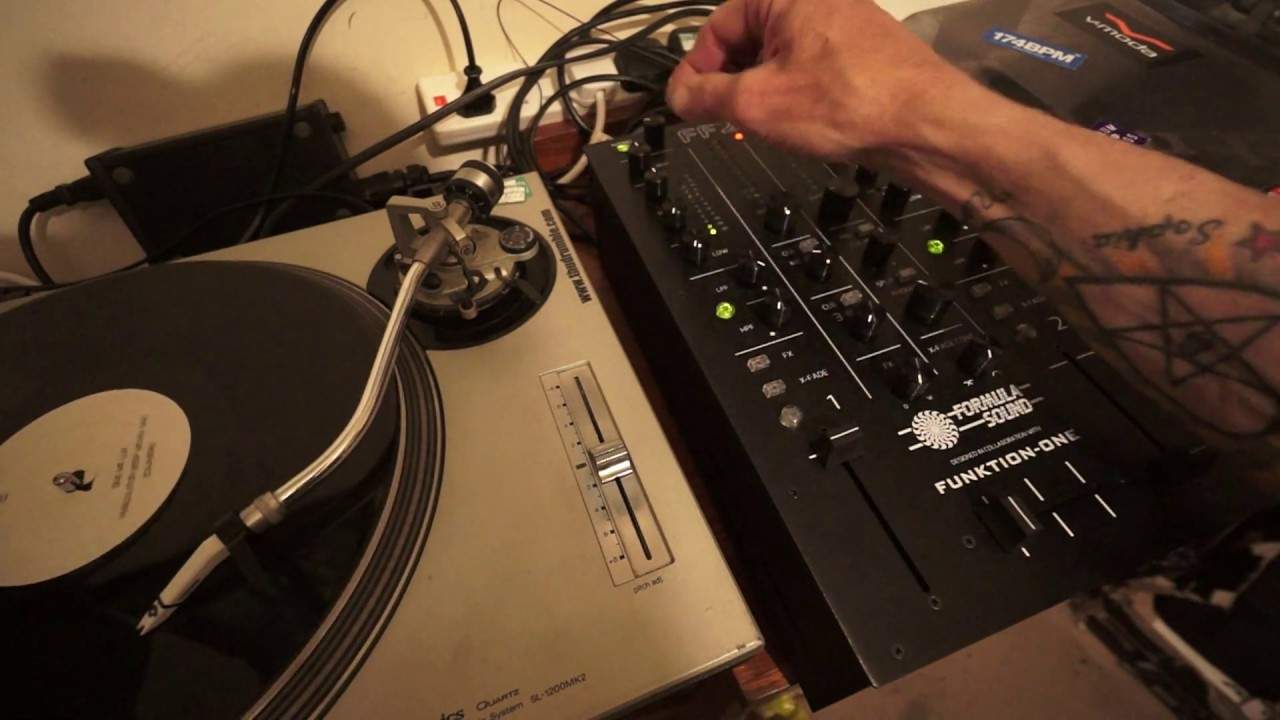
Right, this is my second video on this mixer from a company known as Formula Sound. It's the FF 2.2L. This mixer has been designed in collaboration with Function One. Now, if you're not familiar with Function One, it is one of the premier sound system companies and they don't put their name with anything. So to actually have some form of association with them is... Top, believe me. Alright, so the track I'm going to be using is from Kashmir, a track entitled Perculator Keep Moving Mix and it is a wicked tune. I'm using a Technics SL-1200 Mark II, the daddy of all turntables and I have a Concord cartridge. So very quickly, sort of a first look, first view of this mixer. It looks not... It looks very simple, but it isn't. There is a lot more to this than meets the eye. This has been designed and built in the United Kingdom and it is a premium mixer. Don't think for a second that because it's only two channel, it's not going to have many features. Well, it's got more features than you can imagine.
In this video we're just going to have a look at for example the low and the high pass filter and also something that I think every mixer should have now full stop is a four band EQ. So let's press play. Okay so to engage the low and high pass you've got a nice button there it just feels good you know it's not Something squidgy, it's got a bit of power to it. Press that. Let's have a listen to the low-pass filter. Now the low-pass filter, when not engaged, the dial will be set to 5 o'clock. Anti-clockwise and you get low-pass. Okay, high-pass filter just below that and when that's not in use, that should be set to the 7 o'clock position clockwise to get high-pass. Okay, now low, low-mid, mid-high, call it and high. Above that we have our trim control, volume control for that one channel. And to the left of that we have a button that we will press will light up in green when of course we are using vinyl. So I'm just going to click that again, press that so that's now just poking out of the mixer. It's not in green.
2:56 Again something really important
And you can hear absolutely nothing. I'm going to turn the trim down, press the phono button and there we go. Now again something really important. Why do we have a trim on a mixer? Well we've got a volume control, we've got our EQ. Well the trim there of course is to make sure that if you're using different music sources with say different levels of music input, signal input, On both or any channels, so when you finally go into the mix every single one of those channels input and also then output is exactly the same. So for example you may want to have say a turntable on one side and a CD player heavens forbid with this mixer even though you can use CD on the other side. So what you may find is your mp3 or your CD player or while using WAV or whatever
Maybe slightly or higher, lower than the vinyl. So of course you use the trim to set the level so the levels of both channels are exactly the same and you can see that visually by looking of course at the LEDs. So let's press play again and volume up. So the low, low to mid, mid to high. and hi let's just turn the low up now again it's very difficult uh for you to hear this because you're going to be listening via a small sound system you know across the web so you're not going to get the true definition of the sound but what i like about four band eq is you have you've got more ways of experimenting with the mix because if you wish you can slowly bring in the sound By going from bass, bass mid, mid high and then the high. Using the 4-band EQ is not dissimilar in a way to using the high pass filter and the low pass filter. So for example, if we listen, high pass, high pass filter. Let's do exactly the same now by using the EQ. Moving the low and the low mid down.
5:41 Let's bring the EQ back to the 12 o'clock position
The high-pass filter. Let's bring the EQ back to the 12 o'clock position. Let's have a listen to the low-pass filter. Let's just bring the record back. Low-pass. All we're left is pretty much that sort of subtle sub-bass sound. Let's do the same by using the EQ. Start off with removing the high, bit of the mid and then the mid-low. Now of course... With using the EQ you've got to have about five hands, which unless you're an octopus I don't think you've got much chance. Alternatively of course you can use the high and low pass filter so it's a much easier way of getting that kind of mix into the sound. So of course we have our master volume and believe me there is a lot of headroom in here. I mean if you wanted to you could really push that sound out but again
You have to be very careful with the speaker system that you're using. Make sure you have good speaker management and of course a good sound system. If you're going to invest in something like the FF 2.2L, I'll be honest with you, straight to the point, you're not gonna have a cheap sound system. If you buy this and you have a cheap sound system then I highly recommend you look at your sound system, you remove it to one side and you go and buy something that will complement this mixer. There's no point spending a great deal of money on a fantastic mixer. With great audio signal output, only to be buffered by something that really sounds a bit like a tin can. Okay, so, a small look at the low-pass filter and high-pass filter. Again, stunning feature on the FF 2.2 Alpha Formula sound of course is the 4-band EQ.
7:54 Practice enjoy, headroom means, watts
Very quickly as well, if you're going to use the EQ, it's entirely what you do with it. But of course, you know, user be wary on the sound system. But my sort of advice to everyone is when using your low, mid or low, your low to mid, mid to high and high, by all means go from 12 o'clock anti-clockwise to 7 because you're completely killing, nearly killing should I say, That's part of the equalization bandwidth, let's say. On the other hand, what I wouldn't do is I wouldn't go really above the three o'clock position because that's when you're really going to be cranking out that bass, the mid, mid-high and so on. And there's potential there if you're pushing out a lot of sound, a big signal. And if your system is at full pelt, you know, you could start to damage your speaker system. There are many nightclubs that the sound systems, what they do is they have what's known as headroom. So for example, the sound system may be able to push out 50,000 watts but they might only ever be pushing out a maximum of 30,000 meaning 20,000 headroom. Now you may think
Why have 50 and why waste that 20,000 headroom? Well it means then instead of whacking out 50,000 watts and having nasty sounds and you know really stretching the amps and the speakers you've got 20,000 watts of headroom which means you've got a nice bit of space so if you do get peaks in the music all of a sudden there's a big punch or a hand clap or this crescendo or guitar You're going to hear every single sound instead of it being a mushy kind of sound. So this is really for hi-fi buffs or people, for example, who let's say, I say money to burn. Okay, if you're going to invest in a good sound system, you need to then look at investing in a good mixer, good turntables and so on, alright? Now FF 2.2L, once again it's from Formula Sound. Now if you're watching this video in May 2019 I believe this is not on sale yet but it will be on sale in the very near future so watch out and all I can finish with saying is practice and enjoy there will be a lot more videos on this including some live streams and some vinyl mixing why not practice and enjoy thank you very much
This transcript was produced automatically from the audio of the video and may contain mistakes.





