 4:37
GEMINI GX-1001 Powerd Speaker, Video 2 demonstration
Contents of the video
0:00 It's from a company called Gemini
Alright folks, video number two on this guy here. It's from a company called Gemini. It's known as the GX-1001. It is a powered speaker. You've got a 10 inch speaker there and then you've got a 1.35 compression driver there. That guy will produce the bass and some of the mid sounds. That guy up there will produce the high frequency sounds. Now I've done this video so you don't have to do what I'm going to do. Basically, I've got another one here. And I've pulled it apart. Yeah, alright, looks a bit dodgy, but you must not do this because it could void the warranty. But by me doing it, basically, you know, it shows you what is inside the unit. Now that guy there is the bass speaker, which is that one there.
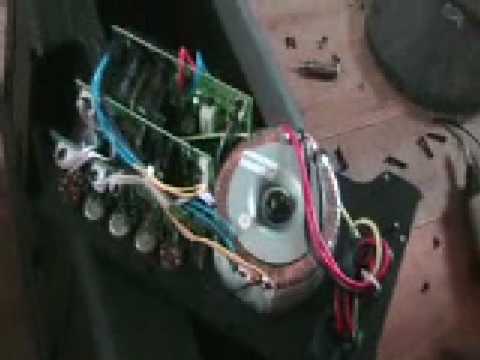
Here is the magnet and that is the treble speaker. A 1.35 inch compression driver and that will produce the high frequency sound. What I'm going to do now is pause the camera and we'll have a look at the back of the unit. Right, there we go, there's the back of the unit. Now in video number one I explained exactly what all of this area was for. What I'm going to do now, I'm going to take this off and we'll have a look inside. And again, A, it's so you don't have to, and B, I can explain, you know, not in great detail, but I can explain what all of the workings are. Right, there you go, that's the back of it. Now, as I said, not in great detail, just to give you a general idea. Amplification, all this area here is for the volume controls, the inputs, etc. That guy there is known as the transformer, and here we have the power input.
1:56 It's just directly opposite the speaker itself, the actual diaphragm,
Now very briefly what I do like about this unit, all of this area has got its own separate compartment. Quite often you'll have powered speakers that will have all of this inside the speaker itself but there's no space specifically for this. It's just directly opposite the speaker itself, the actual diaphragm, the magnet. Attached to the amplifier. So basically what happens is the amplifier gets hot, the amplifiers, in turn the heatsink will help move the heat away from the internal amplifier. Now very briefly on the bottom of it we've got a hole there. Now that is so you can mount this guy on a tripod. That guy there is basically so it can be secured. One very important factor this guy here must not be tampered with because that is set for the power rating for your country. Now if by some chance when you turn the unit on and you're getting no power to it, it could be because the internal fuse has gone. I'll show you exactly where that is, how to get it out and how to change it. Right, if we have a look at here, kettle lead input. Very quickly as well.
Units like this will come with their own power lead. Always make sure you use that power lead simply because the fuse in the plug will be appropriate to the item. But if we have a look here, we can take that part out. Now the bottom area, that guy there, is the original fuse. Now, bearing in mind as well, it's always a very good idea to make sure you have a spare fuse. Don't just put the spare one in, chuck the blown one away and leave it. Try and get a spare one again because you never know if your spare one goes and you have not got another spare one, you might be without a speaker. Press it down and that's it, it's ready to go again. So there you go, video number two on these guys from Gemini, powered speakers, they're known as the GX-1001s. Practice and enjoy.
This transcript was produced automatically from the audio of the video and may contain mistakes.





