 15:56
Get the Money You Deserve for the Mobile DJ Gig You Do Don't Ever Go out for a Cheap Fee!
Contents of the video
0:01 I have a relatively good subscriber base, but
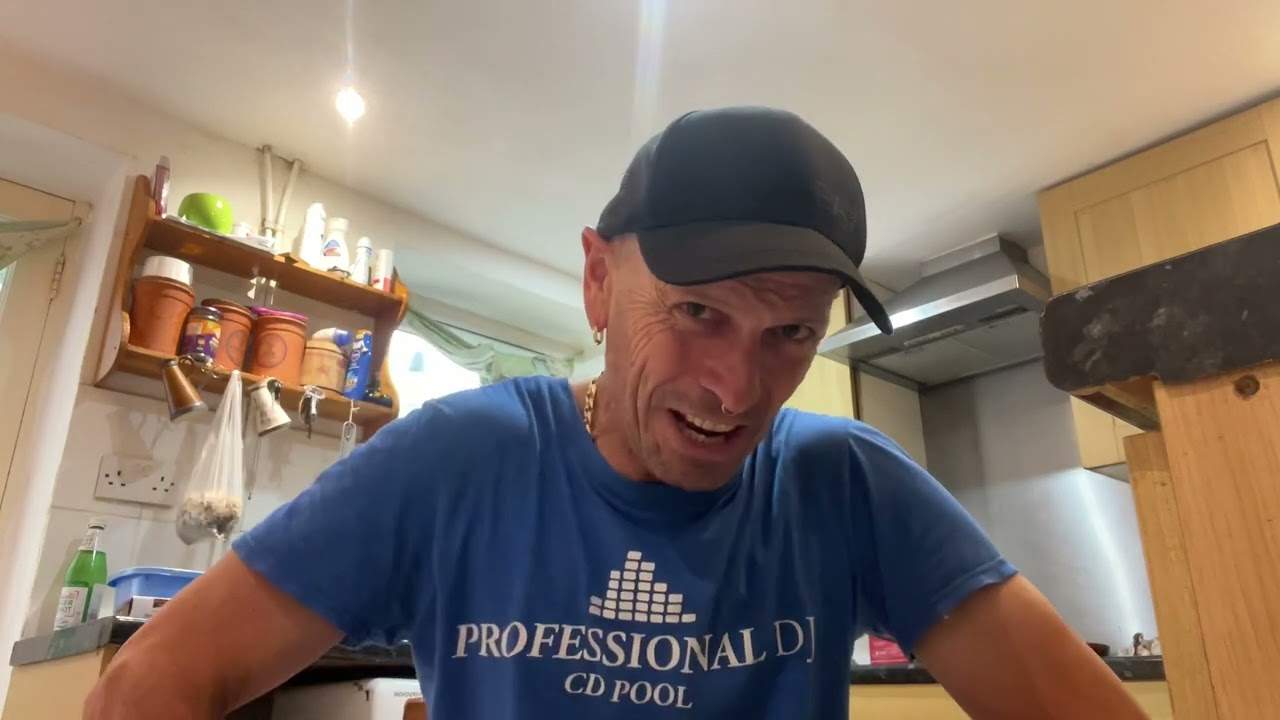
Alright guys, if you haven't watched me before, my name's Jonathan Ellaskins, The DJ Tutor. I'm quite prolific on YouTube, done millions of videos, well not millions, but lots of videos for a long time. I have a relatively good subscriber base, but... Because I've been doing these videos for so long, a lot of the original subscribers are now maybe doing origami paper folding or maybe they're doing, I don't know, flower arranging or maybe they don't want to be a DJ anymore or maybe they're just sick and tired of watching me. It doesn't really matter because I still enjoy making these videos. Anyway, first and foremost this video is not clickbait. Hopefully it will inspire you to look at How you are and what you are, what you do as a mobile DJ and make you realise that you do indeed deserve to earn more money. So we all like to earn a few extra quid and when a client phones up and we give a price, we maybe put the phone down and think I could have asked more.
Now, prior to even mentioning price and talking about price, if you listen to this video, potentially you could make yourself more money by doing exactly the same job you're doing. Now what does annoy me more than anything is when I see on social media someone requesting a DJ and the fee is say £200 or that's roughly equates to... 250 odd dollars, 210, 220 euros. It depends really on the exchange rate but you get a general idea. Now if you are indeed a professional mobile DJ, you've been doing it for a while, your kit is relatively good, then that amount of money is absolutely peanuts. For example many years ago while going through a very horrendous divorce I was paying a solicitor 200 pounds and
2:57 That in a future video anyway
Hour for one hour now when you consider that you're a mobile dj and you're there sat in front of the decks playing music for three or four hours and you get 200 pounds call it 50 pounds an hour doesn't sound too bad does it really 50 pounds an hour that's pretty damn good but it's actually not it's absolutely bloody crap because you have to consider The DJ Tutor. For the amount of money you are asking, you do indeed have a vast, a big responsibility on your shoulders to make sure that night goes ahead 100% with no hiccups. Digressing slightly, but if for example your laptop does break or a speaker does stop working or the lights do go out, Backup. I'm going to talk about that in a future video anyway, but let's get back to the job at hand. So, I see posts where people are saying they're going to give 200 quid for a professional DJ. Now, this is where the problem starts.
Because a lot of pro professional DJs will look at that and not even bother going. In other words, I personally, unless it is a local event, a charitable local event, for example the local school where my son goes to, or for example very soon I'm going to be doing the music for a firework display, it's a charity event and I'm actually going to get less than £200. But there's no pressure. I don't have to get people to dance. I am basically going to turn up with the minimum amount of kit and just play background music, and it's down the road. I can actually leave the property. I can get there and be set up in about half an hour. So that's where I draw the line. On the other hand, if someone 50 miles away has a charitable event and they only can pay £180, I'm not going to tell them to bugger off. I'm basically going to be very polite and explain that I'm not a charity and that fee isn't enough for me. So let's break it down. Why should you potentially get more money for the job you're doing? Now, first of all, there's always talk about...
5:22 60s now or 70s or Motown
Why don't you just get an iPod and plug an iPod in and you don't have to pay for a DJ? Well, the trouble is there. A good professional DJ will be able to read the crowd, understand what music needs to be played right time, right place. Artificial intelligence isn't that good yet. I don't think it ever will get to the stage where it can determine what the crowd's doing. Be sufficiently intelligent enough to go, you know what, we need to go to 60s now or 70s or Motown or Tamela or funk or reggae or drum and bass. That is about the professionalism of the DJ. Also knowing what good tracks to play and knowing what not to play. Also knowing when to play them, when not to play them. Alright, so a lot of it is about the professionalism that you bring to the table. So you have to take that on board. You are not an idiot. You are not some two-bit DJ who has a collection of a thousand songs and will play the same hundred songs every night. Now you may think a hundred songs in a night, that's not much. But actually if you think about it, if you're predominantly playing...
Radio versions, three and a half minutes. You're going to play roughly about three minutes of each track, which equates to 20 tracks per hour. Five hours, that's 100 tracks. So in a way, if you think about it, you're only playing 100 songs in an evening unless, of course, you completely mash it up. In that case, you could play 150, 175. On the other hand, if you're doing a club night and you're playing the extended versions, that 100 tracks may only go down to 30 because you're going to play the extended version. And if that's the case, then in my eyes, you're a very boring DJ because you're just sat there half the time twiddling knobs and not doing anything. But anyway, digressing, let's get back to why you should be asking more money for your mobile event.
Firstly and foremostly, you should make sure you have PL, also known as public liability. That costs money. Also, in the UK, don't know about the rest of the world, but your kit should be theoretically PAT tested. This means that every single item you have has gone through an electronic testing process to make sure there are no loose cables, no loose wires or anything like that. One of the worst things in the world... that can happen it's happened to me is where you plug a four-way into the wall and then from that four-way you add other extensions and then from those extensions you go to your kit your amplifier and all of a sudden there's something wrong there is one plug that seems to not be connecting electronically correctly to the rest of the cables and that could be because there is an earth wire maybe loose in one of them
8:20 So on the off chance
If you have a problem with the overall electronic connection, maybe the lights go on and off. You don't want that to happen so make sure everything is pat tested. Also, you need to make sure that your vehicle is in a position of not breaking down. If it does break down, you need to make sure, of course, you have breakdown cover so on the off chance that you do break down on the way to the gig, you can indeed get to the gig. If you can't get to the gig, you need to make sure that you can damn well get someone to take your place just in case. Now, all of these things are so important. But also, having all of these things in your portfolio means that you are indeed a professional DJ. And this costs money. Now let's look at it from the other side. And that is that you just decided to become a mobile DJ. You've downloaded your mate's hard drive, so you've got all of the latest tracks.
You've got a couple of flashy lights from Argos. You've got the best controller you've ever bought in your entire life that's cost you 300 pounds, dollars, euros. And you've got a couple of dodgy speakers you bought from Amazon that look fantastic, that have got flashy LEDs and away you go. Now you may indeed be able to put together a night, but if anything goes wrong, you're in deep. Poo-poo. Because the key here is social media. If you do a bad job now, your name is basically mud. Because the client, more than likely, as well as all of the people going to the event, will just say the DJ was crap, pictures, your image, your mobile name out on the web and that's it, you've had it, alright? The same applies even if you are a professional DJ. This is why it's so important to cover your back. And this costs money. Now, I'm going to finish off this video with a bit of psychology here. Now, I found this in the past and it does work. It does work. Trust me.
10:37 I say is I am definitely
I've had clients phone me up and say, listen, we're interested in booking you or a DJ for said night, X night, it could be 21st or whatever. How much do you charge? Now the first thing I say is I am definitely not the cheapest DJ you will have. I will give them a price and very often they say you are not the cheapest DJ. But what I can bring to the table for them is the professionalism The years that I have been in this business, but also a guarantee in a contract that no matter what happens, they will have a DJ for the evening if it isn't myself because I basically say if for some unforeseen circumstance I break my leg, my head gets chopped off or something, they're guaranteed to have a DJ. But also, I bring in the intelligence and I bring in
My sort of persona of explaining to them that I am worth the money they're paying. Now this is the psychology part because if you go in and you start talking to them and say well you know I'll do it for 200 or oh you've had a quote for 150, I'll do it for 140. Now for me if I was talking to someone I would be thinking this person is desperate for money. They're willing to lower their prices, which means if they're desperate for money, are they professional? They are not. On the other hand, if your price is quite high and you stick to that price, then the client is going to think, hold on a minute, this person isn't willing to drop their price. So they must have a big set and also, yeah, you get it.
13:30 All the rest of the procedure with booking is entirely up to you
And also, they must have the intelligence and backing and also the confidence to stick to that price. And the confidence is based on the professionalism. So try it. This is what I would like you to do. If, for example, you normally charge £250 or £300 or £450 or £500, have the confidence inside you to charge... From five, say to six, or from three to four. And you will be pleasantly surprised. Now also what you can do as well, and again this is a bit of psychology here, while you talk to the client, of course it's great to also meet them and discuss face-to-face, but what you can say to them on the phone is you could say something like, well normally I do charge 600. But if you agree today and send a deposit, I will only charge you 500. Now normally you would have only charged 500 but what you're giving the client is you're giving them that feeling of them saving money by charging and agreeing to the contract now. And if they do agree, a great idea here is to have either a PayPal account or
Give your client all of your bank details and ask them to transfer the deposit there and then. If they agree, then that's money in the bag and you have a guaranteed booking. Now, all the rest of the procedure with booking is entirely up to you. There are many ways of doing that. But what I'm trying to explain in this video here is that it's reverse psychology. If you lower your price, you're lowering the person that you are And you personally are going to come across as someone who is desperate to get that booking. On the other hand, if you stick to your price or even if you increase your price, the client then feels as though you're more professional and they are going to get a better job. Now I'm going to finish this video with something really important. And that is that if you do indeed only have a really cheap controller, a couple of flashy lights,
And your speakers were £100 from Argos, then you need to invest in better kit. Because if you're going to be charging a big price, you need to make sure that you have the backing, the knowledge and the kit that justifies the price you're asking. Okay, now please leave comments, let me know how you get on and also your price structure. Again, I don't really want to know how much you charge. But, you know, whether you charge more than the local DJs, less than them, maybe you're average, maybe you're the same, or maybe you're double or triple the amount that normal DJs charge, but you're still getting the gigs. So please in a comment let me know your price structuring and how you're getting on in the area where you are. So I hope this has been a help. This is one of my kittens. Practice and enjoy. Thank you.
This transcript was produced automatically from the audio of the video and may contain mistakes.
Related videos
-
How to Get a Better Fee for Your Mobile DJ Services
He disclaims it as not financial advice and notes that everything depends on where you are. Taken as a checklist of what justifies a higher…