 7:44
Gig log Dec 2011 and info on powered and non powered speakers
Contents of the video
0:01 Truth, yourselves favour, always
Alright guys, got a gig log and I'm doing a Christmas party in an army barracks somewhere in Shropshire. The only other thing I'll tell you is that the people I'm doing it for, some of them have just come back from Afghanistan and it's going on until about 3 o'clock in the morning. Of course, it's private confidential, can't say where it is, can't say who it's for, you will not see the people. But you will be able to see the kit and what's going on and how it's set up, etc. For the people who do know and the people who don't, just to let you all know, I'm going through a bit of an horrific divorce at the moment and it does take a lot of your energy. It's horrible. Anyone out there who's thinking about having a divorce, do yourselves a favour. Please, please do yourselves a favour.
1:35 Main reason for this is people ask me continually, So, here we go
And always think of the children, they're the most important part in any breakup. I'm also a firm believer in the truth. Always tell the truth, never overreact, never give in, always stick to the truth and the truth will come out. The truth will come out, just give it time. So anyway, less said about that the better. But right, let's have a look and see what's going on. From this, just about sorted. Alright guys, short gig log. Again, it's really difficult to do loads of filming when you're doing a video kind of thing because it takes a long time to choose the tracks and play them and get them to load up etc. But anyway, instead of this just being a gig log, a bit of advice on powered and non-powered speakers. Now, main reason for this is people ask me continually,
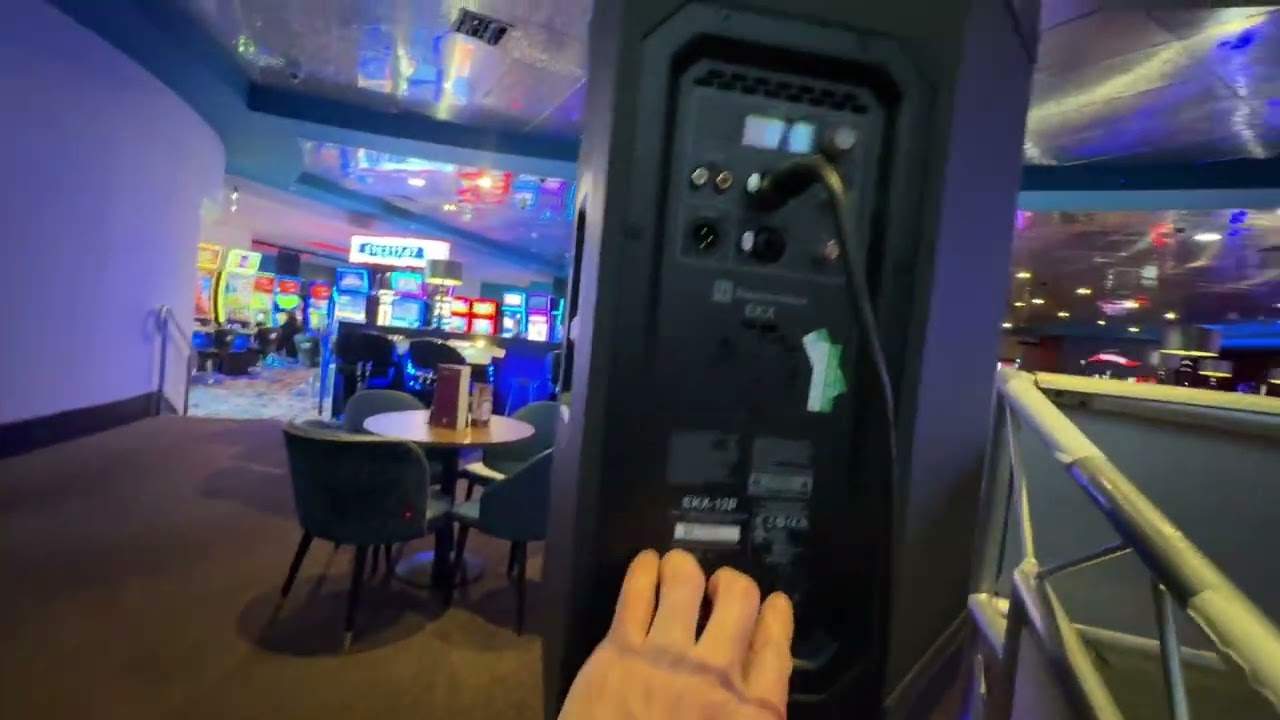
So, here we go. This here is a powered speaker. Powered because it's got an amplifier on the back. Alright, so what are the good points and bad points about powered as opposed to say something like that which is non-powered? Well first of all, the likes of a powered speaker, it's got internal amplifiers inside so there's no need for an external amplifier. Good point about powered speakers is that the amplifiers work perfectly, they're made specifically for speakers. And also amplifiers, 9 times out of 10 are separate, so in other words you would have a separate amplifier or two in that one and likewise with the other speaker. Occasionally very small tiny speakers, monitors, you'll occasionally...
You may have an amplifier in one speaker that will power both of them. So you'll go, the amplifier will be say for example in that speaker or there'll be two amps, one for this particular speaker and then there'll be another amplifier in this cab that will then power the other speaker. Alright, advantages let's say to having powered speakers. Let's say all of a sudden you're... You're at your gig and that starts smelling and then all of a sudden flames start pouring from it and it starts bubbling and popping. Guess what? You've got your other speaker, which is fantastic. Disadvantages. Let's imagine that does stop working. It means you've got to send the whole thing back to get it fixed so you're left with one speaker. As opposed to something like this. The trouble is with non-powered speakers, these guys...
5:17 2.15, 8 and a 1 inch
Is that if the amplifier stops working, then you have no sound at all. So, pros and cons. Also, something like that, non-powered, I could have virtually any amplifier I wanted on that. Alright, I wouldn't be having a 100W side, but I could put sort of 1000W 1k RMS aside upwards. The more powerful the amplifier, not necessarily the louder it will go, but the more powerful the amplifier, the better quality sound I will get because I will not have to push the amplifier as much. So for example, that is a 1k speaker, 1000 watts RMS. 2.15, 8 and a 1 inch. That is bi-ampable, in other words I could have two amps in that or just the one. If I had a 1000 watt amplifier running into that, it could run, it's fine, but all that would happen is as soon as I get to 1000 watts on the amp, the amps, you know, it's struggling so ideally...
Even like a 1400 watt aside, so 1400 watts RMS into that, around about 1000 to 1100 watts ticking over nicely should work perfectly. Trouble is with powered speakers is if there is inside that, for example, let's have a quick look, make sure we get right, I think it's 250 or 300 watts, I think, but that's all you'll get. 25300 butt, and the butt isn't a nasty butt, it's a good butt. It will be perfect sounding because the amplifier is perfectly matched as opposed to, let's say for example, a single, let's imagine that was a single 15 and horn, and that was 8 ohms as opposed to 4. If I had a 4, sorry an 8 ohm, sorry start again, if I had a 4 ohm, A side amplifier. Right, I'm going to start again because I'm going to confuse people. Right, let's imagine that was an 8 ohm cab and I had an amplifier which was 4 ohms a side and the amplifier would say 500 watts RMS each side. I would only be able to put into that about 375 watts, alright? Because this is Ohm's Law, if you want to find any information about Ohm's Law, I'll put a link in the description.
Clickable link, sometimes known as a lickable clink down there. That'll give you info. So I wouldn't actually be pushing out the correct amount of power. Because that is 4 ohms, if I had an amplifier that was 1400 watts aside, I could theoretically put 1400 watts into that speaker. Alright, bit of info for you. I'd like to take this opportunity to wish you a very happy Christmas and a prosperous new year. I hope to see people in Switzerland next year again, and I'm going to see you guys in Las Vegas at the Mobile Beat Show 2012. Practice and enjoy. Thank you.
This transcript was produced automatically from the audio of the video and may contain mistakes.
Related videos
-
How to Get a Better Fee for Your Mobile DJ Services
He disclaims it as not financial advice and notes that everything depends on where you are. Taken as a checklist of what justifies a higher…