 7:57
Constructing a set, for bedroom or club
On YouTube this video is called How to Construct a DJ Set 4 Bedroom or Club
What this lesson teaches
A lesson about preparation that turns into a lesson about its limits.
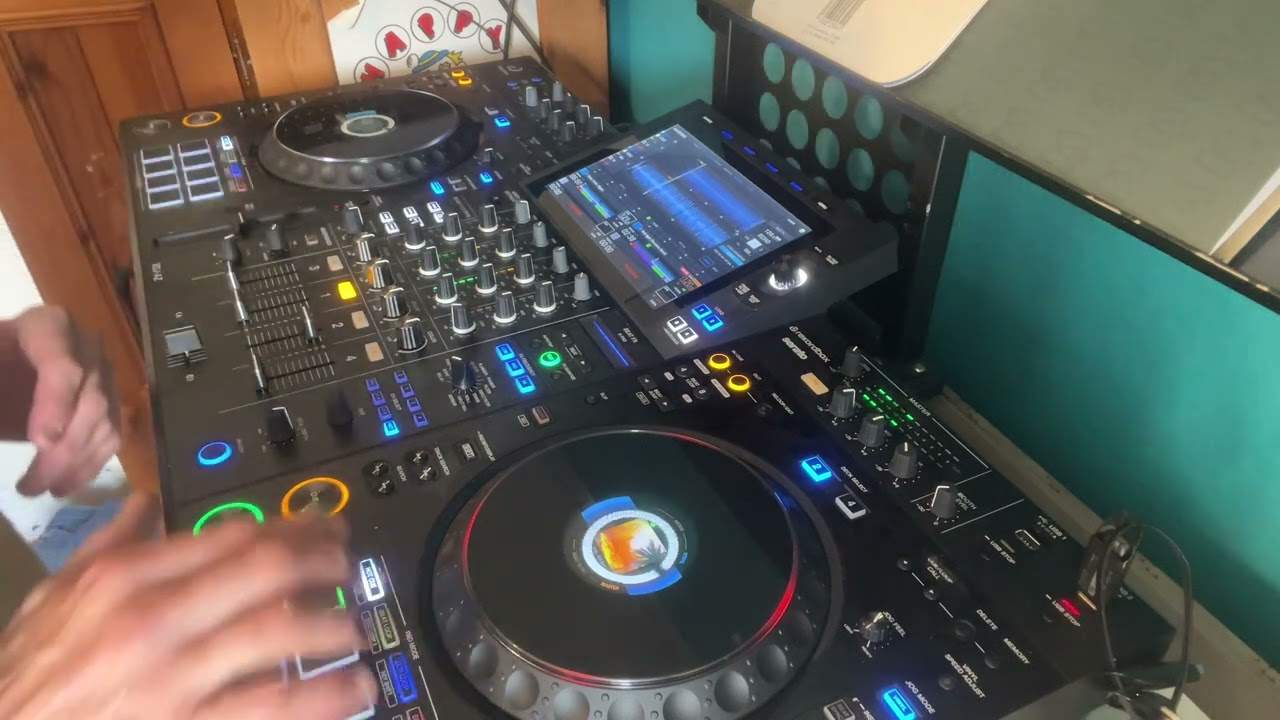
Building one at home
The method is patient and unglamorous. Find a track. Find a second that works with it - which may take three or four attempts, with the first two not sounding right. Find where the second should come in. Then a third, a fourth, and so on, until you have half an hour, an hour, or six.
That is a real way to work and it produces good results, because every join has been tried and rejected and tried again.
The question
Can you then play that set in a nightclub?
Yes. If you have spent the time, if it sounds good, if the transitions are smooth, then there is no reason the crowd would not like it. A well-made set is a well-made set.
And no. Which is where the lesson is going.
Why not
Because a fixed set cannot respond.
The room will do something you did not plan for. It will fill up late, or empty early, or react to the third track in a way you did not expect. The tempo that felt right at home will feel sluggish at midnight. And the moment you deviate - because you will have to - the carefully built sequence after that point no longer applies, because every track was chosen to follow the one you have just abandoned.
So the prepared set is simultaneously the best preparation there is and a thing you cannot actually perform.
What to do with that
The resolution most working DJs arrive at: prepare in groups rather than in sequence.
Instead of one fixed order of forty tracks, build five or six blocks of four or five records that you know work together in that order. Then in the room you choose which block to play and when, and the joins inside each block are already solved.
You get the benefit of the preparation without being locked into a single path - and you have somewhere to go when the room does something unexpected.
Contents of the video
0:00 This particular video is all about putting a DJ set together
Alright folks, this particular video is all about putting a DJ set together. Now first of all very important, I've got a little bit of knowledge so don't take this as the final end product. In other words you have to go by exactly what I say. I want you to just listen to this, take it on board and then almost have... This video is about constructing a DJ set. Putting them together and then making half an hour, an hour, two hours, six hours worth of quality music that's nicely fitted together. Now let's say for example you are in your bedroom and you get track one, you find another track, you put that in with track one, works well, then the third track maybe it takes three or four tracks, maybe you get one, doesn't really sound well, another one doesn't sound well, another one you think yeah it sounds well.
Take a bit of time, find the right place to bring track 3 in into track 2 and then you've got three tracks. So on and so on with 4, 5, 6, 7, 8 till eventually you've got the set that you want and you think it works well. Now, question, can you then play that particular set in a nightclub? Yes, you can because if you've spent time on that particular set... And it sounds well, it's well constructed and you've got nice smooth crossovers from one track to the other. Then why can't you play it in a nightclub? Because if it sounds good and you've spent a bit of time, then theoretically the crowd should like it as well. So you can. But here's the dilemma. You can't. Now I'm not contradicting myself. I'm going to pause the camera and I want to draw you a picture. Excuse me, I've got a glass of water there as well.
2:11 A blank piece of paper
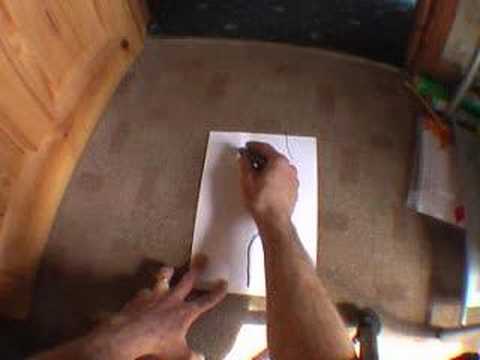
Right, there you go. A blank piece of paper. Now, I'm now going to draw you in a squiggly line or a curvy line, doesn't really matter, the set that you would have done in your bedroom. Alright, starts off here and let's say, you know, you go in this direction. Maybe, I don't know, you're increasing the key, decreasing the key, doesn't really matter. But, and then, you know, you're going to slowly do this and it's going to build, Choruses, verses, etc. Now that is fine, alright? Now a way of looking at it in a sense, a good set is a nice smooth easy line upy downy bits but a bad set is something that probably does this. It's all over the blinking place and there's keys clashing and it just sounds awful. But here's the deal. Let's look at that set in a nightclub situation.
Now what you have to consider is you've got a crowd dancing. Now that crowd have got to be inspired by your music. They've got to be lifted, they've got to be taken on a journey. Now your set could be fantastic but it might not be the set for them for that particular night. It might be, they may love it. But here's the dilemma. Here's your set. And it starts off and it just does this, and this, and this, and it's a nice smooth flowing set. But what may happen is that about here the crowd may want to be taken this direction, like so. Now all of a sudden we've still got a smooth flowing set but they needed at this point which could be 20 minutes into your set, they may have wanted to be taken another direction. But at this point here, okay, which is theoretically say that's 20 minutes and this is 10 minutes into the other part of the set, they may want to be taken into another direction and then maybe here into another direction or from this point maybe a direction.
Or this point here, another direction. Now, I'm going to do something really silly here because I am going to have just about here, I'm going to have, I'm going to do a bird. Now you're probably thinking, why on earth is he doing a picture of a bird? Well, I'll tell you what that is. That is what I class as the tree chaos theory. In the open, in a field, no one knows how that tree is going to grow. No one can predict that, you know, there it is, there's the beginning of it. No one at all can predict in 100 years that, well, there's going to be a big branch there, there's going to be a branch there, there's going to be a branch there and a branch there. No one can predict that. So, here's the tree. It starts and it just branches off.
5:31 This is what you need to understand about building a set
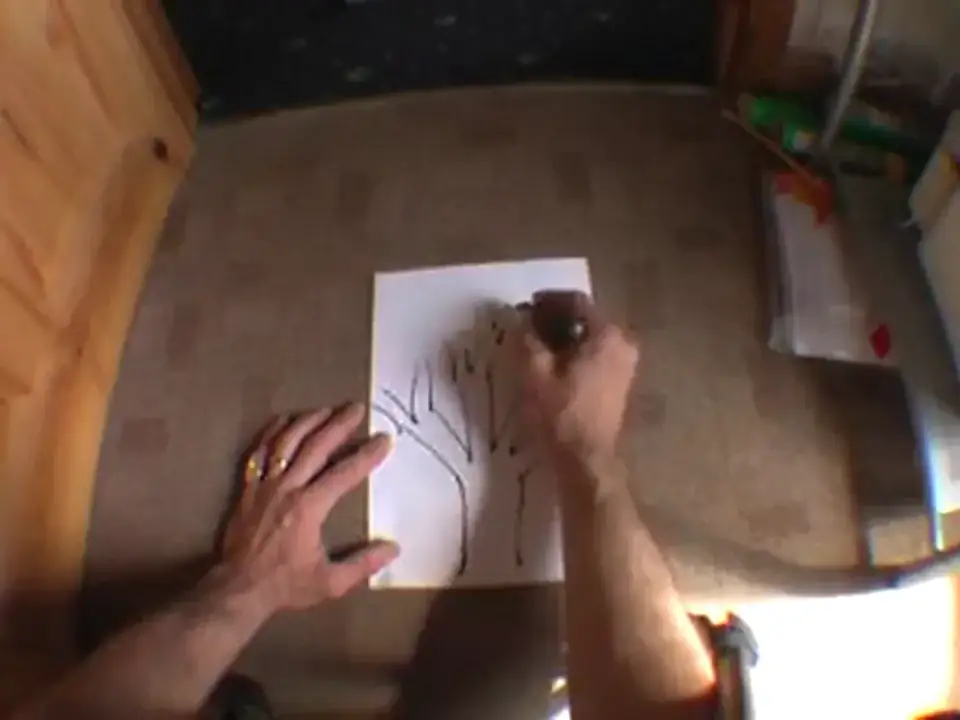
And it branches off again, and it branches off again, and it branches off again, and it branches off again, and it branches off again. So over a period of time as that tree's growing you get more branches that just, they're all over the place. Now this is what you need to understand about building a set. You've almost got to go in sometimes to a nightclub, to a party. An environment and you've got to look at your surroundings. You've got to think, OK, I've got the basis of my set here. Because at the end of the day, if you're going to a house club, there's no point playing drum and bass. If you're going to a hip-hop club, there's no point playing electro house. So you will know near enough what you're going to play. That's the basis. But what you have to consider, you have to open your mind...
To the fact that your set could go in any direction at any time during the course of that evening. If you can take that on board, then you can become a fantastic DJ. And this is what the big DJs will do. They will almost look at the crowd continually and they'll start here. And they'll think, which way do I go? Which way? I'm going to go that way. And then, up which way? I'm going to go this way. And up which way now? I'm going to go that way. So all the time they're almost taking the crowd on the journey that the actual crowd want to go on. That's the point. Now quite often a good DJ as well, slight contradiction here, will be able to take the crowd on a journey. In other words, the DJ will be in charge and he or she will say no, you're going to follow my route.
But more importantly, the DJ needs to look at the crowd and think, what do the crowd want? Where do I need to take the crowd? Sorry, I'll start again. Where do the crowd want to go? Which direction do the crowd want to go? Now, I hope this has been a help. Believe me, there's one hell of a big philosophy on this. It's not simple. Over time, you may get to grasp the whole concept. But as I said, well no, I haven't said yet, but there are loads of DJs out there who haven't really got the foggiest. So it's a case of practice and enjoy. Thank you very much.
This transcript was produced automatically from the audio of the video and may contain mistakes.