 26:48
Finding the exact track for a flowing mix
On YouTube this video is called Intermediate DJ Lesson Finding the Exact Tune for a Flowing Mix
What this lesson teaches
He opens by admitting that a live stream the night before had not gone to plan, and diagnosing why: he had not had time to put his music into folders.
That is a more useful starting point than a demonstration of a perfect set.
Genre is not a category
The part worth taking away.
You might have ten thousand house tracks. As a folder, that is useless - because the question when you are playing is never "is this house?"
Is it techno? Trance? Hard house? Progressive? And beyond genre: what is the vibe and feel? Two progressive house records at the same tempo in the same key can want to be played at completely different points in an evening, and no genre label distinguishes them.
So his filing is by corresponding vibes and feels, not only by keys and not only by style.
Why this is the selection lesson
Because in the moment you have about thirty seconds and the quality of your next choice is limited by what you can find.
A brilliant record you cannot locate is not in your collection as far as tonight is concerned. A mediocre one at the top of the browser gets played. Over three hours that difference compounds into the whole character of the set - which is why the flow of his stream suffered, and he says so plainly.
The organising is not admin. It is the part of selection you do in advance, exactly like the key sequencing and the beginning-middle-end marking.
How to actually do it
Folders or playlists named for use rather than for taxonomy: openers, builders, peak, after-the-peak, the ones that work with vocals, the ones that fix a dying floor.
It feels unscientific and it is far more useful than a folder called House, because it answers the question you will actually be asking.
The aside about file formats
Worth a line. MP3 exists because storage used to be tiny - a four-gigabyte drive fifteen years ago, against terabytes now. The compression was solving a problem that has largely gone away, so if you are buying music today there is little reason not to take the uncompressed version.
He says carry on if you want to, which is fair. Nobody on a dancefloor has ever identified a bitrate.
Contents of the video
0:00 Plan because I have very little
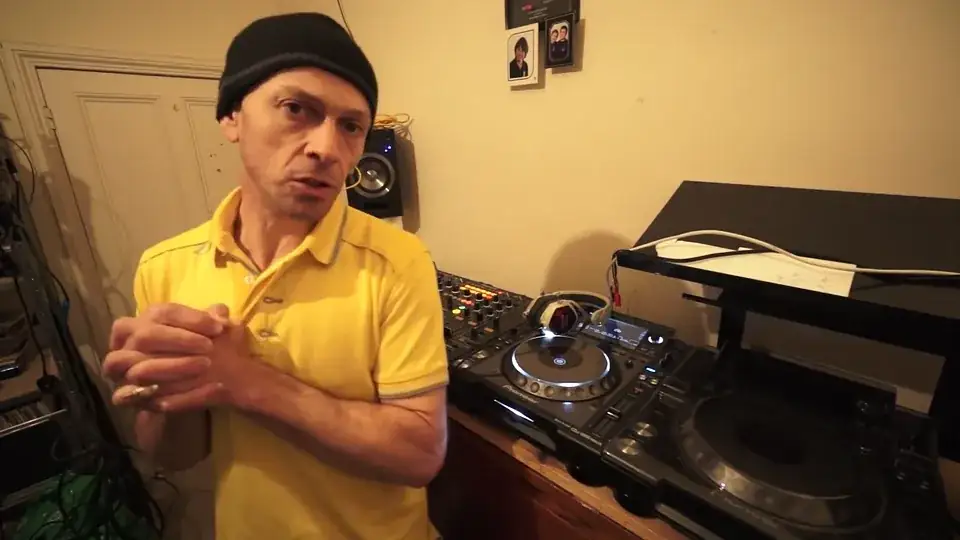
Alright ladies and gentlemen, this video is all about getting your set so it's not only seamless but there's continuity to it. Right, now last night, I will explain, last night I did a live stream on live stream. I'll put a link in the description by the way if you want to follow me for future live stream events. And it didn't exactly go to plan because I have very little time, myself personally, to put files into folders, alright, my music into folders. Now if I said all of a sudden, oh guess what, I'm going to put my tracks into folders but I said that 20 years ago, people would think I was stupid. Why would you want more ideas anyway? Why would you want to put all your vinyl into folders? What's the point because they're in a box, they're numbered, they're set into BPM and away you go.
But of course nowadays you can, of course we're talking about MP3 files or WAV format, digressing slightly, there's probably not a lot of reason now to get loads of MP3s. The only reason MP3s were pretty much invented was they could be squashed down into smaller units. And what that meant is if you had, if we go back 15 years, a 4 gigabyte hard drive then you could put loads of files, MP3 files into your 4 gigabyte hard drive. Nowadays we have 2 terabyte and 5 and 50 million terabyte hard drives so there's actually no real need to have MP3 but of course carry on if you want to. Yeah alright let's get back to what I was on about. So last night I did a set on live stream. And the flow of the tracks wasn't brilliant because I have very little time to sort out my tracks into folders, into corresponding vibes and feels.
2:19 I mean the list goes on
Not only keys but vibes and feels as well. So for example you could have 10,000 house tracks. But is it techno? Is it trance? Is it hardhouse? Is it progressive house? Is it garage? Is it underground deep garage? I mean the list goes on. Not only that, imagine you have got a folder full of underground deep garage and you may think perfect let's do a mix using those tracks. But what you will find is some of those tracks themselves have their own feel. So for example you could have all of these tracks. You could have 100 which are in the same key, the same style. Yet if you played them 1 to 100 the feel in the room, the people you are playing to. The feel could be up here and down there and around and going around corners and jumping over hedges and playing a vinyl jumping over a hedge.
Oh my god! MP3 sorry. So what you need to do is you need to listen to those tracks. And maybe even make sub folders based on how you feel. I will explain again in greater detail. You play a track, you close your eyes and it puts you somewhere. It makes you feel happy, euphoric, sad, deep, depressed, dark. So you want to shoot someone. You shouldn't do that, it's really wrong. Or you want to eat chocolate or you want to jump in bed with the next door neighbours wife. I don't know. Don't tell my missus. Just kidding. Well I'm sorry it was once and that won't happen again. I'm so sorry. So what you want to do. God this is strange, I'm laughing at myself. Yeah alright I know everyone else does but I don't give a toss.
4:42 I'm going to turn it around and point it sort of at my bum
Anyway so you've got your 1000 songs of deep house music. What you will find, not might, you will find. Is that even those tracks need to be put into other folders. So what you may end up with is you may end up with 10 tracks of one feel. 500 tracks of another feel, 200 tracks of another feel. Maybe 290 tracks of another feel so you've got your 1000 I think. I'll explain and I'll show you now in a minute. I've got a video which I'm, am I doing a video? I'm doing one anyway. Right so I'm going to put the camera there. I'm going to turn it around and point it sort of at my bum. No you don't really want to look at that. It's not very nice. Not a nice picture first thing in the morning. Of course it depends on when you're watching this.
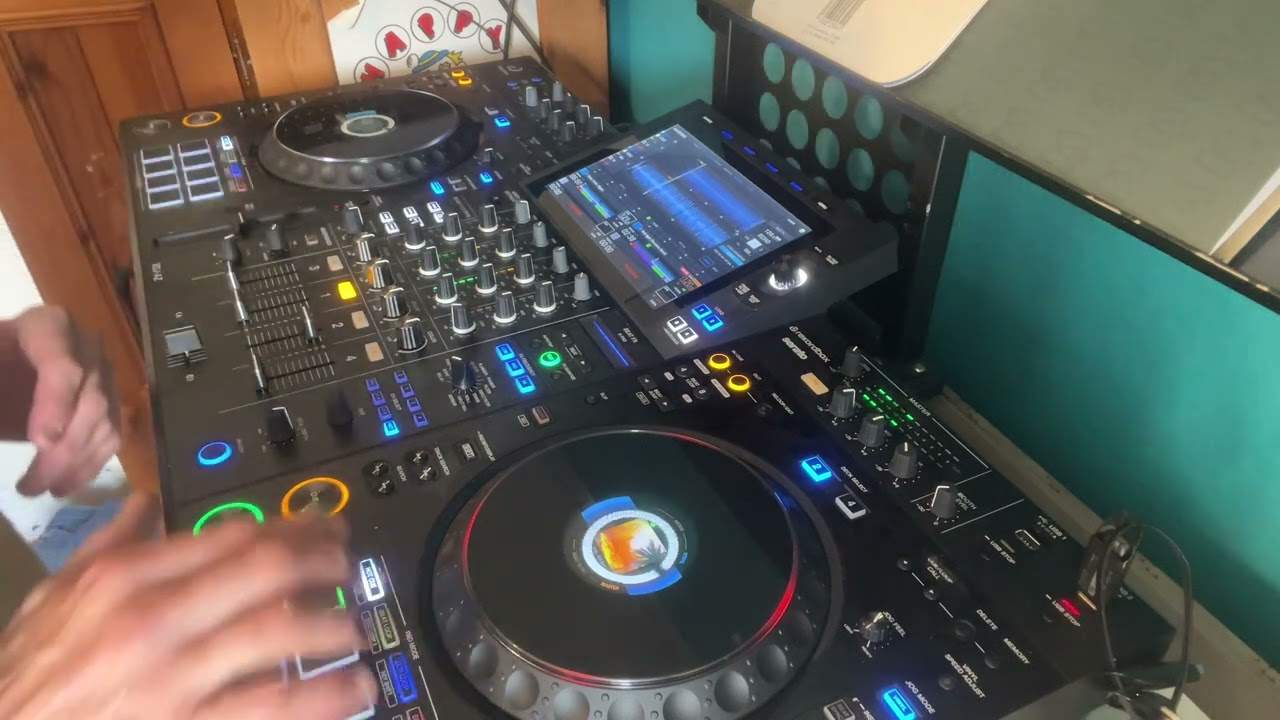
Okay so let's have a listen first of all to a few tracks. Now these have been put through the record box known, the record box. Oh god it's too early. The software known as Rekordbox from Pioneer which is free software. Go to the record, go to the Pioneer website and download it if you want to of course and it will well read up about it first but it's a great software for finding keys, finding BPM and it's pretty much it will analyse the tracks for you and give you a lot more information about the tracks than you didn't know in the first place. I'll show you the wave format etc. Okay so let's have a listen to one track first of all. This is entitled Everything It's The Original Mix and if you want to know all the details of this track
I'll shut up for about 10 seconds so you can Shazam it and that's a little app on your phone. Listen to it, turn the volume up and then it will give you the name of the track. I'll shut up now hold on. Okay there you go. Now for this demonstration I'm not using headphones so I'm going to do the worst thing in the world that I have ever done and that is hit sync. Okay this is just for demonstration. Alright so we have the Everything It's The Original Mix there so I'm going to go to link, I'm going to go to USB and let's have a look. I've gone into keys here so we're on F sharp major something like that and that's the same track Everything. Have a listen. Okay so we've got the same track. So we're going to use that,
7:20 Very soulful, very melodic
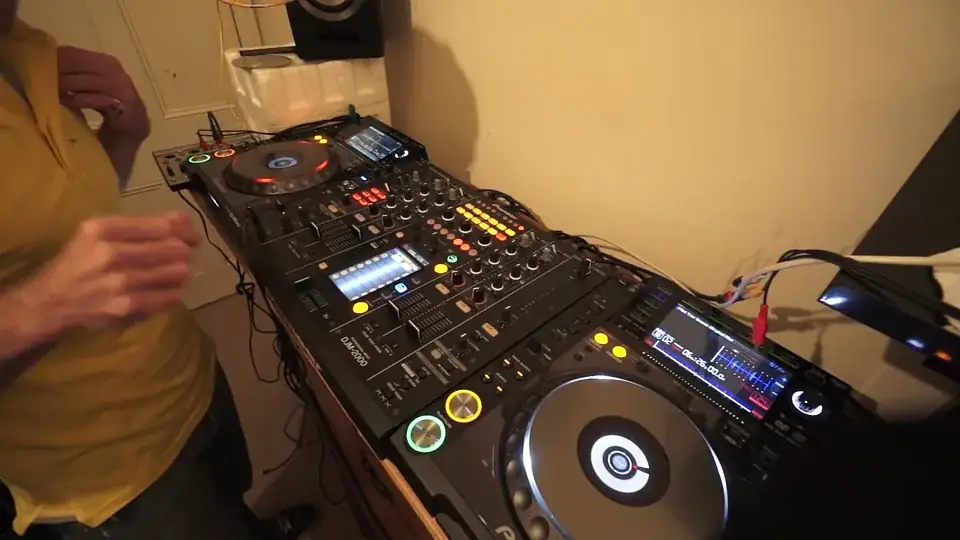
We're going to try this first track for our experiment so what I need to do now is I need to find another track that's not only in the same key which they should be but I'm going to try and find a track now that has the same feel to that. Now let's just go back and listen to this again. Now I'm going to explain to you how this track feels for me what it's doing to me. Okay very soulful, very melodic. It's a little bit deep. It's got kind of a happy vibe but it is nice and underground it's got that sort of very mellow almost got a tiny bit of gospel in there as well. There's so much to consider. There's the way the track is constructed there is the way just even down to the beat is constructed there's a lot of parts of the track that I'm trying to listen to
To make me work out another track that is suitable to bring in to that song. Now let's do two mixes. Let's do one of a track that I feel personally is a great track to bring into that one and then let's also bring in another one that may work musically but just doesn't sort of fit in to the feel. Okay so let's...
Okay this one, Get Your Groove, the original mix. Okay let's just try another track. Okay so alright straight away what I'm feeling here is we've got vocals we've got a good kind of soulful vibe and then we've got that nice bass line So let me just set a hot cue there. Let's go back to our first track. Okay so all I did there was pretty much a very quick flip from the one track into the other one and I used the hot cue. So we'll just do that again, let's have a listen. Alright now to me those tracks seem to complement each other Let's go back to the other track and I'll do exactly the same I'll set a hot cue on this track and try it.
10:17 Can you hear the build?
I'm just going to set a hot cue at the beginning, end of a phrase. Let's go back a bit. Can you hear the build? Not yet. There. Okay so I now have two hot cues one on the track that I feel is a lot more appropriate to bring in to the first track we played and this one here that maybe isn't as good. Okay so let's go back to our first track 124.5, 124.5 Alright now I'm going to pause that for a second and let's just talk a bit further because this video really could go on for like years. So we've got two songs
11:43 Call, track complements, three tracks
Right, we've got two tracks but we've actually got three tracks the two complement each other the other one is a little bit too more disco-y so again first of all how does the track feel for you? Maybe you need to start designing in your mind your own sort of genres how the track feels you don't have to copy everybody alright because the style of genre that a track has been given has only been given by someone who all of a sudden decided to call it Muppet House or like I'm going to call this Bog Brush You choose your own because you may know yourself you may be able to remind yourself that oh I know this track I'll call it or this style I'll call it this because it's easy for you to remember so we have three tracks the first one
I needed to find something that complemented it perfectly and the track over here or one of them complements it perfectly the other one a little bit more disco-y but let's imagine we wanted to increase the vibe in the room so really the other one will work but it won't keep the same flow what's happening is I need the flow to be like this a nice steady imagine a calm sea you're on the boat and you're fishing and the last thing you want is a wave knocking you over and getting wet and being eaten by a shark and having bits of blood fly everywhere it's not a really good idea
Okay so towards the end of the track say this track here if you did want to increase the vibe then of course go up use the other track alternatively if you want to keep that vibe try and listen and try and find a track that complements the first one so again my videos can just go that way that way or I'll just go to the bog and leave you there actually that's a good idea excuse me just kidding okay so let's play this track and let's go towards middle end wherever so I'm going to go to where are we now we're on track three so let's go back to the beginning of this track so you will hear it being sort of jumping and skipping and hopping because this is a demonstration ah you don't want to look at me do you okay so put the camera down
About sort of there strappy bit over there now again phrase beginning of a phrase I'm going to set hot cue there go to record Jonathan you idiot hot cue there
Okay so I've got my hot cue let's have a listen to the beginning of this track
Okay as we can hear it's very straightforward nothing exciting 4-4 time but as ever with pretty much 99.999% of modern day dance music there will be structure during the entire track for example the beginning you could just say have a kick of eight bars and then after the kick you may have something else incorporated into the track and so on until you know you've almost got like this natural lift so we've got I would say I'm not really counting but I'd say 16-ish bars 32 before we get to that bass line right I'm going to count how many bars we have at this fray or this gap here which is instrumental break and we'll class that as a fray so one two three four one two three four one two three four one two three four one two three four right I know it's only halfway through
16:48 Size of that compared to
But I'm sure you can see that you should be able to but I'm not going to count anymore because it's halfway through it's eight so that is 16 bars so looking at that being that in fact if I just take the camera off I did say 32 bars so if we look here you can see in where that white line is that was eight bars from this break to that white line is eight bars so of course that's going to be eight now if we look at the size of that compared to the beginning yeah it's double isn't it so we've got 32 bars here and we've got 16 there all right so it's not rocket science you work that one out I'm going to put the camera back on the stand and turn that strappy bit around we've all got to have a strappy bit now and again and let's go to our A
19:29 Phrase starts, point, break
And I'm going to now count from A so one two three four one two three four one two three four one two three four one two three four one two three four one two three four one two three four five six seven eight nine ten eleven twelve thirteen fourteen fifteen sixteen sixteen eighteen nineteen twenty twenty twenty twenty twenty thirty forty twenty twenty twenty twenty three three four five six three three two one one two three three four one two three three four three three the end here but if I was doing this let's say in a live environment what I want to do is do more of a mix more of a good sort of longer transition so all I need to do is at the point where we get into the last 16 bars here count back 32 and then bring that one in of course at the 32 bar start there and then let them
Flow together and then of course we have the break that one finishes bang away we go alternatively there could be a point in fact there's probably lots of points during this track where I could bring that one in at any point so for example if I was doing a really long set of three or four hours the last thing I'd want to do is start this one and then four bars later bring something else in I pretty much want to let this track play through to practically the end and bring in the next one so let's just try that now so I'm going to press play here again we're gonna go to sort of there ish so let's just volume up see even there right now the break does start but the beginning of the phrase doesn't start until listen
Break put the phrase there that's where the phrase starts now again a lot of people get confused there it's about timing if you are confused where the phrase starts anywhere best thing is to count back find a point in the track that if there is a definite change and more than likely that will be the end of the beginning of a new phrase what we've pretty much found here we worked out complete structure also we worked out that finding tracks that not only need to be the beginning of a new phrase but also the beginning of a new phrase so that's what we're going to do now let's go back to the other track that we had and do something similar so that was this one here so a lot more disco-y so let's go back to the beginning of that one sure you can hear as well there's a
24:23 Loop mode now again what I
Lot of lift with this track so let's just go forward a bit to sort of about here okay again I'm using the beat sync I'm going to wait for it to start and then I'm going to go back to where it started and then I'm going to go back to where it started so we maybe get when she starts stops saying I can't is it I can't live without you or something like that that's what I'm gonna start bringing that one in because that is again the end of the beginning of a phrase it was queued up in the wrong place I'm going to take the bass out slightly on the one that's coming in coming into our last 16 bars from the track that's coming out now that one is taking over too much really so we still got the emphasis on the track
It's playing I'm going to go to loop mode now again what I could do is I could just keep this loop playing halve the loop and give it a nice finish halve it again and again okay a little bit rough around the edges but there you go that's where practicing joy comes in all right been a bit of a long-winded video this one but I hope it has helped so again what were we discussing? we were discussing about how to play the bass on the track and then we're going to be discussing about tracks what to bring in what style what feel of track to bring in as well really important so again check out the link in the description and check out my next sort of live stream event which is very manic there's always beer involved lots of fun and sometimes I give stuff away so
I hope that's been a help practice and enjoy thank you
This transcript was produced automatically from the audio of the video and may contain mistakes.