 14:33
MUSIC INDUSTRY, How it's changed over the years, KIT, Lighting, PC, , APPS and the lot!
Contents of the video
0:02 Pinkie ella
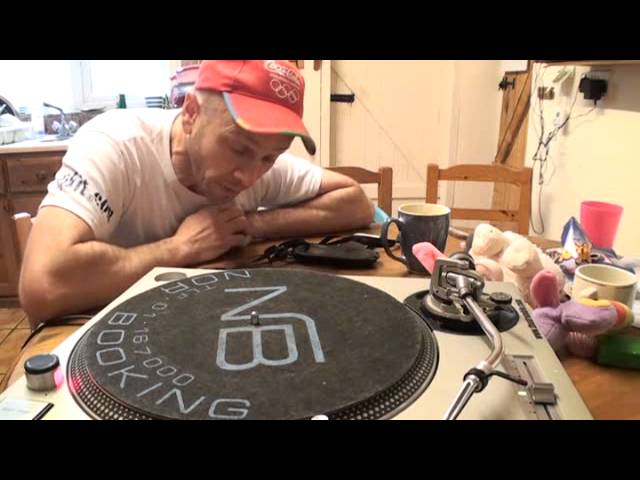
Alright ladies and gentlemen, this video is about how kit, how the gear we use has changed over time in relation to being a DJ, being maybe a producer, mobile DJ, club DJ etc. Now years ago, and I've been in the music industry for quite a few years, we started off with belt drive decks and you were lucky if you had a pitch control, it was a small little dial. And it was an absolute nightmare to mix. Then of course we have the likes of Technics, as you can see in front of you. I've got a few of my friends there. We have The Sheep, which is Barbara, who's been around the world a little bit. We have Bunny Blaze, we have Pinkie Ella, the original Pinkie Ella, and TY Parrot as well. And there are a few other bits and bobs on there that I'll mention, talk about in a little bit. But you have in front of you a Technics SL1200 Mark II turntable.
That basically revolutionised the DJ industry, took it to new heights. Now when this deck was originally made, it wasn't made for DJs at all, it was just made because if you take the platter away, you can switch it to different power supplies so you could take it around the world with you. Of course the DJ industry then, nightclubs realised that well, you know, with a pitch over there, you can start to mix and you can... Mix very well on them. And this is my personal opinion, still to this day it is the best pitch from any CDJ, any other turntable, this is the best. It's rock solid. So let's talk a little bit about how the music industry has changed, or more so how kit has changed. This here is the pacemaker.
2:27 This one here, it's the Sony Ericsson Vivaz
It's from a company called Tonem, I don't believe they make them anymore, but still I feel this has well revolutionised DJing because it's a complete DJ system in a box, two turntables, 120 gigabyte drive and you can use it for storage, you can mix on it. It has two outputs, one for your headphones, one for line out, so potentially you could wire that up to a wireless system, walk around a nightclub and do a set. iPhone 5 apps. You can just bung the DJ app, I'll put a link in the description, other DJ apps relating to mixing music and you can mix music on the go, you can do it wirelessly, you can Bluetooth it say to your car so someone in the back of the car can just be doing a mix and away you go. This one here, it's the Sony Ericsson Vivaz. It was the first camera phone I believe to do...
If you're a teacher in the music industry, a singer, artist, band, whatever, then do a video response and explain to us underneath this video. So if you don't know how to do video responses... Where you normally put a comment, you will see a little icon, place a video response. You click on that and then that will take you to all your videos. You click on the video that you want to respond to, press respond and then it will go to this video as a video response. So explain in your own words how the music industry has changed for you. Maybe you hire PA, maybe you hire lighting, anything to do with the music industry, whether it's light, sound, audio, visual, doesn't matter. But let me... Give you a little insight first of all, now this is quite important and I'm going to turn this, no I'm going to take it off. By the way, have you ever seen, this is cool, have you ever seen a Technics turntable on the platter turning but you can make the platter stop turning by not turning it off? Confused? I'll show you. Start it up, watch this. Watch, there you go, see it's actually stopped turning. So hold it and there you go, it's stopped turning.
4:48 Sync button, changed djing, plus
That's because I'm counteracting the motor, because half the motor is the platter itself. Right, now let me explain first of all a few fundamental facts about a pitch control. Now, if we look at this pitch here, this here is plus or minus 8%. Now, one of the problems faced by a DJ using just vinyl, no programs whatsoever that can change the pitch, the key, was this. And you had your pitch, say, set to plus one. And you found that the two tracks sounded really good, that they were in key, but this one was too slow and you had to speed it up to, say, plus six or plus seven. What you would find is that then they would become in BPM, they would mix perfectly, but this one will be out of key. That's because with the old school vinyl turntables, if you were anywhere...
DJ tutorial by Ellaskins, The DJ Tutor And it wasn't 120.367, it was 120 because we had to do it the old school way. You had stopwatch and you counted the BPM in a minute and then that was your BPM, beats per minute. That's exactly what it means but of course you had to have the pitch in the centre. So we didn't have key lock, we didn't have master tempo and we did not have the sync button. The sync button then was, if you go back 20-30 years, sync button, it wasn't even there. It wasn't even in the English dictionary for a start. So the music industry has changed a lot. DJing has changed a lot because DJing has become so much more easier to a certain extent. But you still have to use your ears. You still have to be the one who finds the right tracks.
Admittedly as well, I suppose there are programs out there that can do that for you. Oh, that will go with that, that will go with that. What the programs generally do is find the BPM, find the key, and they'll put them in little folders and files for you. But, they still can't do the internal workings of finding the precise and correct time where to bring a track in. The perfect mix. That can only be done by a human. So, until such time, which I don't think will ever happen, You know, it's always going to be the DJ that takes control. Now, there have been lots of discussions on how good and how bad controllers are. Controllers are very, very bad if you press sync and you let the controller do everything. Alright, contradicting slightly because if you've got a controller with four decks...
7:33 I'm going to have some of my coffee, excuse me
Then it does give you more scope to do some remixing, so acapella on one beat on the other, bassline on the other and a good old drum solid beat on the other one. And away you go, you can do some really good mixing. I'm going to have some of my coffee, excuse me. Oh, the skin! I like that. But a lot of people take advantage of that and they will act as though they're doing a great mix. By, you know, really going into the mix and EQ and bass and treble and whatnot. But of course, the sync button's there. They've made the program match the beats. They've also made the program choose the tunes for them because they're in key. So a lot of the hard work is gone. So our DJ's getting a little bit too lazy as well. Also...
Are we getting to the stage now where a DJ can go out and buy a controller, relatively cheap, couple of powered speakers, tripod and a light, and just knock prices down for a mobile DJ? That's another discussion. So talk about that as well. Because I'm finding now that there's a very good friend of mine called Nick. And he said that in where he lives there's 42 odd DJs and they're all knocking each other down. So, of course the bad part there, I'm digressing slightly, is that someone who books a cheap DJ is getting a cheap DJ. And then, the very, very, sort of, well, start again. The big downside to that, sorry, is that the people booking that DJ may be their... The DJ Tutor People then, when they do book you, maybe they're taking a chance, but they'll realise that they're getting quality. So, digressing slightly, going back to this, the music industry has changed. If we go, say, and we step back in time and we looked inside a production studio, you'd have a huge big reel-to-reel, some guy there would be chopping up tape to edit the track, and also you'd have racks and racks, 19-inch rack mounts full of compressors, limiters, gates and goodness knows what.
10:07 You pick yourself Ableton Live Suite, get loads of plugins and away yo
You pick yourself Ableton Live Suite, get loads of plugins and away you go. And you can be remixing on your laptop on a plane. Now that is pretty good because you're able to take your job with you and you're able to work away from the studio. Then again it's sort of not very good because it's... Taking money away from the people in the studios because that's what they used to do. Now you can go to a studio, do your recording and away you go. Alternatively, which is crazy but it can be done, you can invite your mates around for a cup of tea and a few beers and your bedroom becomes a studio. That didn't happen years ago but it does now. So here we are, something that was big, bold, is still around but they don't make many more, the Technics SL1200M2.
And we have the likes of this now, even though they're not made. I don't believe they're made anymore, I'm not sure. But where is the music industry going? What will happen? Will we get to the stage where we'll have something that big, if not smaller? And it will do absolutely everything for us. And I mean everything for us. It's near enough getting that way anyway. But is it a good thing? Is it a bad thing? How has it affected you as a producer? As an artist, as a DJ, as a mobile DJ, as a lighting jock, how has it affected you? My thoughts on the matter is this. I still like using what I class as kit. I still like putting vinyl onto a turntable, old school vinyl, and hearing that crack and rumble. I still like to put a CD in a CD player. Even though this is quite sadistic really, no is it?
11:57 It's taking a lot of press
No, it isn't. But I still like the buzz of looking at that CD player and looking at the countdown and going, I've got one minute left to find a track. Where is it? I sort of know where it is. And digging through all my CDs and eventually finding it, putting it in and whatnot. I sort of get a buzz from that because for me, I'm being paid to do a job. I'm not being paid just to sit there and press a button and there it is. Or someone go, have you got Madonna? And you type Madonna and there it is, an entire list. And you put it in drag and drop and away you go. Alright, it's taking a lot of pressure off the DJ. But then, what did the DJ do 30 years ago? The DJ was an entertainer. The DJ was part and parcel of the entire evening without the DJ having fun and jumping around and moving around and the needle jumping and whatnot. Some of the vibe was just gone. So now are we at a stage where the vibe has completely gone?
Are we at the stage in the evening when the DJ is just sat there and pressing buttons or a laptop in front of them and a mouse and standing there like a brick? That is not DJing. DJing is movement. DJing is pressing, touching, feeling, move, vibe, atmosphere. So let's try and keep the industry like that. Alright, we can work with technology, we can move forward. With technology, let's not forget the roots where it came from. Alright, bit of a big video here, lots of discussions going on, lots of information but I need your information as well because we can pass this on to future generations what it was like. Also, if you've just turned up in the industry and you have your controller in front of you, a set of powered speakers
And you've got your laptop, your MacBook Pro with Facebook, Twitter and goodness knows what on. You're watching YouTube and you're texting your mates at the same time on your iPhone. How do you feel? Where do you think it's going? What would you like to see? Or maybe, would you like to be reminded of a double deck system? With dodgy belt-driven turntables, a very, very silly, crazy mixer with only bass, mid and treble on the output, and a couple of fan lights and a mirror ball and a pin spot. Practice and enjoy. I do. Thank you.
This transcript was produced automatically from the audio of the video and may contain mistakes.
Related videos
-
How to Get a Better Fee for Your Mobile DJ Services
He disclaims it as not financial advice and notes that everything depends on where you are. Taken as a checklist of what justifies a higher…