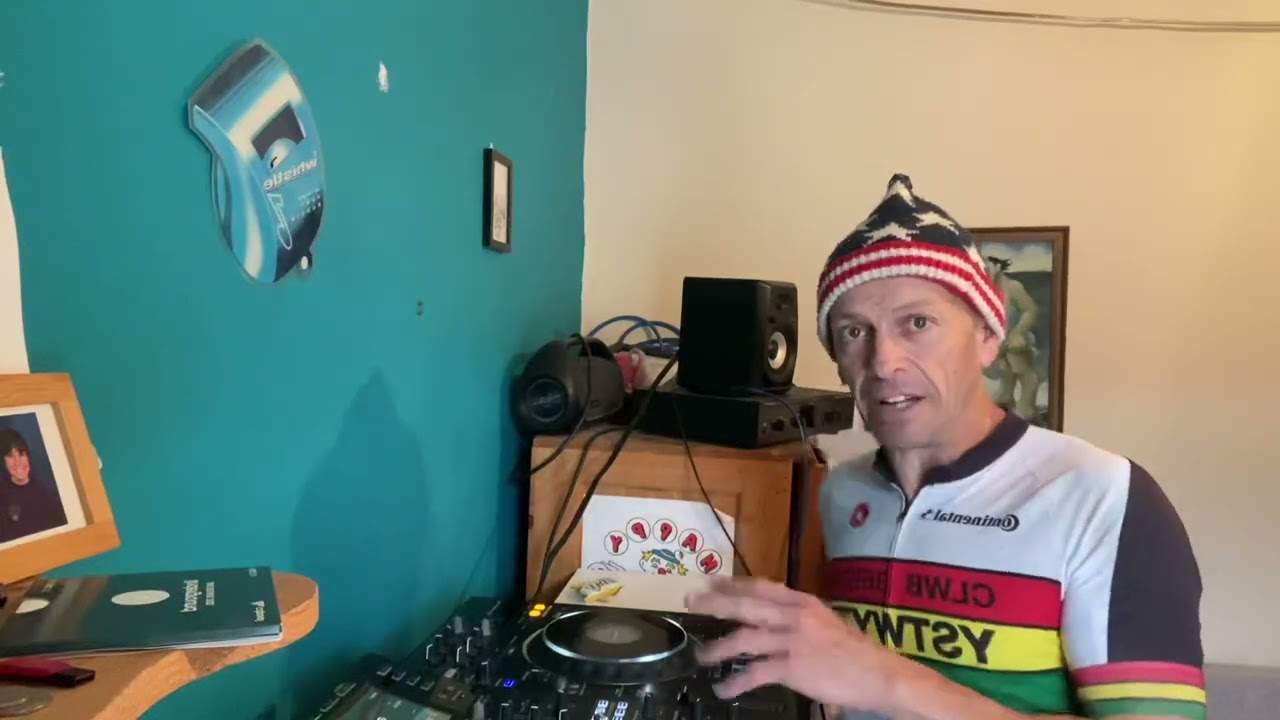
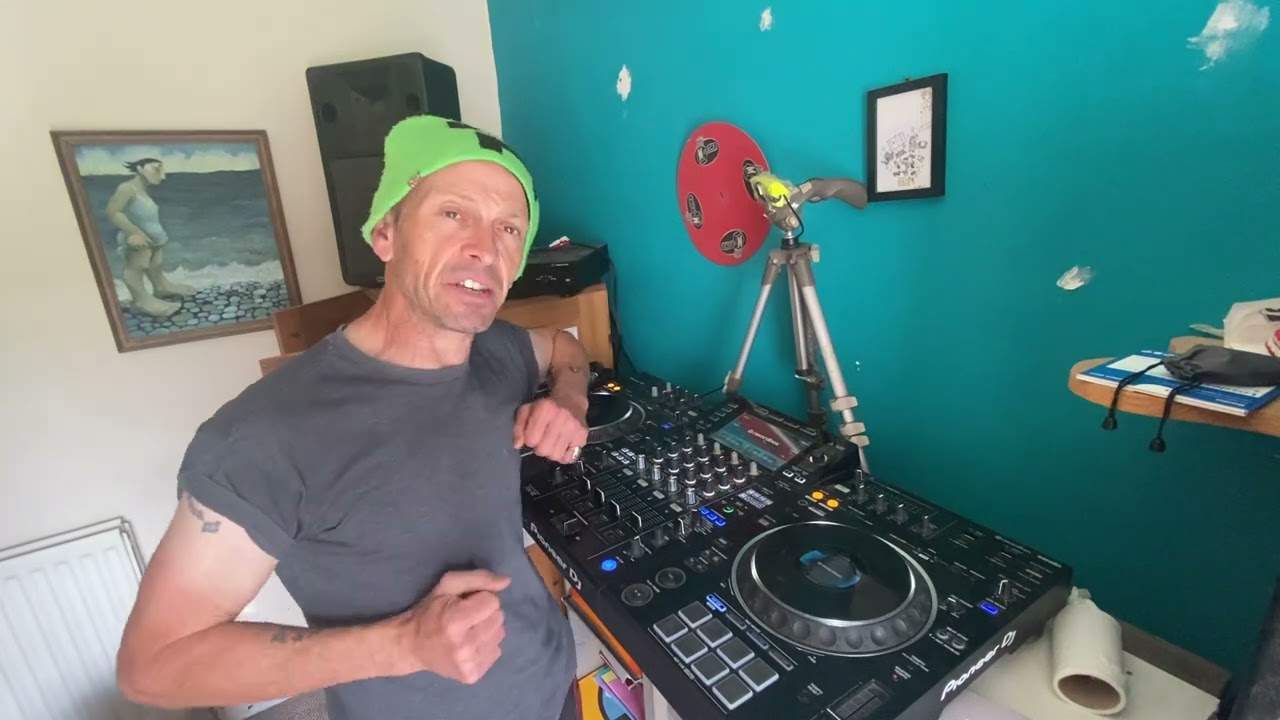
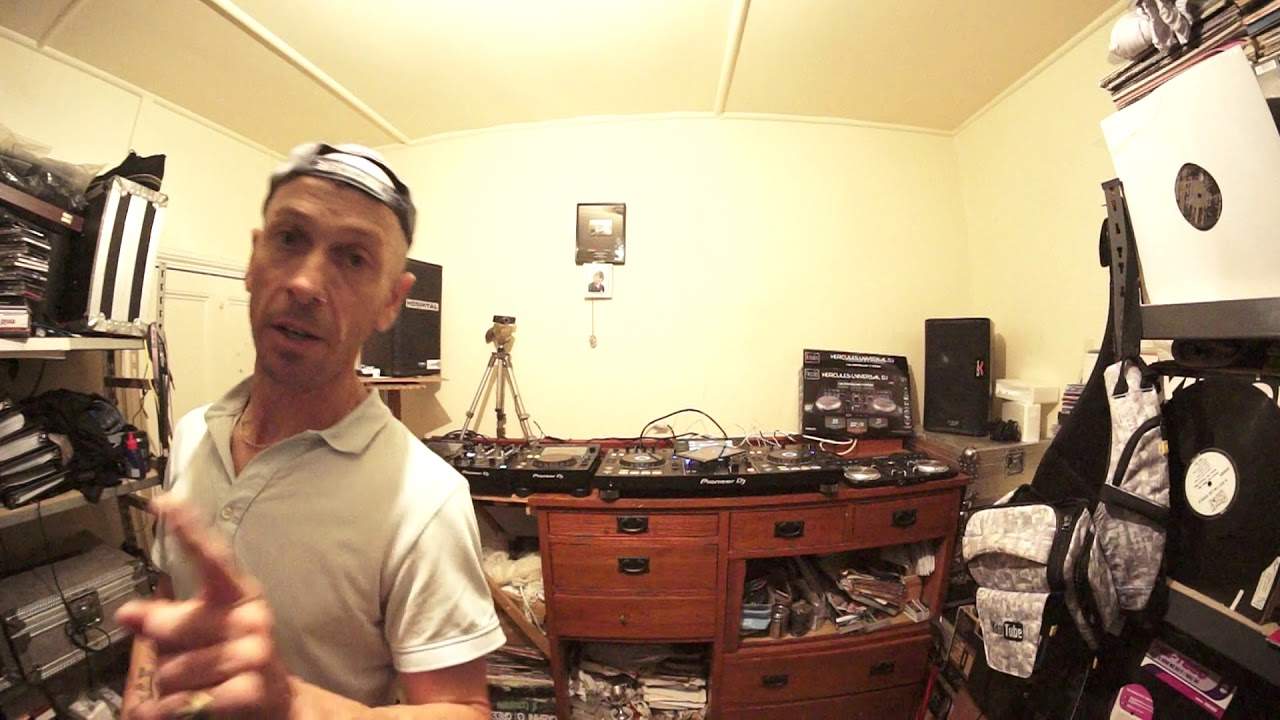
 21:31
What to buy and what to avoid, to save money
On YouTube this video is called New DJ What Kit to Buy and What Not to Buy to Save You Money
What this lesson teaches
This is the anchor lesson of the stage and it is worth the full twenty minutes. It is organised around one idea - buy the kit that suits what you are actually going to do - and it contains more hard technical detail than anything else in the course.
Match the kit to the room, not to your bank balance
His opening point cuts both ways and is easy to miss. Having little money does not mean you should buy the worst equipment, and having plenty does not mean you should buy the best. Both mistakes cost you.
Buy below your needs and you outgrow it immediately, as he puts it, about as soon as you have opened the box. Buy a club-standard setup as a beginner and most of it sits unused while you learn things a two-hundred-pound controller would have taught you equally well.
Why a controller comes first
For a bedroom, a controller. No separate players, no turntables, no spread of cables - one box, your laptop, and software that came in the price.
The feature that decides whether you replace it
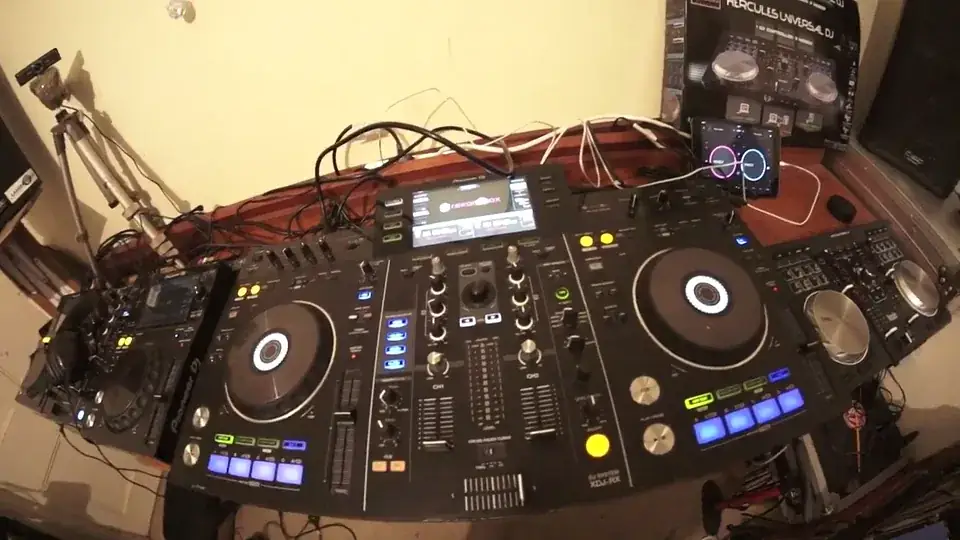
Here is the buying advice that nobody gives beginners and that genuinely saves money: look at the inputs on the back.
A controller with line, aux and phono inputs is not just a controller. It is also a mixer that happens to have a controller attached. That means two things.
First, you can grow without replacing it. Start with just the laptop, and when you want CDJs or turntables later, plug them into the inputs that were always there. The cheap-looking upgrade path is the one you already paid for.
Second, it is your insurance. His scenario is the one every DJ eventually lives through: you are playing, the laptop crashes, and a room full of people turns round to look at you. With a line input and a CD player beside you, that is an awkward thirty seconds. Without one, the night is over.
Headphones, and what they are actually for
Worth stating because it genuinely puzzles people watching a DJ: why wear headphones when the music is already coming out of the speakers?
Because you are not listening to the same thing the room is. You are auditioning the next record - finding the start, checking the tempo, deciding whether it works - while the current one plays. Cue it through the speakers instead and the crowd hears an R&B track arriving over the house record they are dancing to.
Active and passive, and the way people blow speakers
Active speakers have the amplifier inside. Out of the master output of your mixer or controller - not the booth output, which is for your own monitoring and is on a separate level control - into the speaker. RCA is fine at home; use XLR if you are carrying the kit to gigs, because a balanced connection with a locking plug survives a venue floor.
Passive speakers need a separate amplifier, and this is where equipment gets destroyed. Put a powerful amplifier into an under-rated speaker, turn it up, and you get one loud noise and then silence. The amplifier has to suit the speaker. He deliberately stops short of RMS, programme power and impedance, which is the right call for a beginner's video - the rule you need first is simply that the two numbers have to be chosen together, and the shop can do that with you.
Adding a sub when you have no output left
This is the best trick in the video and it solves a real problem. You have small speakers, you want bass, and your master output is already in use.
Use the booth or record output. Run that into a powered sub. A powered sub normally has a crossover inside it that keeps the bottom and discards the rest, so sending it a full-range signal is usually fine - the speaker sorts that out itself. Check the manual for yours. Your little tops keep doing the mid and top, the sub does what they cannot, and suddenly the system sounds like a system.
Sizes, and getting them off the floor
For home, an eight-inch driver or thereabouts. Below about four inches there is no bass to turn up in the first place.
For a mobile setup, twelve or fifteen inch tops with a horn will fill a room of a hundred people, though without deep bass. The moment you notice yourself turning them up to compensate, that is the signal to add subs rather than push the tops harder. He prefers eighteens to fifteens for subs: less efficient, because there is more cone to move, but warmer down at the frequencies you feel rather than hear.
And put them on tripods. Speakers on the floor look fine in an empty room and disappear the moment it fills - bodies absorb sound, nobody can see the speakers, and someone will kick one over or put a drink on it. A set of stands costs almost nothing against the speakers themselves.
Two pieces of money advice
Buy brands that hold their value. Not because you plan to sell, but because the one certainty about a first setup is that it is not your last, and the difference between recovering half your money and recovering almost none is decided at the moment you buy.
And keep the box. He is serious about this and he is right: the carton your controller came in, with the corners taped, is a free flight case that protects it perfectly well for the first year. You will want something better before you carry it into a wedding - but that is a reason to buy a case later, not a reason to buy one now.
Contents of the video
0:00 Jonathan here, The DJ Tutor
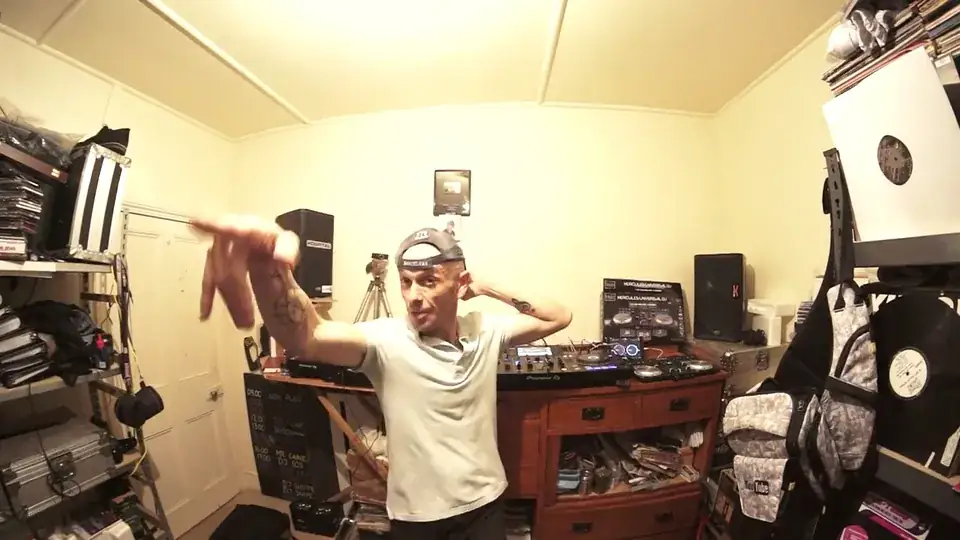
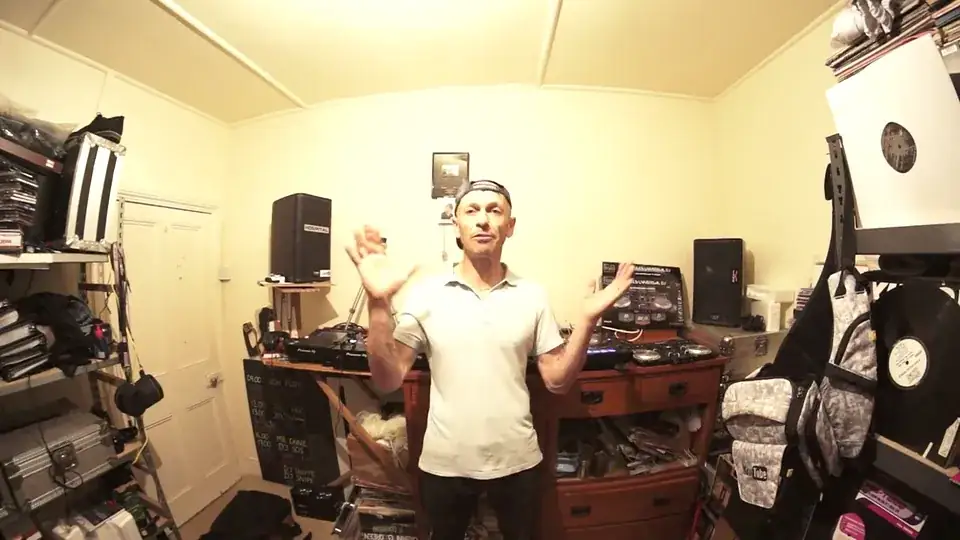
Right guys, Jonathan here, The DJ Tutor. It's been sort of a while since I've done this kind of video, but every once in a while they are very appropriate. What kit should you buy? Should you invest heavily in the top of the range Denon or Pioneer? Or should you maybe tread carefully, poke the toes in the water and go along with something to stick on your iPhone? iPad over there. So this video is about hopefully helping you to make the right choice for the kit that is best for you. Now that statement is very important, is exceedingly important, it is like up there, right? Because you don't want to start investing a pittance and think, oh what the hell did I buy this for? And you outgrow it as soon as you've opened the box.
What does that button do? You press it and then a country next to you explodes in a rage of fire and everyone dies. So you need to make the correct choice for the right budget. So if you do have money that you can just literally burn, then don't go out and buy the latest kit, the best kit in the world because you won't be able to use it correctly unless of course you know what you're doing. If you're a new DJ, then perhaps you need to invest in something that is suitable for the bedroom. Maybe you want to become a mobile DJ, so you need something. There is so much to think about. So, just because you have not much or a lot doesn't mean to say that if you have not much, you should buy the worst kit. A lot, you should buy the best.
2:19 My decks and just get
First, so let's talk about that. Okay, so you want to be a bedroom DJ, you want to play to your friends, your family, you want to have a little bit of fun, get completely drunk on Jack Daniels and just press buttons and just cause mayhem via friends in your house with the doors locked so no one else can hear. In that case then, think about a controller. Alright, there's no need for CDJs, there's no need for final turntables, there's no need for a myriad of plugs and cables all over the place with look at my decks and just get a controller. Very simple. So a controller you can spend anything from a couple of hundred P, the Pioneer RB, maybe the Newmark Mixtrack Pro 3, a couple of hundred pounds up to SX2 from Pioneer which is very good.
Or even something like the RX that I have behind me. Now, I'm going to show you that now because I do like the RX immensely. Because there's no moving parts and it does a lot of things that your run-of-the-mill controller cannot do. Inputs for auxiliary or phono. Now, excuse me, auxiliary can mean anything. You could even plug an old school CD, sorry, old school cassette player in there. Literally, an old school cassette player, DAT player or a CD player. CD player, okay. So if you have a controller with auxiliary line and phono in, then you can, if you want to, progress. From just using your laptop to then using CDJs or vinyl. So now, if you think about it, if you've invested not only in just a controller but a controller with RCA...
And phono input, you can start off by just using your laptop and let the programs that are with the controller help you to become a better DJ. Then eventually when you feel more confident, then of course you can just use CDJs or vinyl. Alternatively, quite a few controllers out there will let you switch in between all three formats. Also, you've got to think that let's say you're at a gig Your house party and your laptop crashes and everyone's going... And they're looking at you like stuff ducking a thunderstorm. You can go... I know where you go with your CD player. So, controllers. Right, let's have a look at the RX. So I'm just going to press that button, pull that lever and hopefully destroy the camera knot. Move it back. Right, so this is the RX. So what we have here is we have a...
5:00 This is pretty much anything and everything you need
An all-in-one controller, you can use a laptop if you want to, you can also use CD players and you can also use vinyl. You can also use USB as well. So this is pretty much anything and everything you need. Next to that I have the DJM450 and the XDJ700s. Now this setup here is very similar in its footprint to... The RX, the difference being is that these are separate units. Now this here you can if you want to, you know, you can plug, you can go through a laptop so long as you've got the correct connections. You've also got an input here so you can plug in an external kind of effect unit, ideally the likes of an iPhone or iPad. So a nice kind of setup there. Again, with both of these setups, one of the key features that I do like, I've grown accustomed to and over the years, the technology has made it better and better and better is that there are no moving parts. So if you do get a CD player, you never know, the CD player could stop working. It can, it has been known to happen.
7:43 Stop laughing please, thank you
Now, let's imagine you haven't got that much money. How about this? The Hercules Universal DJ controller. Now, this is not as cheap as chips, but it is a very good price. It comes with software known as Deduced. You can use it on many, many platforms. You can use it tablet, screen mode, also laptop as well. So you can plug your tablet in and away you go. Alternatively, of course, you can plug your laptop in Or just via screen mode. Now, how about this? We DJ. So for example, if you just want to not even... Hold on, let's just go back a bit, put the camera back on the screen. Sorry, on the screen, on the stand. There you go, I'm getting hot now.
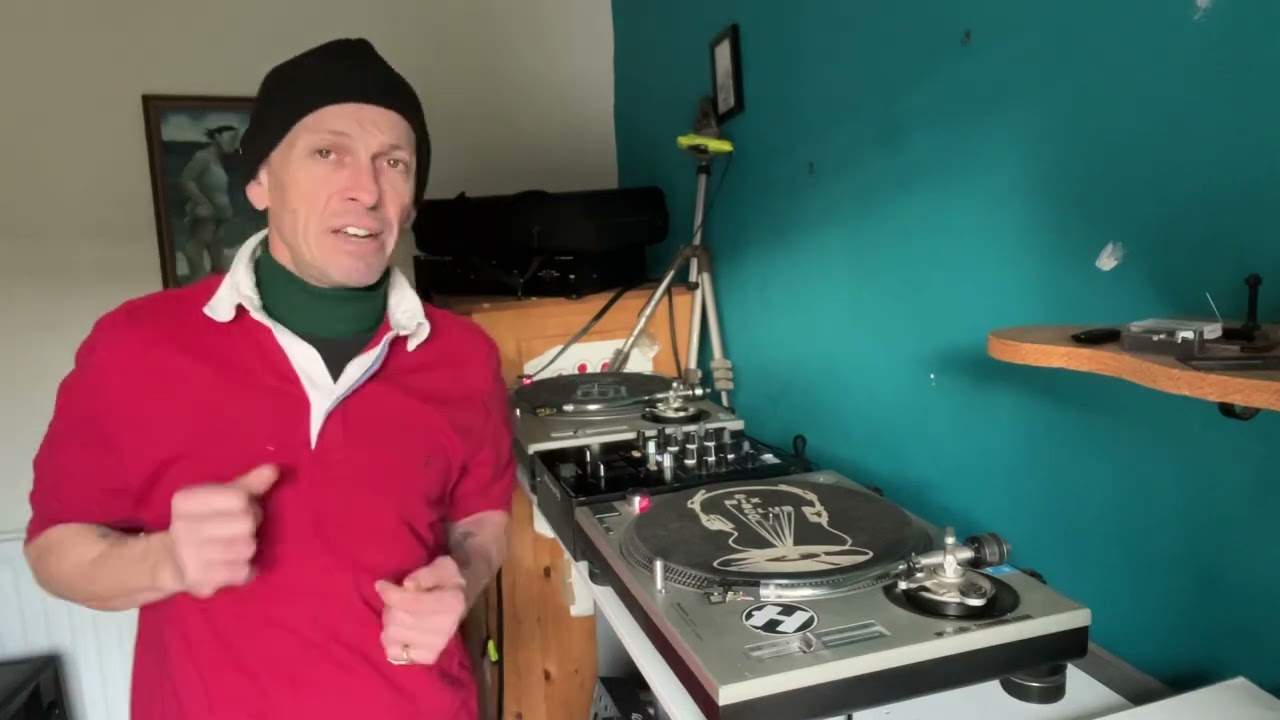
Alright, so let's imagine now that you don't even want to buy a controller. You know, you don't want to invest that money. So what do you do? You can just download an app. Vinyl was the only thing, that was it. It's a little bit like going for a journey from A to B and realising many years ago that if you wanted to get there quickly, you had to jump on a horse. Right, so... Stop laughing please, thank you. Right, so there you go. This is a Technics SL1200 Mark II and there is absolutely no difference between the SL1200 Mark II, silver or black. But I recommend 100 and million 10% by Direct Drive Turntables.
9:29 Flight case, vehicle, quality items
Anything with an elastic band in it, the only good thing that's got is if you've got long hair to give yourself a ponytail. That's about it. Otherwise, you need to get Direct Drive Turntables. It is so important. Now, like with a lot of today's kit...
This is the crunch part. This is where you have to start thinking. Let's imagine that you're testing the water. So you've taken your clothes off, not all of them. You've tipped in, you know, you've just jumped a little bit into the water and you're now about to head straight in. Even though you head straight in, you may find it still very deep. Good analogy here. So you may think, oh, you want to get back out the water. Now, how does that analogy work with kit? Well, once you get back out of the water, you've got to put your clothes on. Now, if your clothes don't fit you anymore, you may have to get rid of them. That's sort of an analogy. Now, how does that work with DJ Kit? Let's imagine that you bought the cheap stuff and you like it, and then you buy the more expensive stuff and you think, well, this isn't actually for me. You may find it difficult then to... Actually, that analogy doesn't work. Never mind.
12:06 Oh darling, you've got a rather nice box as well
Some of you may get that. You may find that you want to then sell everything and take up flower arranging. So what you possibly will find is that the kit that you spent an absolute fortune on and you haven't got an arm left because you've sold it and half a liver, you get a pittance back on eBay or, you know, a Facebook swap shop. Now what I do recommend, and I don't want to give names here because I don't want to be biased, but what I do recommend is that you buy good quality items, good quality items that will get a good return second-hand value. Because there are some items out there, some companies that will manufacture stuff that's cheap as chips and you try and sell it again and...
You've got enough for a fish and chip dinner. That's about it, really. So again, a mobile DJ. Maybe you want to become a mobile DJ. You have to consider that your pieces of kit are going to be in and out, in and out, in and out, in and out. What's in and out? Well, it's out of the house into the vehicle, out the vehicle into the venue, out the venue back into the vehicle, from the vehicle back into the house, and again and again and again. You don't want to leave your kit in a vehicle just in case someone tows it away, which isn't...
14:14 Bigger event
Not really nice. So you've got to have something that's reliable. Not only reliable, trustworthy. Now before I delve into what isn't, no in fact I'm not going to say what is and isn't reliable because today's technology, in the past sort of I would say 10 years, the likes of a controller and a laptop has progressed immensely. What I will say though is you definitely need to invest In a flight case for your kit. Now, if you cannot afford a flight case to begin with, guess what? You've already got one. You have. If you haven't thrown the box away. Because believe it or not, the box that your whatever came in is a really good flight case. All you need to do is make sure you gaffer tape it so the corners don't get knackered after the first two or three months, but believe it or not, so long as you look after it, that is possibly the cheapest, in fact it is the cheapest flight case you will ever buy in your entire life. Until you get a little bit more professional because when you turn up to a very posh wedding in a marquee where everything's white and the bride and groom go, hello, how are you? They'll look at you and think, oh my goodness me, he's bringing a box in.
Oh darling, you've got a rather nice box as well. So, you don't want to use the box all the time but the box is a great way of keeping your kit in good condition. So, we've talked about controllers, we've talked about vinyl turntables. How about everything else? You know, you need something to monitor which is of course headphones. Hold on a second, don't go away. Right, so here are some headphones. There's some headphones. And there's other headphones everywhere. There's small headphones. So for the people who don't know what headphones do, why do DJs... What's the point in headphones when you can hear the music through the speakers? Right, I'll tell you. You need to be able to listen to tracks...
16:45 Your tiny squeaky little speakers and you're thinking what else can I
Parts of the track, you need to sift through all those tunes and you need to be able to listen to something that the crowd can't listen to because it would sound very, very bad if all of a sudden they're bopping to the latest house tune and you're trying to listen to an R&B tune over a house. It just wouldn't work with it. So that's why DJs use headphones. So you will need a set of headphones. You're also going to need something to play them through because it's going to be rather, rather silly going, come along to my house party. We're rocking! And you're there on your headphones going like this and everyone's going... So you need some speakers. Yes. Now, there are two ways of having speakers. It's active or passive. Active, they have the amplifiers inside them. So you will go from your output of your mixer
Master out, not booth output, from your master out or record output for that matter of your mixer or controller into your powered speakers. Now you could have RCA to RCA which is just that red and white cable. Alternatively you could have XLR. Now if you're a mobile DJ and your controller is XLR I recommend you use XLR but again it depends on the input. The DJ Tutor allows you to use the QS-EK series for monitors, but they're really powerful. They'd happily do a small house party of 50 people if I wanted to go to a bigger event. I would use a set of those which I have done with a set of 18 inch subs and it's happily throttled to death 100 people and given them loads of drum and bass sounds. So that's fantastic. So again, powered, make sure you've got good cables and the powered have internal amplifiers. Alternatively...
Passive speakers do not have internal amplifiers. This is where you've got to be slightly more careful because if you get a speaker that is low power and an amplifier that is high power and you turn it all up, all you'll hear is boom! And you'll be wondering why you haven't got any more sound. It's because possibly the amplifier has put too much signal into the speaker and the speaker's gone, I can't handle this. So you need to make sure that the amplifier is suitable for the speakers. Now I don't want to go at the moment into RMS, PMPO, maximum output and the power of ohms and stuff like that because it's another new dimension. But what you need to make sure is that you've got a good amplifier that will match the speakers. Now, if you are using it for home use, for example, you're just in your house and you don't want to go out, you definitely 110% do not want to play out there to the general public.
18:54 Bass cabs mid and top
Then the likes of an 8-inch like that, maybe slightly smaller, will be suitable. Do try not to go for 2-inch or 4-inch speakers because they're probably a little bit too small and if you start turning the bass up you're going to have no bass. On the other hand, if you have already got... A 4-inch speaker, the likes of a monitor, a powered monitor. Don't worry, don't fret. Help is at hand by the means of a sub bass cab that you can buy. And if you're looking at your mixer and thinking, well I've gone out of there, how on earth do I configure and plug in an external bass cab? If you've got on your controller or your mixer, you have the master out and you've gone from the master out to... Your tiny squeaky little speakers and you're thinking what else can I do? If you've got a record out, or for that matter even if you've got a booth out, you can go from your booth or record out into your sub speaker. Now every single sub speaker that is powered will or should have
An active, a crossover in there that will eliminate all the mid and high frequencies. So all you've pretty much got to do is make sure you've got the correct cable to go from the output, the booth out or the record out of your whatever you've got into your bass cab and away you go. And all of a sudden your sound will become more alive. You'll get a rumbly sound. And if the rumbly sound is right down there it could be rather interesting as well. Right, so hopefully we've covered that. Now again, if you want to, let's say, progress and become a mobile DJ, that's when you need to start thinking about bigger speakers. I would have... I'd probably consider more on the lines of a 12-inch or a 15-inch mid and top speaker, and a set of those would happily...
Fill a room for 100 people, but you wouldn't expect to get loads of booming sub-bass. And what you've got to remember is when you start to turn a speaker up, the driver, the big driver, starts to move more. As it moves more, it's losing a tiny amount of the sound. A millisecond after it moves out, it's lost that sound that is a millisecond after it's moved out. I've already said that twice. Say it three times. No, I'm not going to. So once that happens and you get to the stage where you're having to turn up your 12 and horn or 15 and horn, then you need to consider getting a set of bass cabs. Now if you've got 12 inch, you could go maybe with 15, but I'd be more inclined to go with 18 simply because you've just got a bit more warmth to them. Now 18s are not as efficient as 15s because they have to move more, they're a little bit more sluggish.
But what they will do, they'll give you those subtle underlying kind of 45 below hertz frequencies, but you need to cut off at 20 hertz because no one can hear that anyway. But again, I'm digressing slightly, I do apologise. So, bass cabs mid and top. When you're setting up your system, for goodness sake, don't do a ridiculous silly thing and turn up and put a set of 12 and horn or 15 and horn. On the floor. They may look good there, but as soon as you get the dance floor full of people, A, no one's going to see them, B, people might kick them over, D, someone might pour a drink over them, Y, is because the sound's going to just disappear. And as soon as you get people in front of a speaker, the sound's lost. Buy a set of tripods that will cost you...
A pittance. There's a link down there to getinthemix.co.uk and they sell them for like, I think about 40 quid a set. Cheap as chips. Right. So that's that covered. So really this video is about hopefully helping you make the right choice and also saving you money. This is the key here. Do not go and buy stuff that you will regret as soon as you've paid the money. Thank you very much. It's gone through. What did I do that for? You don't want that to happen, alright? I hope this has been a help. By all means leave comments down there and if you do want any personal information, I am giving Skype lessons, DJ Skype lessons. Also we can go through the medium of Facebook. Private and confidential, no information is given away about anybody except on the back wall there where I say who I'm teaching, just kidding. And I can teach you how to DJ, I can help you with radio, club DJing, mobile DJing, and just give you some good advice, tips and tricks on all manner of DJ mixing skills on the likes of players like that.
Top Pioneer kit as well as the RX or maybe even small controllers, maybe even vinyl as well. Alright, on pretty much any style of music. So give me a bell if you want to. My email will be down there in the description and I'll finish off with practice and enjoy. Thank you. Oh, sorry.
This transcript was produced automatically from the audio of the video and may contain mistakes.
This video is part of
Related videos
-
WHY Vinyl and WHY Is Now the Time to Go Old School
He admits at the start that this one might annoy people, and some of it should be argued with. The practical half is excellent. The claim…