 11:25
Pioneer DJ PLX-1000 Can You Mix on Them with Real Vinyl Lets Find out with Ellaskins DJ Tutor
Contents of the video
0:01 Before I do, I love my analogies
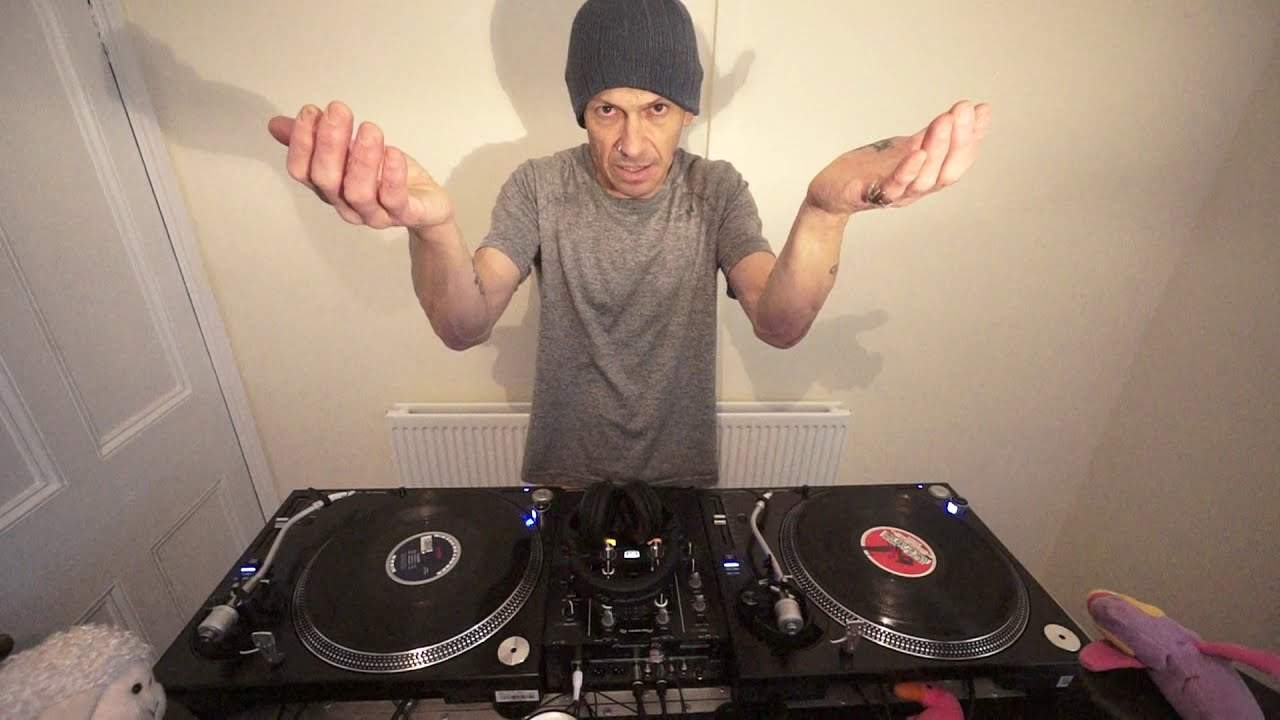
Right guys, it's vinyl time and also this is going to be my first time using the PLX-1000 for basic beatmatching mixing. Before I do, I love my analogies. I want to give you an analogy. Now imagine you're holding a cylinder, okay? Cylinder with on either end a stopper. And inside that cylinder, you have a ball of mercury. Now your objective is to keep the ball of mercury dead centre inside that cylinder. Now, of course, by now you should know that mercury is a metal and a liquid. So if you imagine you're balancing it and you're trying to keep it in the centre. You're in control of where that moves. Now, if you're very careful, you can get it into the centre. But let's imagine to begin with, it's only on one side. So of course what you've got to do is you've got to tip that side for the ball of mercury to roll. But unless you're very clever at stopping it or tipping back even before it gets to the centre, its own inertia...
We'll keep it going and it will go past the centre. So in other words, what you're trying to do is you're trying to move that ball of mercury slower and slower as it gets closer and closer to the centre until eventually it's at the centre. Now that's a kind of an analogy based on learning how to beatmatch because as you speed up one track, you're speeding it up, it's going faster than the other one But then you need to make sure that you slow it down before it overtakes the other one. And if you're not quick enough, it will indeed overtake, which means then you have to slow it down further or slower than the track that you're trying to catch up, only then to repeat the process, speed up again and slow down, speed up, slow down, speed up, slow down until eventually you do...
2:32 Hit that exact same BPM
Hit that exact same BPM. So that's sort of what I'm going to try and do here. Tunes I'm using is Kid Krem featuring Shakarta and it's entitled Doing My Own Thing. And on here we have Lottie, Superkiller and I think it's this side which is Superkiller 1. But again you can Shazam them of course. So if you want to Shazam now... I'll just play a bit of the tune. This one's really funky. Look at that. Very funky tune. Okay, should have shazammed that by now. And then over here. Also, very quickly, I made sure that the pitches were dead centre so they are not only the original speed but also the original key. Now I'm not sure how Shazam works, how the algorithms work, but I would have thought that if I...
Thanks for watching.
4:39 In DJ terminology that's known as a train wreck
Okay, so in DJ terminology that's known as a train wreck. So what I'm going to do is I'm going to leave that dead centre and I'm going to bring in the super killer into doing my own thing. Now the great feature of the PLX1000, well we'll say great, what I do like is plus 8, plus 16, plus 50. If you're going to be just, say, mixing basic house tunes, you know, rough, similar sort of BPM, then you'll be a muppet if you're at plus 16 or plus 50, definitely. Because the higher the percentage, the less control you have over the BPM. So, if we break that down and make it very simple to understand, if you've got a tune at 100 BPM, you're at plus or minus 8. If you reduce it all the way... As far as it will go, as slow as it will go, the track will go down to 92 BPM, bring it all the way up, it'll go to 108 BPM. You are increasing or decreasing the BPM of that track by 8%. So it means you've got a certain amount of control over that pitch but then the higher the number, the less control you have because the smaller moves you can make on the pitch
6:31 I'm getting on to the first beat
To speed up or slow down the track. Whereas if you get to 50, you're going to have to use minute amounts. Whereas on controllers in the software, you can go to 100%, which basically means you can make the track stop or double its time, which can be used more so for an effect. But again, there's so much into that. We'll look at that in future videos anyway. So I'm going to put this one here, cue that one up. Get this one ready. So I'm getting on to the first beat. Is there? Seems quite easy actually. Seems relatively easy. Now what I'm... I'm utilising that theory I said earlier on with the Mercury Ball. Oh, you're there. It didn't work. So what I'm going to do is put my finger up on the side of the deck and see if that's right. I don't remember where it was, who it was, but someone said, gave a comment saying you can't mix on these decks. Now I've been using vinyl for a very long time.
9:01 You just don't hear any reviews
Now, one of the worst things in the world to say is, oh well it's great when it isn't. And a lot of people have always said, how come you never review any stuff that you don't like? Well, I do that, I don't review the kit because what's the point in having a piece of kit and saying I don't like it, it's crap, it's a waste of time. It's just not what you do. So if I get something I don't like... You just don't hear any reviews. I don't do it. What's the point? Whereas these, they are good. Okay? Now if I was doing say a vinyl mix and I will be doing some in the future, the very near future, I'd happily play that and let that play and I could form some kind of maybe 8 bar, 12 bar, 24 bar mix. And not have to worry about them going offbeat if I spent a little bit more time. But you see, that's what it is. It's about time. With using vinyl, you don't have a BPM counter. You've got to use your ears. And if you go back in the day and you listen to a lot of the original DJ sets, if you listen really closely, you can indeed hear the tracks going offbeat, back in beat, offbeat, back in beat. And you heard that more so back in the day than...
Today with a lot of mixes when indeed someone's using a controller. Now I embrace modern day technology, but what I don't want to do is abuse it. So this is the first time I've done an honestly on my word of honour, this is the first time I have done a mix on these decks and I'm pleasantly surprised. Okay? And I mean that I'm pleasantly surprised because I'm surprised how well Thank you for watching.
This transcript was produced automatically from the audio of the video and may contain mistakes.





