 11:38
QSC KS212C Cardioid Active Subwoofer 2 X 12" bass Cab Review BY Ellaskins the DJ Tutor
Contents of the video
0:00 It's from QSC, it's the KS212C
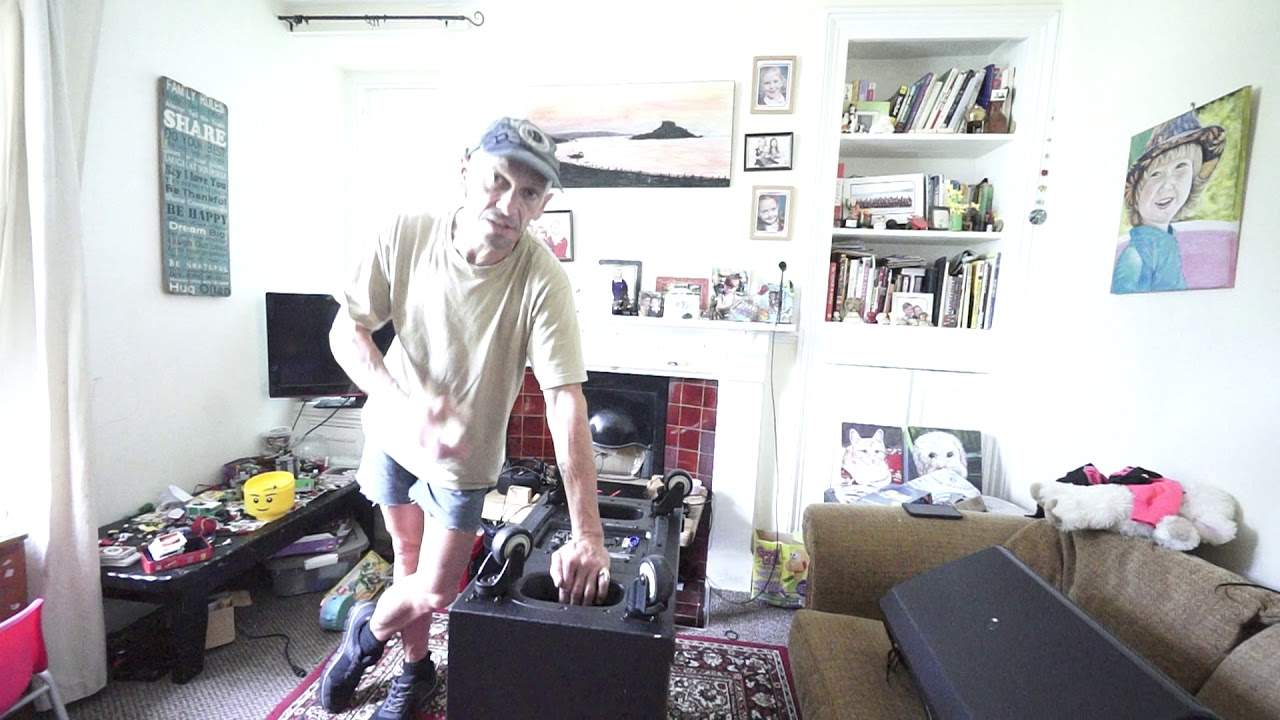
Alright ladies and gentlemen, now if you've been watching me via Facebook or the occasional video, you would have seen me use this here. It's from QSC, it's the KS212C. It's their first Cardual subwoofer. Now, first of all, what does it do? Well, it gives you a bit of bass. Two 12-inch speakers with rather nice amplifiers. There's an amplifier for each one, OK? Let's get that straight. And being a 12-inch speaker, it's going to be more efficient. Now, if you're used to the KW181, which is the subwoofer, the 18-inch, you'll know that that's got a really nice, warm, deep feeling. Whereas the KS212C is more of a punch. That's because 12-inch... bass speakers are more efficient now without going into the technical spec when you've got something that's quite small and it's moving forward and back it hasn't got as much air to push when you've got something bigger there's more air to push so it's going to be less efficient so you will get more efficiency with this and it's a nice warmer kind of i don't know it's it's an inviting sort of feeling
Where when you turn it up and you get a whole bunch of bass right so i have mine covered so the uh cover is optional and i'm going to remove that and pull it off right so here we go now if you're not familiar with anything like this you've never seen this sort of bass speaker before it's very simple well actually it isn't very simple there's a lot of technology that goes into this so um just reverse that If you've ever seen a bass cab like this before, it's not very simple because there's a lot of technology that goes on with this. You have a 12-inch at the front and a 12-inch at the rear. Now, what's the point in that? Well, let's imagine that you're in a venue and you want all the bass to go forward and not behind you.
2:25 Behind the speaker than in front
Behind the speaker than in front. You see, the trouble is with bass, it's omnidirectional. So what that basically means is that if you set up a bass cab and you say you face it forward and you think all the bass is going to go in that direction, you're wrong because bass will travel everywhere. It's not like a mid-top cab, more high frequencies where the sound will pretty much go the way you point them. Is my phone going? Right, so... What I'm going to do, I'm going to turn it on its end and... I don't know if you can see that properly. Yes, you can just about. Let me just move the camera down. These are my punk style videos, so if you've ever seen these before, they never change. This is just real, isn't it? OK, so... Now, they're not... It isn't...
4:14 Make sure you invest correctly
Easy to carry around, but I've got a transit van and I'm relatively fit and I can get this into the van with pretty much ease. You know, it's not difficult. I'm not struggling. OK, so in here we have a pole mount and I can fit that pole in there. Right, I'm going to move the camera up again now. OK, so let me show you something over here. We have the K12.2. Now, to give you a comparison, they are around about pretty much the same height. The base cab is a little bit bigger, alright? Now, if I was going to have a setup, I don't think I would get the base cab and the KS212. What I would do on the other hand... Now the beauty about this bass cab and the beauty about really any bass cab is you don't really need to have two, you can just have one. Now a lot of people are always asking me what bass cabs
If you're on a limited budget, I highly recommend you get one bass cab to begin with of good quality and then when you can afford it, get another one. Don't think I've got like six, seven hundred pounds, euros, dollars and I need to get two. You can, you could probably get four for that amount of money but you're going to get crap. Alright so make sure you invest correctly. Bass being omnidirectional, you only need one to begin with and then like I said when you've got some money you get another one. Alright so that is it with the bass cab facing upwards. I can take that off and let's imagine You have set up, I don't know, on a table and there's legs and you want the bass cab to be underneath you, then you can do something like this. You can just face it down like that. Now, the QSC do recommend that if you buy a couple of these, you can lay one on top of the other.
All side to side, so you could have another one on top here or another one on the side. If you do though have any more than two it's recommended go and check out online to have them set correctly so you can still get the cardioid sort of function where you have more bass at the front and not at the back because as soon as you're starting put loads together you know you may defeat the object of having the bass in your... no actually the bass not in your face, the bass In their face. Right, okay. So we can put another pole mount on the back as well. Sorry, we can put a speaker on there. Right, so I'm going to turn this upside down and... Right, so you had two ports at the front. You've also got two ports at the rear. Now, a while ago, again, I've said this before but when I was younger, I just used to pull things apart and...
6:48 You know, it's been in marquees, it's been in buildings and it has roc
Subtitles by the Amara.org community There are two amplifiers, now don't quote me here, I think each amplifier is 1800 watts, okay, giving you 3.6k. Now again, go online, I am not sure if that's peak, if that's RMS, PMPO, but the manufacturer does say 3.6, 3600 watts. Now again, I've had this for quite a while. And as soon as I got it, I could have done a review and gone, it looks good, it's fantastic and it works. But what I really wanted to do is to test it out, put it out there in front of people. You know, it's been in marquees, it's been in buildings and it has rocked. Now, this will not give you the depth of an 18-inch, but like I said earlier in the video, it will give you that punch. Now again, the way bass works is very simple and this is a tip for you here, really good tip. If you've got two bass cabs and you've got two pole mounts or two tripods and you put a bass cab there, a bass cab there, your tripod, tripod, mid and top at the top and they're spaced, I don't know, however many feet away from each other, you're going to get a really good sound. But bass being omnidirectional, you do not have to have a bass cab there and there. I would like you to try this.
Put your bass cabs together, either side by side or on top of each other somewhere. They could be there, there, there, doesn't really matter. And then put your mid and top on tripods, alright? You will find you will actually get another two or three decibels more by just putting them together because, you know, I don't know the exact physics but it will work, it does work. You get a much... Richer sound. Okay, so there you go. Back, very simple. Now the workings here on the back, there's a lot more to it than meets the eye but you can set the crossover point. Now what is a crossover point? Okay, so let's look at it from an easy point of view. Let's imagine from the floor to the ceiling is the complete...
10:01 Low at the bottom, high at the top
Audio range from about say 30 hertz to 20, I think it's 20,000 kilohertz. I think so. Don't quote me there. So let's imagine this is a really good analogy, a really good way of explaining. Now you should have the bass speakers on the floor. Now the higher you go, the smaller the speakers until eventually you get to the ceiling, the tweeters. Now they're the high pitch. They're the really high pitch. Pitch frequencies. So, low at the bottom, high at the top. Alright, so now just imagine this. Just imagine you've got a big bass cab on the floor and that's your bass. And then as you go higher and higher and higher, you've got smaller and smaller and smaller speakers till you get to the top. But somewhere in the middle, or not really the middle, probably like a third of the way up, you're going to start changing speaker.
Setup. For example, you're going to have more of a 12-inch and a horn or a 15 and a horn. And then below there, you're going to have your bass cabs. So bass cabs normally have a crossover of around about 80 hertz to 100 hertz, maybe 120. And then above that, you have got your mid and top from 120 to whatever kilohertz. Okay, so this speaker here is probably best run about 80. This is the KS212. Thank you very much.
This transcript was produced automatically from the audio of the video and may contain mistakes.





