 7:45
Do real DJs use vinyl?
On YouTube this video is called Real DJ's Use Vinyl or Do They Let's Find Out!
What this lesson teaches
Put this next to the previous two lessons and notice that he is contradicting himself, more or less deliberately. That is worth keeping rather than tidying away, because the argument is real and he is on both sides of it.
His own route through the formats
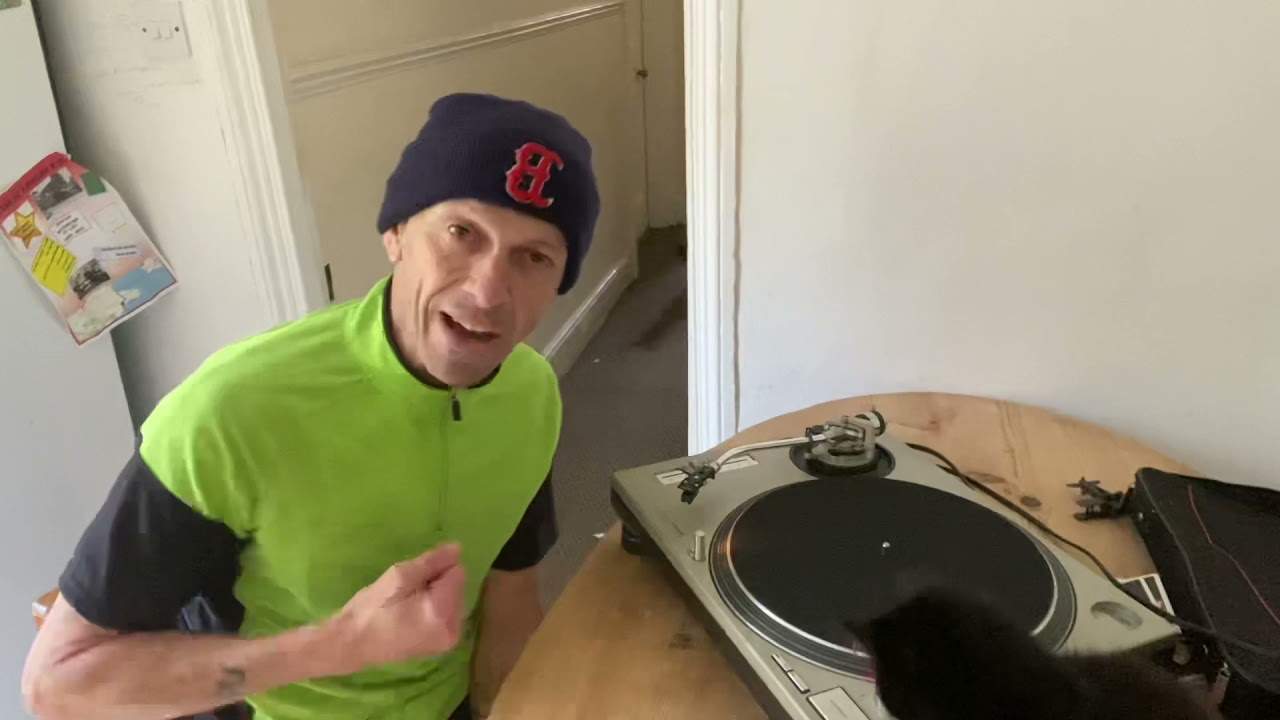
The history is the argument. His first gig was a Sunday school event on his sister's record player, where he ran out of records and played the B-side, which was called something he was asked to turn off. Then cassettes for a sixth-form party. Then belt-drive console decks with a mixer that had no crossfader at all - bass, mid and treble, and a tone control for the microphone. Then Technics. Then CD players. Then Walkmans, because that was what he could afford. Then controllers.
Somebody who has worked through every format in turn is in an unusually good position to say that none of them is the qualification.
The claim
Real DJs play music. The format does not make you one; understanding how records go together does.
He has heard controller DJs far better than vinyl DJs, and the reverse. He is explicit that the difference is knowledge - of the music, of how one track hands over to the next, of what an eighties set needs beyond the fact that the records are from the eighties. Putting Michael Jackson next to Take That because both are old is not programming.
And he is dismissive of the status version of the argument: having Technics does not make you a real DJ, and he uses a shorter word than that.
The exercise
This is the part to act on, whatever you play.
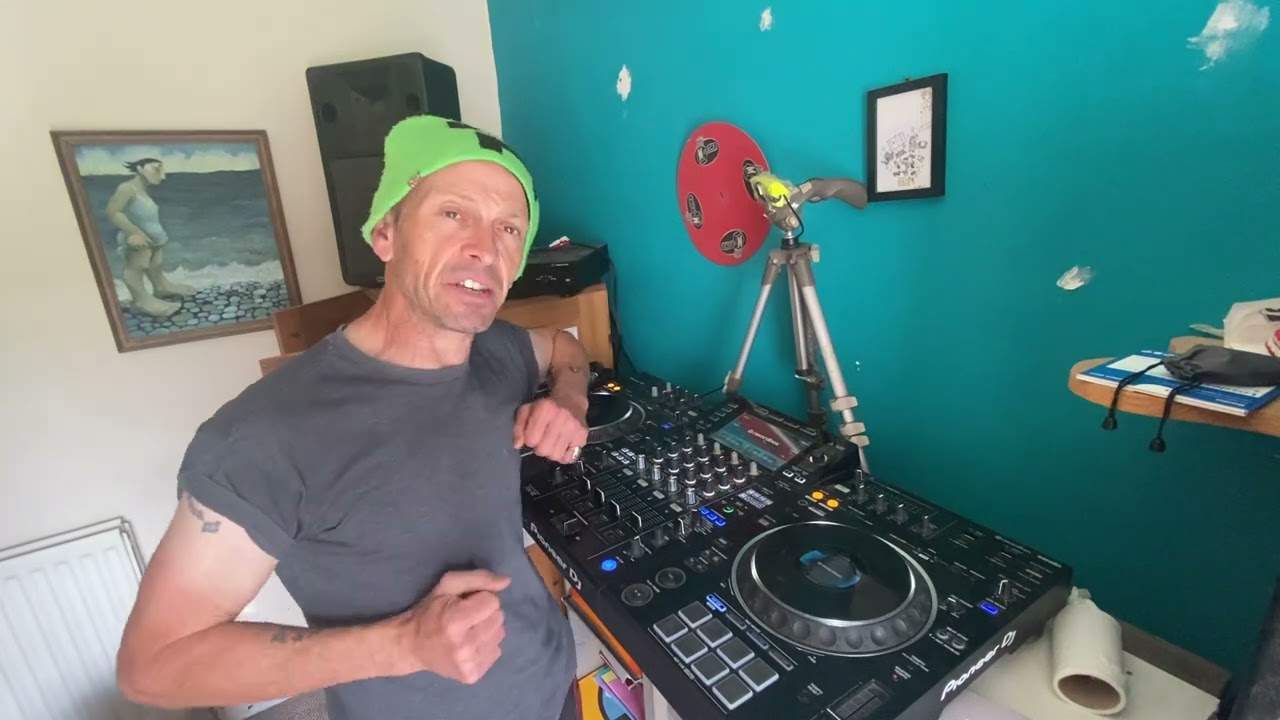
Turn off master tempo - key lock - on your controller. And set your pitch range to 6, 8 or 10 per cent, not wider.
Both deserve explaining, because he states them without quite saying why.
Key lock exists because changing a record's speed changes its pitch: speed it up and everything rises, slow it down and everything falls. Key lock undoes that in software so the key stays put while the tempo moves.
With it switched off, you get the physical truth. Pitch a 120 track up to meet a 130 and you have also raised its key, so two records that were harmonically compatible at their own speeds may now clash. That is a real constraint that vinyl DJs have always worked inside, and learning with it teaches you to hear the relationship between speed and key instead of being insulated from it.
The pitch range matters for a different reason: resolution. A fader with a 10 per cent range spreads ten per cent across its whole travel, so a millimetre is a small adjustment. The same fader set to 50 per cent makes that same millimetre five times coarser - and on the short faders of a small controller, precise matching becomes almost impossible. Narrow the range and the control gets finer.
Where this leaves the stage
His conclusion and the one to take with you: it does not matter whether your equipment is the cheapest controller or the most expensive kit made. What makes somebody a DJ is understanding how music works against other music, and knowing enough records to have the choice.
Everything in this course is about buying the thing you will practise on. This lesson is the reminder that the practice is the point.
Contents of the video
0:01 Don't worry, the camera will stop wobbling in a bit
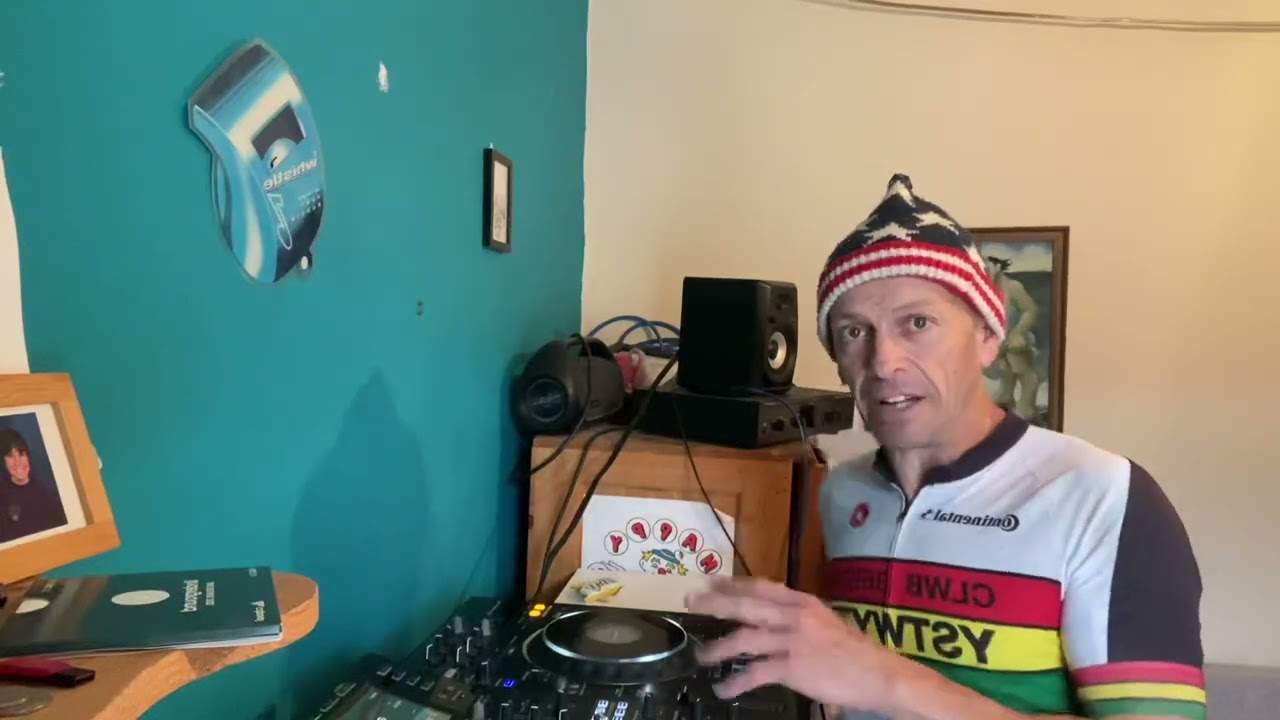
Right, ladies and gentlemen, don't worry, the camera will stop wobbling in a bit. I'm going to explain to you in this video how I honestly think, in my professional opinion should I say, that real DJs play music. Now, a lot of people have been saying, and I've sort of broached the subject in the past about real DJs just playing vinyl, that's it. In other words, if you're on a controller or if you're playing CD using CDs or any other digital format, you're not a real DJ. Well, in this video, I'm going to explain how real DJs don't just play vinyl. Now, I've been in the industry a very, very long time. In fact, I have used practically every single format you can imagine, all the way down to a cat. All the way down to, years ago, my sort of first gig, which was a Sunday school event where I took my sister's old school record player.
I played Ian Dury and the Blockheads, Hit Me With Your Rhythm Stick. And because I didn't have many records, I played the other side and the track was entitled Ain't Half Been Some Clever Bastards. And I got asked to turn it off. I'm not surprised. Then, when I went to secondary school... I did a gig for some six-formers and I used cassettes. Then, when I finally started doing proper gigs, I had a... I think it was a Trent 2, belt-driven turntables, very dodgy mixer, no crossfade. Basically, bass, mid and treble for your output, a volume or a tone control for your microphone. Eventually, you've got a set of techniques. And then, of course, I went to CD players to begin with as well, when I had CD players.
I had to... I had to use mini... Not minidisc. Small Walkman players, because that's all I could afford. Until eventually, I got the 800s and so on and so on. Controllers, the list goes on. It's got to be done, hasn't it? It's just got to be done.
It had to be done. I'm sorry, Pussycat, but just had to do it.
2:20 Exactly why I think that statement
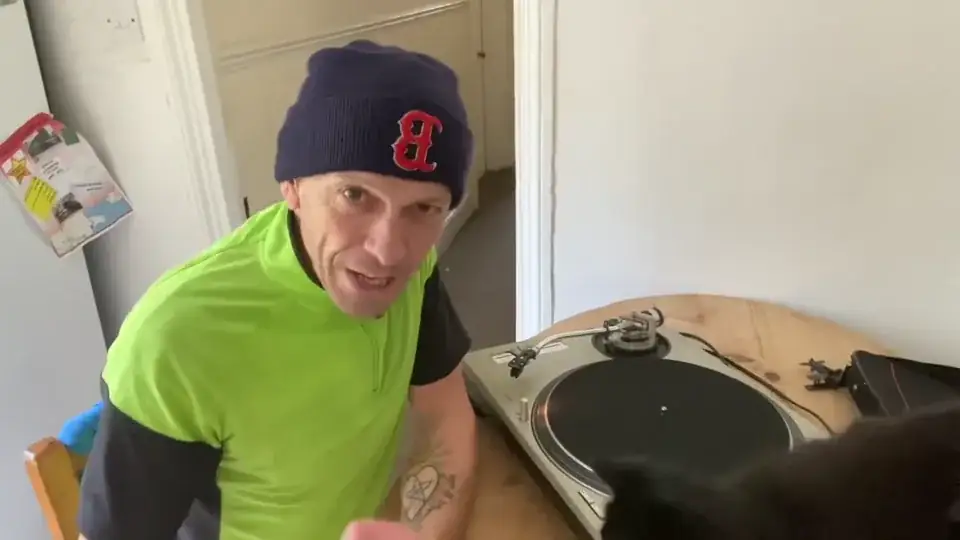
Okay. Okay. So, real DJs play violins. No, they don't. Real DJs play music. Now, I'm going to explain exactly why I think that statement is 100% correct. Because if you put a set of turntables in front of any DJ, they should be able to put the needle on the record and play music, play the tracks. But it's not just about playing the tracks on a piano. Or a piece of... Or with vinyl. It's about how you put the tracks together. So, really, the way this video is going is very simply like this. Real DJs play music and understand how to put music together. Now, this is really important because I've heard DJs on controllers who are far superior to some DJs I've heard using vinyl. And then again, I've heard DJs using vinyl and I thought that is amazing.
And there are other DJs who got a controller, the software and all of the mechanics to make them just put this wicked set together, but they can't do it. It's because they don't have the knowledge and they don't have the music content, the music feel, because real DJs understand how to put tracks together, how to form a flow. And it is difficult to do that with vinyl. Of course, it is because you don't have Key Lock Master Tempo. But at the same time, if you're using a controller and you've got the best controller in the world, you know, money's no object. You've got all the tracks. You've got the best laptop. You still have to have the music knowledge to understand how to put the tracks together. Because if you're doing an 80s set, it's not just a question of like
5:10 Master tempo, music knowledge, tempo disengaged
Sticking on Robbie Williams, Michael Jackson, Take That or, I don't know, Michael Jackson. You know, you don't just put those tracks together because they're from the 80s. You have to understand the music content of each track and how the music flows from one to the other. Now that is the important part of DJing. It's not how you look with a set of vinyl turntables, original Technics and oh wow, you are a real DJ because you've got Technics. No, that's bollocks. It's about how you're able to use the music. Now what I would suggest, and this is where I'm going to finish this video because I don't want to go on, but I am very sure a lot of you will agree with me here. I would like you if you're using a controller to turn off master tempo on your
Controller or also known as key lock, just make sure, and again, this is very important, especially if you've got like a mixtrack pro or the DDJ 400 with small pitch controls, make sure that your pitch percentage is at six, eight or 10%. You don't want it any higher. If it's any higher than that, you have less control of your pitch. But once you get to the stage where you can mix without having master tempo, then you're becoming more of a DJ because you're becoming more of a DJ because you're learning how to play. You're learning how to play. You're starting to have to listen to the track because with master tempo disengaged two cats know what that means is that when you speed up or slow down a track, you not only speed it up, but you increase the key.
When you slow it down, you decrease the key and it is more difficult to mix because when you have two tracks that are in key, but maybe one's at 130 ones at 120, when you start to mix them or try to. Mix them and then disengage master tempo, disengaged key lock. You may find that now they won't harmonically match because you're changing the key as well as the BPM. So to finish this video off very simple real DJs mix music and whether you are a DJ using the cheapest of controllers or the most expensive piece of kit out there. If you. Understand how music works with other pieces of music, then indeed you are a DJ and also about complete music knowledge cats going underneath the stand on there on the phone understanding music knowledge and the track selection as well.
That's important so again back to this real DJs play vinyl no real DJs are good at putting sets together. Understand music and also have got a very good music knowledge as in what tracks to play practice and enjoy and by the way please leave a comment let me know what you think do you think this video is a little box or do you think there is some truth in it practice and enjoy thank you.
This transcript was produced automatically from the audio of the video and may contain mistakes.
This video is part of
Related videos
-
WHY Vinyl and WHY Is Now the Time to Go Old School
He admits at the start that this one might annoy people, and some of it should be argued with. The practical half is excellent. The claim…