 7:50
Taking a set to the next level
On YouTube this video is called Take your DJ set to the next level. Tutorial
What this lesson teaches
A lesson about the difference between a set and a sequence of tracks.
Every record is a journey
Whatever the genre - soul, hip-hop, R&B, reggae, trance, techno, electro house - a track has a start and a finish, and in between it takes the listener somewhere. The producer built that in.
Play one record alone, start to finish, and the listener goes on that journey.
A set should be a bigger one
The whole emphasis of a set, as he puts it, is to join those tracks together so they gel - so the listener goes on one journey rather than eight consecutive small ones.
And here is the failure mode he is naming.
The habit that prevents it
Play a track. Wait for it to finish. Mix the second one in at the end. Wait for the second to finish. Mix the third in at the end of the second.
That is fine. It is also, structurally, a queue - and what the listener experiences is eight complete arcs in a row rather than one. Each record rises and resolves, rises and resolves, and the resolution at the end of each one keeps releasing the tension the next one has to rebuild from scratch.
What to do instead
Come in before the end. Leave before the finish. Overlap the interesting parts rather than the convenient ones.
A track brought in two-thirds of the way through the one playing never lets the first one resolve - so the tension carries across the join instead of being reset. Do that a few times in a row and the energy accumulates rather than sawing up and down.
That is the mechanism behind "taking a crowd on a journey", which otherwise sounds like a phrase people say.
The practical test
Record twenty minutes of your own mixing and listen to where the energy sits.
If it climbs and drops, climbs and drops, in a sawtooth with one tooth per record, you are playing a queue. If it accumulates, you are playing a set.
Contents of the video
0:00 This video is all about taking your mix to the next level
Alright folks, Jonathan here. This video is all about taking your mix to the next level. Now I have delved on this sort of subject before, but hopefully in this video we may be looking at a few other aspects. What am I on about? Right, basically any track, that particular track will take you on a journey. Soul, hip-hop, R&B, reggae, trance, techno, electro house, it's got a start and it's got a finish. And that particular track, like I said, will take you on a journey. But when you start a DJ, let's say starts putting a set together, no longer is the one track taking you on a journey. The whole emphasis of a set is to join all those tracks together, to almost make those tracks gel together, to take you on an entire journey. So in other words, one track, if you played that from start to finish with no music before or after, will take you on a nice journey.
And you play them all together so it starts and finishes. Theoretically, that should take you on an even wider journey. Now a lot of DJs, what they'll do, they'll play a track, they'll wait to the end of that track, then they'll mix a second track in to the end of the first track, then what they'll do, they'll wait for the second track to finish, they'll mix the third track, the beginning of the third track in with the end of the second track, etc. Now that's fine, but what this video is all about is trying to get you guys out there To listen to the internal workings of each individual track and maybe mixing a track to the inside of another track. There's a lot of tracks with the likes of, say for example, techno and trance that will take you on an overall journey in that particular tune let's say.
And let's be honest, if you mix incorrectly one track halfway through, you may just lose the whole emphasis of that particular track, the first track that you're mixing into, simply because there could be a certain point at which the crowd are just about buzzing and if you chuck another track in at the wrong place, it's going to sound off and you will lose the whole emphasis of the original track how it was meant to be. So that you need to take into consideration. But if you can work around that and you can listen to the music and you can almost try and gel the music together, you will keep continuity all the way through your mix. Now I hope you can understand the logic there. What I'm going to do, I've got the two tracks set here, look to the side of the video for the actual track listings or the track name should I say.
2:38 Beginning, part track, latter part
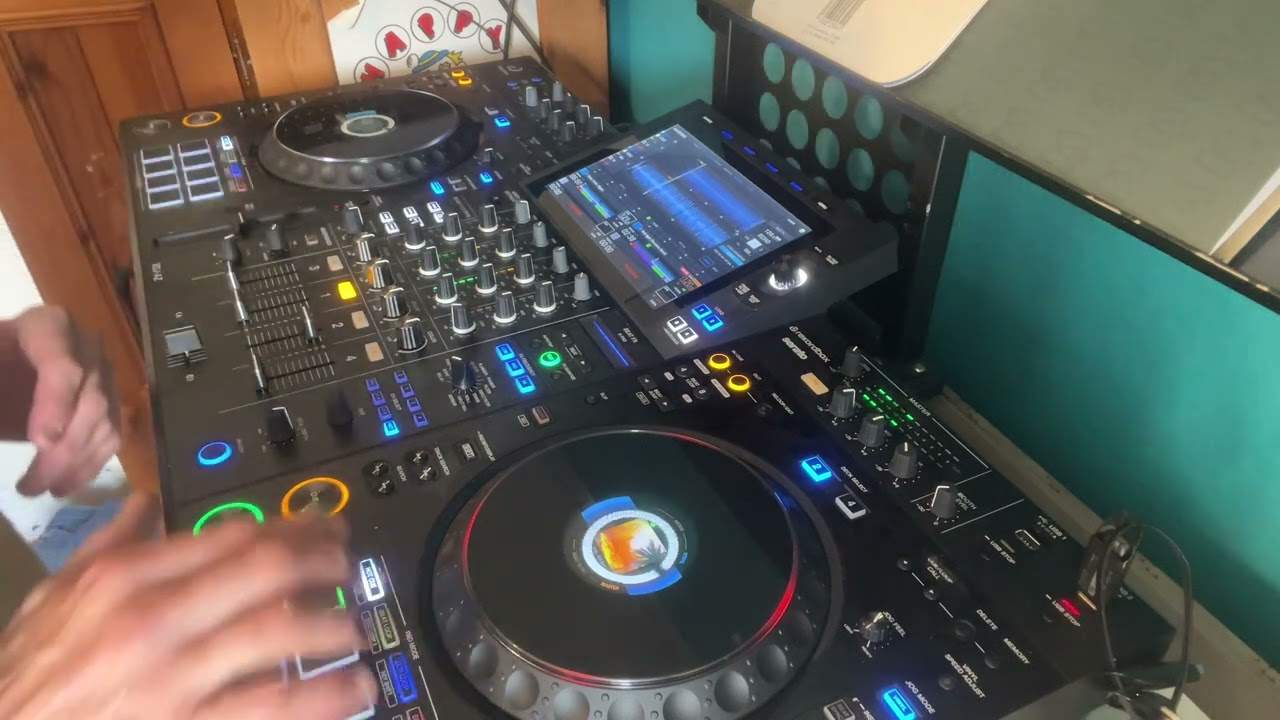
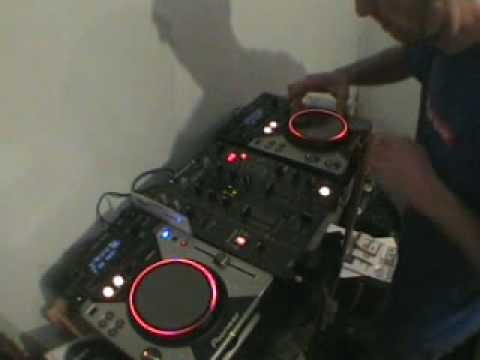
The CD here is I'm going to play the latter part of this track, I'm going to mix in the beginning of this track as you normally would do and hopefully it'll sound quite nice. But then what I'm going to do, I'm going to do the mix over again but I'm going to have this track halfway through and I'm going to mix the beginning of this track in. So what we'll actually have, we'll have two mixes, the difference being we've got end and beginning and then in the second one we've got middle. And we've got beginning, so I'll just pause the camera and we'll have a closer look. Right, here we go. Here's the first track. That's like the beginning. Second track. Right, so what we'll do, we'll find the latter part of this track. Here we go. Bass off here. Not any bass on this one. I haven't got any headphones, so bear with me. Normal pop standard thing the DJ does. Right, I'll pause that one. Well, in fact, we'll go back to the beginning.
4:51 What you would actually do, you would then start to construct your mix
Right, now what I'm going to do now is, I think I've got it near enough set out where I need to start, when I say start, I need to start this one at a certain point. So what you would actually do, you would then start to construct your mix. In other words, look at this guy here because this is basically the reader and it's telling you whereabouts you are in the track. So what you would actually do is you would say work at this track number 1 and you would think right at track number 1 Let's say two minutes and 30 seconds left, I need to bring in track number two. And then you do exactly the same with track number two. You'd look, you'd work it out and you think, right, maybe at track number two, I need to bring track number three in at let's say one minute and 20 seconds left. You're playing track number three, you do exactly the same with track number four. And maybe with track number three, you would bring track number four in, say with three minutes left.
Now that way what you're doing, you're not waiting just to the, continually to the end of each individual track. So we'll do exactly the same now but I'm going to bring this track in halfway through this track so bear with me while we, I just need to find the right place. Hold on. We've done exactly the same thing, the only difference is listen to the middle of the track brought in the next track in an appropriate place that is beatmatched and sounds good. I hope that's been a help. Practice and enjoy. Thank you very much.
This transcript was produced automatically from the audio of the video and may contain mistakes.