 8:12
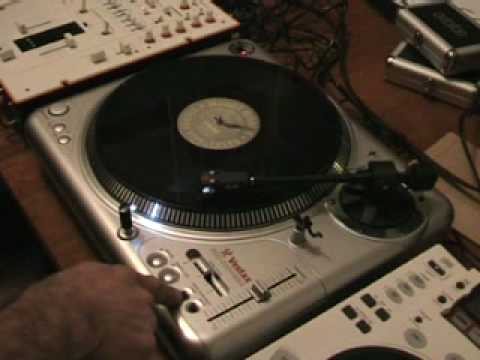
To Abrasaxon, a look at the the pdx-2000mk2
Contents of the video
0:00 It's quite a few people that said, oh you've got new decks have you?
It's quite a few people that said, oh you've got new decks have you? And they've said, right so can you demo them? So what I'm going to do, I'm going to be honest, straight to the point. First thing, I haven't used them that much. I've used them in the past and I thought yeah they're pretty good but I can honestly say at the moment now if someone said right it's a 1200 or one of these which one would you choose? I'd find it very difficult because this has got a lot more features. Again, I'm going to be honest okay. The only downside, two downsides to these is that I'm 99% sure that this is plastic and it would have taken it to another level if it was metal. Basically it would have taken it from a good turntable to a very good turntable. Button here, on-off button, if you've had one of these for like two or three years, I'm not exactly sure how long they've been out, but tell me, if you were one of the first people to have one of these turntables when they're first out, let me know what this button's like.
Because it does seem a bit wobbly. Now then, one very good feature and that is this, that when you put your hand on the actual record and you press down, you've got to put a hell of a lot of pressure on there before that platter stops. Okay, so I do like that. That's a nice feature. Good feature as well, they've got reverse on it, so if we just bung a tune on. That, I do like that. And again, quartz lock, so wherever the pitch is. If you press the quartz lock then it will go straight to either 33 or 45 depending on where the, you know, if you're on 33 or 45 logically. The actual pitch itself, nice feel, that's most important to me. There's a very nice feel to that and of course again there isn't a click there. It goes to minus 10 and plus 10 which again it gives you some more scope and then also here you've got ultra pitch so it will actually increase and decrease.
I'm pretty sure this guy here is to plus and minus 50, so if we have a listen. So again, if you think about it, if you've got 33 RPM tune, and if you put that on to 45, it's going to be fast. If you put it then to plus 10, it's going to be faster, but then if you whop it up again, it's going to go ape, I tell you now, so that's quite fun. That's a nice little thing to play with as well. What I do like as well, and it's only a small point, sometimes the fine details are the ones that... All of this can help you six months or a year down the line. Then it was an absolute nightmare to fix it because you had to unscrew all the bottom. It was 40 quid to get it done in the shop or if you did it yourself, it would take half a day and a pint of sweat. Believe me, it's not a very nice job. Now then, from a turntablist point of view, I can't fault this. I have done a bit of scratching on this and I'll tell you what, I'd have to throw a brick at it to get this styli to move. So if we just... If I move this a bit now and we get it up to a scratch...
3:32 I'll tell you what, I'm going to be straight to the point here
Check it out. I'm going to give it some stick now. It didn't move at all. I do like that. So, I'll tell you what, I'm going to be straight to the point here. Straight to the point. A 1200, you would have to get this perfect for it to not jump as much. Well, no, sorry, I reiterate. 1200 Technics turntables. You'd have to spend hours getting that arm balanced correctly but then you would still have to be very careful. To make sure that the styli, the needle, did not jump over the record. I spent five minutes aligning that and I'll tell you what, like I said earlier, I think I did, it would take a brick for me to knock that out of place. So if you are into scratching and that sort of stuff, even if you're a beginner, then believe me, that styli isn't going to move. So that feature is fantastic, I do like that. And again, like I said, with regards to the pitch.
5:30 Until eventually if we move it all the way around clockwise, then what
Nice movement on it. Also there's a couple of things here which is the start and break. Now what that basically does is at the moment the start and break are set to 7 o'clock so if we start it, it starts instantaneously and stop it, it stops instantaneously. Now then, as we move the start clockwise it will start up a bit slower. Until eventually if we move it all the way around clockwise, then what happens? It takes a long time to start up, which is a nice sort of feature like so. And then stop it again if the break is at 7 o'clock, then it will stop instantaneously. So if we put the break all the way to 5 o'clock, then logically it takes a long time to start up, but then also it'll take a long time to slow down. And then if we do the opposite here...
With the start, it should start straight away and slow down. It'd take a long time to slow down. So there you go. One thing I have found, I don't know if I've mentioned this already, but putting your hands here, you've got to press down hell of a lot before you stop that platter. And I mean hell of a lot. You've got to have a hell of a lot of pressure there. A lot more pressure than the SL-1200. So that's a very good feature because quite often if the actual slip mat is a bit damp, You do find that with a 1200 it almost sticks and the platter will stop. I can't see this guy stopping at all. Now then, I'll be honest with you, let's say hypothetically now, if you gave a turntable 10 out of 10, that turntable...
Should be good enough to make tea and coffee, and not only make coffee, but say, do you want coffee latte or do you want a demi-tasse? Alright, in other words, 10 out of 10 is something that would probably cost a million pounds to buy. In other words, there is no such thing as a 10 out of 10 turntable. I'd give this about 7.5, alright? I do like it. The more I use it, the more I'm getting used to it. I'm thinking, yeah, this is pretty cool. I like the pitch control. Good. I like the ultra pitch because you can speed it up, slow it down. I love the reverse because there's a lot of funny things you can do with that. I like the fact that you put your hand on the turntable and the platter doesn't slow down. I love the fact that this guy here doesn't jump. So yeah, I'm happy with it. So I hope I've been a help. Don't forget, leave your comments, you know, underneath. Tell me what you think about how I've explained it. If you've got one of these turntables, tell everyone else about it. It's about sharing, alright?
It's all well and good me telling you what I think, but there are a lot of other people out there who've had these turntables far longer than I have, and you can help as well and you can share your information with us. My name's Jonathan, DJ Tutor on YouTube. Thank you very much for watching and take it easy, practice and enjoy. See ya.
This transcript was produced automatically from the audio of the video and may contain mistakes.





