 7:32
Vinyl, CDJ, turntablist - is it the same job?
On YouTube this video is called Vinyl, CDJ, Turntabalist, are they the same?
What this lesson teaches
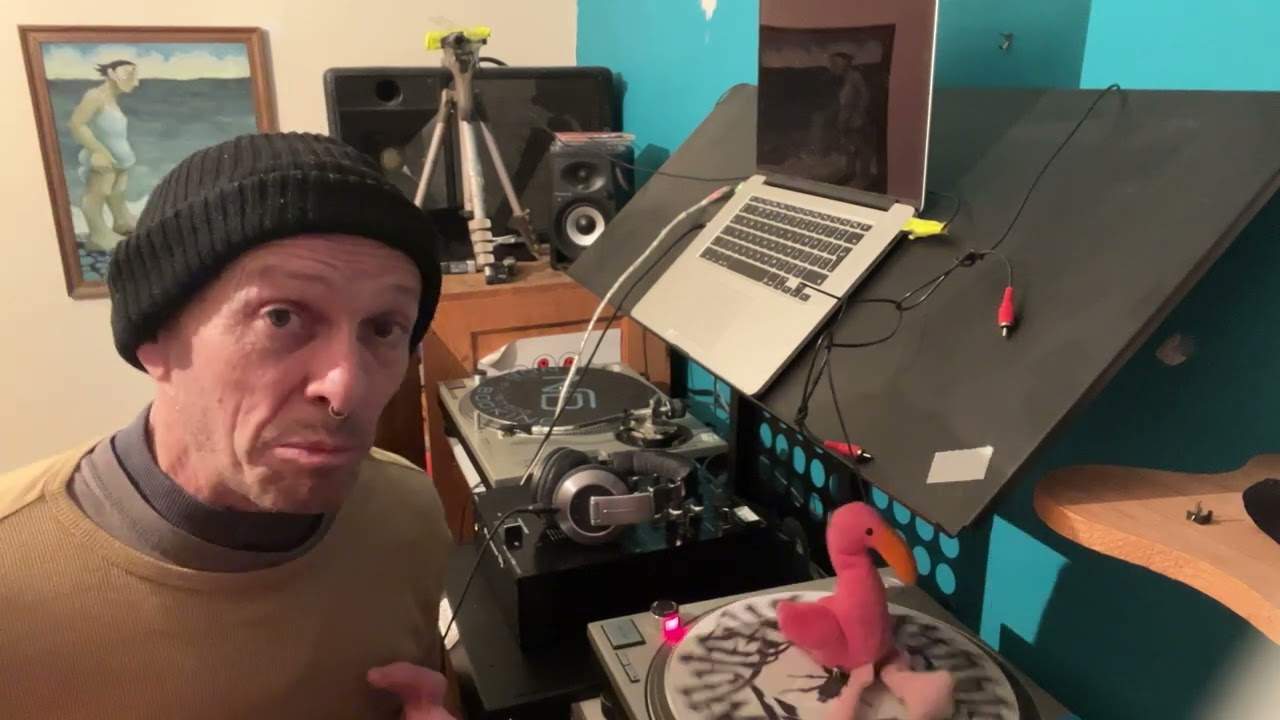
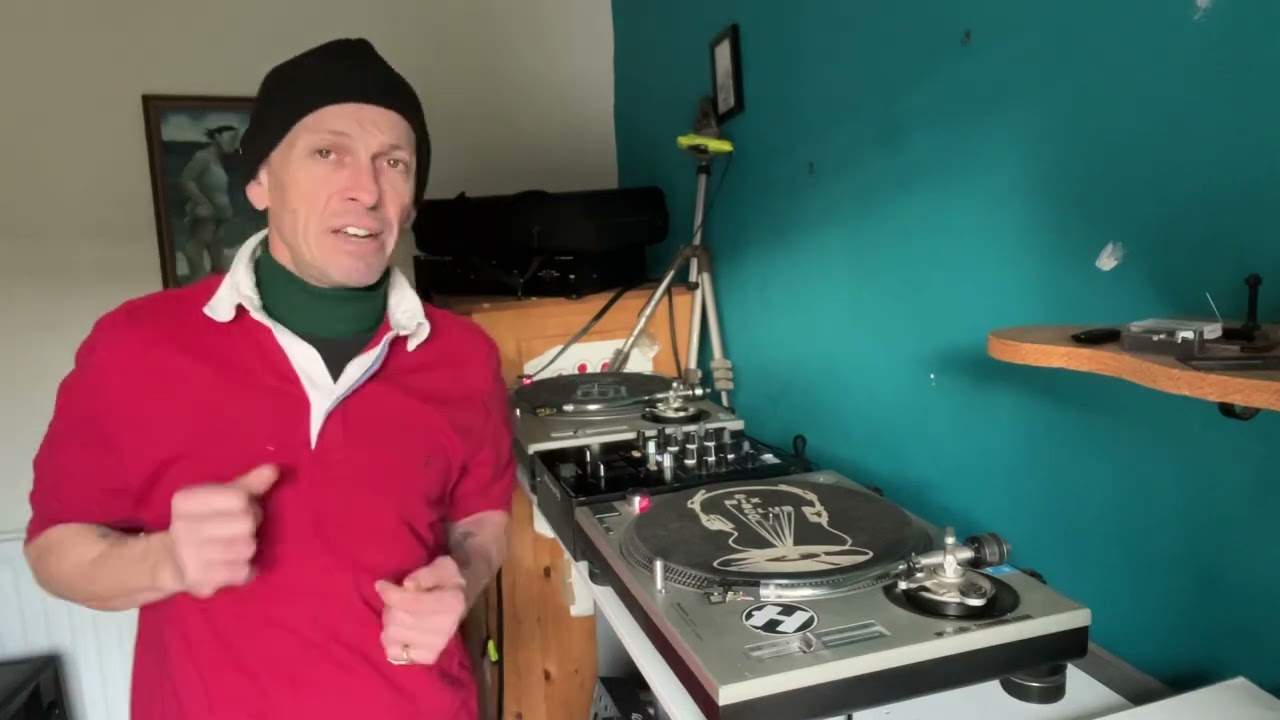
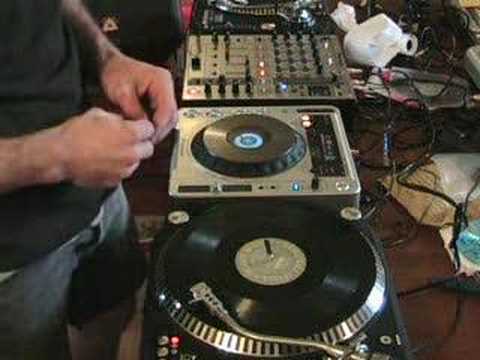
This is a genuine comparison rather than a tutorial: the same sample recorded onto vinyl and loaded onto a CDJ, scratched on each, with the two machines sitting one above the other so you can watch as well as listen. His conclusion is that there is very, very little difference in the sound, and that what differs is the visual and physical side. Both halves of that are worth unpacking.
The same gesture, two mechanisms
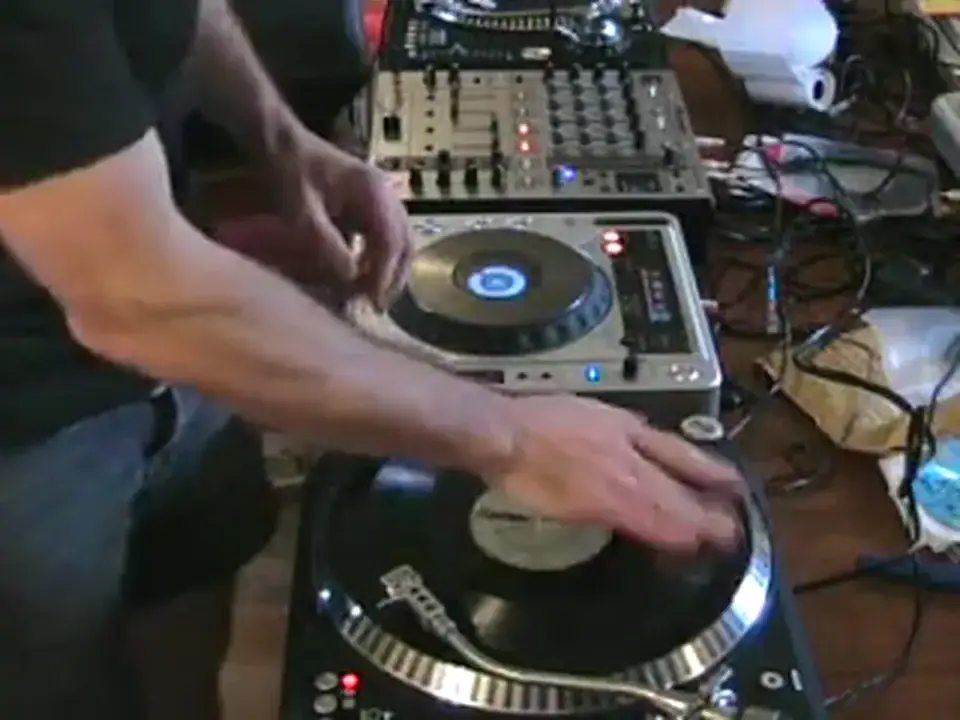
On a turntable the stylus sits in a groove and your hand moves the recording itself. The link between hand and sound is direct and mechanical: push the record and the needle travels further along the groove, which is the sound you hear.
On a CDJ the platter is a sensor. Moving it tells the player how fast and in which direction to read a buffer. The gesture is the same and the result is close enough that he cannot hear a meaningful difference, but nothing is physically being moved except a disc in a tray.
That distinction explains every practical difference that follows.
What the cue button changes
The sharpest demonstration in the video is not the scratching, it is the cue.
On the CDJ he sets a cue point at the exact start of the sample. Press cue at any moment and the player is back at that point, to the sample, instantly and identically, as many times as he likes. The sample becomes a thing he can fire.
On the turntable he does the same job by hand - find the start, hold it, release - and it is approximate, repeatable only as well as his hand is repeatable, and it can skip, which it does, on camera.
So the CDJ gives you exactness for free and the vinyl makes you earn it. Which is better depends entirely on whether you are performing or learning. Earning it is how you get good.
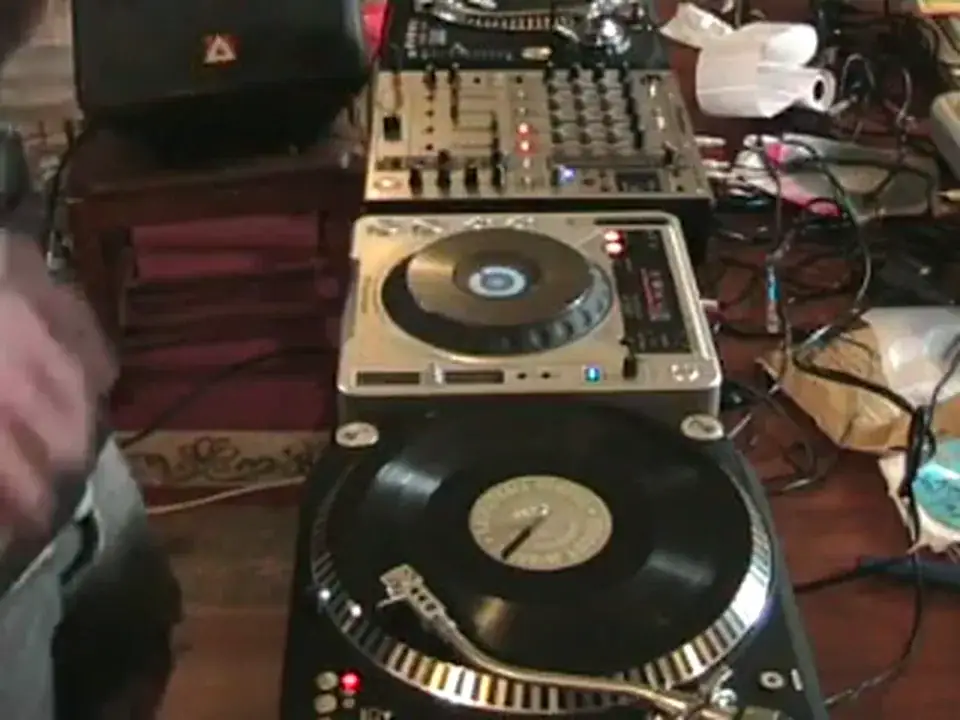
Why vinyl is easier to see
His strongest point, and the one he says he agrees with completely, is that vinyl is visual.
A twelve-inch record shows you where you are. You can see the gap between tracks, see how far the needle has to travel, mark the label and read it at a glance. Twelve inches of circumference is also a lot of distance per degree of rotation, so small hand movements are finely resolved - which is why a bigger platter has always felt better under the fingers, and why CDJ platters have grown over the years.
On a player, that information is on a screen. It is more precise and less immediate, and when you are learning, immediate is worth more.
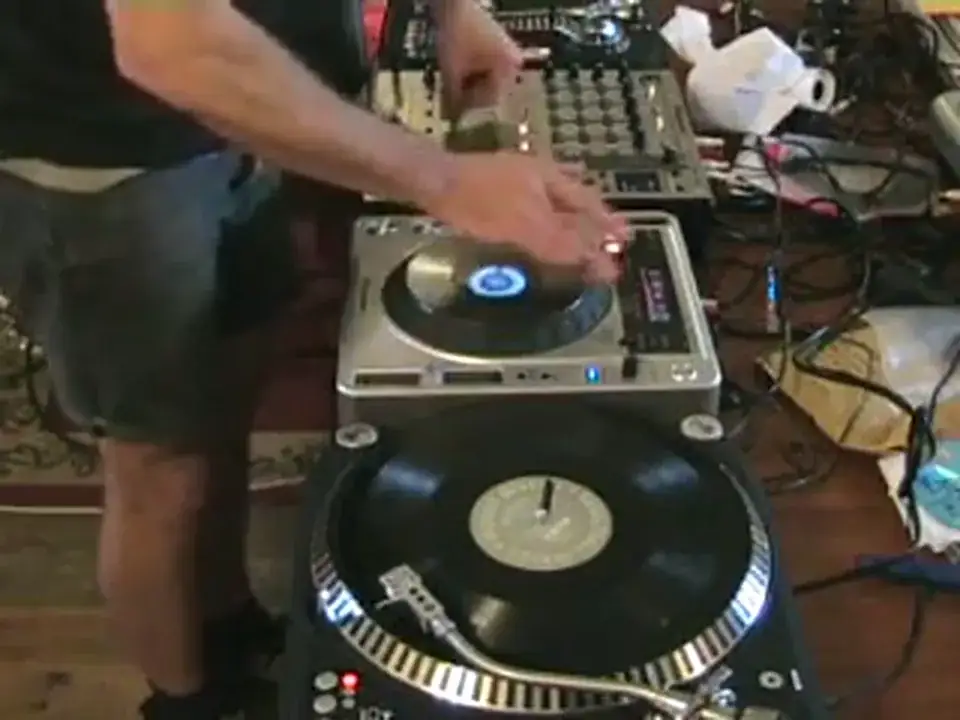
Where he lands
He says ninety per cent of him agrees that vinyl belongs to the turntablists, and ten per cent expects CDJ players to produce people who are just as good. He recorded that in the 2000s, and the ten per cent turned out to be right.
The useful conclusion for a beginner is the one underneath his argument rather than on top of it: the skill is in the hand and the ear, and both machines train the same hand and the same ear. Learn on whichever one you own.
Contents of the video
0:00 Scratching on a vinyl turntable

Alright folks, Jonathan here. In this video what we're going to do is look at scratching on a vinyl turntable and a CDJ right close together. We're going to look at the differences, what you can, maybe what you can't do, the good points, the bad points. Any more information or any points you'd like to put forward with regards to this video then just bung comments underneath. Alternatively you can always post video responses under as well. First of all let's have a quick look. Now bearing in mind this video is also dedicated to people. Who don't know anything about turntablism or scratching, so as follows. This is a vinyl turntable, this is a CDJ player, this is a mixer and this down here is a table. Just being a bit silly there, okay. And also over here we have a sticker. Thank you. Right, now firstly, a vinyl turntable, you can see that we've got a 12 inch single. Now that is 12 inches, so...
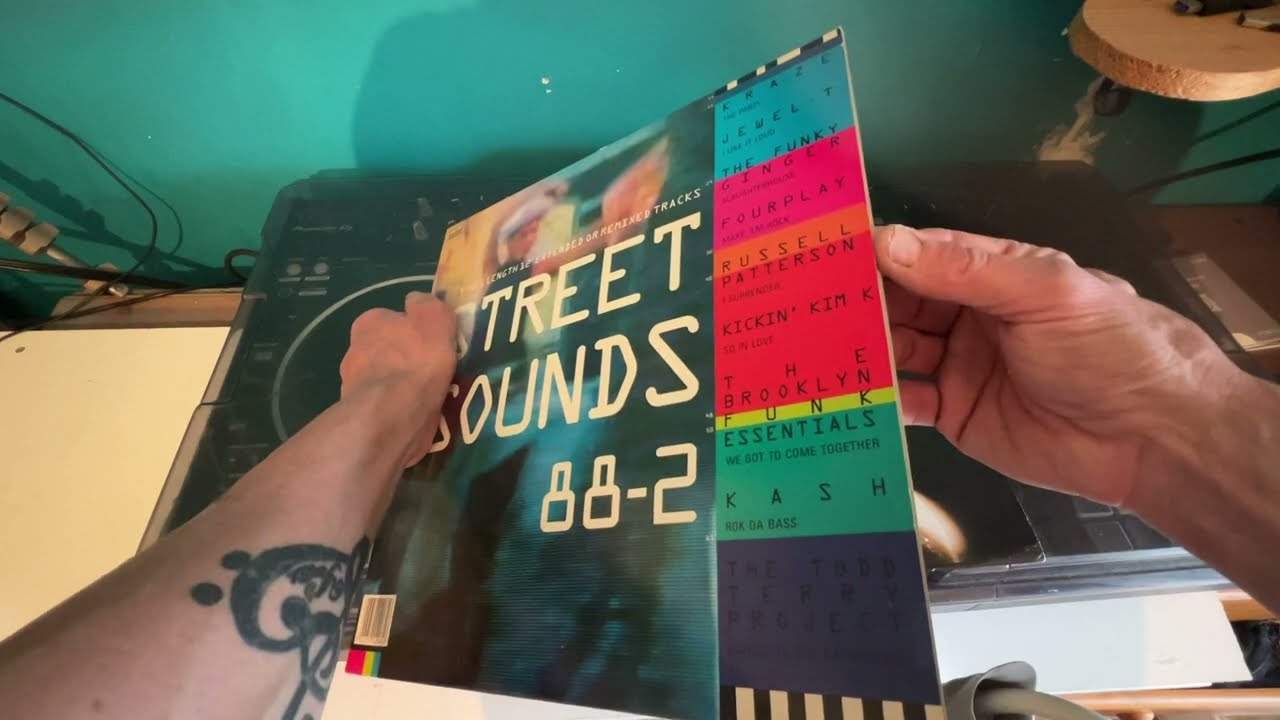
The DJ can have a lot of area to mess around with. There's a lot to touch there and fiddle about with. Okay, now a lot of turntablists say that vinyl will always and only be for true turntablists. Now, 90% of me agrees totally. 10% thinks, well, you know, there's going to come a point whereby you're going to have loads of people on CDJ players who are just as good as vinyl turntablists. The difference is with most of the CDJs out at the moment, and that is that the actual jog wheel here, this area, is a lot smaller. There are a few like the Technics that has got a big platter, almost, I think it's near enough exactly the same size as a normal vinyl turntable. So first of all let's have a listen to the samples. What I've done is I've recorded this exact sample or this exact sound from this vinyl turntable and I've recorded it
2:38 To the exact point at which this starts off, the actual ah sound
So let's have a listen to the two first of all. Here we go. We'll rewind that. Now we'll listen to the actual CDJ. Okay, the first thing that is very different and that is when I press play on this CDJ, we get the sample. But if I press cue again, because I've set that up... To the exact point at which this starts off, the actual ah sound. If I press cue after the actual track's been played it will go right back to the beginning. So what I can actually do here is just edit it. Now you can do nearly exactly the same thing on a vinyl turntable but you have to manipulate the actual vinyl backwards and forwards. I'll show you. Well, it does jump occasionally. Now this is one of the reasons why true vinyl turntablists say that vinyl is better because it's more hands-on and visual. So on that basis I have to agree 100%. Vinyl is better because you can see what's going on. Now let's have an actual listen.
Two, let's say me scratching and bearing in mind I'm not brilliant at all this is just a demonstration so for crying out loud don't say oh you're crap because I know I'm crap. Right here we go let's have a play now with the actual CDJ. So what I've done now if you notice if I have my hand on the CDJ and I don't press cue or play what happens is this I can do this when I try and push it forward it'll just go right back to the beginning How, or should I say, if I want the actual scratch or the sound to carry on, I press my finger on, or I have my finger on the top of the platter, and then I need to press play. Now what's happened is everything is engaged and ready to go, so I can as follows, and it'll carry on going. And if I want it to stop, I can either press play, pause,
Or, if I want to, I can press Q and it'll go right back to the beginning. So let's first of all have a go with the vinyl turntable. But there you go. Okay, that's probably just me bouncing around on it. Now we'll try and do exactly the same thing with the actual CDJ. Now bearing in mind, like I said, what I'm going to do, I'm going to press the play pause so as soon as I take my finger off the platter on the CDJ, the actual track will continue going. And the only way I'll be able to stop it is either put my hand back on it or spin it back. So here we go.
5:46 To be quite honest there's very, very little difference
Right, to be quite honest there's very, very little difference. Maybe there are tiny, tiny subtle differences in the sound but mainly the difference between scratching on a CDJ as opposed to scratching on a vinyl turntable is in my mind it's the visual aspect of The actual DJ, moving the platter backwards and forwards, moving that stylite. Now in my mind, you know, a true turntablist really is a vinyl turntablist. But there is no reason at all why someone who's got a CDJ can't do scratching and turntablism as well. Right, I mean, not so much a tutorial here but maybe it's my idea on the actual aspects of vinyl Turntablism and CDJ turntablism. Okay, so I hope it's been a help. By all means, please, like I've said, bung loads of comments underneath. And by the way, happy Christmas. Practice and enjoy. People say that you can't scratch on CDJs. Well, you can. Maybe not... Three, two, one. Two, one. Alright folks, Jonathan here. In this video what we're going to do is actually look at scratching.
On a vinyl turntable and a CDJ. Now some people say that you can't scratch on vinyl turntables. 3, 2, 1. Alright folks, Jonathan here. In this video what we're going to...
This transcript was produced automatically from the audio of the video and may contain mistakes.
This video is part of
Related videos
-
WHY Vinyl and WHY Is Now the Time to Go Old School
He admits at the start that this one might annoy people, and some of it should be argued with. The practical half is excellent. The claim…