 8:19
Kit for a small mobile disco
On YouTube this video is called What gear to buy for a small mobile disco
What this lesson teaches
This is the practical end of the stage: not what to buy to learn on, but what to buy to get paid. He is clear about the trade in the first minute - you probably will not be playing the music you love, and the money buys the records you do.
Leave the vinyl at home
For mobile work, CD or computer. Vinyl is heavy, bulky and slow to handle in a room you have to set up and strike in an evening. Keep it for the bedroom.
A basic twin CD player does start, stop, cue and pitch, which is all the job requires. He is honest that the mixing capability on something at that price is limited, and equally honest about why that is acceptable: at around a hundred pounds, if it fails inside the year it is under guarantee, and if it fails after, you replace it without much pain.
The part everybody forgets
His best point in the video, and it costs almost nothing to act on.
A twin CD player typically shares one mains lead, one power supply and one circuit board between the two sides. It looks like redundancy and it is not. One failure and you have no music at all, in front of a room full of people who have paid for an evening.
So carry a second, genuinely separate source. A small CD player, a phone, an MP3 player - anything that plugs into a spare channel and makes sound on its own. He takes one to every gig.
This is the difference between an incident and a disaster, and it is the cheapest insurance in the trade.
Mixer and microphone
An ordinary mixer: bass, mid, treble, and line inputs for the players.
And a decent microphone, because at a mobile gig you will have to talk - and he returns to this at the end. The venues chasing DJs are not looking for the best mixer in the county. They want somebody who can pick up a microphone, get a room going, and play Billie Jean when Billie Jean is what the room wants.
Lighting that runs itself
For a one-person operation the lighting has to need no operator, and sound-to-light is how that works.
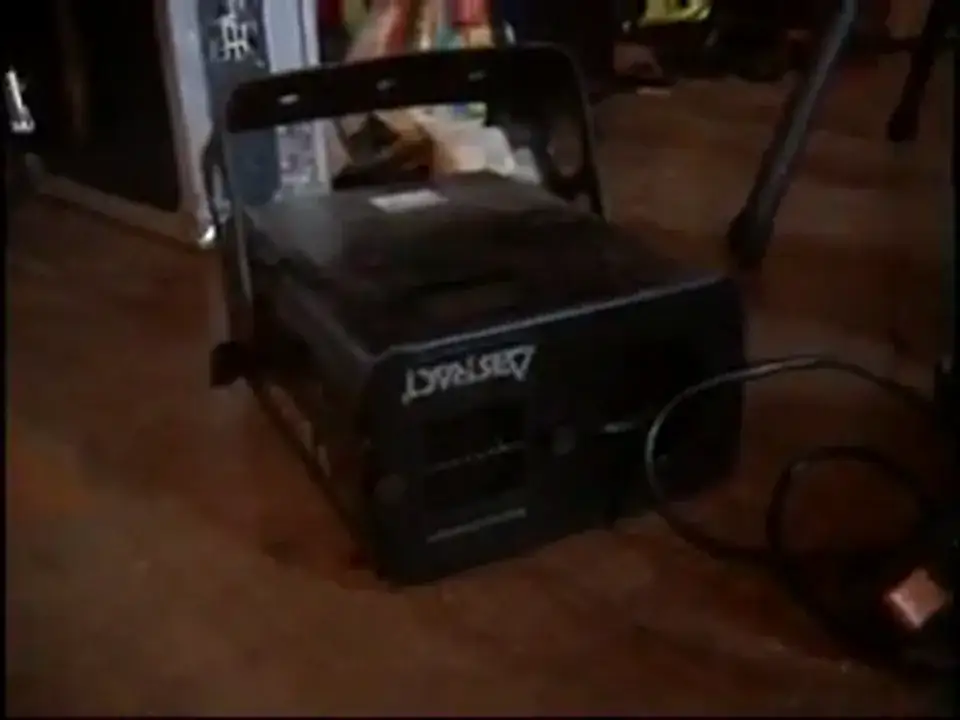
The mechanism is worth understanding. Inside are dichroic lenses - coloured mirrors that light passes through, so the colour of the mirror lands on the floor - mounted on motors that twist them, which is where the name comes from. There is a small microphone in the back, so the unit moves on the kick and the snare by itself.
Two of those on a telescopic T-bar behind you, raised high, is a complete light show that you switch on at the start of the night and off at the end. Add an LED water effect if you want ripples across the floor.
A smoke machine tip worth the whole video
If your smoke machine has gone weak, do not replace it. Drain the fluid, boil a kettle, let the water cool, run that through the machine.
The reason is scale. Fog fluid leaves mineral deposits on the heating element, which is why output drops off over a couple of seasons. Boiled and cooled water has very little dissolved mineral left in it, so it takes those deposits back into solution and carries them out. His own machine cost fifty pounds, is ten years old and still works.
Speakers, and what three-way means
Tops of around three hundred watts on tripods will comfortably do fifty to seventy-five people, and the whole rig fits in a car.
For bigger rooms he uses three-way cabinets, and the three ways are worth naming because the words appear on every spec sheet: a compression driver for the high end - cymbals, claps, the air in a vocal; a horn-loaded mid driver for the body of the voice and the melody; and bass drivers underneath for the thump.
Bi-amping means feeding those with two amplifier channels instead of one, split at a crossover frequency - he uses 150 Hz, so one amplifier handles everything below and the other everything above. The gain is control and headroom: the bass amplifier can work hard without the loud bass eating into the power available to the vocals.
PAT testing, which can stop you working
He points at a small label and admits he does not know what PAT stands for. It is Portable Appliance Testing: an electrical safety inspection of every mains item you bring with you, extension leads included, each one labelled with the date it passed. There is no fixed legal interval - how often depends on the equipment and how hard it is used - but kit that lives in a van and is rigged in a different building every week is at the demanding end of that, so annual is the trade norm and it is what a venue or an insurer expects to see on the label.
It matters because venues ask. Hotels in particular are entitled to refuse to let you set up without it, and at a wedding that is not an argument you can win on the day. He says that in years of functions he has been asked once - which is true, and is a reason to have it rather than a reason not to bother, because the one time will be the expensive one.
The economics
His closing arithmetic is the argument for the whole approach. The entire rig above costs less than a pair of flagship CD players. At around a hundred and eighty pounds a night, more for New Year's Eve, it pays for itself in three or four gigs - and then it keeps paying, and you can buy the flagship players with the proceeds if you still want them.
Which is a long way of saying that for mobile work the equipment is a tool that earns, and spending more on it than it earns is the wrong way round.
Contents of the video
0:00 There you've got your money
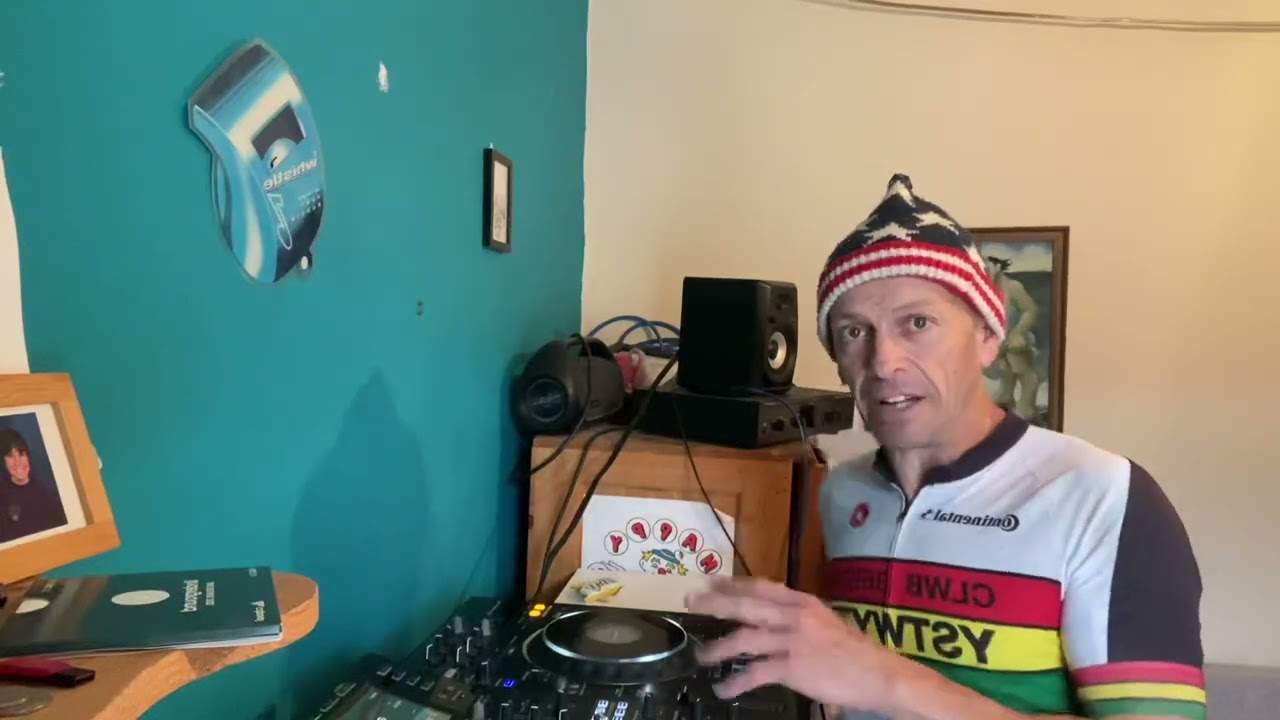
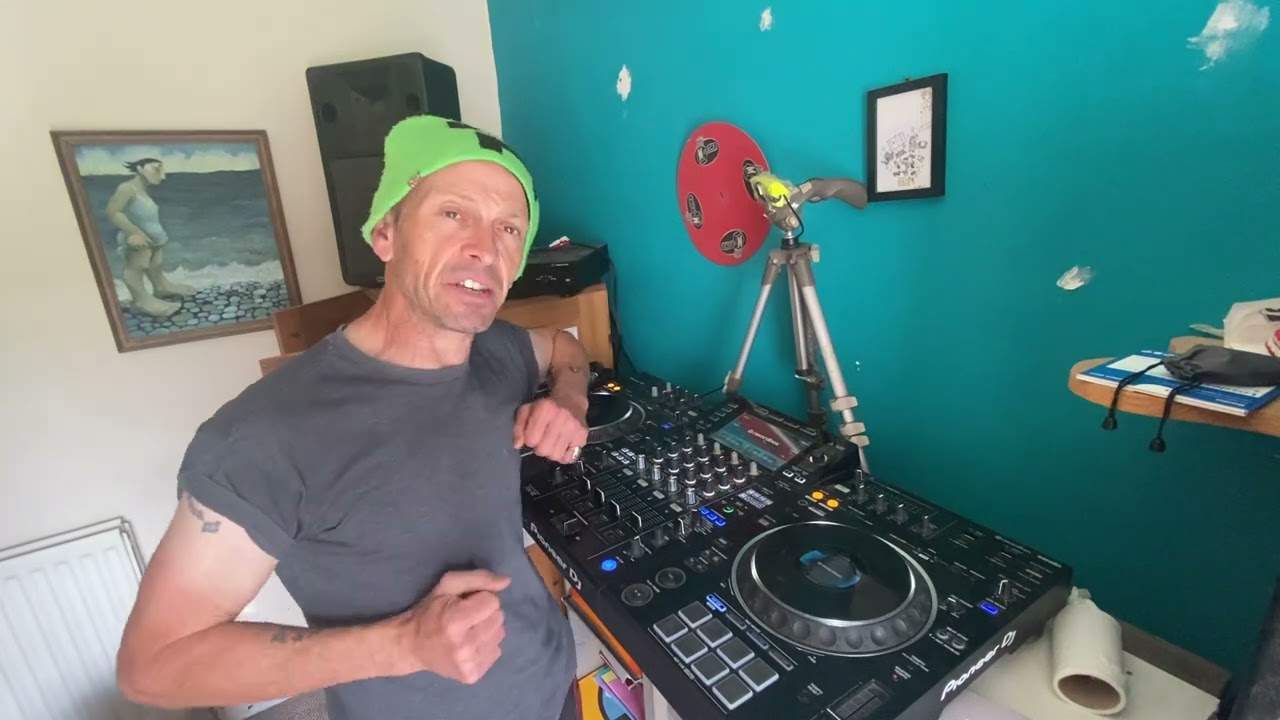
Alright folks, quite a few people have asked me on what sort of gear to buy for mobile discos. So I'm going to give you a brief description of relatively cheap and cheerful stuff that can enable you to make a decent amount of money. And if you do put your whole heart into it, you could make a living out of it, okay? But sadly, you probably won't be playing the music you want to play, but then again, of course, you'll be earning money and be able to buy the records or the CDs or the programs that you enjoy. So there you've got your money. For the stuff you like to do. Right, first of all what you need is, of course, bearing in mind PC, CD or vinyl, what I recommend is if you're going to do like the mobile, cheesy mobile discos, don't bother using vinyl because it's a lot of hassle to carry about. Save that for your bedroom. You're better off either going for CD or PC. This guy here, Citronic Pro CD player.
He does exactly what it says on the tin, which is basically stop, start, cue. There's a pitch control for mixing. The mixing capabilities on these systems aren't fantastic. It can be done, but then again, it was only about £100, so look at it on this basis. If that breaks after a year, you throw it away. If it breaks within the year, it's under guarantee, so you can get a new one or they'll fix it. So that's the first thing you need, a relatively decent unit. Now what I recommend as well is if you think about it, that's on one mains lead, two units. If one of those stopped working or it broke, you'd be knackered. So it's advisable to take a second entity, i.e. a separate small CD player. I quite often will take an MP3 player just in case. Now into that then you need your mixer of course.
Box standard mixer, it's got the usual sort of bass, mid, treble, cut and of course your line inputs which is what you need for your CD player or your MP3 or your program from your PC. Headphones and microphone, you need a lead of course, you need a relatively good microphone because you will have to talk. Lighting, now then years ago they used to have these horrible box foul lights that were... Pretty naff actually, but nowadays you can buy these things like Abstract Twister 4s, NJD Data Moons are another good unit. And all they are, you've got dichroic lenses in there which are basically mirrors, coloured mirrors, but light can shine through them. So when the light shines through them, the colour that the mirror is ends up being on the floor. And you've got a few motors in there that...
3:00 You don't have to worry about messing around with a light show
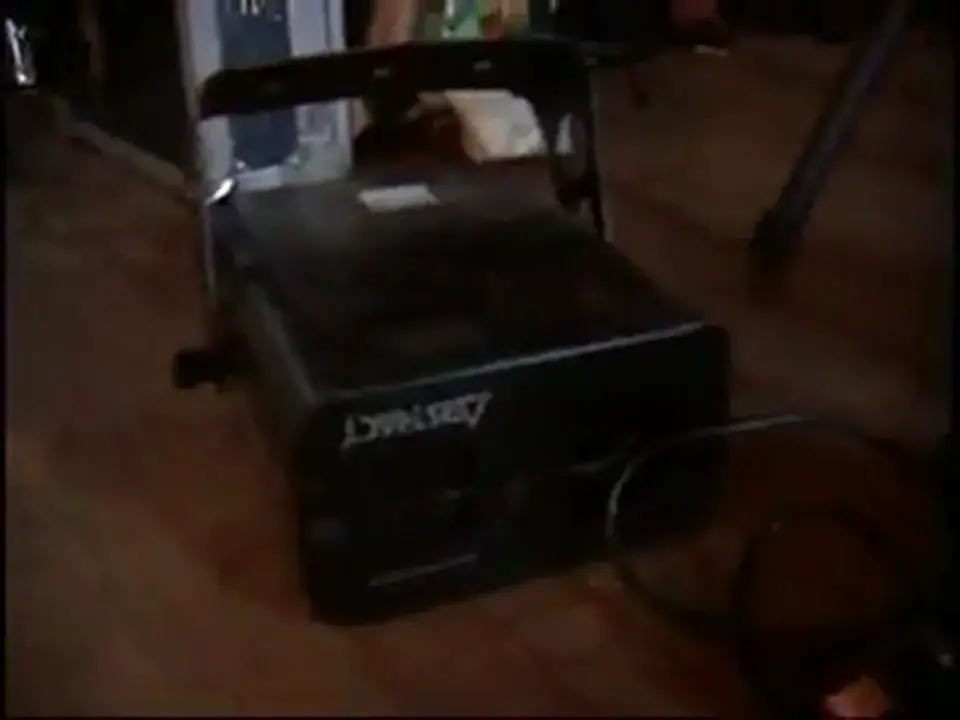
You can also twist these mirrors, so you have what's known as a twister effect. That's why it's called a twister. Yeah, you guessed it. They're also sound to light. Now what that means, there's a little microphone in the back of that. So all you have to do is plug it into a mains lead, which is a kettle lead, and stick it on a T-bar, which is one of those. There should be here a piece going across there and across there. And this is telescopic as well, so that can go behind you quite high. Attach that to the T-bar, one of those either side, sound to light, so of course as soon as you get a bass kick or a drum snare, the light will move by itself. It'll move to the beat and all you do at the beginning of the night, you turn it on, at the end of the night you switch it off. You don't have to worry about messing around with a light show. This little unit here, these have only recently started coming out. It's using LEDs, Light Admitting Diodes, believe it or not, and these are known as water lights.
And a water effect, and what they've got is basically two bits of glass in there, the similar sort of stuff you'd have in your bathroom so you can't get peeping toms looking in. And they move in opposite directions, the lights shine through, bit of a lens at the front, and you get a ripple effect on the floor. Falken machine, I mean that looks rather dodgy, that's been battered to hell. Cost me 50 quid, it's 10 years old and it still works perfectly. With a smoke machine, here's a tip for you, okay? If you've got an old smoke machine and it's not working very well... Take all of the fluid out of it, boil the kettle, let the water cool down in the kettle, put the water from the kettle you've just cooled down into the container here and then let it flush through. Because what you're actually doing is you're using deionised water and you're actually cleaning out all of the element inside there and I guarantee you it'll probably be working perfectly again once you've done that because that clears all the crap out of it. Right, so we've done that. Speakers, now then.
For small functions, what I do is I'll occasionally take these things. You can stick them on little tripods. These are Ohm MR228s. They're about 300 watts each. There's four of those if I do sort of bigger functions. But at the end of the day, for about 50 to 75 people, they're ideal. And all of this gear I've shown you now, you can bung into the back of a car. Now then, very important as well, OK, a couple of things. You can see that little thing there. That's known as electrical safety test. It's passed. It's known as a PAT test. Don't ask me what PAT means. The only thing I know about PAT is a friend of ours down the road. And these items, all electrical items, even leads, have to be checked once a year just to make sure they're perfectly working order. When I say you don't have to do this, it's sort of beware because it's illegal entitlement in a lot of hotels and quite often they'll ask you for your pack test list. If you haven't got it then they're legally entitled to say no you can't come and work here but just to let you know in the years I've been doing functions I've only ever been asked once.
5:30 I do have these monsters which are RCF Event 6000s, pretty decent spea
So there you go, there's lighting. Now I do have these monsters which are RCF Event 6000s, pretty decent speakers. They're three-way, which I was on about earlier. There's a high-end one and a half inch compression driver for the high end, the top, the clap. You've got in there... You can't really see it very well, I do apologise. You've got an 8-inch driver which is horn-loaded, that's sort of your vocals, your melody, and down there two bass speakers for the bottom end, the thump. That can be run by one amplifier or you can bi-amp them, which is utilisation of two amplifiers. The one amp will do the bass, so the one amplifier you'll probably cut off at 150Hz, that'll do 150 below, and then the other amplifier will do 150 and above.
And below you're looking at the bottom end, the sub, the drum and bass boom, whereas 150 and above you're looking at the melody, the vocals, the hand claps until you go to kilohertz which is the top end where you are looking at the really high end, the tambourine sounds and the high shrieks from these wicked ladies who can sing marvelously. So right, let me turn the camera around. Fucking hell I'm just trodding on my headphones. I've just broken the headphones. Well, they were actually broken anyway. And excuse my furs and burs. But there you go. So a small insight into what gear you need for a mobile disco. So don't forget, you need CD players because you've got to play with something. You need a relatively decent mixer. But you don't have to go to town. You don't have to think you've got to buy the latest Panasonic mixer that costs 800 quid.
And the CD players that are £800 each, you know what I mean? For the price of two brand new Panasonic perfectly fantastic CD players, you could in essence buy a complete and utter mobile disco system. And at £180 a night, if you're any good, plus up to £200 maybe. Within three or four gigs, you can buy the Panasonics. New Year's Eve, you can ask three or four hundred pounds, okay? And believe me, there are people begging for DJs who can use the microphone, who are quality DJs, who can get the crowd going, not, right, listen to me with this banging hardcore tune. They just want to hear some DJ who say, right, you know, here's a bit of ABBA. You know, or like, listen to this latest Michael Jackson track, or, well, latest Michael Jackson track? Try Billie Jean. Play Billie Jean, they love it, alright? So this is it, I mean, easy, easy peasy, if you want to be a mobile DJ, go for it.
This transcript was produced automatically from the audio of the video and may contain mistakes.
This video is part of
Related videos
-
WHY Vinyl and WHY Is Now the Time to Go Old School
He admits at the start that this one might annoy people, and some of it should be argued with. The practical half is excellent. The claim…