 17:39
Dubplates, white labels, acetates and promos
On YouTube this video is called What Is a Dubplate, White Label, Acetate, Picture Disc, Promo?
What this lesson teaches
This is a glossary lesson, and a good one, because these words are still used by people who assume you know them. Each term below exists for a practical reason, and the reason is usually more interesting than the word.
Sizes and speeds
Three sizes you will meet: 7-inch, 10-inch and 12-inch. Three speeds: 78, 45 and 33 and a third revolutions per minute. RPM is literal - a 45 turns forty-five times in a minute.
78s belong to the shellac era and you will not meet one in a DJ context. Those are the discs he describes as feeling like a plate: rigid, and they shatter rather than bend.
LP is short for long player, and it runs at 33⅓. The reason it holds more is mechanical: at a slower speed, less groove passes the stylus each second, so a side holds more minutes of music. You trade fidelity for length, which is why a single pressed at 45 sounds better than the same song on an album.
Acetate and dubplate
These are the same thing and the term matters because of how they are made.
Normally a record is pressed - a stamper squashes hot vinyl, thousands of times, in a factory. That takes weeks and only makes sense in quantity.
An acetate is cut, on a lathe, in real time. A disc coated in soft lacquer turns while a cutting head carves the groove as the music plays. So a five-minute track takes five minutes to cut, one copy at a time. A producer who wants a track playable tonight has it cut; a handful of copies exist and no more.
Two consequences, both of which he states. The lacquer is soft, so the record wears noticeably after a few dozen plays - a dubplate has a lifespan measured in nights. And it is fragile.
If you were handed one, you were one of perhaps six people on earth who could play that track. That is the whole romance of the dubplate in sound-system culture.
White label
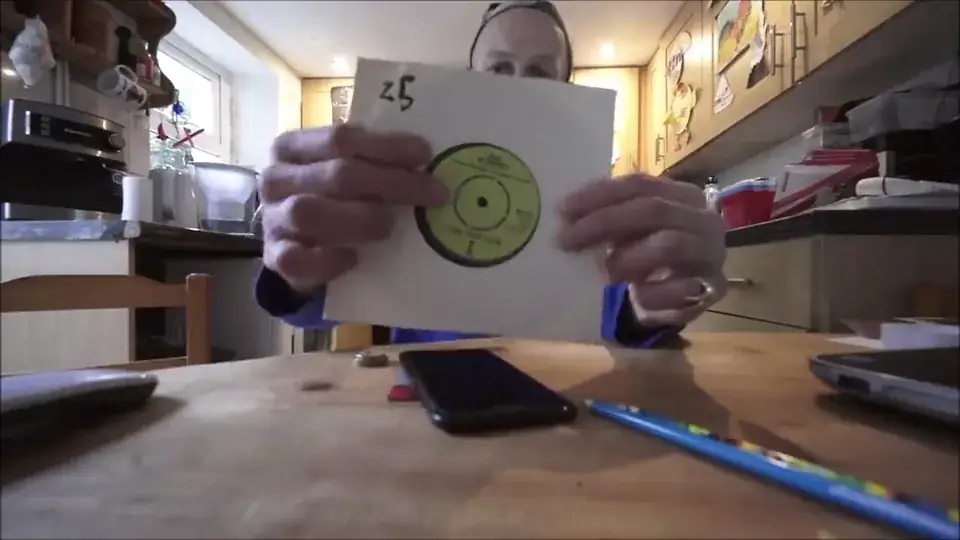
Exactly what it sounds like - a pressing with a blank label - and the reason is psychological.
Send a DJ a record with the artist printed on it and they decide before the needle lands. Send it blank and they have to listen. The white label is a deliberate blindfold, designed so the music is judged on its own.
He notes the obvious drawback from the other side: six months later you have a record you like and no idea who made it.
Test press
Five copies or fewer, made before the real run.
The logic is that vinyl cannot be patched. Order two thousand copies, discover afterwards that something is wrong with the audio, and you have two thousand coasters - there is no equivalent of replacing a file. So a handful are pressed first and sent out to be listened to, and only when those come back approved does the money get spent.
Promo
Short for promotional copy, sent to radio stations and club DJs ahead of release.
The interesting part is the form that came with it. He still has one: artist, title, the area you were in, your name and number, the station, your show times - and then will it play?, which mix did you prefer?, and space for comments.
So the record company was running a panel. If a hundred DJs said the third mix on the B-side was the good one, that mix got promoted to the A-side of the commercial release. DJs were not just being marketed to; they were being used as the test audience that decided what the record would be.
Picture disc, shaped disc, gold disc
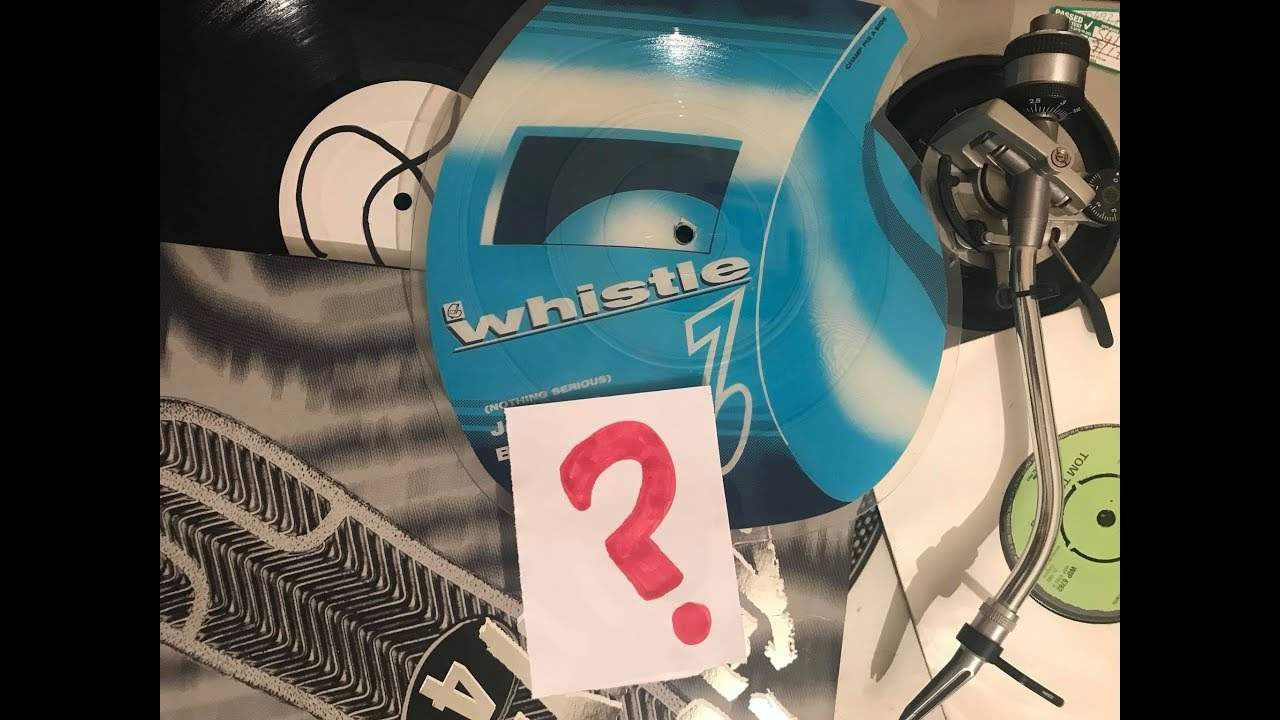
A picture disc has artwork visible through clear vinyl. Collectability varies enormously - some are worth hundreds and some nothing at all - and specialist shops rather than general ones are where you find them.
Shaped discs are cut to an outline rather than a circle. They play, but most end up on walls, and a surprising number become clocks, since there is already a hole in the middle.
A gold disc is not gold. It is a normal record, sprayed and lacquered, awarded for a sales threshold - which is why the walls of record company offices are covered in them. It still plays.
The 7-inch with the hole punched out
The best detail in the video. Some 7-inch singles have a centre held in by three or four small tabs, so it can be snapped out leaving a large hole.
That is for jukeboxes, which used a fat spindle rather than a thin one. You punched the centre out of a record destined for a machine.
And it explains something sitting on your turntable: the little metal disc in the top-left well of a Technics is the 45 adaptor, there for records whose middles have been removed.
Virtual vinyl
Also called DVS. A control record looks like any other 12-inch and carries no music - just a continuous tone that encodes position and speed. Software reads it, works out exactly where the needle is, and plays your library in step.
You need the software and a sound card, which many mixers now have built in; otherwise an external one. The pay-off is real turntables, real stylus, with a laptop's worth of records.
Contents of the video
0:00 Jonathan here, The DJ Tutor

All right, Jonathan here, The DJ Tutor. So what is a 12 inch? What's a 7 inch? What's a 10 inch single? What is a picture disc? What's an acetate? A dub plate? A white label? A promo?
What are they? Hopefully in this video I will give you a little bit of information so you understand what each one of them is. If we go back many, many years, in fact a long time ago, when turntables started. Now I can't say vinyl turntables. What I can say is the old school wind-up turntables. Now maybe you have not seen, you haven't touched, but if you ever get the chance of looking at a very old 12 inch single, or should I say a record that feels like a plate. It's rock hard, and if you dropped it on the floor it wouldn't bounce, it wouldn't scratch, it would literally break, it would smash. Now that is an acetate, or that was an acetate from years ago. Nowadays on the other hand an acetate is very similar to what we call a dub plate. Now let's imagine you have the producer
1:31 This is a material that if you drop it can break
And has got this wicked track. Now if they want to get that onto vinyl, that track has got to be sent to a factory where they will press some plastic and make the vinyl copy. But let's imagine they want to get a copy now. They've just made that track and they want that on some form of playing surface so the DJ can put the needle on the record and it will go like this. That's when they'll make an acetate, but what they have is they have a piece of acetate. This is a material that if you drop it can break. Then it has to be sent to somewhere where they can cut straight away the music. Now this is not a long process because the process will take as long as the track will play for. So while the track is playing there is this cutting instrument that will actually cut the groove
In the acetate while the track's playing in real time. So this isn't like an MP3 where it's burnt, no. This is real time movement. This is real time audio being put onto an acetate, also known as a dub plate. Now let's say they probably make two or three copies, six copies, that is it. And then of course if you were a DJ and you managed to get the dub plate or the acetate, do you know what? You are very lucky because you are one of only a handful. The only downside is that if you dropped it, it would break. The other downside is that the acetates would wear out a lot quicker so their lifespan is a lot shorter than normal vinyl played by Joe...him...or whoever. Now I'm going to kill two stones with one bird here. So what's a white label? Right,
Well first of all that is actually a 10 inch record. So just to put you into perspective and so you see that is a 12, that is a 10. Now what is a white label? Well let's have a look. The term white label is pretty much...there it is! It's got a white label. So why did they make them? Well they didn't make so many white labels, first of all. Secondly the reason they made white labels is when they gave these to DJs to play, they didn't want the DJ to think right, look at the label and see the artist and almost straight away just think well I don't like that artist, I'm not going to play it or no I don't like them because they're rubbish. In other words the whole idea of a white label was for the DJ to be able to see what's on
The label. So if you were a DJ and you wanted to make a white label then you would have to make a white label for the DJ to play that record and not really know who it is. So there's no preconception about well I don't like it or I don't even want to play it, they would play the record knowing practically zilch about what's on it. And quite often has happened to me if I was given a white label, if I liked it, if I hated it, I'd say put it to one side and six months or a year later I'd be thinking who is that? Because I can't see any information about it. So that's what a white label is for. What is a test press? Well let's imagine the producer has made their track and all of a sudden they just say right I want 2000 copies of that so they've spent a great deal of money
5:47 Few people and they will say

On manufacturing 2000 copies. Once those are made you can't like an mp3 on your thumb drive just delete it and then put another one on. No! Once you've got that music on your piece of vinyl it's there for good. So let's imagine that they just said let's have 2000 copies, paid a great deal of money for that, they've got their 2000 copies and there's a problem with the audio. There's something wrong with the sound. Well tough, you've wasted a lot of money. That's why you get test presses because normally what they do is they'll manufacture say 5 or less copies and the idea is to evaluate the quality of the sound. The audio to make sure there are no problems so those test press will go to a few people and they will say yes it's a good one or no just do something to the settings to make
Sure the audio is a lot better. So that's why you have a test press. What is a promo? That's short for promotional copy. Now these were, there was quite a lot of these made and the promotional copies would generally be sent to radio stations, nightclub DJs or people who the companies knew would be able to play their tracks in front of a big audience. Now the idea behind a promo copy was to make sure that there was a market for that track. So what would happen is the DJ who was sent the promo copy very often would have to fill in some information. Now this one was sent
To Radio Caridigin, I used to work at Radio Caridigin. I used to have a show called Fat Beats FM. This is a Michael Jackson promotional copy that's worth quite a bit now. I'm going to open it up and here still is this. Now this information here I had to fill in, I didn't fill in with this one, sorry. For example the artist, the title of the track, area code where I was so there's the there's a picture of the UK and I would put down the area where I was. My name, telephone number, the radio station, the show times and reaction. My personal reaction, will it play? So in other words they're asking me do you think this is suitable to be played? The next one is my favourite mix. Now of course there were different mixes on the radio
So if you think about it, if a hundred DJs said mix one track A, it's more than likely they would then play one track A. So if you think about it, if a hundred DJs said mix one track A, it's more than likely they would then keep that as the first mix on track A. On the other hand, if we all preferred the third track on side B then what they might do is take that from the side B and put that on the side A. And then my additional comments so I could maybe talk about what I thought about the track. So that is a promotional copy. Now again the promotional copies were not as readily available as the original one. I've mentioned that it is a very popular sample of album covers and it's very often, very often promotional copies ended up being worth a lot of money. For example
The likes of Madonna, Prince, Michael Jackson as well. Madonna promotional copies are worth quite a fortune and of course you don't just get... oh my nose needs some tissue i'm gonna get some tissue in a bit. You don't just get promotional 12-inch you would get promotional business and also companies quite often used this as commercial copies.
9:46 Specialized shops to get your picture

Would have little quirky bits like you could have a bag with the record in or they might give you stickers and so on so right i'm gonna have to pause the camera because i've got to blow my nose don't go away here is another promotional copy here this one is a gangster uh a track entitled take a rest promotional copy on cool tempo so there is another one right so what is a picture disc it's a disc and it's a picture let me show you all right this one here is prince and there it is now this is a piece of vinyl but it's actually a picture disc vinyl now these are of course they're not readily available you know you can't just pop out to your local record shop and grab one having said that though some record shops will have picture discs so don't take that at face
Value okay for example most record shops may have one or two in the window for just decoration but you need to go to specialized shops to get your picture discs or of course you can get them online now that is a 12 inch picture disc and this one here is a 7-inch picture disc and you can get picture discs from these vinyls which i've got here i've got them on this one right here on the discs that are just round or for example this one here this is a shape now check that out that sort of thing that you could put on your bedroom wall and a lot of people turn them into clocks you have this center point there where you put it on the spindle so you could just attach a small mechanism to the back and you could use something like that as a clock so it's got more purposes than just
Playing music but again picture discs some of them are highly highly collectible some of them are worth hundreds and hundreds of pounds and some are worth absolutely nothing alright so what have we got now let's have a look at a seven inch single all right so a seven inch there's a seven inch and there's a twelve inch so that will give you an idea of size now seven inch singles this one here is a colored seven-inch single there it is that's logical and hardy but let's have a look at another seven inch single I've got one here now this is quite interesting right so there is another one that's Womack and Womack and that's Love Wars but this one here slightly different now can you notice the center part you've got a small hole there where of course the
Spindle will go through but around that it's almost as though there's an area that see-through it's almost as though it's been cut and you've got one two three four bits holding on to the main part of the seven-inch single so why is that well many years ago prior to modern day technology of even CDs and mp3s in fact pre CD you had jukeboxes and those jukeboxes used to play seven inch singles and instead of having a thin spindle to put the 7-inch on you have to put it on a 7-inch single and instead of having a thin spindle to put the 7-inch on you have to put it on a rather large circle okay the equivalent of the centerpiece on a vinyl turntable that's why for example only Technics SL 1200 turntables on the top left hand
12:34 Virtual vinyl, vinyl virtual, gold
Side you should have if you haven't go and get one you have that sort of small piece of aluminium now that is there for a reason because you never know you could have ended up getting a 7-inch single with not a small hole in the middle but a big one so that's the whole idea behind that the person buying the record who would want to put that into a jukebox would have to take all that area away and then that would be able to play on a jukebox isn't that amazing hmm what is virtual vinyl well virtual vinyl is vinyl but it's sort of virtual vinyl right well of course if you buy today a vinyl a piece of vinyl for example if you buy a piece of vinyl for a record shop you should by all rights if you don't then take it back and slap
The person across the top of the head with a wet piece of cod and demand your money back you should have audio music on there but of course virtual vinyl you haven't let me show you a virtual vinyl this one here is Pioneer DJ a record box control vinyl vinyl dick control there it is and it just looks like a regular piece of vinyl but it plays slightly differently because there is no audio on this at all it is just a sound that is pretty much it now what happens is it's also known as DVS virtual vinyl now you will need the correct software to be able to use virtual vinyl a lot of mixes today have internal sound cards if you don't have a mixer with an internal sound card you will need an external sound card to
Be able to have all of your kit in front of you talk to your laptop so your laptop then can understand that oh you've got virtual vinyl and the two will work together I don't want to talk too much about this because there are many of the videos that go more in-depth on the discussion about virtual vinyl so what's virtual vinyl no thank you thank you thank you very much I just got this is a gold disc now I'm going to show you how to use it and I'm going to show you how to use it and I'm going to show you how to make a gold disc first of all it is not made of gold it's sometimes sprayed or it actually might have gold leaf which is highly unlikely more than likely it's just sprayed and then you have a lacquer on the top now this can be played it is a normal playing
15:12 Lot of let's say record producers
Record the only difference is it's gold so why have a gold disc well many people like to just make a gold disc and sell it to Joe Public but quite often they do that because they don't want to go public with it they don't want to sell it to Joe Public and let's imagine you have a hit record and you sell maybe a hundred thousand copies or a million copies then you are pretty much entitled to get a gold disc with your name on it that's why if you go to a lot of let's say record producers or big companies and you walk into their offices you will see lots of gold discs all over the walls basically saying how big their balls are what's an LP an LP is short for long player so we have a gold disc and a lacquer on the top
So we have a gold disc and a lacquer on the top you have a 12-inch that can be or a 7 inch quite often either 45 or 33 rpm now 45 or 33 rpm is very simple rpm stands for revolutions per minute so if you've got a 12 inch that's 45 rpm it will spin the turntable spin at 45 RP sometimes though if we go back a long time you used to have a 78 as well now that's sort of the speed of really old-school tracks it was 78 rpm 78 spins revolutions of that turntable per minute those are pretty much unheard of now you've pretty much just got 45 or 45 rpm and 33 and a third rpm I have to add the third as well now an LP most of the time practically every single time will go at 33 and 1 3rd rpm and that's what you're going to get for a
Long time and the LP has more tracks on it now because the action the movement of the turntable is a lot slower there's more information being able to put on to the piece of music or the sorry I beg your pardon the piece of vinyl so of course for example on an LP a long player you get to hear more tracks so this LP I've got on here one two three four five six so on each side there is three tracks so there is 12 tracks on this double LP because there's two pieces of vinyl in here so that is an LP and last but not least that it's a thumb drive practice and enjoy
This transcript was produced automatically from the audio of the video and may contain mistakes.
This video is part of
Related videos
-
WHY Vinyl and WHY Is Now the Time to Go Old School
He admits at the start that this one might annoy people, and some of it should be argued with. The practical half is excellent. The claim…