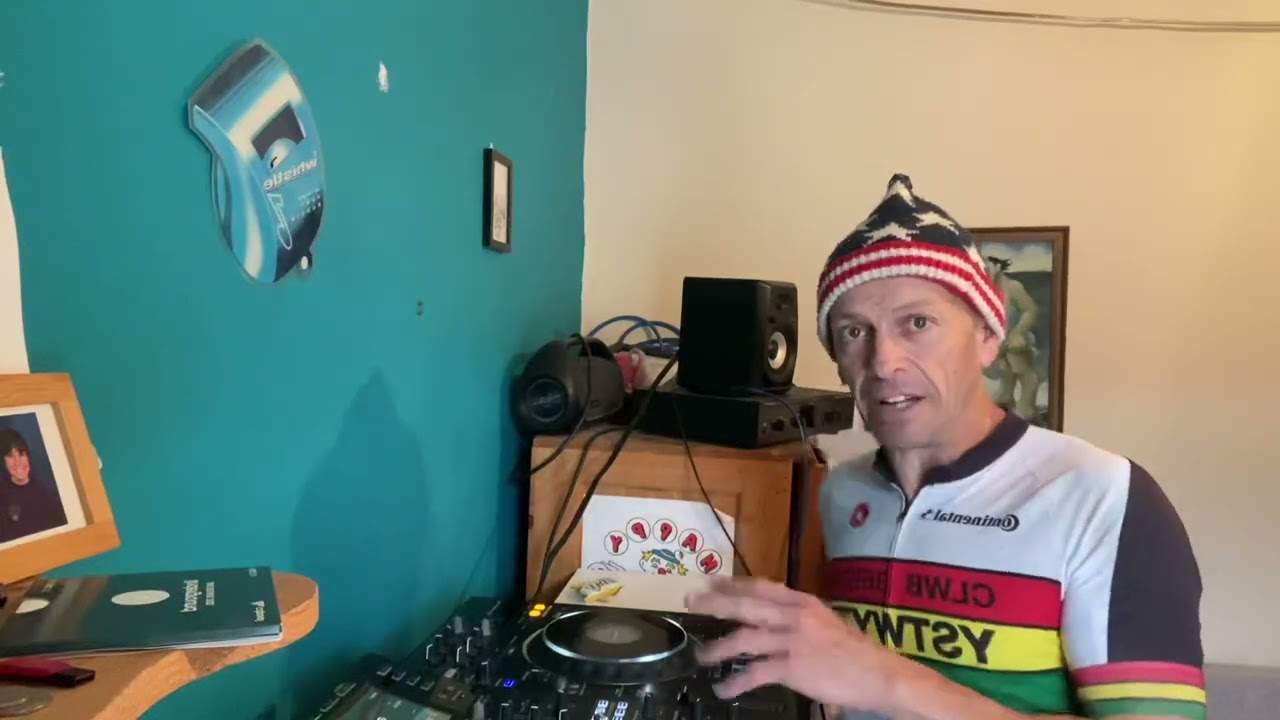
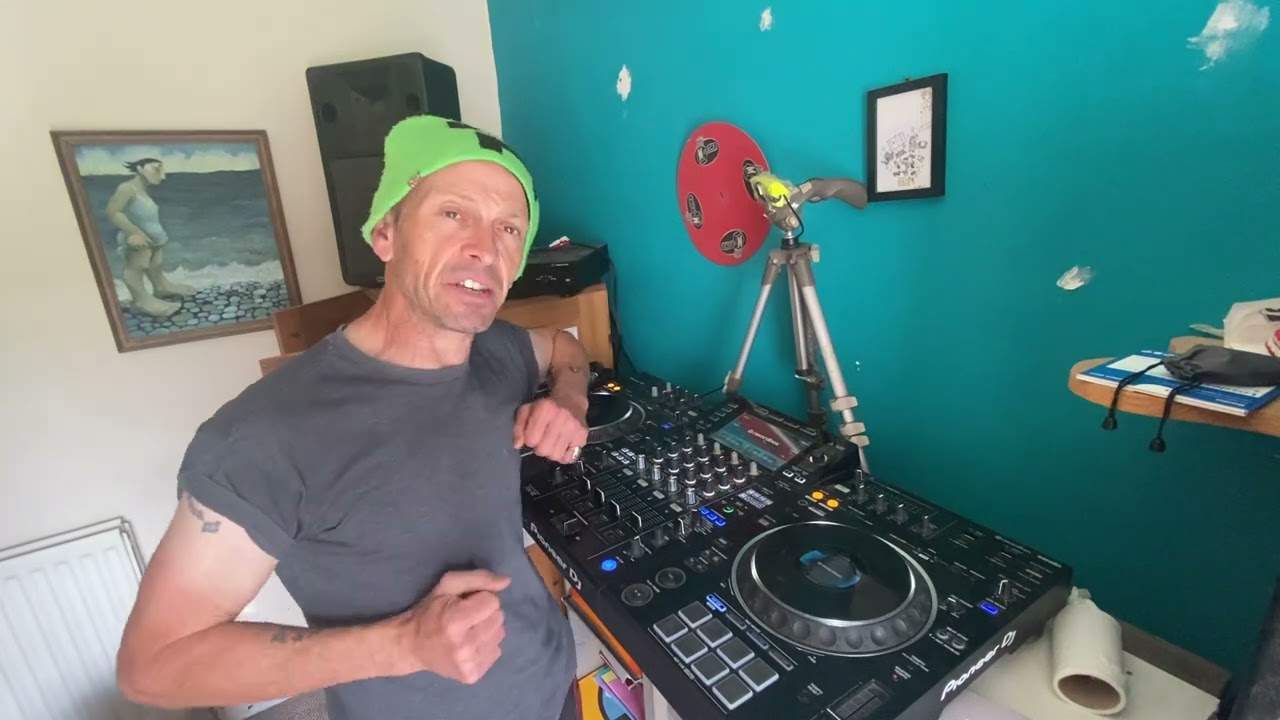
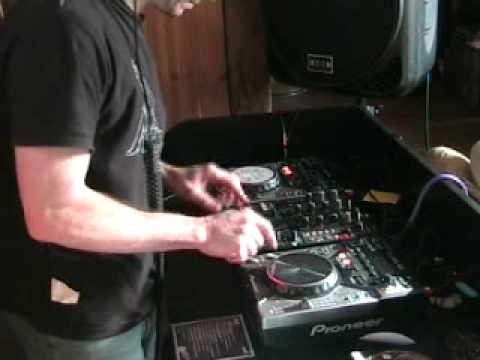
 4:54
What DJ mixing actually means
On YouTube this video is called What Is DJ Mixing?
What this lesson teaches
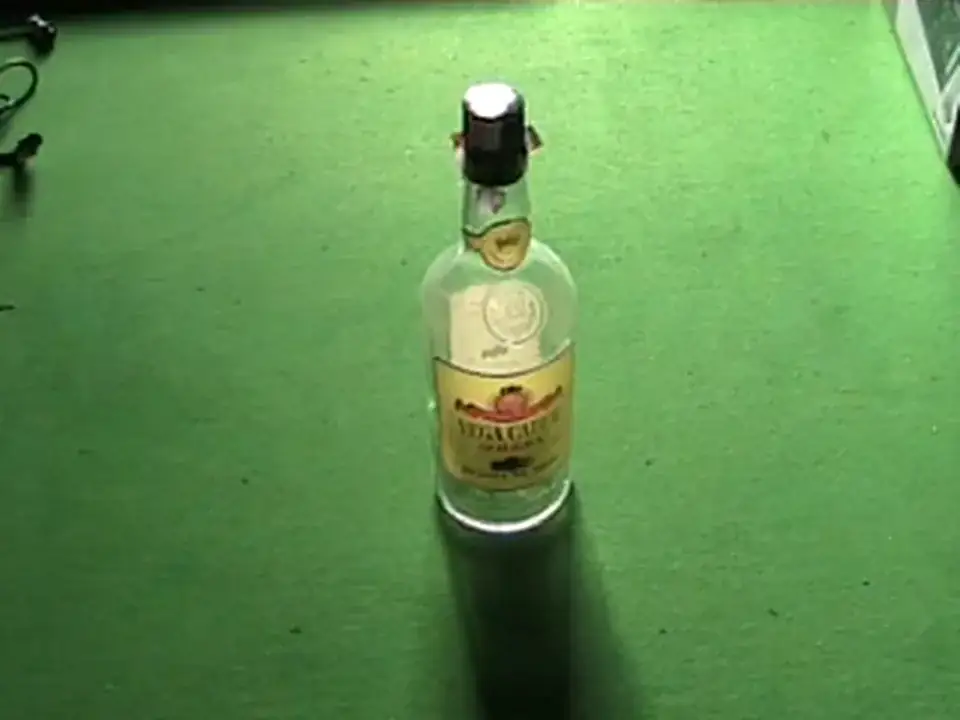
This is the video to send somebody who has asked what you actually do. It defines mixing, lists the equipment, and gives a tour of a table that includes an empty brandy bottle. The definition is better than it first sounds.
The third track
His phrasing is that you take one track and another track and join them so that in the middle it is almost as though you have a third track.
That is the whole idea and it is worth sitting with. During the overlap the room is hearing something that is not on either record: the drums of one under the melody of the other, two basslines briefly agreeing, a vocal landing over a rhythm it was never written for. Nobody has heard that exact thing before and nobody will hear it again after those few bars.
Everything else you do during a set - the selection, the order, the levels - is choosing. The overlap is the only part you make. That is why mixing is judged so harshly by other DJs and barely noticed by the dancefloor: it is the one moment that is yours rather than the producer's.
What the mixer is actually for
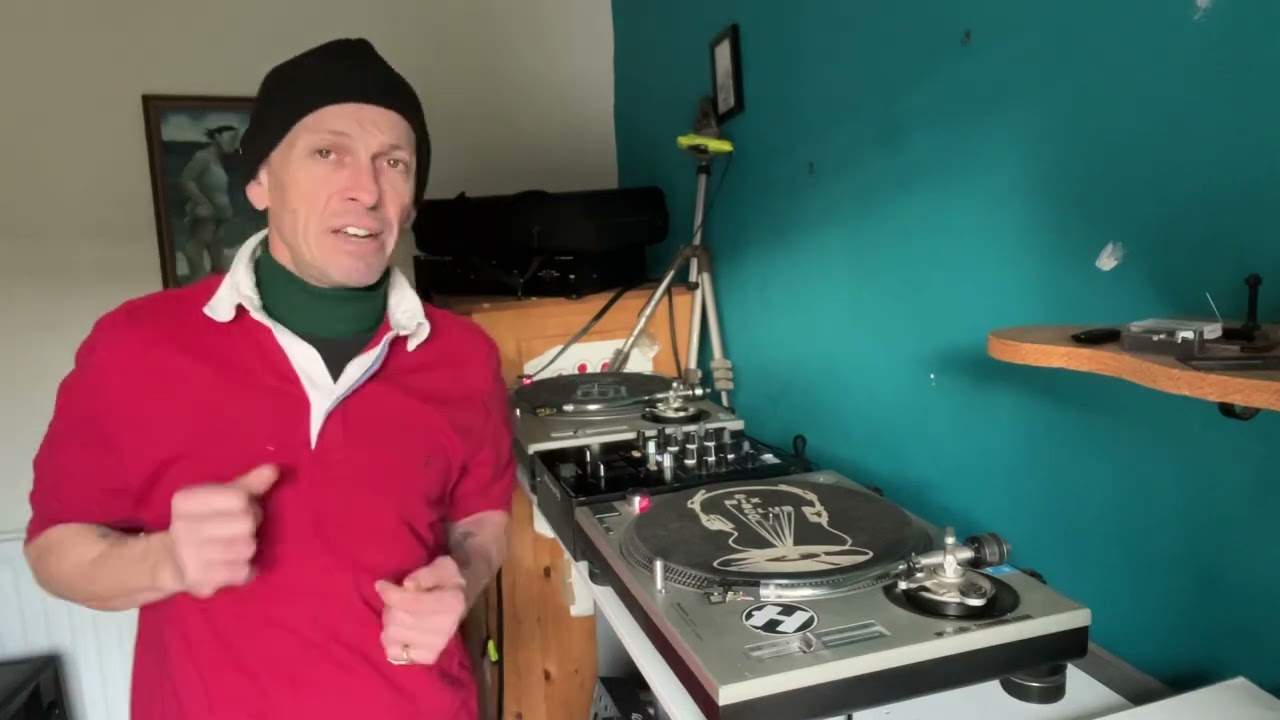
You need two sources. Turntables, CD players, a controller, a laptop, or one of each - the format genuinely does not matter and he says so.
You need a mixer, and this is the part beginners under-rate. Two players side by side are just two players. The mixer is where the decision gets made: what is audible, how loud, and which parts of each track survive into the overlap. It is not an accessory that joins your decks together, it is the instrument you play.
You need headphones, so you can hear the incoming track before the room does, and you need amplification. Powered speakers have the amplifier built in and are the simpler answer; passive ones need a separate amp, which is more boxes but more flexible later.
Then leads. The RCA or phono cables he holds up are the ones you will spend your life replacing, and a dead one is the most common reason a channel goes silent.
A note on speaker size
He points at a fifteen-inch cabinet with a compression driver and says it is too big for a bedroom and good for a mobile setup, which is exactly right and worth taking seriously. Buying PA for a room that does not need it is the classic first mistake, and the second is buying bedroom speakers and then accepting a booking.
A set is a chain
The last idea in the video is the one that makes this a skill rather than a trick. One into two, then two into three, then three into four. Each join has to work with the track you have just arrived in, and has to leave you somewhere you can get out of.
That is why a set is harder than a mix, and why somebody can nail a transition and still clear a floor.
Contents of the video
0:00 First of all, actual DJ mixing is not this

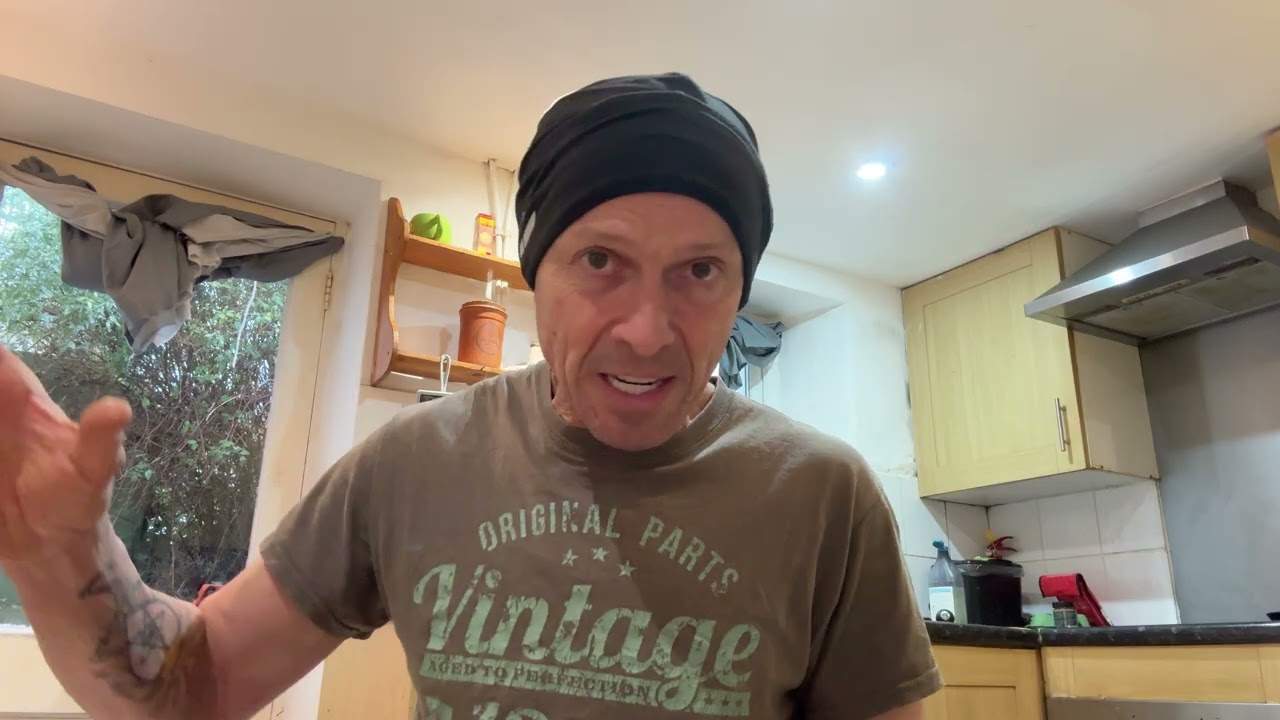
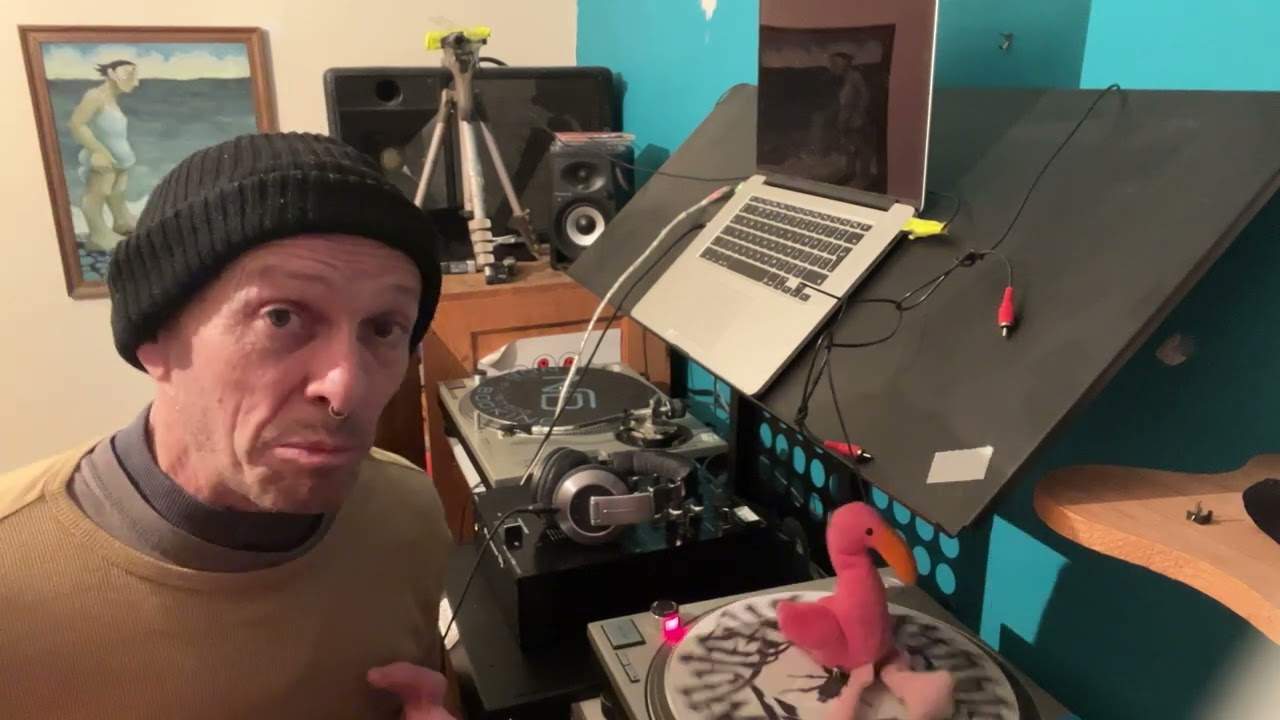
Alright folks, this video is dedicated to everyone out there who is not a DJ and wants to know what DJ mixing is all about. Now first of all, actual DJ mixing is not this. Basically DJ mixing is an art form and the DJ would like to get one track, another track and mix them together so it's almost as though you've got a third track. So you're playing one and then the other one comes in So in the middle you've got the two tracks actually working together. Now there's lots of ways of doing this and this is definitely not one of them. Basically a DJ needs a couple of items. He or she needs a couple of turntables, maybe a PC program. Turntables could be vinyl turntables, CDJs, I'm sure there's other things, and the most important thing is the mixer in the middle. You need a set of headphones, you need an amplifier, some speakers. Alternatively...
1:23 You can get powered speakers

You can get powered speakers. You've got all that set up and you've near enough got a complete DJ unit to have a mess around with. What you don't need though is stuff like this. What you do need though is stuff like this. That's an actual DJ mixer. That's a DJ set of headphones. Those are speakers but they're actually powered speakers, they've got amplifiers inside them. That's an actual CDJ A vinyl turntable or a tabletop turntable, but it's an actual CD player. That's a vinyl turntable and that's an empty bottle of brandy from a party from last year. Man, it was a good party. Those there are RCA leads, sometimes known as phono leads, and you'll always need these to go from your CDJ into your mixer or alternatively you'll actually find these in the back of your vinyl turntable.
That is a non-powered speaker, but you've got there a 15 inch and a 1.75 compression driver. That's rather big, rather loud for home system, probably a little bit too big, but for outside PA or a mobile setup, rather good. But back to the actual mixing thing. What is DJ mixing all about? Well like I said, it's about joining two tracks together. And making them sound good in the middle, but finding two tracks that work really well together and making them join quite nicely. As though it's seamless, as though there's no real join. And the whole idea of getting a good set together is actually getting one track, getting another one, fitting those together, and then the second track, getting a third track, and fitting the third track really well together with the second track, and on and on and on. So you end up having what's known as a set.
3:19 Absolutely nothing to do with badgers

Absolutely nothing to do with badgers. Badgers? We don't need no stinking badgers! So basically, a DJ is trying to get one track and mix it in with the other track, a bit like this. Here we go. So there you go. So anyone out there who thinks that DJing is easy, simple for mugs and for idiots and for down-and-outs, you're very wrong because DJing is quite a hard thing to do. Guess what? Practice and enjoy.
This transcript was produced automatically from the audio of the video and may contain mistakes.
This video is part of
Related videos
-
WHY Vinyl and WHY Is Now the Time to Go Old School
He admits at the start that this one might annoy people, and some of it should be argued with. The practical half is excellent. The claim…