 21:07
Whats Is a DJ What Is a Producer and How Are They Different?
Contents of the video
0:00 Jonathan Ellaskins, The DJ Tutor here
Right, ladies and gentlemen, Jonathan Ellaskins, The DJ Tutor here. Now, before I start this video, I would like you to do me a favour. Yes, I'd like you to do something for me for a change. Now, recently I've started doing some DJ lessons for kids. Now, those lessons, there's going to be many more over the next however long, are targeted for young children from about four upwards. You know, you may think, some of you, that, well, four-year-olds, all they want to do is play with Lego and pick their nose. Well, they probably want to do that as well. But a four-year-old is very intelligent and probably knows how to use a computer better than your grandparents. So, let's bring them on into the industry because they are the new DJs and these are the people that in the future will inspire the next generation of DJs.
So, please check out the DJ lessons for kids. There's a whole bunch at the moment and there's going to be lots more to come. But anyway, let's dive on into this video and if this was Americanized, normally it would be clipped and I'd go, oh, and now there's another part of the video. So, let's get started. But I'm old school, I'm just going to let the camera roll on. Right, so a few people have asked me about, well, have asked me this question. One recently and one about six months ago. Now, six months ago, I thought, what's the point? Now, more recently, I'm thinking there is a point. In fact, there probably was a point six months ago to delve into this question anyway. But I'm going to do now, I'm going to do it now.
Sorry, correct English. What's the difference? What's the difference between a DJ and a producer? All right. Now, there is a very, very big difference, but also there's practically no difference at all now. Well, there isn't much difference, but there is a lot of difference or is there or isn't there? This is a really tough question. But there is a very good and logical answer. So what's the difference between a DJ and a producer? Well, first of all, if we go back to the 80s when we had vinyl DJs and we only had vinyl DJs. All right. Maybe the latter part of the 80s. We had very, very crazy style, clunky CD players that would only play track. Well, what I say maybe on a CD you'd have seven or eight tracks.
2:39 It wasn't invented then and you didn't have any pitch control
And that's it. You know, you didn't have any MP3. It wasn't invented then and you didn't have any pitch control. It was literally like the beginnings of the CD era. But 99% of DJs would use vinyl. Now, you weren't really a producer then if you were a DJ or I know some people may be saying, yeah, well, producers were DJs. But what I'm trying to get at here. And this is the key here. Is that when you were playing your set, you had to be a DJ. In other words, you were playing vinyl. That was it. Now, the only way you could dip your finger into sort of production. I mean like literally just like just tap into it. But did I say finger? I meant toe. Never mind. Okay. This is you had two copies of the same vinyl. And you were able to go from one to the other and start to do a remix of a track.
Now, if you think about it, that's what producers will do today. They will remix a track for another DJ or another producer. But back in the day, a DJ, the only way of sort of being let's say in the same camp as a producer was to have two pieces of vinyl. Start the one off at the beginning and then maybe the second one. Flip it over and play the acapella over the instrument. And then maybe put the leave the acapella play for a little bit. Turn the instrument over and play the vocal version and so on. So you go from one to the other. So you were in a way, you were reinventing the track by making it your own. But you were still using other people's music. Now that's the key there. You were using other people's music.
Now I'm going to delve into this more depth as the video goes along. Now, when we then went into the 90s, we started having CD players that were a little bit better. We had a pitch control. We were able to form some kind of really dodgy loop and so on. So now what we could do is, you know, we could even more go into remixing because you didn't have to buy two pieces of vinyl. You could burn a CD, copy it, you know. And then you've got two CDs. And go from one to the other and form dodgy loops. And there was a little bit more scope. But it still wasn't very good. And what we didn't have much of in the early 90s was effects. Now when we started to get effects in mixers, now that's when things started to change.
6:05 Could start to add effects onto a track
So let's imagine that we've got a scale of 1 to 10. Number 1 being a DJ and number 10 being the producer. And in the 80s, there was a very big gap and the one couldn't cross over to the other. In other words, the DJ could not become a producer while they were DJing because it was practically impossible. Unless of course you had a Fairlight which, go and Google it. This is an old school machine from years ago that made really, really strange sounds and probably cost more than a house. Nowadays, you can probably get that sort of effects on your thing. On your phone. It's mental. But really, if we look at it, 99.999% of DJs out there could not become a producer because they didn't have the tech. But of course, tech eventually flooded the market towards the latter part of the 90s, early 2000s.
And what started to happen with effects on controllers and on mixers is that the DJ now... Could start to add effects onto a track. Maybe make a loop. Add loops onto another track. And then start to almost do this production on the fly. Now, where does this fit in with an actual producer? Because all I've done at the moment is talked about DJs and them trying to become a producer. But what is a producer? What does a producer do? Where are they? Are they male? Are they female? Where do they live? Do they have four legs? Well, basically, they have four legs and they live underneath stones in Outer Mongolia. There you go. Just kidding. They actually have three legs and they live in Cyprus. Sorry.
7:25 A producer can be anybody from anywhere
A producer can be anybody from anywhere. Any age. In fact, some of the best producers in the world... Are about 60 or 70 because they've been there. I mean, when production started, they were like in their 20s and they'd grown up with technology. They've taken on board new technology. They've also remembered the old technology and added that to the new technology. Now some old technology which was analogue is now digital. But the old school producers have probably kept the analogue and incorporated and added that to the digital. Whereas some of the new producers have realised they can't get hold of the old analogue. But they can get hold of the digital version of the analogue and use that. Now, it's a bit technical that but it's all about the 707 and the 303.
The groove box and all that kind of stuff that was hardware that made these really kind of twisty bendy sounds. I mean, if you think of the old acid sounds from the 90s. What a sound that was. I mean, Josh Wink, Highest State of Consciousness. If you do not know that tune, go and Google it. Let's say for example, I Am Ready, Size 9. Another great tune from the rave era from the 90s. Go and Google those tunes. Absolutely amazing. Especially Josh Wink, Highest State of Consciousness. That is probably by far one of the best 90s tunes of all time. If you agree with me, thumbs up. Leave a comment, go yes. Thank you. So what we had or what we've got now, a producer. Let's talk about producers. So, oh no, no. Before we do that, very important.
A DJ will play tracks that have already been made. That's generally what happens. Whereas a producer will make the tracks that DJs will play. So what we have is we've got programs out there. The likes of this is a few. Fruity Loops, Cubase, Ableton Live Suite. There's a couple of them. Now these programs will allow you to make, design and produce your own tracks. So what you have to do is you will buy the program. I'll put a link in the description for Ableton Live Suite, for example. Or just Ableton. And what you do, you download that program. There is a fee. The program will come with a whole bunch of samples, and then you'll be able to use those samples in a timeline and make up your own beats, make up your own melodies,
10:33 I'll see you in a day
Add some of your own samples, maybe add some vocals. And before you know it, you may have some kind of strange sounding hip hop tune with some drum and bass features and maybe a little dubstep in there as well with a bit of techno and hip hop and soul. A mish-mash. But basically you can do what you want. Now when you start producing, you'll realize that you could if you wanted to, put it this way, you can't just pick up Ableton Live Suite and say to your mate down the road, oh you wanna house track? I'll see you in a day. Alright? Now you could possibly do that but you wouldn't be able to do anything else in between and you'd probably come out with something that sounded pretty crap. On the other hand, if you wanted to,
Like for example, you bought Ableton today and you wanted to make your own track that sounded relatively good and you could stick it on Beatport. Well then you'd probably have to hang around in your bedroom for about a year to get to know how to use Ableton to understand everything about it how you, you know, how you set beats, how you make a groove, how you add the hi-hat and you add the attack or the delay. You know, you increase the parameter of the beats and there's so much to it. It's not just a case of let's put a drum pattern in there and press play. Believe me, the list goes on. I know that much about production to the size of this house which is, actually it's sort of big. Anyway, so production is about making the music.
DJing is about playing the music that the producer has made and it's, they're miles away. The difference between being a DJ and being a producer is like me standing here and someone else is on the moon. But you see what has happened over the course of the past decade is now we have a vehicle that will take us, a good analogy here, from where we are to the moon and we can step on that vehicle and we can take that vehicle however far we want to. And that vehicle is the likes of controllers like this because you see back in the day it was two pieces of vinyl and that was it and a really, really dodgy mixer. I mean, the first mixer I had was a Crossfade. It was a 19-inch rack mount Citronic something or other and eventually I did get a Crossfade
13:14 Bass, mid, treble not on each slider
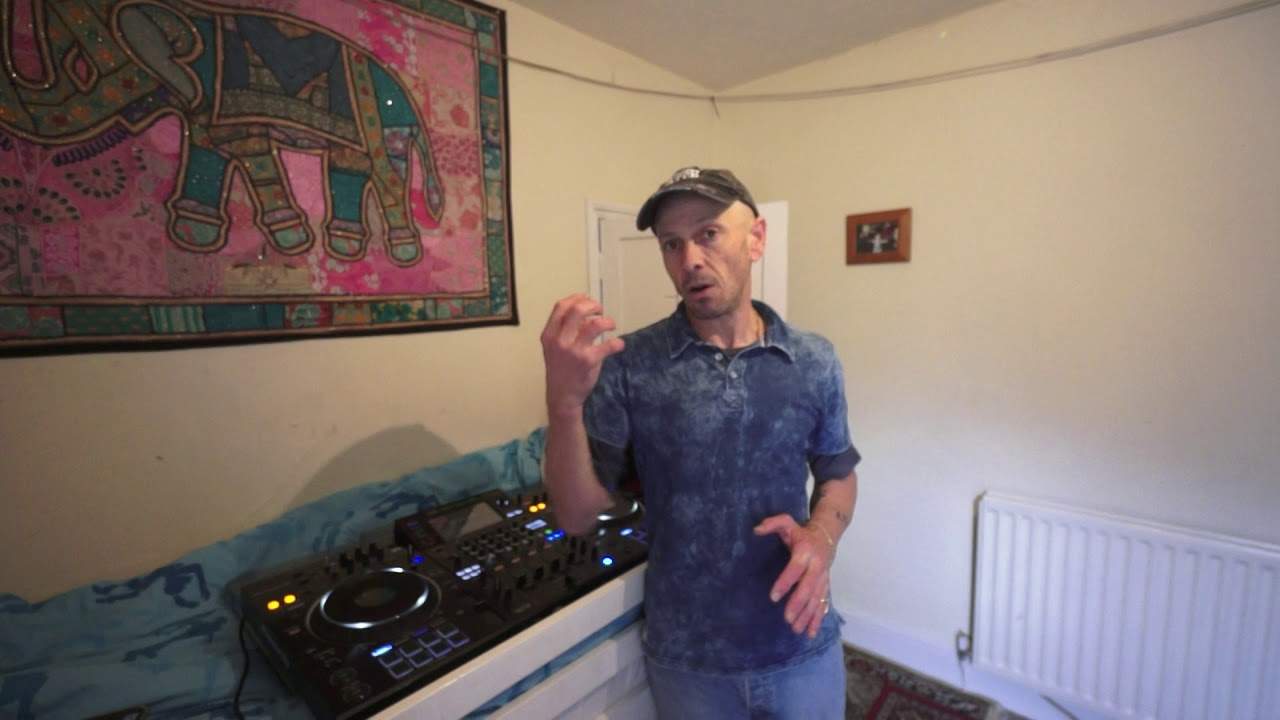
Which is a one unit Crossfade that you put underneath it, you had to plug it in and the Crossfade itself was, it was insane but it was old school. But you see, that was about it. Bass, mid, treble not on each slider. No, bass, mid and treble was on the actual output. The sliders were just sliders. That was it. Whereas now, you know, we've got the colour effects. You know, here I've got space and by the way this is the XDJ-XZ. I've got dub echo, sweep, noise, crush, filter. Those are my colour effects. I've also got beat effects so what I can actually do now as a DJ is I can get someone's production, someone's track and I can make it my own by adding effects to it. I can not only do that, I can then just take the same file. So now it's not like
The 80s where you had two pieces of vinyl. Alright, they were the same and if they're on Technics and they were set at the same speed in the centre they should theoretically go the same speed but because technology has moved so much forward now if I have the same file and again if I use the Rekordbox software which, you know, makes controllers like this come to life that's what they're designed for, you know. Controller is designed for the programme vice versa. Excuse me. I'm able now to do a remix on the fly using the same track to the extent that it would it's far superior to say using vinyl but it's still not as good as a real producer stroke production DJ producer. Now what some producers excuse me asthma anyway what some producers will do
Is they're able to take their production out into the street into a nightclub.
This at the moment is November 2020 and I don't believe there are many nightclubs open at the moment.
15:13 File, music play, laptop
But let's say they can then they can take their production from their laptop and they can produce music on the fly so they can open up a programme. Now again if they've made that track on their laptop then they will of course have the file on the laptop. Now they can use that file in many ways they can give that file to someone and go there it is and that person will be able to just hear the track but on the other hand they can then take that file put it back into the programme and then they can take that file and put it into their laptop and then they can use that file to make music or whatever they want to do. So that's what we're going to talk about in this video but before we go on to the next topic we're going to talk about DJM Nexus 900 Mark II and you haven't seen
Them use CD players and you're thinking well what are they doing? Well they're actually just using the 900 as a MIDI device and that will let them use the software so for example the bass could be one of the components on the software the treble of this technology is the gap in between DJing and production is slowly diminishing because lots more DJs are realising and I'll talk a little bit about this how you can make money on the web in a bit a lot more DJs are realising that the future of the DJ being able to play music and you could come in and well when I say this is where you could come in right this is where you can play a part and where you can start to potentially begin to make money from playing music make your own music now it depends if you want to start making your own
18:28 Making music, start making
Tracks then look at producing your own music because if you think about it when you play a song somewhere on the web it's possible it's not highly likely likely it's possible that some kind of I don't know program is going to recognise someone else's stuff it's copyrighted on the other hand you could if you wanted to spend a bit of time make your own music okay so in other words you've downloaded the program for example Ableton live suite download onto your laptop you spend the next six months studying other videos not mine not this one and then you start making your own music you've got your own tracks you burn them onto a CD stick on a thumb drive you give them a name a title artist it's your own music and guess what you can start streaming you can start playing music you can
Start making music you can make money from making music so in a nutshell a DJ will play other people's tracks a producer will design and make tracks for DJs to play but like I said earlier in between the DJ and producer is slowly diminishing and maybe in the near future in fact it's happening now as we speak there are people who can come along and play a beat from an mp3 and then bring in Ableton as well and start adding loops and samples and echo and then they can play music from an mp3 and make music from a mp4 or a mp5 or a mp6 or a mp7 or a m8 or a m8 or a m9 or a m10 or a m11 or m12 or m13 or m14 or m15 or m16 or m17 or m18 or m19 or m20 or m21 or m22 or m23
This transcript was produced automatically from the audio of the video and may contain mistakes.
Related videos
-
WHY Vinyl and WHY Is Now the Time to Go Old School
He admits at the start that this one might annoy people, and some of it should be argued with. The practical half is excellent. The claim…