 16:56
WHY Mixing with Vinyl Is a Thousand Times Mor Dificult than Using a Controller PLX-1000 Demo Part 1
Contents of the video
0:00 This is sort of a review of the Pioneer PLX1000
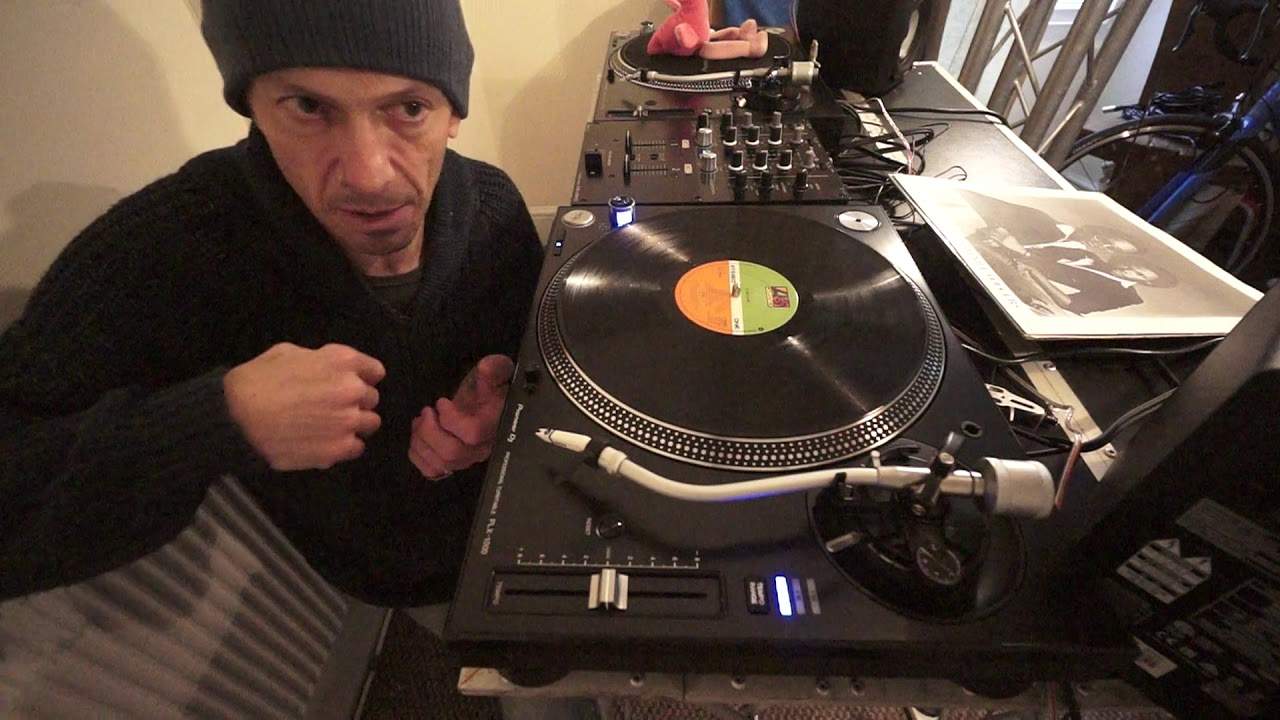
Alright ladies and gentlemen, this is sort of a review of the Pioneer PLX1000. It is their premier vinyl DJ turntable. It's the Pioneer DJ Professional Turntable PLX-1000. That's exactly what it says there. Now I have used Technics SL1200 Mark II for practically all of my life and I've now got a set of these. the crossfader and loopers. Specifically designed for children from the ages of four upwards, so completely friendly, no innuendos. It's just me, a bunch of fluffy toys, giving very, very simple explanations on what DJing is about. For children, that's it. But anyway, back to the job at hand, this deck here. Now, as I said, I've worked with the SL-1200 for many, many years, so I do want to give...
Some kind of comparison. Now, first of all, the Technics SL-1200 is a big heavy chunk of metal. It's solid and very often when you pick something up, whatever it is, if it's light and fluffy, you think well there doesn't seem to be much sustenance to it and it's almost like this rule of thumb that people have got if they have no idea about anything. If you pick something up and it seems as though it's well made and it's chunky and solid, then in a way it's got over the first hurdle of being worth a second look. So the SL-1200 is a solid piece of material. Same with this. You pick it up, the PLX-1000, and it is solid. It's chunky. It doesn't feel light. It doesn't feel plasticky. It doesn't feel as though Pioneer DJ have gone...
2:34 One great feature here is the power on and off
Do you know what? We just need to make a turntable. You over there, go and design something, stick it in a plastic box and we'll do with it. No! I really think they've gone to town with this because it's a solid chunk. So I'm just going to go off camera now and we'll have a look at some of the features. Alright, so firstly... One great feature here is the power on and off. Now with the Technics SL1200 Mark II, if you weren't careful, you could accidentally turn it on and off because the button or the on-off button was positioned in a way that you could brush it and you could turn the deck off. Alright, it didn't happen that much and all you had to do was turn it back on again, press start and if you were clever at what you were doing, you wouldn't have done that in the first place. If you accidentally did it...
You were intelligent enough to know what to do so the listener wouldn't really hear much of a difference with the track being played so on and off so we have a nice blue led feature here i like this it's very um it's not all right blue isn't warm but it's got more of an icy feel it's more i can imagine this in a low-lit environment looking a little bit more sort of inviting and like what's that okay a nice Slow start to the on-off and again you can see when I press the start stop we have the blue LED highlighted there. We have the usual 33 and 45 and just straight above from the on-off we have a small little centre piece here that you can fit over the spindle which is great for your 7 inch that haven't got any centres to them.
They're not really used much now, but back in the day they were used all the time because lots of DJs, including myself, we would get 7-inch with no centre in. The reason they didn't have them in is because those 7-inch more likely were used in jukeboxes. That's another story in itself. Okay, so at the moment I've got a vinyl, piece of vinyl here. This is Cess Chic and this is an absolute... Classic piece of vinyl. Sadly, I can't play this due to, of course, copyright issues. But, alright, so what do you get? Now, you will get a head shell. There it is. I've got some autophones there at the moment. You get your weight at the back. Of course, you get a small, tiny weight that you don't really need to use, alright? So if you do get this and you put the tiny weight in at the back and you get...
4:58 Generally, the small weight at the back is if you've got
The head shell, you also get a tiny little weight here that you can screw into the top. You put your cartridge on there and if you're finding that the whole tone arm seems to be skipping quite a bit, even though you've gone through all the format of setting it correctly, the height and so on, it could be because you don't need the weight at the back. Generally, the small weight at the back is if you've got... Head shells that are slightly heavier, I think like the Stanton 600, I think it was, or the 620, I'm not sure. But the rule of thumb is this, if you've got a small head shell, a small cartridge, sorry, you will not need the weight at the back. Alright, now one of the great features about the PLX1000 is the fact that we can increase or decrease the speed. So we can go from plus or minus 8%, 16% or 50%. Now this is a big deal, okay? But it's not so much a downside, it's... You see, back in the day in the 80s, before the likes of having...
Multiple screens that could just basically tell you what to do. You had to know what to do with vinyl. Now, I would hazard a guess to say every single DJ who had vinyl would have had their vinyl in order of BPM. Now, of course, you're probably thinking then, yeah, but that means the soul and the R&B and the hip-hop's all over the place. Not really. I mean, when I say not really... Not all the time, because your soul in hip-hop would be slow BPM, going through 108, 114 to disco, and then you get to pop new wave, and then you get more to house music, early house, which is like your 120. So, in a way, if you did have your tracks in BPM order, you would also have them ordered in genres, to a certain degree.
7:05 With the pitch set to the centre positi
So why would you want them in BPM and not like just house over there or R&B over there or so-and-so? Well, you could do that. There's no problem in that. But by having them in BPM meant that you knew you had a certain amount of tracks that you knew would mix harmonically if, of course, they were already harmonically matched with the other tracks. You knew they would mix harmonically If the BPM of those tracks was close together. Now this is where it gets a little bit more technical, not a lot of people know this at all, but hopefully you will understand. With the pitch set to the centre position, that means that of course I will be playing the track at its original speed. So let's say for example, this track...
I was going to play, I will play, I won't play because of copyright issues, is 100 BPM. And if I'm at plus and minus 8% on the pitch, that means I can slow the track down by 8%, which will take it to 92 BPM, or speed it up, which means I can bring it up to 108 BPM. Now that's all well and good, that's fine because I can slow it down and speed it up. But the trouble is, it's because I do not have key lock or master tempo. Now key lock and master tempo will enable me to keep the music the same, in other words the key of the track the same whether I slow it down or speed it up. But with decks like this you don't have that. So anything above or below 3% you will start to increase or decrease the music by semitones.
9:37 Scratch turntablist, similar
So this is why it was very important, and it still is today for vinyl DJs to keep their vinyl in some form of BPM. Because if you think about it, if you've got a track that's 100 BPM, and you've got another song that's say 109 BPM, you won't be able to mix them, or you might not be should I say. Just in case, be able to mix them because the one you'd have to slow down quite a bit, the other one you'd have to speed up and once you've slowed the one down and you've made the other faster they may now be in beat but now they might be out of key. You see this is where the problem arises with decks like this where you cannot have key lock or master tempo. Now of course if you've got the correct software, you can use these with virtual vinyl and you've got software on your laptop where you can key lock and jobs are good. But if you're just using proper vinyl, in other words a purist vinyl DJ, within 3% and you're fine.
8% of course you're going to slow the track down by 8%, speed it up by 8, but then on these decks you've got another range of plus or minus 16 and plus or minus 50. Alright so this is where a deck like this starts to show its colours because there's a lot more to it, you can do more to it, you can do more with it. Whereas aesthetically it's very much similar to... An SL1200. The tone arm is very similar, how you can move it up and down, you've got your anti-skating, all of this part here where the arm is connected to the actual housing seems to be very similar. Now I'm not saying anyone has copied because the trouble is with patents is that you only have to change something very slightly. For it not to go into any copyright issues or any patent issues, should I say. Now if I take the piece of vinyl off, you also get the Slipmat Pioneer DJ Slipmat and you also get this nice thin piece of plastic. So if you wanted to, you could use that.
On there, and you can put your vinyl on top, and if you're just predominantly a scratch turntablist, so long as you're careful with your record, that is going to spin your vinyl quite nicely. On the other hand, you have your other slip mat, also comes with the rubber mat as well, but I highly recommend you don't do that if you're a scratch turntablist because you'll be... The deck will stop. Now, there's a lot of talk there, alright? It does feel as though it's... Pulling, it's wanting to pull my hand off if I hold it in place but it's not a good idea to do that while of course the deck is moving. So I'm going to turn that off and let's see if we can just take the platter off the deck. So I'm going to pull that up and there you go. So this is known again as a direct drive turntable. Two parts to the motor and there's the one, there's the other.
12:15 Platter is just a magnet, that's it
Platter is just a magnet, that's it. Here we have 240, 110 volt, the volt selection. I highly recommend you do not touch that at all because it will be set for the country where you are and if you do change it, in fact just don't. That's the best thing to do, just don't do it. I'm not going to say unless because I don't want any problems there, but use your common sense, alright? That's the only time you need to change it is common sense. Right, so that on there. What we have got at the top here, this small little hole and that is of course to put your cartridge in. And I would always recommend if you're going to be DJing solely with vinyl and you've got two turntables and two needles and you're going to the event...
You're an idiot. You need to make sure you have two turntables and at least three or four needles. If not an extra cartridge, make sure you've got at least the extra needle stylight at the end because the worst thing that can happen is the first track you play, your needle breaks and you're left with one track so you better be good on the microphone. Alright, so there you go and again... Very similar to a lot of other turntables. You have your tonearm rest, you have your tonearm arm there, lift up, put down. I'm quite happy to let that lie on the slip mat. I could leave that there all day because so long as I don't start moving it back and forwards, the needle is just going to sit there nicely. And then I'm just going to lift that up, not that I would want to do that anyway, and move that across, let the tonearm sit now on its...
14:54 It is a professional turntable
Nice little clip there, clip it in place and that's it. Now also with this deck as well we have the reset. Now what that will do for me is no matter where the pitch is it will reset it to either 33 and a third RPM or 45 so I can demonstrate that now say if we're at plus 50 if I put in fact I'm going to put pinky yellow here Pinky Ella on the deck. So there you go. So I'm going to go really fast now. Pinky Ella is going rather fast, getting a little bit tipsy there. Press reset and you can see now it's back to 33 RPM. So if we slow down, it's not going to do anything because we're still on reset. Disengage that and now Pinky Ella is going even slower. Bless her. So there you go. All right.
A short review here, well, short-ish, on the, it's known here, Pioneer DJ Professional Turntable, the PLX1000. And I would say that is absolutely correct. It is a professional turntable. And for any of the diehards out there, including myself, who are like, oh no, Technics are the best, da-da-da. Well, of course, they are great. They are good turntables. But you can't take away the fact... A great feature on this deck is it will take your regular RCA in and of course the earth cable. And with a lot of the old style decks, the cables were plugged in. So of course if you had any issues, which I have on many of my decks where the RCA starts to wear away, you have to do one of two things.
Either find where the break is, cut back from the break and resolder another cable onto the cable. Or, worst case scenario is unscrew the whole thing and re-solder a new cable, which is time and effort. And if you don't know what you're doing, you've got to send it to someone and get them to do it, which is cost. Whereas the PLX1000, you don't have to worry about it. It comes with its own RCA cable and its own earth cable. And if over a matter of time they break, you just plug a new one in.
Simple. Alright, any more info on this, check out the description. Thank you for watching. Practice and enjoy.
This transcript was produced automatically from the audio of the video and may contain mistakes.





