 13:26
Choosing the next track to please the crowd
On YouTube this video is called DJ Mixing Lesson on Choosing the Next Tune to Please the Crowd by Ellaskins the DJ Turtor
What this lesson teaches
A clean framework, and it connects the harmonic mixing course to what is actually happening on the floor.
The four
Same key. A smooth transition where the vibe and the feel stay where they are. The room continues.
Key up. The vibe rises. This is the lift - the moment described in the harmonic course where a club suddenly goes up a level.
Key down. The vibe dips. The overall feel of the room slants downwards, which is a legitimate thing to want and the one people forget is available.
Wrong key. It sounds, in his assessment, shit. No further analysis offered or needed.
Why having the list matters
Because it turns key selection into a choice about the room rather than a compatibility check.
The wheel tells you which records will not clash. This tells you what each of the non-clashing options will do. Those are different questions and most people only ever ask the first.
So the sequence becomes: what does the floor need in the next five minutes - hold, lift, or settle? - and then which of my compatible tracks produces that?
The refinement
And this is the part worth catching, because it stops the framework being too neat.
Even with two tracks in the same key, you can still increase or decrease the atmosphere.
Key is one lever among several. A same-key track with more going on, a harder kick, a vocal where the last one had none - all of those raise the energy with no harmonic change at all. And the reverse lowers it.
So the four categories describe what the key change contributes, not the whole effect. A key lift into a sparser record can leave the room flatter than it was.
Using it
The practical version: decide the direction first, then pick the mechanism.
If you want a lift, you can get it harmonically, or through arrangement, or both - and both at once is how the biggest moments in a set are made.
Contents of the video
0:00 Jonathan here in the world famous DJ Tutor studios
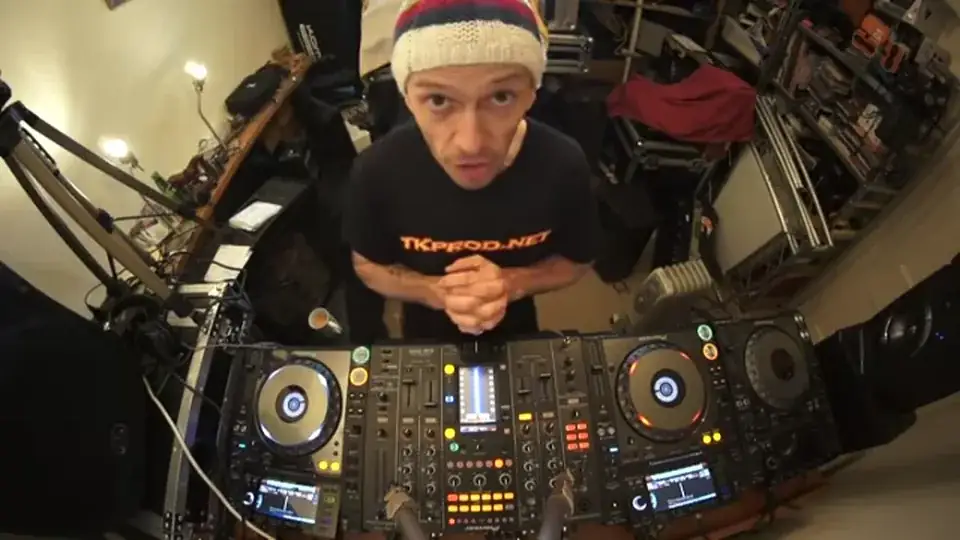
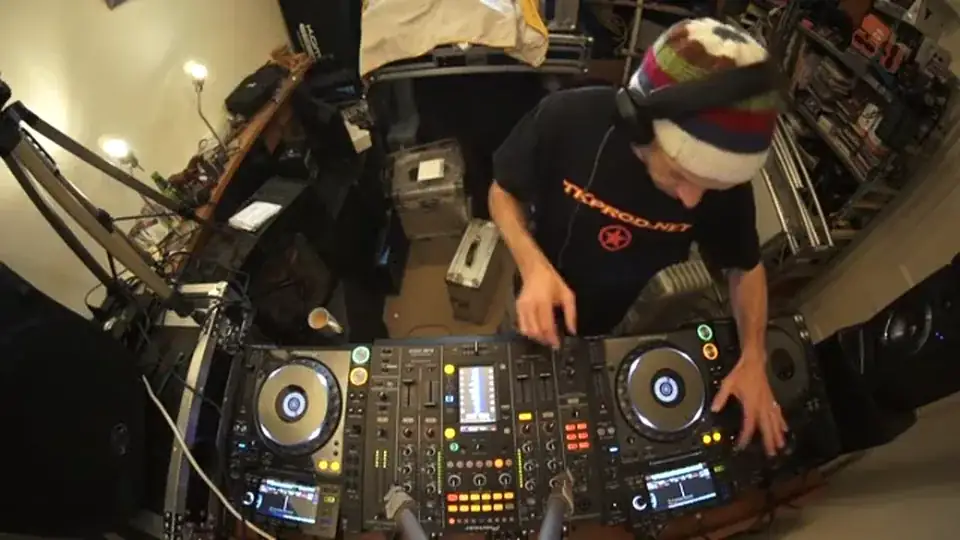
Alright guys, Jonathan here in the world famous DJ Tutor studios. It's hot outside, it's warm in here, I've got the heater on, I've got a cup of tea, it's another tutorial and we're good to go.
Ah, yeah, OK. Right, I'm going to use a couple of cuts from CD Pool May 2013 from the Global releases. We have track one here from disc number two, Mr Lenny Fontana in the house. It is a tune. It's called Pay the Price and over here we have Miss Me, Back to My Beat, which is taken from, have a look, it's taken from disc one and it's track number nine. I'll put info in the description for you so put those over there. Alright, now first of all let's have a little bit of a discussion. Come over here. There's lots of ways of constructing a mix. And if we were to break it down to four, one, two, three, seven, they'd be as follows. One would be a transition using the same key, a nice smooth mix so the vibe, the feel would stay the same.
Well, it might, I'll explain in a bit. The other one is when we let's say lift a key so we go higher, that would make the vibe rise, the feel rise. Sort of like this. Sort of, I'll explain in a bit. The other one is if we reduce the key it would make the vibe sort of dip, the feel, the overall feel of the whole room would start to slant. Sort of. And the fourth is when we mix a track that's a key that doesn't work and it would just sound shit.
That's it, it would just sound crap. So the first one, so we have two tracks with the same key. So even though sort of the transition would be very smooth, you can still increase or decrease the atmosphere. And that's all down to tune selection. Number two is when you want to increase the vibe, of course you need to have maybe a higher key. And again, a higher key or a track of a slightly higher key than the one you're playing could keep the vibe going. It could increase the feel or decrease the feel. It's track selection. Guess what the third one is? It's sort of the same. It's track selection. And the fourth one is track selection. That's all it is really. It's actually about listening to the music and listening to what you want to play.
So for example, you could have a track playing and you could have ten tracks that will mix into that one perfectly. But maybe only 50% of them. Will fit that point in the night, because the other 50% could ruin the feel. I nearly said the veal. Feeling quite meaty.
3:13 These two tracks pretty much the same key
Could, sorry itchy nose, could ruin the vibe, stop picking your nose, could ruin the vibe, the atmosphere that you're trying to make. It's like you are constructing something, you are in control, you're holding this something you want to construct. No one else is. It's you, it's your baby and if you start putting the wrong bits into it, what you wanted, you will not get. You'll end up with something that you had no idea would happen and it's probably a mush and a mish mash mess. So these two tracks pretty much the same key. And even though they're the same key, the vibe just goes straight up because Mr Lenny Fontana grabs a cut and just minces your internal. Workings to make you go, oh my God. Sometimes if you listen to this track, you may want to dip into another room whilst you have your organism.
I just said that for everyone. I'm sure you understand where I'm coming from. Okay, so miss me back to my beat Lenny Fontana over here pay the price. Now one thing that Lenny's done here is he hasn't started this track on the 1 1 2 3 4 1 2. 3.
So what you might want to do is count in at the one, so you may need to cue it in slightly have a listen there.
So if I was to form a hot cue there and the beginning as well.
So this is the beginning and this is the one.
5:19 You're pretty much at your last
So if you're a beginner or even if you just are not confident about bringing tracks in that aren't in on the one. I highly recommend you cue them up on the one at the beginning of a bar, make sure it's the beginning of a phrase as well. A phrase most of the time, most of the time is the beginning of a section of the music, for example, the beginning of an instrumental break the beginning of maybe the percussion that starts the beginning of the vocals. The beginning of the melody, what you will find in most dance music is when you get to the last set of minutes. You're pretty much at your last 32 bars, the last 30 seconds. You're at your last 16 bars and after the 16 bars you finishes. Okay, so again this track if we listen to this is Miss me, it's got that sort of like nice chuggy on feel chuggy chuggy on.
Okay. All aboard chuggy on, chuggy on chuggies please. Okay, so I'm going to chug you on now, thank you very much.
That's about the track, you see here it's that sort of track where if you feel as though you want the night to go bang then a sort of a Lenny Fontana track like this would seriously make the roof go aboom. Now this sort of transition isn't really a transition. It is a smooth transition but at the same time it's not a build, build, build. Imagine a house and the bricks are about that big and you've got a wall there, you're lining it up, the next wall there and so on and so on. So you're gradually building the blocks. This sort of mix, you're not really doing that, what you're doing is you've got a big block here and then you've got quite a high rise to the next block. So you're taking people up a great distance.
8:03 To get the general idea about how can we make this more interesting?
You're not slowly building. You're not slowly bringing them up but at the same time because the tracks will work well together, they won't work okay, they'll work well together, you can still form quite a nice smooth transition. So we'll go to the latter part of this track here. Grab your dog and bone of bones. To get the general idea about how can we make this more interesting? We need it more interesting. It's almost as though we've got dum-dum-dum and then ba-da-bam, ba-da-bam. It's like... No! No! Give me a bloody nose will you? Right, so how about this. Okay listen. Ah. Right and again. Very clever. The second is not on the beat. It's like... It's off but it's actually on. It's a very, very clever track. Very clever.
10:46 Dum-ch dat-ch dum-ch dat-ch dum-ch dat-ch dum-ch
Ba-dum da-da-bam. Accents. It's not like this where I'm talking and... No. An accent in music is when for example the drummer. Dum-ch dat-ch dum-ch dat-ch tsh. That's not an accent. The accent is when you just go slightly before or after the normal hit of, for example, the hi-hat or cymbal. So... Dum-ch dat-ch dum-ch dat-ch dum-ch da-da-ding. Da-da-da. Da-da-ding. Da-da-da. Da-da-ding. Da-da-da. Da-da-ding. So for some people this kind of track could put you off because you'd be thinking, well it sounds as though it's on but it's actually off. But then why is it off when it should be on because it's on? Right. So this time what I'm going to do is just bring in that little bit. Listen. Dum-ch dat-ch dum-ch dat-ch dum-ch dat-ch dum-ch.
Right, so I've done that and then what I'm going to do is get it right at the... If I... If I get a hot cue there. Hold on. So... There. So just try that. OK. And then I want to get right to the beginning as well. So... Dum-ch dat-ch dum-ch dat-ch dum-ch dat-ch dum-ch dat-ch dum-ch dat-ch dum-ch. So we've got a hot cue now at the beginning and we've also got a hot cue at the accent. So I'm going to go back a little bit more. A little bit more. And play the latter part of Miss... Miss Me. Buff around the edges. But it was real. It was actually done by me and these things, not some sync button or something like that. So again, by trying to just change things very slight... Very slightly can make one hell of a distance...
Distance. Go over there yourself! The difference. Oh God blimey. Thank you very much for watching. That is CD Paul and Mr Lenny Fontana. Love you baby. Practice and enjoy. Bye dude. Nice one.
This transcript was produced automatically from the audio of the video and may contain mistakes.