 9:06
A tip on mixing in uk Garage, 4/4 to the floor stylee!!
Contents of the video
0:00 In this video it's going to be two or three parts
Alright folks, Jonathan here. Now in this video it's going to be two or three parts. First of all, the tracks. It's Mika Big Room Girl and a Z bass track entitled Neighbourhood. This is UK Garage with big style bass. Just watch first, let's have a listen. Well, the one track was playing which was of course the vinyl turntable. Then the CDJ, what I'd actually done is I got it right at the beginning of the beat. Then just using the actual cue button, what happens when you press that cue button, bang like that, the track will start. When you keep your finger on the cue button, the track will carry on playing. As soon as you take your finger off the cue button, the track will go back to its original position. So have a listen first of all.
2:07 What I want you to imagine now, okay, this is the most important thing
If I just wang the camera down, you can see what I'm doing. Now, what I want you to imagine now, okay, this is the most important thing. Heat of Joe's is there forever. And that is, think of the funky drummer. No, first, no, I'll tell you what, what we'll do, because this is where my mind works. Think of a basic 4-4 beat. Bam, bam, bam. If you hit that cue button like this... It's okay, just as long as it's in beat. But if you imagine in between there, there's loads of other beats like this. Then again, if you imagine there's more beats squashed in between those as well. So that's exactly what's happening. Funky drummer. Drum and bass. So what you have to do, you've got to try and make your mind think of drum and bass. So in other words, what we'll do now...
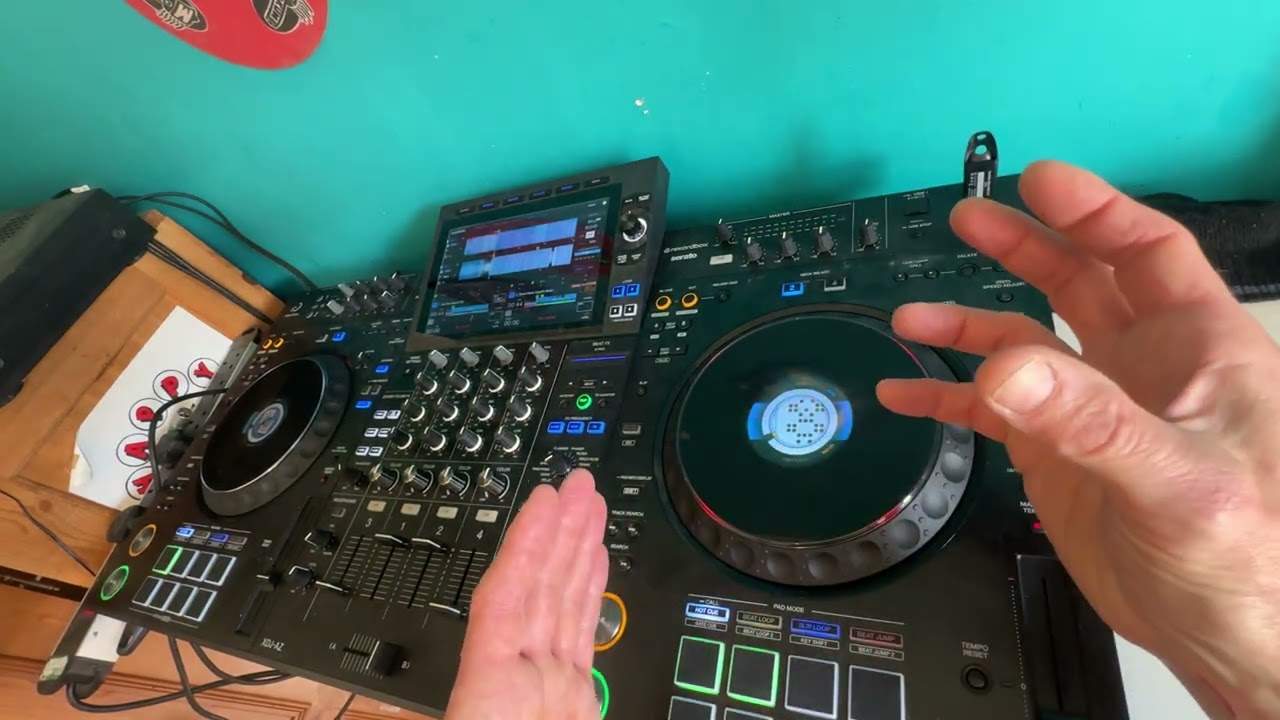
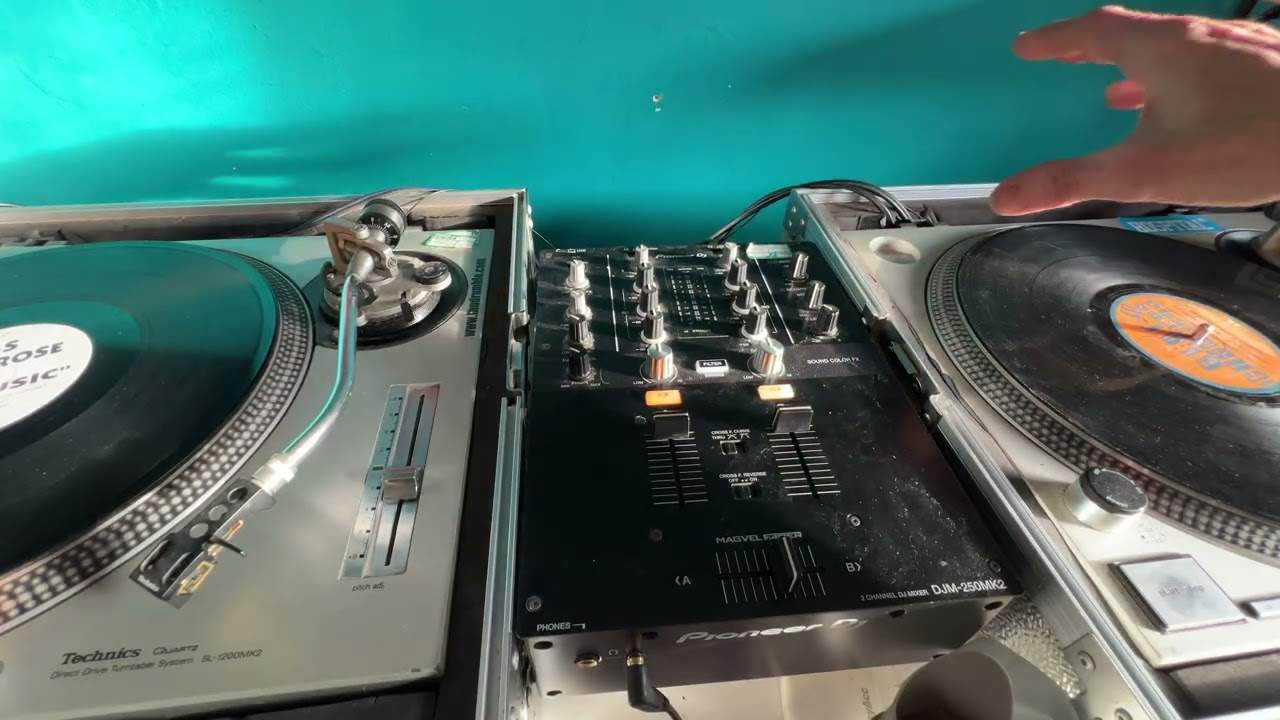
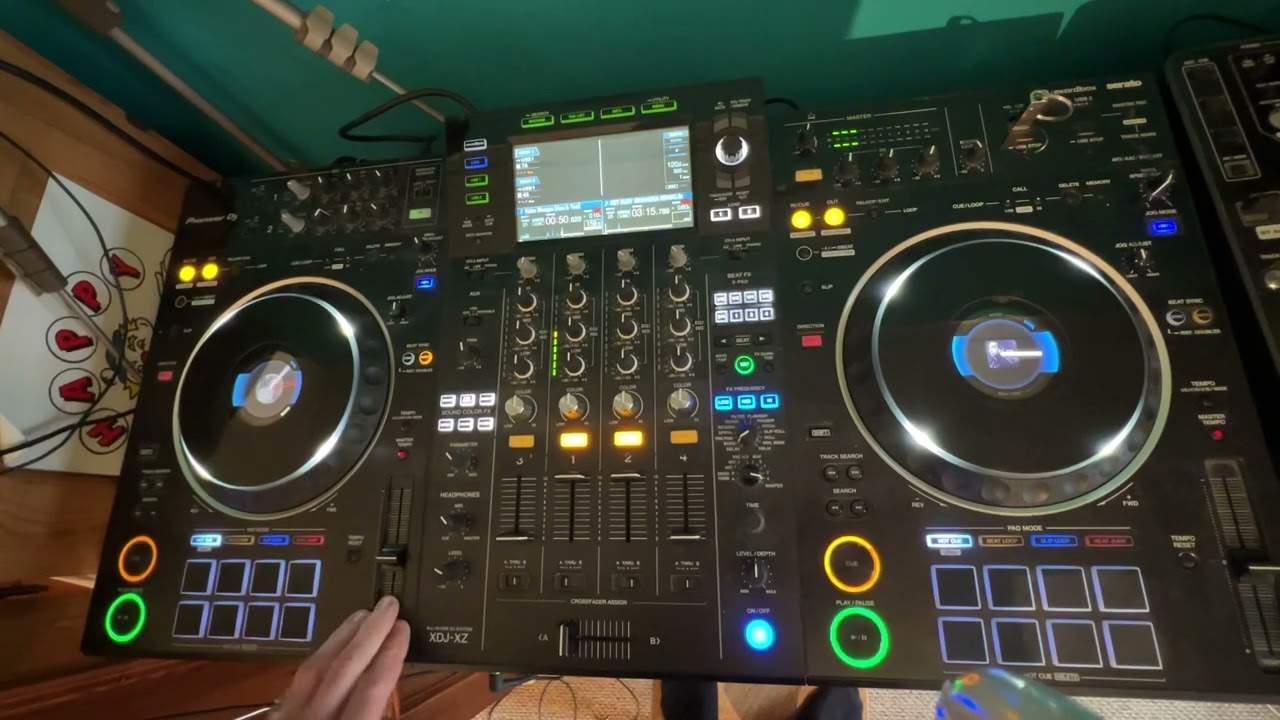
I will put the camera right close to the mixer and the actual CDJ turntable because there's no need to look at the vinyl turntable, that's playing by itself. You actually need to concentrate on my movements on the actual CDJ. Then what we'll do, I'll explain exactly what's happening with the mixer as well. Hold tight. Alright here we go. Bearing in mind none of this is edited so here we go. Right let's just wind the actual vinyl turntable back a bit.
4:21 Let's pause the camera one second
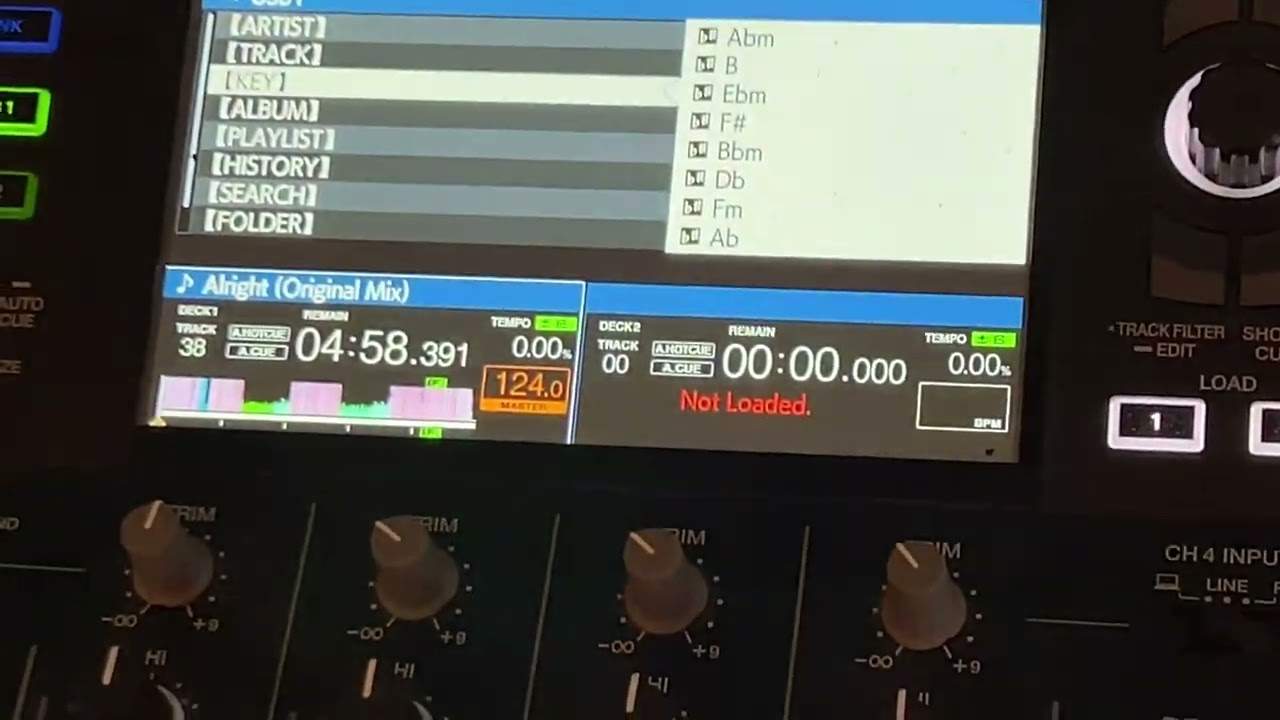
Right, let's pause the camera one second. Hold tight. Right, so theoretically what you can actually see me doing is editing this particular track but I was doing it in beat. Now there are two very, very important facets where this is concerned. One is that alright, there's three in a sense because the tracks have got to be similar. In other words, maybe they've got to be the same sort of genre and the same feel to get the continuity which is a very important word. The next thing They've got to be in beat, in time. Because if I pressed play there and let them ride together, if I hadn't beatmatched them prior to doing that, then we would have a train crash. So you've got to make sure they're in beat first. Then of course just as important, the tracks have got to sound together, they've got to feel well. The continuity, the key, the flow has got to be nice.
You've got to know what you're doing. There's no point trying to do this and thinking, oh bang bang bang bang bang and it sounds terrible. So I'm going to pause the camera again and I'll show you the mixer now and exactly what I was doing there. Hold tight. First of all, what I'm going to do, I'm going to talk you through exactly what I was doing but without any music at all. Now if you imagine, this track here is for that CDJ player and this track was for the vinyl turntable. Now the vinyl turntable, turntable sorry, I'm not pissed don't worry. Over that side was playing continually. So, volume up. And then what we were actually doing... Oh, the camera's going down here. Hold on a second. Right, if I just block that. OK. Right, what was happening was this. I was pressing the cue button here with the volume up. But every time I pressed that cue button, I was bringing the volume of the vinyl turntable down. So, in other words...
6:23 Volume, soon finger, track playing
So even if I was going to hit it two or three times, I was bringing that volume down. As soon as my finger left the cue button, volume up. The reason being is because as soon as you take your finger off the cue button on this CDJ turntable, the music will stop. Now it's very important, as soon as you take your finger off, you bring the volume back up here, because this volume here is for the CDJ. And even with the volume up, you won't get any sound because... There you go. Watch. See? But this guy over here was playing continually that track. So while I brought the volume down, you couldn't hear the track but it was still playing. As soon as I put the volume up, guess what? Because the track was playing continually, you were bringing it in. Now what was actually happening, I was hitting that...
In beat, I was making up my own beat. It's almost as though you're scatting. Now what is scatting? You've heard people go... Right, so we'll try it now and you can see exactly what's going on. Dodgy, dodgy. Here we go. You want to see where my hand is? It's right in between the blinking tripods. I have an insight for you.
Thank you for watching, and I'll see you next time. It's a DJ community, it's what it's all about and if I'm teaching you guys then all I'm going to ask you is one thing. I've taught you, you teach somebody else. Practice and enjoy. Thank you.
This transcript was produced automatically from the audio of the video and may contain mistakes.