 8:18
Beginner DJ Mixing Lesson Repetition Is the Key to a Great Smooth Transition
Contents of the video
0:01 A track here entitled Rufus
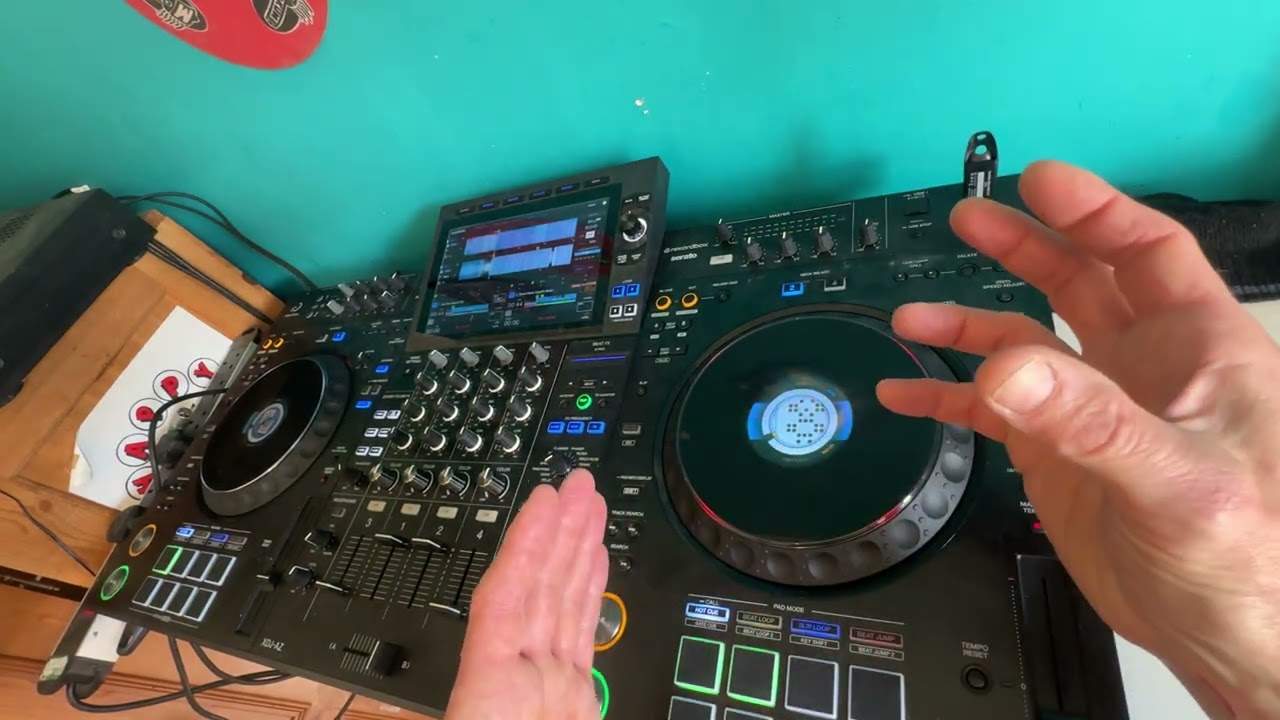
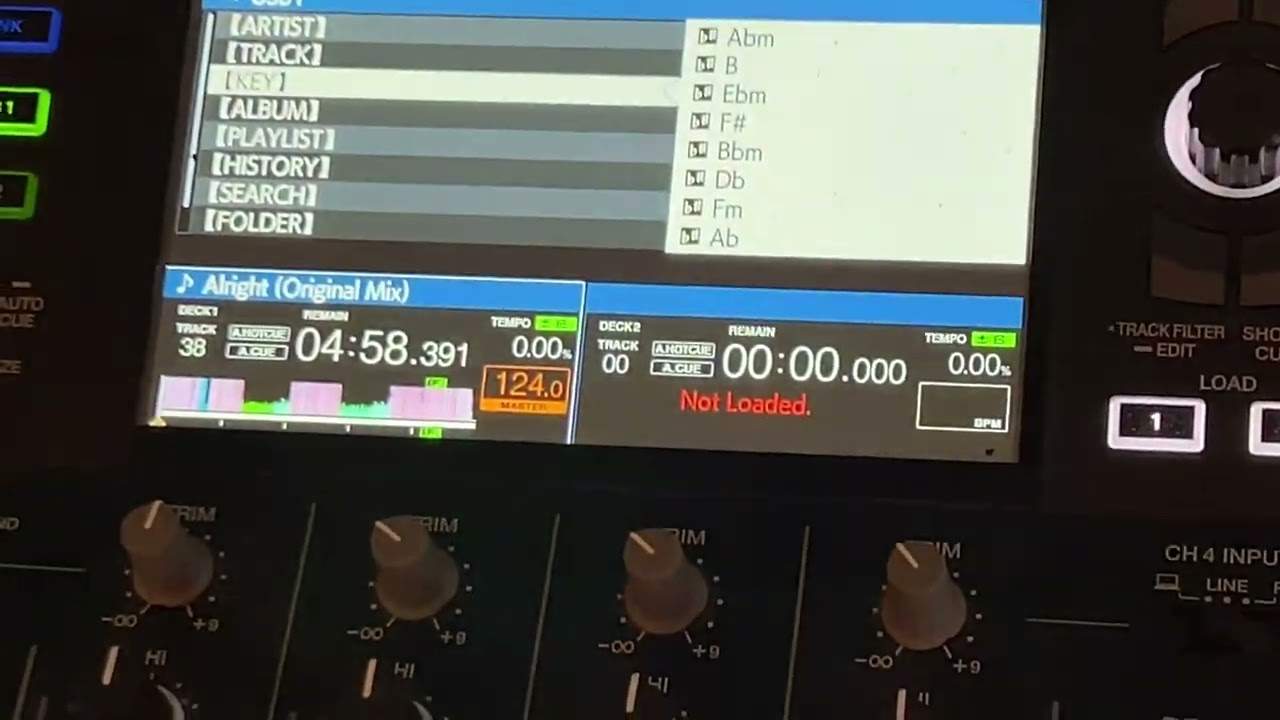
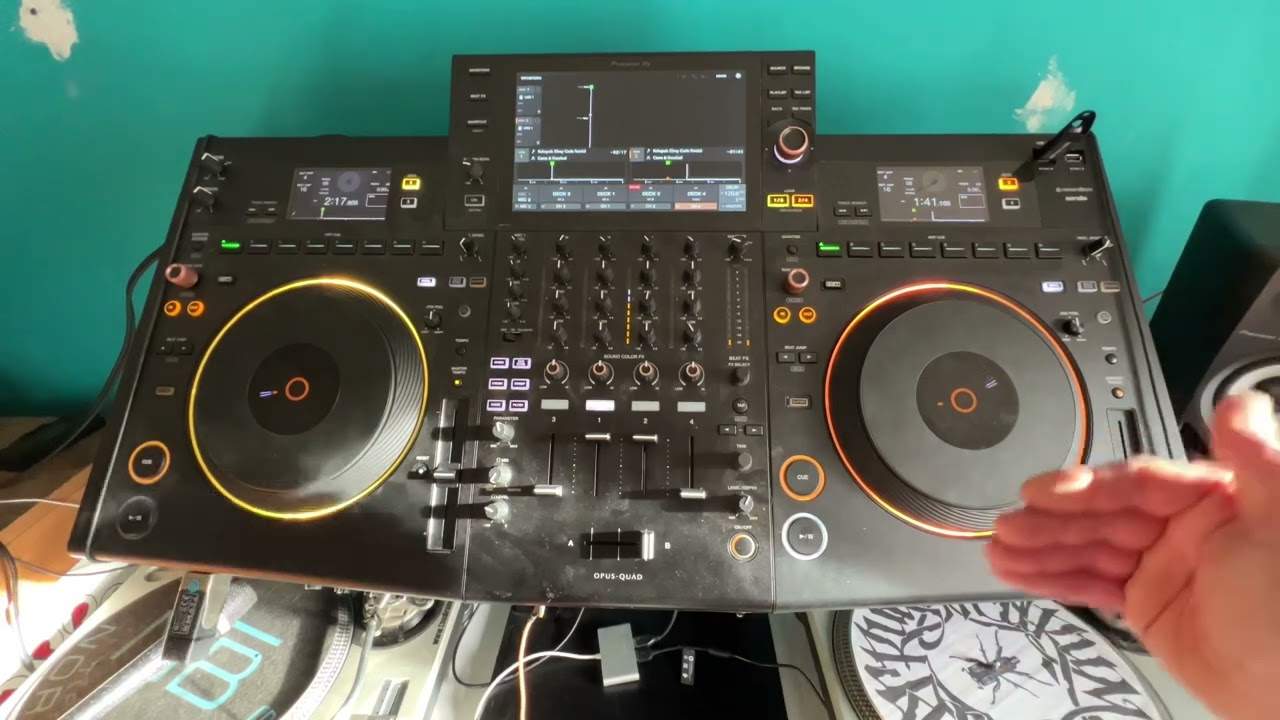
Right, ladies and gentlemen, a track here entitled Rufus. The mix is the Grey Code Remix by Camco and Krupt, and it's on Hospital Records. Check out the link in the description. Really simple kind of beginner DJ lesson on phrase mixing, drum and bass. And again, you need to make this as simple as possible for yourself. Don't try and go overboard if you are a beginner. I've got the reset buttons pressed on. I'm using the Pioneer DJ Opus Quad and the reset buttons just to let you know if you have no idea what they are. Basically, what that means is that when... Wherever I put the pitch control, the track will stay at the same speed. So if we have a listen... Okay, I'm moving the pitch to the minus position, and now moving the pitch to the plus position, and it's staying at the same speed.
Let's just disengage so you can hear the difference. I'll emphasise that a bit more by putting it plus or minus 16. You can definitely hear a difference there. So again, it doesn't really matter what percentage you are... If you've got the reset button engaged, because it basically says, right, we're going to keep this track at the original speed it was made in the studio. So again, I'm going to demonstrate... While I demonstrate, I'm going to talk through the process. Now, don't forget, drum and bass is one of the most formatted genres out there. The likes of drum and bass, jungle, and all of the great, the fast kind of drum and bass styles. Now, drum and bass, jungle, and all of the great, the fast kind of drum and bass styles.
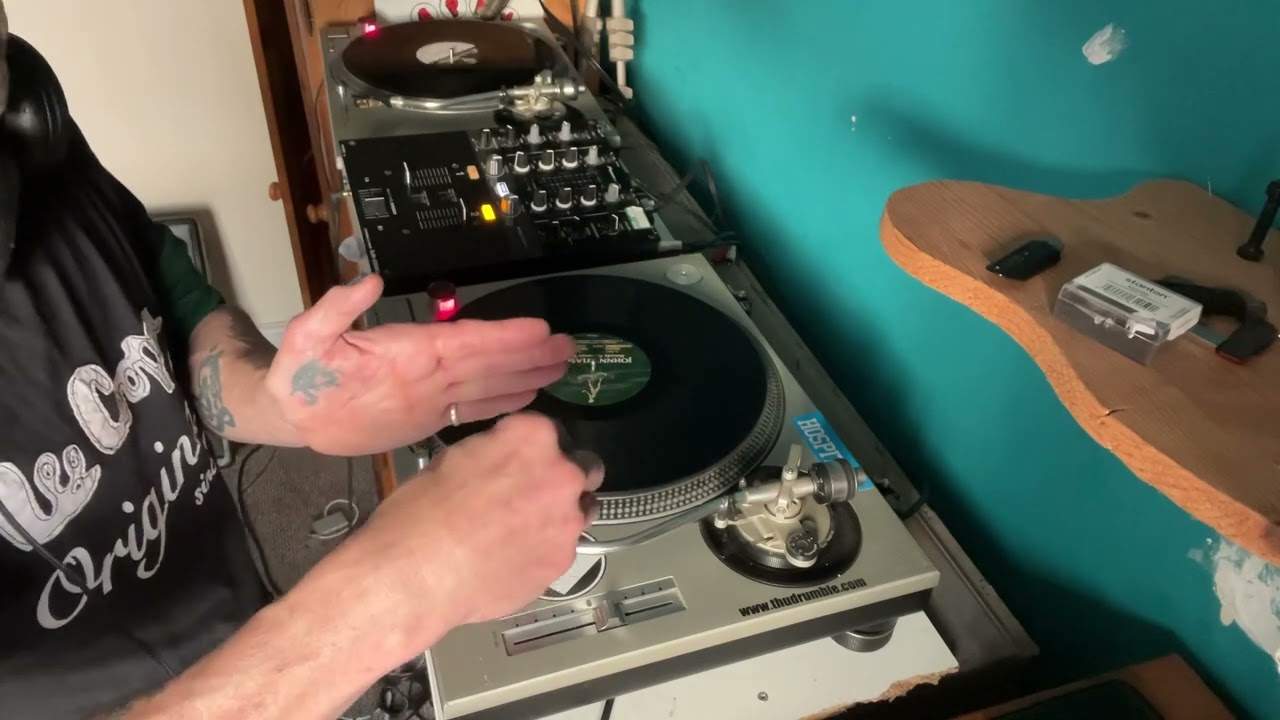
You will have phrases of 16 bars. The only time it could be slightly different is if you're using, let's say, the radio version. Now, in that case, they could be 8 bars. I need to really look into that, but generally with the extended versions, 16 bars change, 16 bars change. I'm using... I'm using the 7-inch version, which is... Normally, they're about 3 1⁄2 minutes radio-friendly. In fact, do a bit of research and you'll find that a lot of tracks they play on the radio are about 3 1⁄2 minutes. So let's press play on the left-hand side. As soon as I press play, I'm going to count. 1, 2, 3, 4. 1, 2, 3, 4. 1, 2, 3, 4. 2, 3, 4. Start the other side. Now, I've got the other side in my headphone.
And what I'm waiting for is now so I can hear them both working together and I haven't got an echo.
Slowly move the crossfade over to the right-hand side.
There you go. Now, I'm going to disengage the headphone on my right. Go to my left. Press Q, and I'm back to the beginning again. Now, you may think I've stopped counting. It doesn't matter. It doesn't matter. You just need to listen to the track, wait for a change, and then start counting from that change.
3:42 Sorry if the camera's wobbling, but I've got it attached to an extensi
For example there. Okay. That wasn't a subtle change. Sometimes a subtle change could be a little change in the drum pattern or an added snare or hi-hat or a double kick on the bass drum. But here we had a definite change if we go back a bit.
Sorry if the camera's wobbling, but I've got it attached to an extension. Okay, there. I'm going to have to change the camera angle or not, in the next video. There.
4:26 Drive, bars, soon vocals
All right there. Okay, as soon as the vocals, let me pause it there, as soon as the vocals came in, we had a definite change. So that's where I'm going to start counting again. Now when mixing drum and bass and going from one side to the other, you need to think of quite a few things. But for a beginner, it doesn't matter that much because all you're trying to do is just blend the one side into the other. The only thing really you definitely mustn't do, when I say mustn't, try not to, is when you're bringing in the second side, try not to bring it in, say after only one bar or three bars or five bars, because what you'll find then is that the drum patterns may change slightly and put you off and it may sound very messy.
What you'll find is that very often the structure of the track happens to be in sections of, say, two bars, four bars or eight bars. And what I mean by the structure, the sort of melody, the way the producer has designed the melody inside, let's say, a section of two bars or four bars. And that's what I'm going to do here. So go back a bit.
I need to bring it in there using my jog wheel. Just get them in sync, cross fade over.
There you go. Let's do it one more time that waited for that change.
Jog wheel, just get it in time.
There you go.
Now again, videos like this are meant for the complete beginner and the key here is repetitiveness. I always bring this subject up. Karate Kid wax on, wax off, wax on, wax off. Do it until you get to the stage where you don't even think about what you're doing. It comes naturally and anyone out there who is a driver, if you drive, I think in the States, you call it stick drive. So if you do drive stick drive also in Europe, it's known as a geared car. If you think about it, in fact, if you drive anything or if you do anything in life, if you actually had to think about every single action, then you wouldn't be able to do the job you're doing. In other words, if you get in your car and you think, right, I've got to sit down, I've got to put my seatbelt on,
I've got to put the key in or press the button. I'm now going to put my foot, you know, on the clutch. I've got to put it into gear. I've now got to take my foot off the clutch, put the throttle down. You wouldn't be able to drive because you'd be thinking about all of the actions. Mirror, check no one's in front of me. You do it naturally. And that is the whole philosophy behind videos like this. It's getting you used to. Just doing things time and time again so you don't have to think about it. Don't forget, leave a comment. Let me know. Thank you. Let me know what you think about videos like this if you want any more or maybe certain different videos. Thank you for watching. And as ever, practice and enjoy.
This transcript was produced automatically from the audio of the video and may contain mistakes.