 10:07
Basic DJ Scratching Lesson and Can It Be Done on the Pioneer XDJ-RX?
Contents of the video
0:00 Size of the platter on
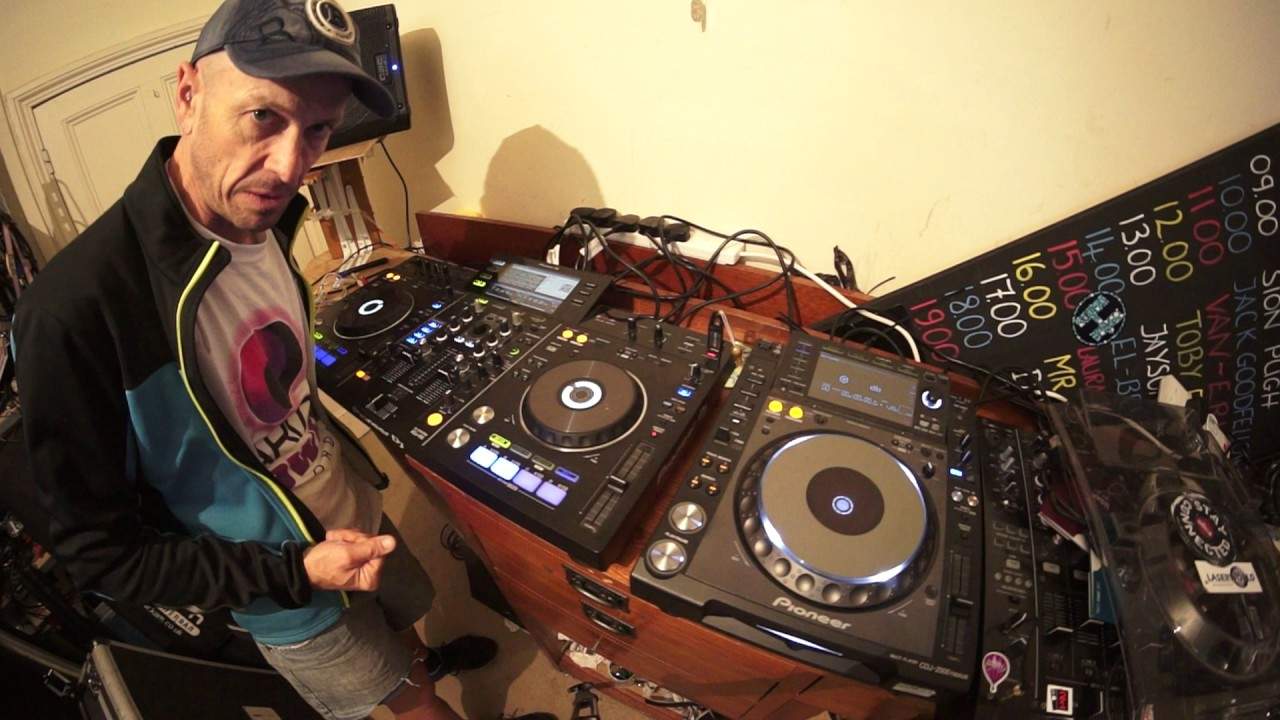
Alright guys, Jonathan here, The DJ Tutor. Now then, can you scratch on the XDJ-RX? And also, if you can, we'll find out. This video is also going to give you a couple of little lessons as well. Now first of all, let's have a look at the size of the platter on the RX. Now that is a regular CD. I'm going to put that now on the top of the platter of the RX. And it sits neatly at the centre of the RX and you've got around about sort of half a centimetre either side. So if I move it all the way to one side, you've got a good centimetre there. So it's a little bit bigger than a conventional CD. If we have a look on the other hand at a Pioneer Nexus Mark 1, the CD is a lot smaller than the platter itself.
If we grab a rekord, this is a 12-inch signal. This is Paul Rotherhouse which is a bit of a classic and if you disagree with me, bugger off. There it is. I'm going to put that now against the 12-inch signal. Signal. Single. And you can see it's a lot bigger than the 12-inch. There you go. Alright, so first of all, what does that tell us and how is that going to make... Has DJ Tutor become a better scratch turntablist DJ or a bad one? Will it help, will it not help? Well, it goes without saying that the bigger the platter, the easier it is. Few people may disagree with me but you have got more surface area to hold, grab hold of. So if you do like using vinyl, then you may find it easier to scratch. And you may find if you're going to practice and you need to become or you would like to become a scratch turntablist DJ, then maybe consider vinyl. On the other hand, the Nexus series are very good because the platters are still very big. The RX, the platters are a lot smaller, so it will be slightly more difficult.
Now, it's not just the size of the platters that will be an advantage or a disadvantage. What we have on the Nexus series is we have the jog adjust. So I'm just going to move the camera down there a little bit. Now, the jog adjust will set the torque of the platter itself. So if I move the jog adjust all the way to five o'clock to its maximum and I spin the platter, have a listen.
2:37 Something's holding it back
It's almost like... Something's holding it back. It's almost as though it's got brakes on it. Now, what that is doing is it's making it so if I spin it, it doesn't spin much, alright? On the other hand, if I turn the jog adjust dial to 7 o'clock now and spin it with the same amount of pressure, you can see that's moving a lot more now. So, if I was going to, let's say... Try to scratch on that, I'd be more likely to have this set to about 11 o'clock so there's still a little bit of pressure pulling me back but at the same time there's a lot of movement there. Now you don't get that with a vinyl turntable at all but because the platter is bigger that could outweigh the disadvantage of not having the torque dial.
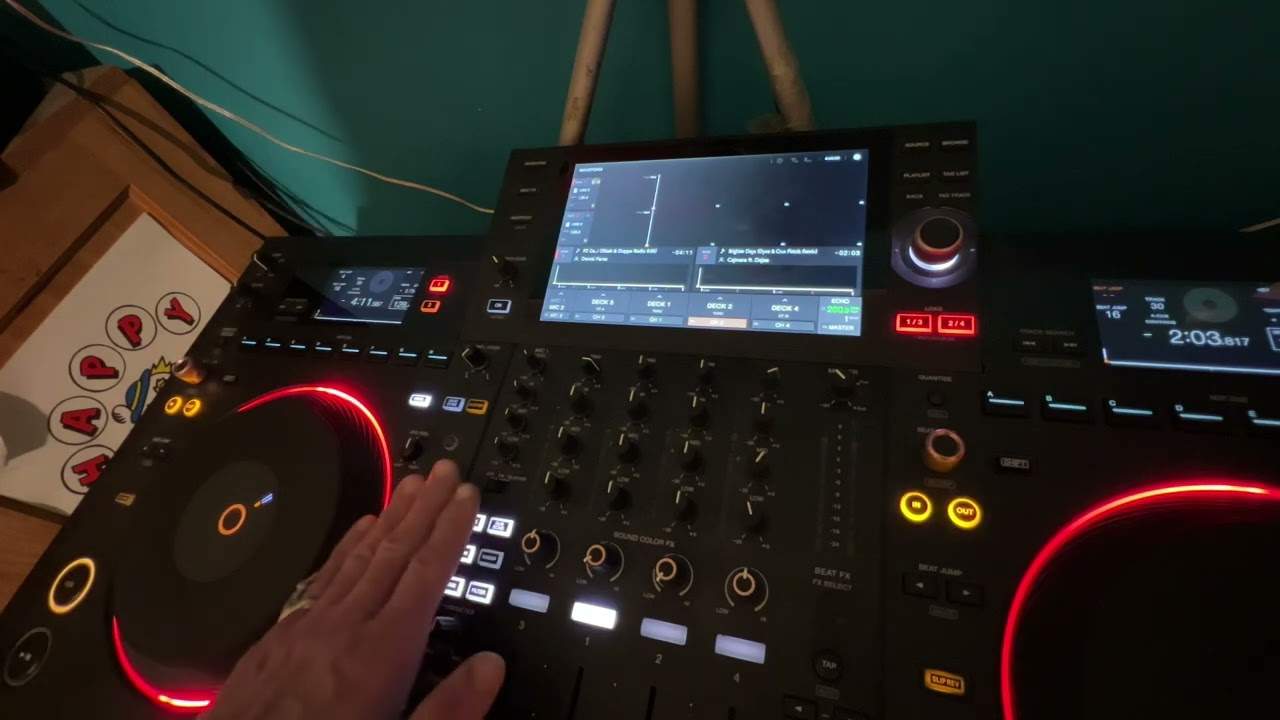
Now, if we have a look at the RX and I'm going to now just put the camera a little bit closer to the RX because this is what we really want to concentrate on. Okay, so the platter again is a lot smaller. Now, there's no torque adjustment, nothing at all. That is pretty much what it's like. Alright. So again, this is apart from a demonstration and a bit of info, it's also going to be a very basic scratching lesson as well. Now, a lot of scratch turntablists, what they will do, especially with vinyl, is they will tend to move or turn the bass either off, and you can do that by moving your low, also known as bass dial, to the 7 o'clock position. Alternatively, if you want just a little bit of bass there...
5:16 Leds, trim, starting rise
You know, half eight, nine o'clock is fine. Now again, vinyl turntablists will pretty much always turn the bass down because that will eliminate any rumble or any feedback. Because again, with vinyl, if you've got the needle on the record and you've got your speakers close by and you start scratching, you could start getting feedback and also that rumbly sound. People who scratch like to use high frequency sounds, mid and top, like a... sort of sound. So a way to eliminate the rumble is, as I said, to move the bass either off to the 7 o'clock or anywhere from 7 till 9 is fine. But of course by moving that down you're also going to turn the volume down as well. Because the bass below gives a lot of sound, so you can get the sound up again. You can make it a little bit louder by increasing perhaps the mid, alternatively turning your trim up as well. But you also need to check and make sure that you've got a good sound by you can just press play and have a look at your LEDs. So if the LEDs are a lot lower than the sound you're going to be scratching over...
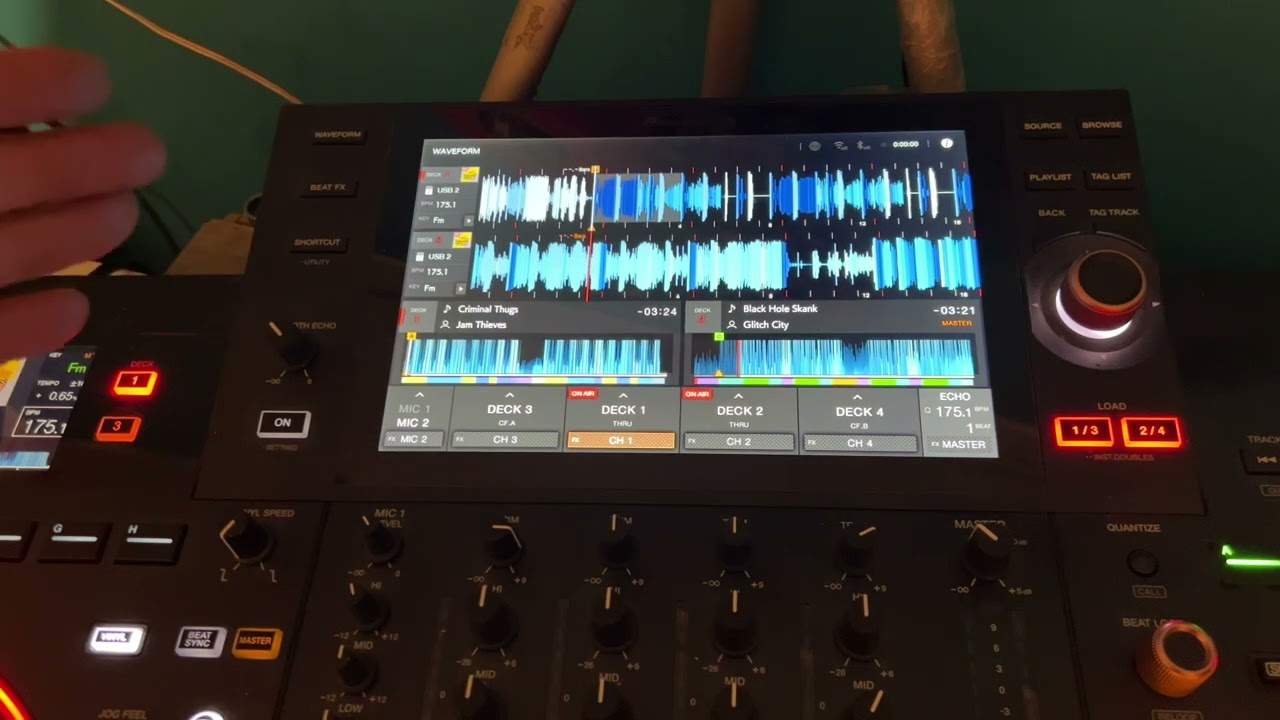
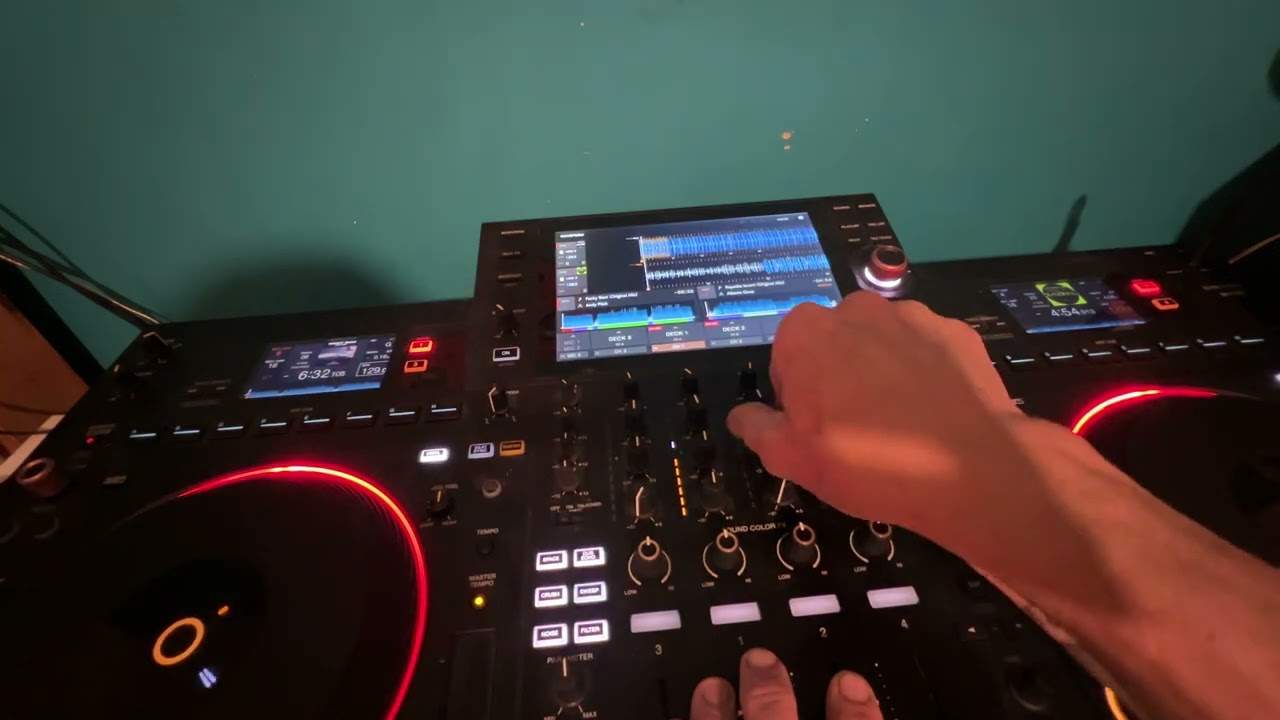
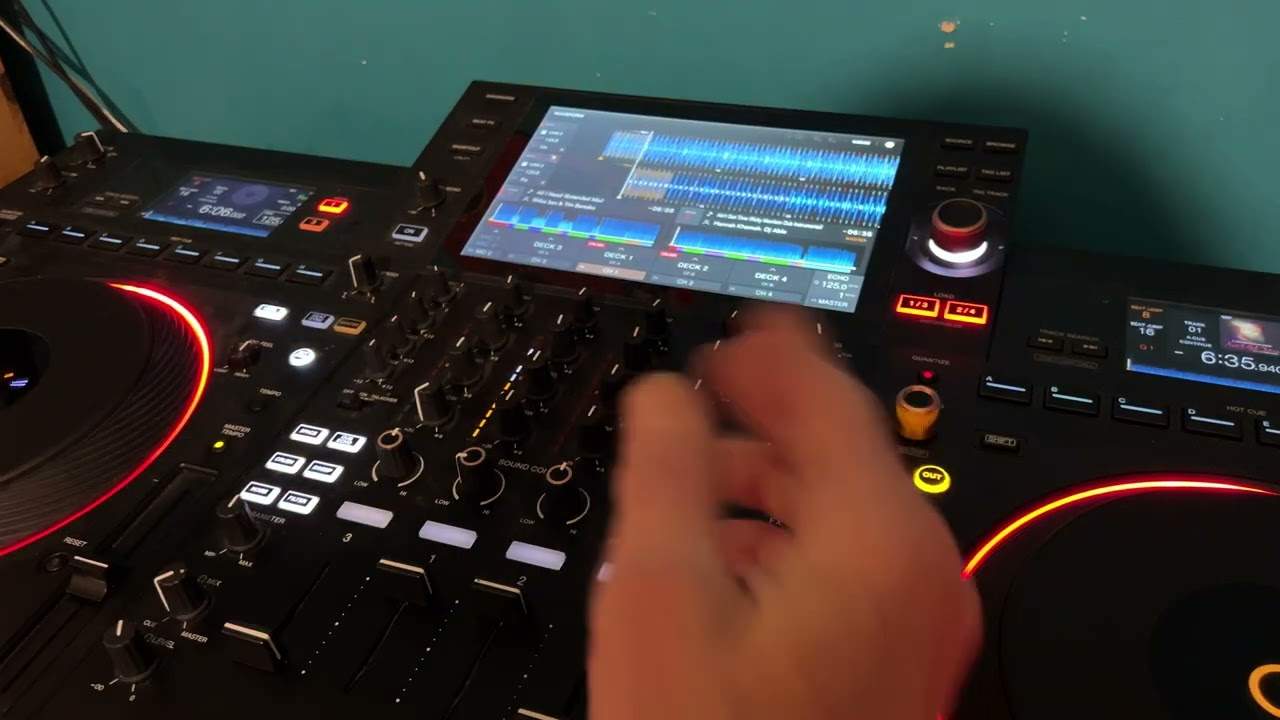
You can just turn the trim up, so if I turn the trim up you can see that the LEDs are now increasing. For partially sighted what's happening is I'm turning the trim up on the mixer and while I'm turning that up the LEDs on that side of the mixer are starting to rise as well. Turn the trim down to 7 o'clock, the LEDs are off. As I increase the trim from the left to right, so I'm moving it now 9, 10, 11... 12 o'clock, the LEDs are starting to rise. So let's have a listen now to a couple of hot cues that I've got. Okay, so there you go. I've also got a loop here on the right-hand side. I'm now going to demonstrate and show you what's known as the baby scratch which is a very, very... Easy move, very simple and it's great to practice. And this can be done in quite a few ways. So first of all I'm going to start my loop on the left hand side. 3, 4, 1, 2, 3, 4. 1, 2, 3, 4. 1, 2, 3, 4. Now I've now got my finger on the platter and what I'm going to do now is in time with the loop I'm just going to move the platter forward and back.
7:11 Forward, back, forward, back
Forward, back, forward, back. One, two, one, two, one, two, one, two. I'm going to increase the trim a little bit just to get a bit more audio on the scratch. And again, forward, back, forward, back, forward, back, forward, back. Now this may look very simple. It is very simple. But believe me, for some people, even this is difficult. Now then. I'm going to do exactly the same thing, but double time. Get that sound again. Here we go. Now, I'm going to do something else which is double time and single time. Here we go. Get it ready again for duple time. All right, so the baby scratch. What was happening? I had a loop playing and I was moving the platter forward, back, forward, back. So one, two, three, four. One, two, three, four. And then double time.
1-2-3-4, 1-2-3-4, 1-2-3-4, 1-2-3-4. Now a good way of learning how to become a turntablist and first of all scratching which is pretty much what I'm doing is to do that over and over and over and over and over and over and over and over and over and over and over and over and over and over and over again and over again Until you can pretty much do it blindfolded, sitting there while you're watching television with the other hand eating some food. The more you can practice that, the better your internal sort of working will get. It's almost as though your mind is no longer thinking about one, two, three, four. It becomes natural. It's like walking or sitting or looking or reading a book or just doing a very natural thing you would do. You don't think about it. It just happens.
That is the first move. There will be more videos like this on the RX, we'll go slightly more in depth and look at other ways of scratching. I hope that's been a help. Don't forget as well, in the information of this video there will be a link and also an email where you can if you want to get one-to-one personal DJ mixing lessons by myself, Jonathan. Practice and enjoy. Thank you very much.
This transcript was produced automatically from the audio of the video and may contain mistakes.