 15:25
Using the bass in a transition
On YouTube this video is called Beginner DJ Lesson Demonstration on Using the bass in a Transition
What this lesson teaches
A long, unhurried demonstration of the technique from the previous lesson, with the EQ work audible throughout.
The layout, which generalises
Worth having, because it is nearly universal:
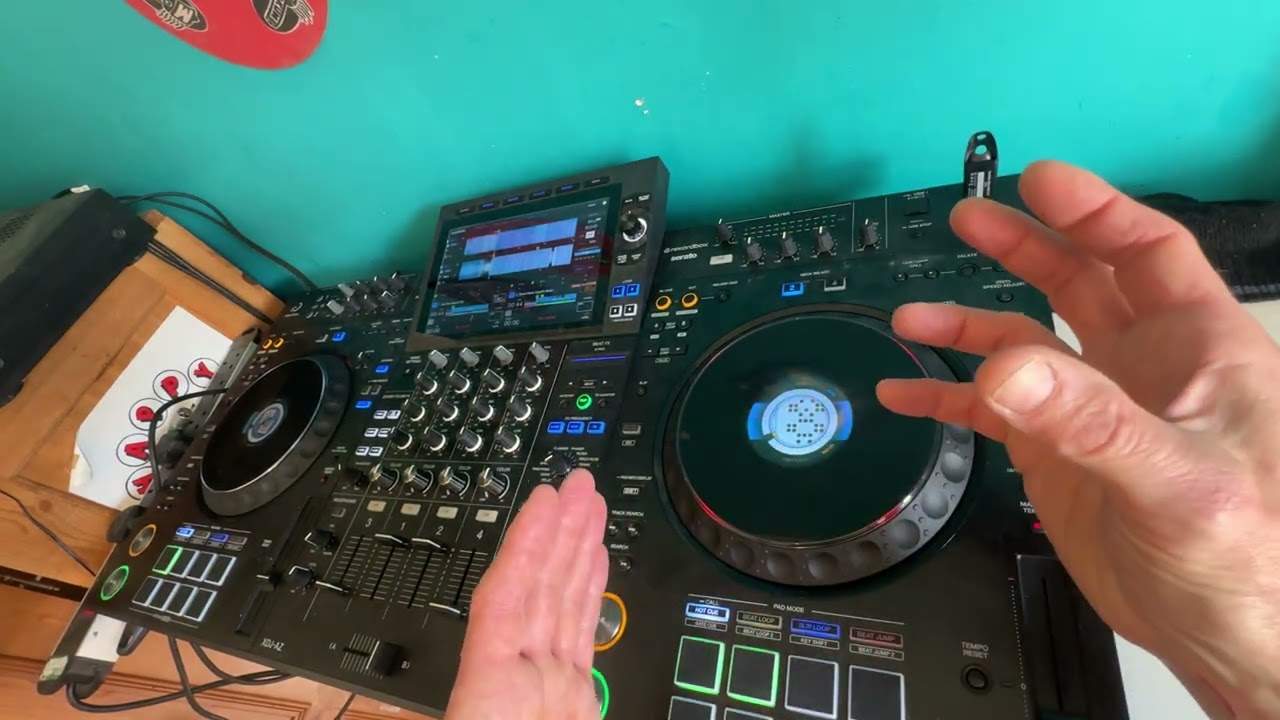
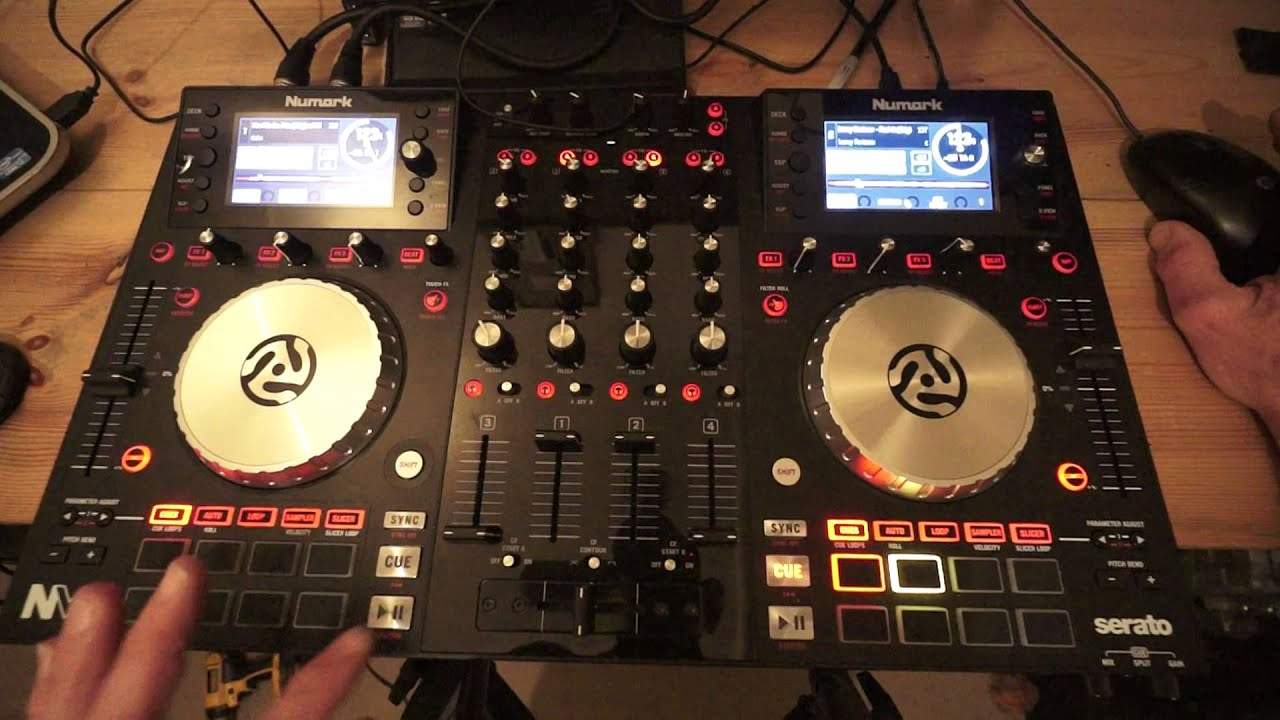
Bass closest to you, then mid, then top above it. Above those, the trim. On units with a filter, it sits near the EQ - on this one directly below the bass.
Very cheap controllers leave out the trim and give you bass, mid and treble only.
Once you know that order you can find your way around any mixer in the dark, which is frequently the situation.
Setting up
He sets hot cues as reference points, so he can return to the start of the relevant section and have time to get ready rather than scrambling.
That is a small habit with a large effect on practice: anything that reduces the time between attempts means more attempts per hour.
The drill
No headphones. Both channel faders up. EQs flat at twelve o'clock.
First, just bring the second track in with nothing done, and listen to what two full records sound like together. That is the problem being solved, and hearing it clearly is the point of the first pass.
Then do it properly:
- Take the bass out of the incoming track before it arrives.
- Leave the playing track's bass up.
- During the overlap, bring the incoming bass up while taking the outgoing bass down.
The two movements are roughly mirror images, and the moment they cross is the moment the mix hands over.
His caveat
Practise this at home, not at a gig.
Working with both faders up and no headphones is a practice arrangement, not a performing one - the audience hears everything including your mistakes. It is excellent for learning precisely because there is nowhere to hide, which is also why it is a bad idea in public.
What to listen for
During the swap, the thing to notice is the floor of the mix. There should be exactly one kick drum and one bassline holding the bottom end at every instant - never two, and never none.
A gap where you have taken one out before bringing the other in is as noticeable as an overlap, and it is the more common beginner error once the lesson has sunk in.
Contents of the video
0:00 We've got a beginner DJ lesson here for you
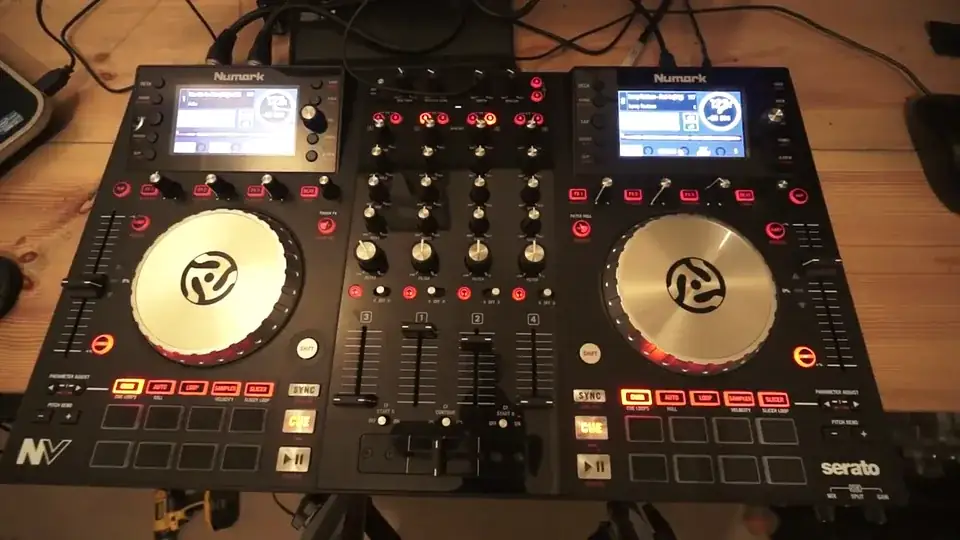
Alright guys, we've got a beginner DJ lesson here for you. I'm using the Newmark Envy. We have Serato DJ as the software. Two tracks I'm using. One is by Calix. It's a track entitled How We Do This. It's the original mix that's on the left. On the right hand side we have Lenny Fontana, a track entitled Feel It. It's the original mix. In this demonstration, really it's a tutorial, what we're doing is we're going to use the filter effect. We're also going to be doing a transition mainly using the bass. Now on the Newmark NV you find the bass dials, there's four of them, one for each channel and they're directly above the filter dials which are slightly larger and they're below the mid. Pretty much on every single style of mixer or controller out there. You'll have bass closest to you, followed by mid and then top. Above there you'll normally have the trim, but on very, very cheap controllers...
You probably won't have a trim, you'll just have bass, mid and treble. But of course on the MV we've got a great feature which is the filter effect. So that is something that I will look into in a future video for beginners but for this demonstration we're going to concentrate mainly on the bass. So I'm going to press play now on, let's go with Lenny Fontana, a track entitled Feel It. Okay I'm just going to go forward very slightly. I'm going to set some hot cues. Just go back a bit. That's just my reference. I'm going to put another one in. There. So what I'm going to do is I've cued it up to the first hot cue. Now that gives me time to get ready to bring the next track in. Now where this is great for beginners is because we're not using headphones at all. What we're doing is we will have both of the volumes up.
2:32 Straight away, this is the sort of practice that you can do at home
Straight away, this is the sort of practice that you can do at home. I wouldn't recommend you start doing this out at a gig. Now, I'm going to keep all of the EQ flat at 12 o'clock. What I want to do is I want to listen to what the two tracks sound like as soon as I bring the other track in. Then what I'm going to do, I'm going to take the bass away from how we do this. Leave the bass up at 12 o'clock on the Lenny Fontana track, Feel It, which is on the right-hand side. And then slowly bring the bass out from Feel It, Lenny Fontana, and bring the bass in on how we do this. So the movement will be pretty much like this. So the bass is out on how we do this, and then I'm going to slowly bring the bass up on how we do this.
On Lenny Fontana, sorry, Feel It. Now this being a beginner lesson, this is a good way of practicing but believe me there could be 100 lessons just on taking out the bass. You don't have to move them at the same speed and at the same time. You could for example take one out, have the other one out and then bring the other one in so at some point you may have no bass at all. The easiest way to look at it, and again this is slightly more for intermediate to advanced, definitely not advanced but definitely intermediate to advanced, is that the tracks themselves will let you know how they want the bass to come in and out of the mix. A different form of movement on the bass at a certain point in those tracks. Then further along the tracks, they may need another different type of movement on the bass. But then track A or for example track B with track C could want another completely different movement on the bass. It's about the track. But for a beginner, this is a good way of just learning. So I'm going to press play, turn the bass up again on...
4:59 I'm now going to press play here
Or, sorry, have the bass at 12 o'clock on both the tracks, so we'll play Lenny Fontana. OK, I've set them up pretty much from the beginning, or this track here, how we do this at the beginning. I'm now going to press play here. I've set them up so they're both at the same speed. Now there is a slight difference in beat there, so I'm going to move the jog wheel clockwise. The levels up very slightly. Okay, let's bring the bass out on how we do this. Now I'm going to slowly take the bass out on Lenny Fontana and slowly bring the bass in on how we do this. Do it again. And do it again. I'm going to snap one in and one out. Slipped. And again, cue them both up. Now with the how we do this track, there is a point I would say roughly right after that break there. I'm just going to press play there.
7:32 I'm just going to move the camera up
Got a break around about after sort of 16 bars and then we come in with that wicked bass line. So what we could do here, and again as I said at the beginning of the tutorial, there are many different ways of taking the bass in, bringing the bass in, taking it out. Probably the best way here is just to have the bass straight in at that point because we've got a proper bass line. So I'm going to do just that now. Let's have a quick... I'm just going to move the camera up. Try. It's very difficult to move it really fast. It's on one of these stands that doesn't move that quickly. Now, if we look at the wave format here, we can see the beginning of the track and we've got that break. Here's the break here. And then this is... Sorry. Hold on. Which one are we looking at now? Sorry. It's the top one. Sorry. I beg your pardon.
There. Let me just go to that break. There. Okay, this is where the bassline comes in. There. Alright, so again this might be quite a long tutorial and again this is a beginner tutorial so if you are intermediate to advanced then possibly go and watch television or go make yourself a cup of tea. Alright, so what I'm going to do now is I'm going to put the camera back on the stand and just make sure it doesn't fall off. What I'm going to do here now is I'm going to bring the bass out. So I'm going to have the bass on the How We Do This at 9 o'clock. So it's not completely in, but then we've got a tiny amount of that bass, average scale of 1 to 10, couldn't really say, but we have got a little bit of bass there. The track is at the beginning there.
So what I'm going to do is directly after that break when the bassline comes in, I'm just going to snap that in and bring the other one out. So this tutorial as well is about watching but also listening because you're pretty much listening to what I can hear. The audio isn't that high but the microphone's pretty good on this camera. Now I'm going to go towards the latter part of this track here. There is a break there. There's a bit of a break so...
10:08 I'm going to bring how we do this in the beginning of a phrase
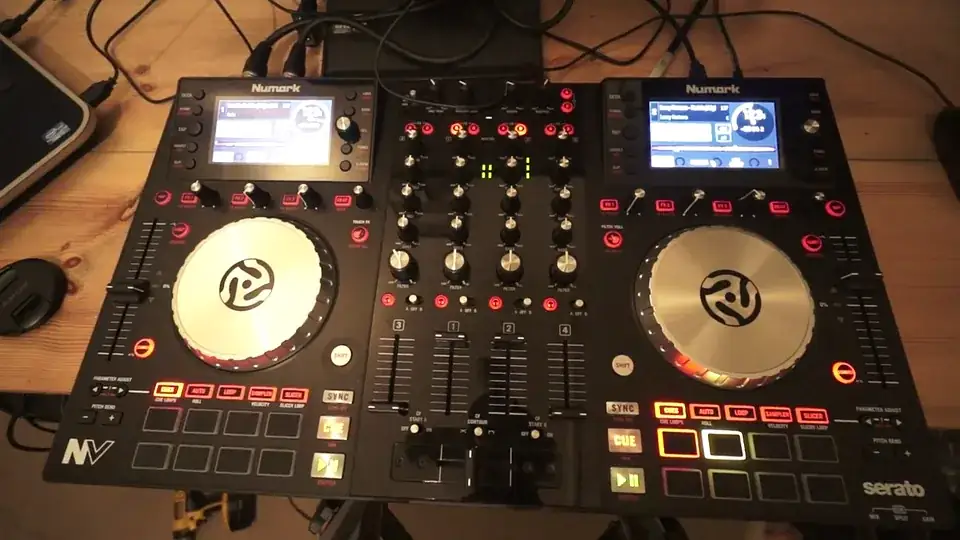
I'm going to bring how we do this in the beginning of a phrase. Four, two, three. I'm going to form a hot cue so I know where the beginning of the phrase is. I think it's around here somewhere. There. There's a definite change there. Again, if you're not familiar with phrasing in music, if we have a listen to that point where I set that hot cue, you can... Here, a definite change in the Lenny Fontana Feel It track. So let's go back. There. So all of a sudden that kind of electric guitar finishes and we have a change. So that's the point where I'm going to bring in how we do this into the mix. And again, I'm going to keep both volumes up full. Let's go back a little bit more. Jog it. Oh, sorry. Bass out. There.
Let's hear the difference with the volume down on how we do this. Definite slight difference, but it doesn't matter because we want to slowly bring this track in. Have a listen. Okay, we're coming towards that break. Okay, break. Ah, that was out. Okay, that was out. Right, I'm not going to start doing this video again because this is going to be really long, but that definitely, definitely, definitely was out of time. What do I need to do? If you were doing this and you found that was out of time, and again we're not using headphones, maybe what we should do is bring the bass up slightly on the track that we're bringing in. Alternatively, we could bring the volume up slightly so we can hear it a lot clearer, and if we can hear it a lot clearer, that means we can hear if it's going off beat.
12:59 Don't forget the trim for each channel is completely different
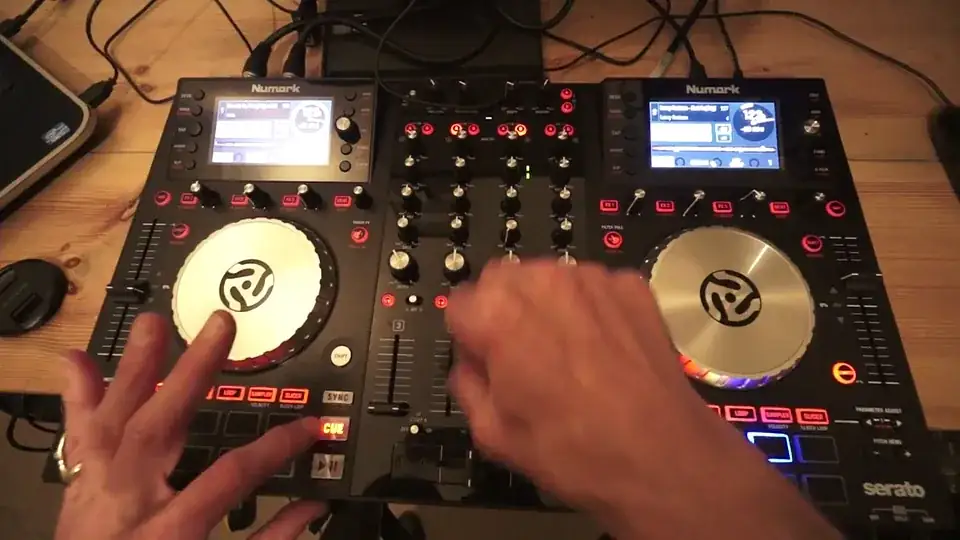
I'm going to do that transition again. What we're going to do, I'm going to set that up to the beginning there. I'm still going to have that bass at 9 o'clock but I'm going to turn the trim up now on that channel. Now don't forget the trim for each channel is completely different. It's completely different to the master volume because the master volume will increase the volume. Of the overall mix, the trim above each channel will increase the volume of just that channel, not the entire mix. So let's go to there, our cue point and go back slightly. Okay here we go. I can hear it a lot clearer now over the overall mix. And again you notice I'm moving the outside of the jog wheel. If I touch the top I would stop the track.
Which I don't want to do. Okay, we're coming to that break. You can also use the pitch bend as well. Here we go. There, much better. Straight in. So a lot was going on with this video. There has been a lot going on. I hope that's been a help. The time on this is finishing for the SD card so I'll finish off with practice and enjoy. Thank you. Oh no, I've got four minutes left but I'd better say goodbye now before it goes and cuts off. Don't forget, check out the link in the description to the tracks and also to more info on the new Mark MV.
This transcript was produced automatically from the audio of the video and may contain mistakes.