 10:17
Beginner DJ Mixing Lesson on Progressive House Also Known as Prog BY Ellaskins
Contents of the video
0:00 It's from Karmic Power Records
All right, ladies and gentlemen, this is a demonstration for complete beginners on learning how to mix a genre known as prog progressive house. Track I'm using is by Mr. Lenny Fontana. It's from Karmic Power Records. It's entitled Work It Out. It's the original mix. And if you're interested in one-to-one Skype lessons by myself, then in the description there'll be an email where we can have a chat. You can ask any questions you want and I can give you information on the Skype one-to-one lessons. Prog progressive house. Progressive house is the sort of genre that's quite minimalistic. Very often you don't have a lot of vocals, so very, very few vocals if any to be quite honest. You do have a little bit of melody but quite often the melody is very subtly put into the background. Progressive house is more a good rumbling steady bass line. Lots of emphasis on the beat. Of course,
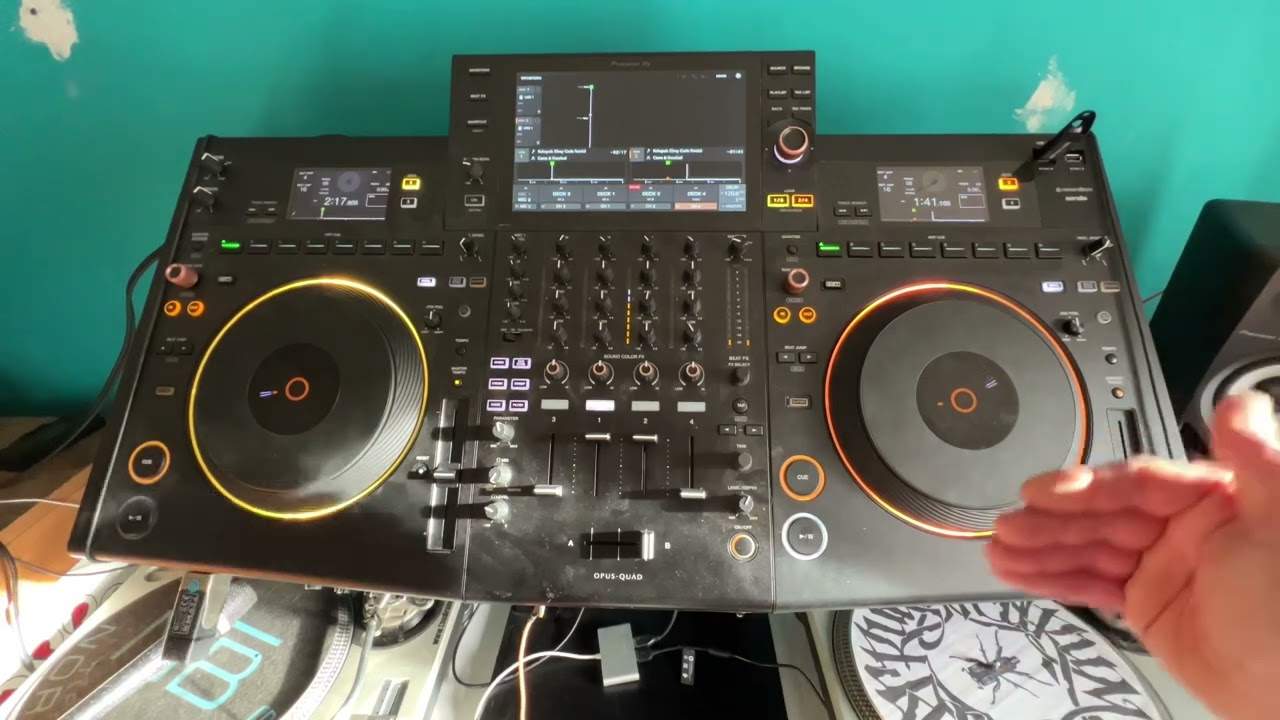
You have a little bit of percussion, but the beauty about prog is it's got a natural progression through the course of the track. And then also what tends to happen, it tends to dip towards the end of the track. It's almost as though how it starts, it finishes. Now this track is slightly different because it does come in with a straightforward bang beat straight away and there's a natural nice sort of fade out. But progressive is a little bit like this. Let's look at our mixer. Let's imagine these four up faders is the track, sorry track one. Fader one on the left hand side, fader four on the right hand side. Let's say fader one on the left is the beginning of the track and fader four on the right is the end of the track. So almost fader one, we'd start here maybe at volume number three. And then towards the middle of the track, we're getting to seven and eight and we're getting to seven and eight again, middle of the track. And then the end of the track, we're getting back to how it started. So this track here by Lenny Fontana is
2:30 Wave format
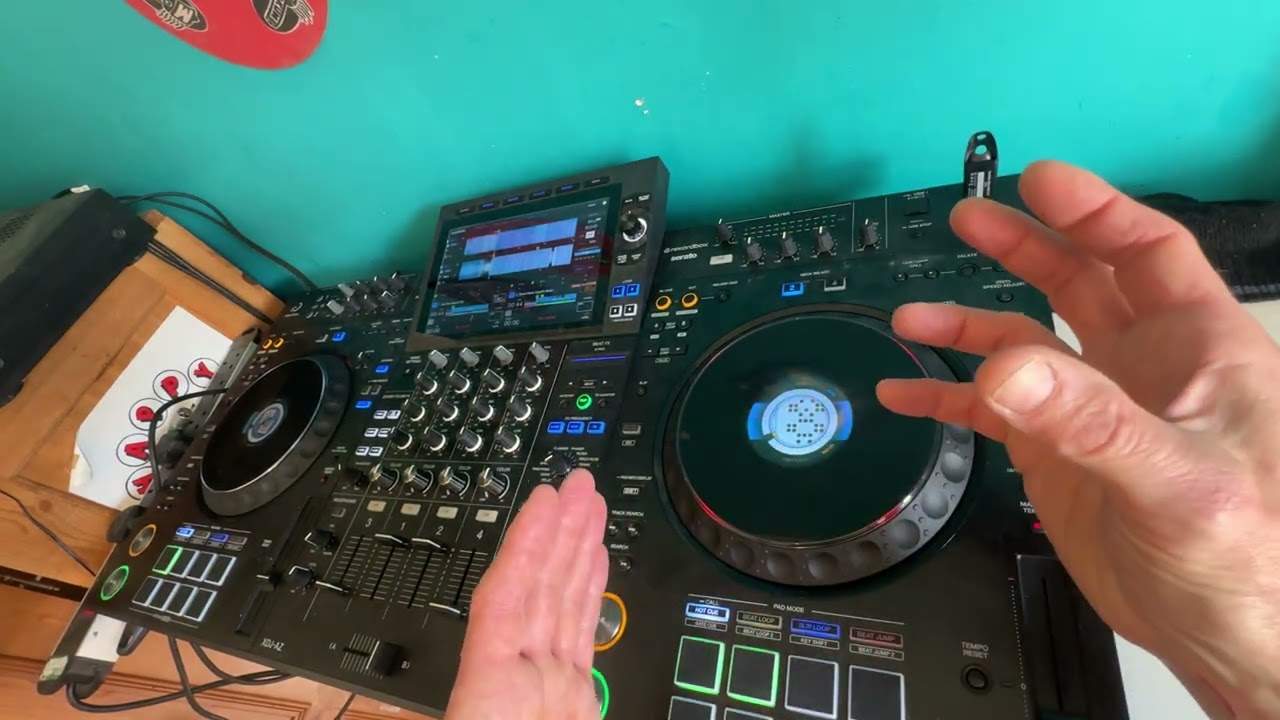
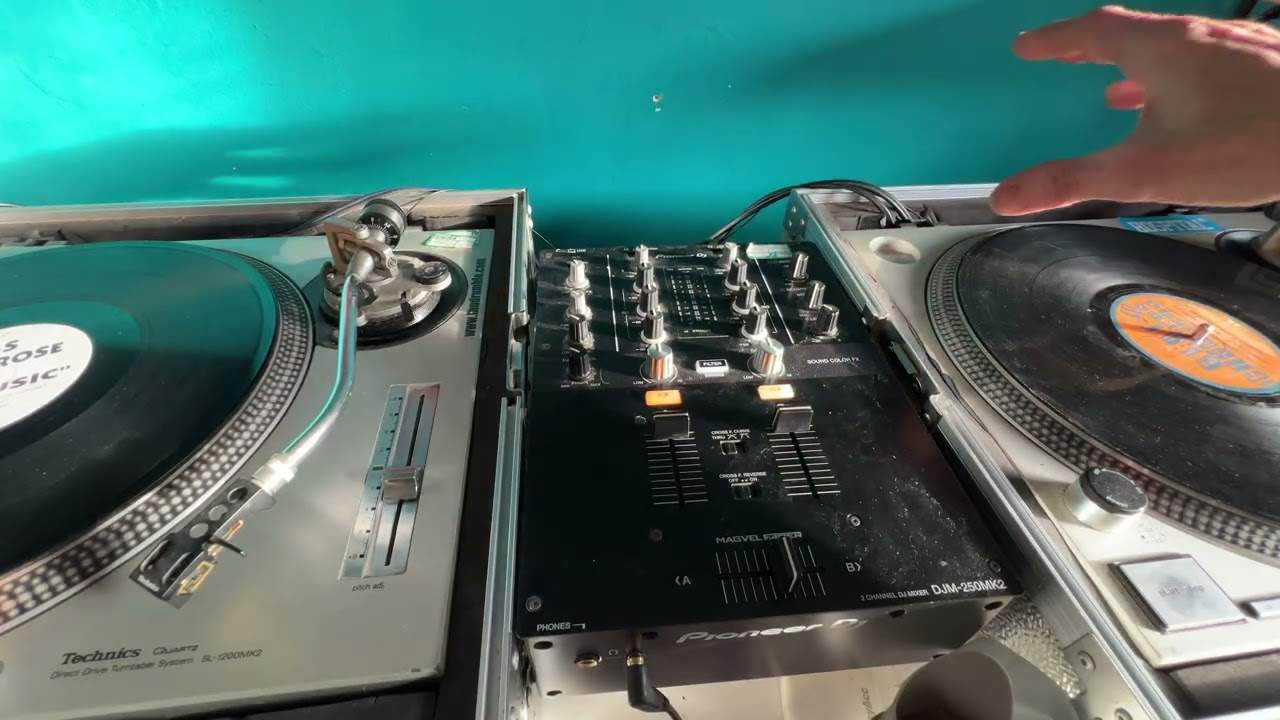
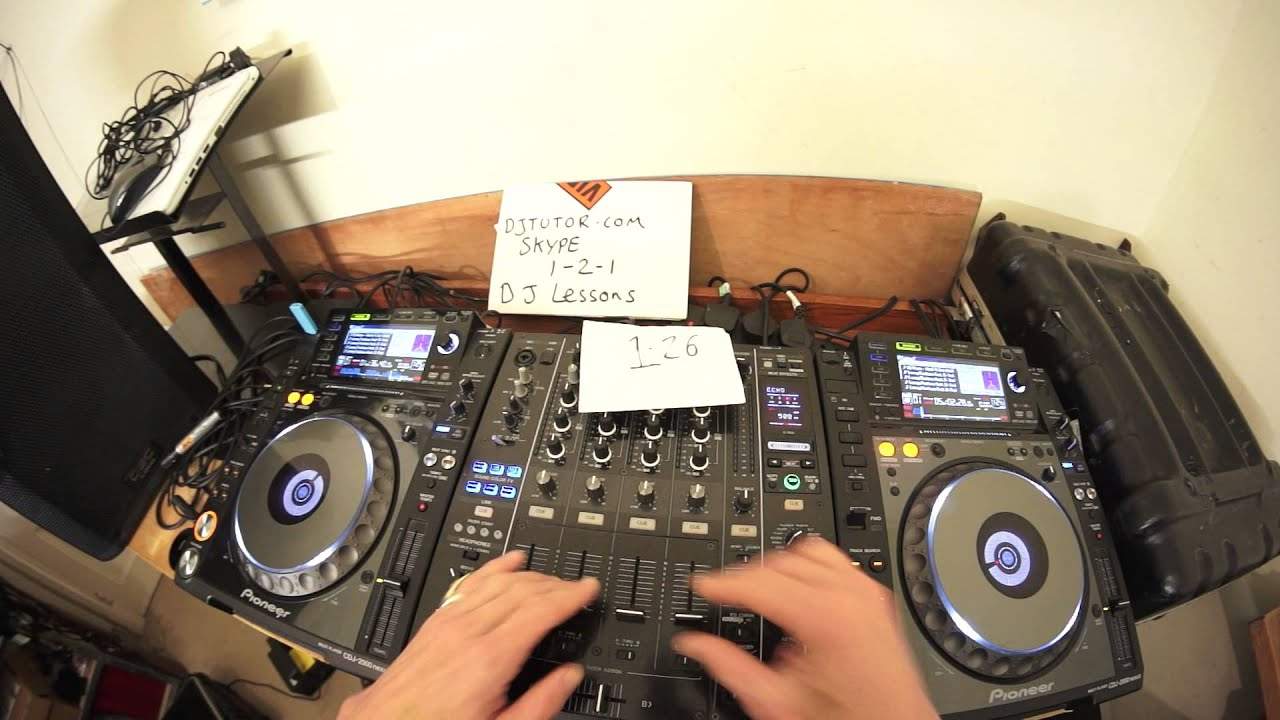
Slightly different because it does start with a full on kick. But this is a great track to use for let's say practice purposes. Okay, now this demonstration can be done on CDJ, vinyl and or controller. What you need to do is set tempo reset so that both the players are at exactly the same speed. Use the same track as well. You can do that with vinyl by just going to the dead center. And then of course, you can do that with controllers by just pressing sync. So what I'm going to do or what I have done is I've set a hot cue here at one minute and 26. Now I wrote down earlier on one minute 26. Why did I do that? Well, I've now got two ways of knowing when I need to bring the next track in. One is the visual look at the wave format. And you will get that on a controller
Sadly, you won't get that on vinyl. Also, I can see that at one minute and 26 is the point where I've set my hot cue. So if you think about it, when this small line is traveling along and getting to the hot cue, quite often, it's difficult to know exactly when the line hits the point where you set the hot cue. But by looking at the time, you have a countdown timer. So if I'm just zip back a little bit, I can see 142, 41, 40, 39, 38, 37, 36. Now for a lot of people that's far easier to make note of than waiting for that line to hit the point where you set the hot cue. Now what I'm going to do now is I'm going to count how many bars I have at the beginning of this track before we get into a change. So here's the beginning. I'll go
To the beginning. Sorry. There. So I'm going to start counting my bars from the beginning of the Lenny Fontana track. 1, 1, 2, 3, 2, 1, 2, 3, 3, 1, 2, 3, 4, 1, 2, 3, 5, 1, 2, 3, 6, 1, 2, 3, 7, 1, 9, 2, 3, 10, 1, 2, 3, 11, 2, 3, 12, 2, 3, 13, 1, 2, 3, 14, 1, 2, 3, 14, 1, 2, 3, 15, 16, 17, 18, 19, 20, 21, 22, 23, 24, 25, 26, 27, 28, 29, 30, 31, 32, 33, 34, 35, 36, 37, 38, 39, 40, 41, 42, 43, 44, 45, 46, 47, 48, 49, 41, 42, 45, 47, 48, 49, 41, 42, 43, 45, 48 53, 54, 45, 46, 49, 43, 44, 45, 46, 47, 48, 40, 42, 43, 42, 44, 45, 46, 46, 47, 48, 41, 42, 43, 44, 45, 46, 2, 1, 2, 3, 3, 1, 2, 3, 4, 1, 2, 3, 5, 1, 2, 3, 6, 1, 2, 3, 7, 1, 2, 3, 8, 1, 2, 3, 9. Okay so after eight bars what happened with this track is the beat
5:29 Percussion and the bass line
Stopped and we were just ending with percussion. So let's bang the camera. Percussion and the bass line. Okay so I'm just gonna go press the hot cue again, go back a little bit. Okay so what I want to do is I want to try and keep that beat flowing. Now we have the beat on the left hand side finish after eight bars but we've got the beat on the right-hand side from the word go. So what do we do? What can we do? I'm going to remove the bass from the right-hand side and then after the eight bars I'm going to move the bass from the right-hand side and after the eighth bar I'm going to bring the bass up so the bass vanishes from the left-hand side. As soon as it does we bring the bass up on the right-hand side
And we should have the bass stay at a constant. So bring the volume, sorry the bass down both volumes up. Now very quickly as well because we've set both of the set, we've set the same track at the same BPM if it does go off beat there's no need to move the pitch again exactly the same with vinyl. No need to move the pitch control. All you need to do with vinyl is move the platter forward or backwards if you feel or should I say if you hear the clicks that the beats going even more off and you're moving your vinyl turntable clockwise then you're moving it the wrong direction you move an anti-clockwise and hopefully then the beats should start to, the offbeat should start to reduce in sound and when you get that
7:44 Press play, time
Phasing sound, that slight phasing sound you should know that it should theoretically be in perfect time. Okay so again if you're using CDJ just move the side of the CDJ if you're in vinyl mode if you're in jog mode then of course you can touch the top of the platter very important while you're in vinyl mode if you do want to nudge the deck a little bit try not to touch the top of the platter because you will stop the track and if you do want to nudge the deck a little bit try not to touch the top of the platter because you will stop the track and it will be even more offbeat so again both volumes up what I'm going to do is I'm gonna press my hot cue A and press play at exactly the same time bass down and off we go. Got that phasing sound, that means they're in time, two three four
Now any point now I can take the bass out from here let's do that again this time I'm going to count the bars for you so bass down on the right hand side hot cue ready and we're ready on the right-hand side to press play so off we go 1, 1, 2, 3, 2, 1, 2, 3, 3, 1, 2, 3, 4, 1, 2, 3, 5, 1, 2, 3, 6, 1, 2, 3, 7, 1, 2, 3, 8, 1, 2, 3 back from the other side if I want to and slowly bring the volume down on the bass on the left hand side a very very smooth mix that was done in a nightclub or anywhere people wouldn't even be able to hear that you were going from one track to the other even though of course you're using the same track right I hope that's been a help again this is a bit of practice for you and if you are
Interested again in Skype lessons by myself Jonathan the DJ Tutor then check out in the description there will be an email where send me some info, send your questions and I'm sure we can sort something out for you and I'll finish with that. Thanks for watching! I'll finish off with a big shout out to Mr Lenny Fontana Karmic Power Records once again the track you're listening to is a track entitled Work It Out it's the original mix practice and enjoy thank you
This transcript was produced automatically from the audio of the video and may contain mistakes.