 10:59
Beginner DJ Mixing Lesson Vocals over Vocals Is a Big No No CD Pool June 2017
Contents of the video
0:00 Now is, it is difficult
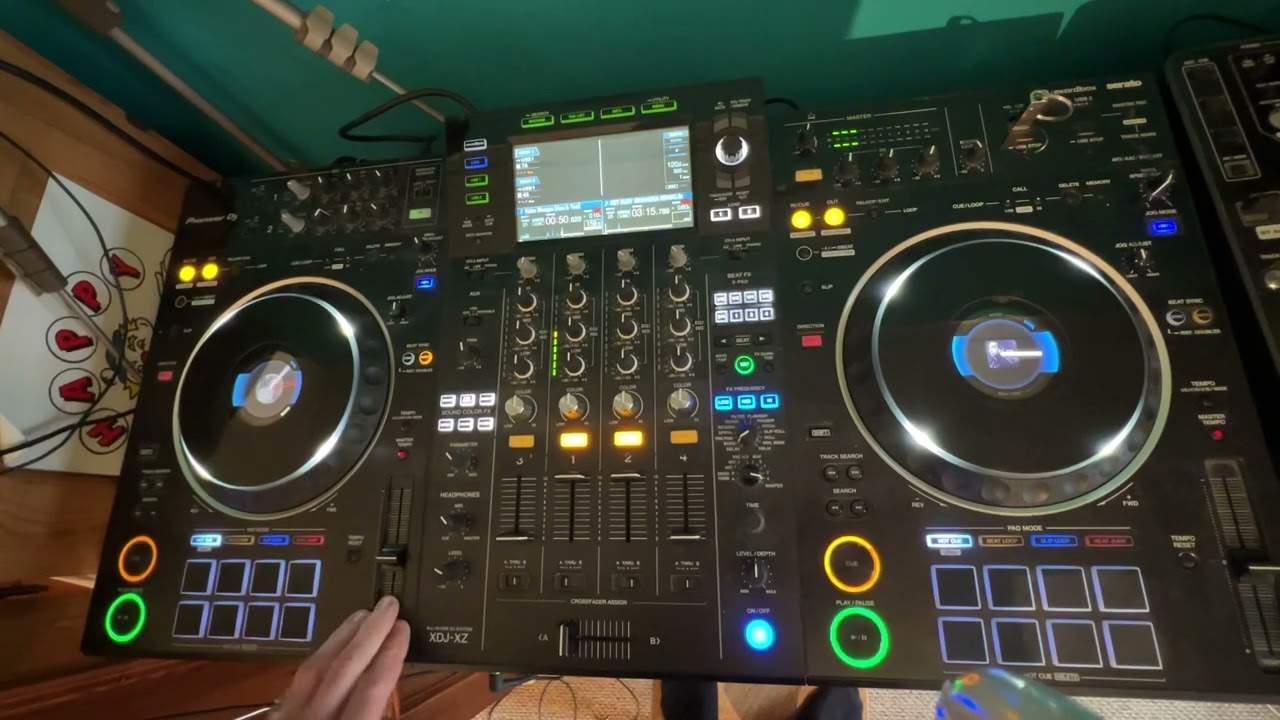
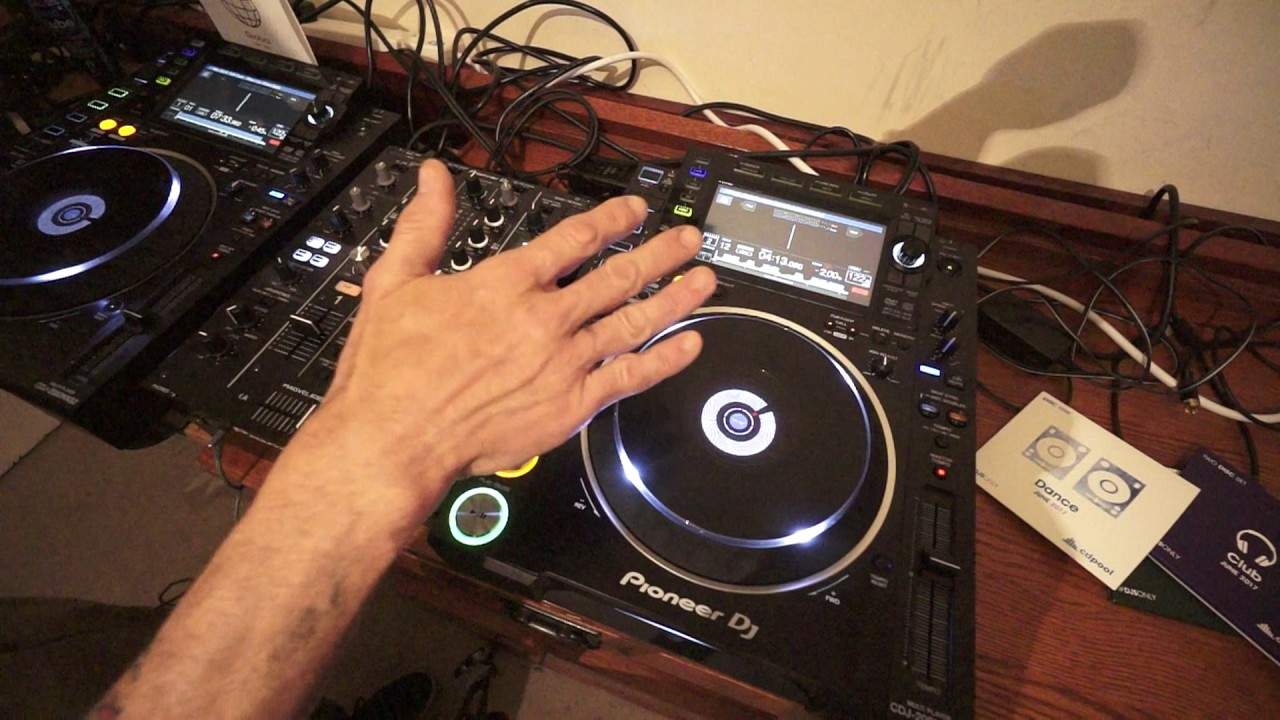
Alright guys, we've got track number 1 from disc number 1, June 2017, Global Releases CDPool. And that's on the left hand side you're listening to right now. On the right hand side we actually have track number 12 from disc number 1 from the Dance Releases from June 2017. Okay, so what I'm going to show you now is, it is difficult but it isn't difficult. And when you get to understand how dance music is constructed, one day you'll wake up and you'll have this eureka moment and go, I get it. Up until then it may be complete rocket science to you, but most, in fact practically every single dance track, modern day dance track out there that has been made with a drum machine is formatted into good phrasing, good quality phrasing.
Now, right. What is good quality phrasing? Let's imagine we have a bar, 1, 2, 3, 4. Okay, the producer doesn't let's say have 3 bars here and 2 bars there and 5 over there and 7 over there and will give an 8. No. What the producer will do is make sure that the track is constructed in 8s, 16s, sometimes you get 24s. More than likely in the radio version. You will get 4s. But, the whole idea of this video is to show you how with a little bit of tweaking and going back not 1 bar or 3 or 7, those are bad numbers. By going back maybe 8 or 16, you can get a nice smooth transition. Now, this demonstration is pretty much about making sure that you don't have vocals over vocals. Drop. Bang. That's called a talkover.
Okay, so we've got some vocalists. We've got some vocals coming in here. Now, we set a cue point here. Now, if we listen, prior to that cue point, we've got a bunch of vocals. Have a listen.
2:10 Nice melodic female vocals in the background and it finishes there
Nice melodic female vocals in the background and it finishes there. So on the right hand side, track number 12, you just heard Mike City featuring Faith Evans track entitled When I Love, LUV, Kenny Dope Remix. Kenny Dope, what a guy. Amazing producer, been around for like 6 billion years. This one here, Fida, back for more. Mr Belt and Wesol Remix. Okay. Nice good solid kind of introduction. Again, it's all structured. Listen.
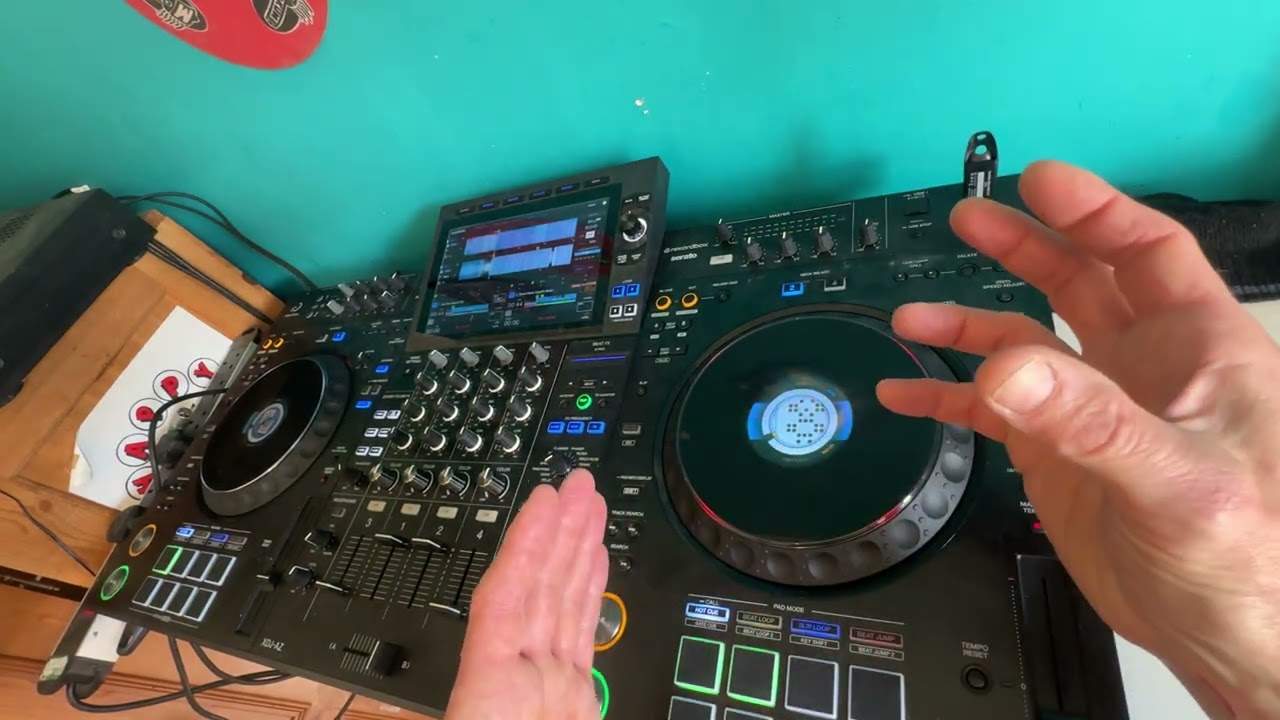
Vocals come in. Let's have a listen and count how many bars we've got at the beginning of the track before the vocals come in. Simple. 1, 2, 3. 2, 3, 4, 5, 6, 7, 8 and 9, 10, 11, 12, 13, 14, 15, 16. Now, again, right. Modern day technology, whether you have the high end kit or the cheapest of cheap controllers, you will undoubtedly, if you have a controller, have a wave format because you're looking at a program, whether it be virtual DJ, Tractor Serato, whatever. And what you should be able to notice is the changing in the changes, sorry, in the wave format. Now, not only should you be able to see changes, but you should be able to see a pattern. And that pattern is also based on an amount of distance in those patterns.
So for example, you may find that you've got a bit of a squiggly line and it's like, I don't know, if you measured it with your fingers, it'd be like two centimetres. And then you've got a change and there seems to be another change in a difference in colour or something after two centimetres. And then maybe you've got a change. After a centimetre and then maybe you've got to change after four centimetres. Possibly, if you then listened to that track, counted how many bars there were, let's say in the first two centimetres, you may find there's an eight, eight bars. The next one, eight. And where it was four, it could be four bars. And where it is even bigger, four centimetres, it could be 16. So looking at this here now, I'm going to zoom in just a tad.
5:23 Of the kick comes in, from
Make sure it's not blurred. So I need to press that button there or I'm just going to know it's good. OK, so you should be able to see where my thumb is now. We've got the line at the beginning of the track and then we've got a jump up where the kick comes in. So have a look at that distance. And then guess what? From where the kick comes into a tiny little break looks to me the same distance between from the beginning to where the first part of the kick comes in, from where the kick comes in to that tiny little break seems to be exactly the same distance. And it is and it was not only in distance, but also in time eight and eight bars. So if we also then no need for the other track, but the other tracks are no different,
To be quite honest, except for one thing. The track over on the other side is longer. So the distance in between that 16 bars is shorter. Why? Well, because this is a four minute track. That's a seven minute track. So the way format is compressed on the left hand deck and it's a lot wider. There's more room on the right hand deck. So of course, the distances are going to be different. So that's another little thing to think about. And it will be pretty much exactly the same with your PC program as well, because when you have your screen in front of you and you have the beginning of the track and the end of the track and you can see a distance of one centimetre on the right track, for example, and then on the left side, there's a distance of one centimetre.
Don't for one second think that they're both going to be eight bars because a perfect example here, the one on your right maybe four minutes, the one on your left maybe seven minutes, which means possibly it's double the amount, which it is here. So I set a cue point here where the vocals finish and also where the vocals where I know is the 16th bar before the vocals finish. So I'm going to do a bit of an experiment here. I'm going to start this track off one, one, two, three, two, one, two, three, three. What name? Hold on. Let's just go to the first kick where the bass comes in there. So I'm going to start that track at the point where I set the hot cue on the other track where we have 16 bars and then the vocals finish.
8:07 I'm going to start the feeder track at the beginning
So really, again, it's very basic math. We have 16 bars of vocals. We have eight bars of eight bars and then the vocal start. So we are going to have a clash of those vocals overlapping each other. Okay, so I'm going to from here. Where are we? So I just started them both off at the same time. You know, it's it just doesn't work again. The analogy here is like having three people in a room, two people talking and the other one trying to hear two conversations at the same time. It's not only very annoying, but you feel like slapping them both and saying, look, just shut up. Right. So let's get back to business. So I'm going to start the feeder track at the beginning. I'm going to start the Mike City track at the first cue point.
And let's do hopefully fingers crossed, it should be a much better mix. And he's breaking your heart when the bottle is empty. Okay, that definitely was better because we didn't have vocals over vocals. All right. There was remnants of vocals on the left hand side, but almost that's like a little kind of fill. All right. So I hope that's been a help. You know, again, phrase mixing is the key. And also that complete sentence is the key because it's about making sure that you keep the vibe going as well and you can do that with mixing in key. All right. There'll be more info on videos like this. And by the way, don't forget, follow me on Snapchat. Also follow me on Instagram and Facebook. Practice and enjoy. Thank you.
This transcript was produced automatically from the audio of the video and may contain mistakes.