 9:05
Transitions on an all-in-one player
On YouTube this video is called Beginner DJ Transition Mixing Lesson Using the XDJ-RX
What this lesson teaches
A useful counterweight to the EQ course, and he names the thing it is pushing back against: people saying all the time that you have to take the bass out, move the mid, move the treble.
Not all the time. It depends on the tracks.
The hands
His analogy: hold your two hands in front of you with the fingers interlocking. They fit, snugly, because the gaps in one line up with the solid parts of the other.
Now turn one hand sideways, or face some fingers down. They do not fit, and no amount of pushing will make them.
Two basslines are the same. Some pairs are rhythmically complementary - the notes of one fall in the gaps of the other - and they roll together without fighting. Some are not, and they collide.
How to tell
Two questions:
Do they clash rhythmically? If both basslines are busy in the same places, you get mud. If one is sparse where the other is active, they can coexist.
Is it simply too full? Even complementary basslines can add up to more low end than the system or the room wants. Two is twice the energy down there, and a mix can be rhythmically fine and still too heavy.
If either answer is yes, do the swap. If both are no, leave the EQs alone and let the two run together - which is what this lesson demonstrates, using nothing but the channel faders.
Why the rule exists anyway
Worth being clear, so this does not read as contradicting the earlier lesson.
The bass swap is the right default, because the majority of pairs do clash and a beginner cannot yet tell which are which. Doing it every time is safe and will never sound bad.
This lesson is what comes after: once you can hear whether two low ends are fighting, you stop applying the rule mechanically and start deciding. That is the same progression as everywhere else in this stage - a rule first, judgement afterwards.
Contents of the video
0:00 Jonathan here, The DJ Tutor
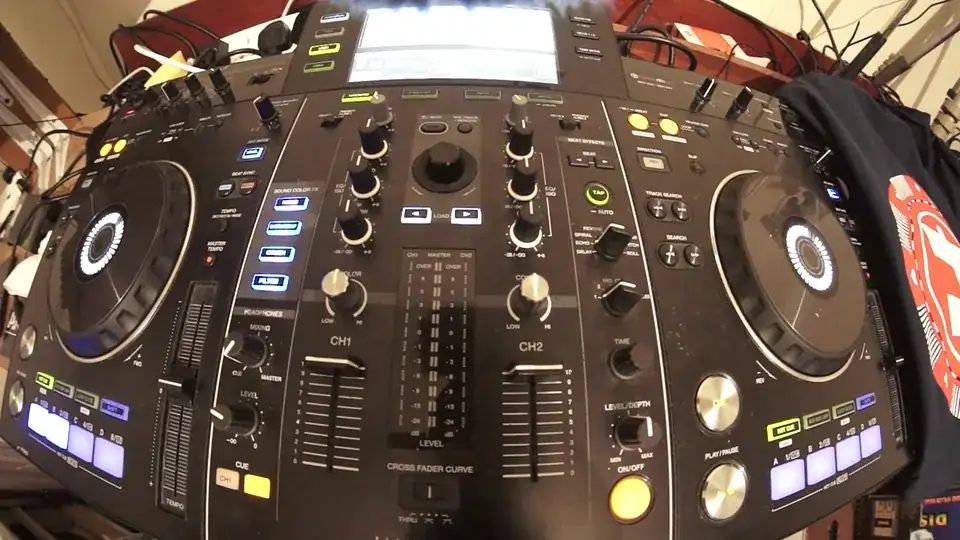
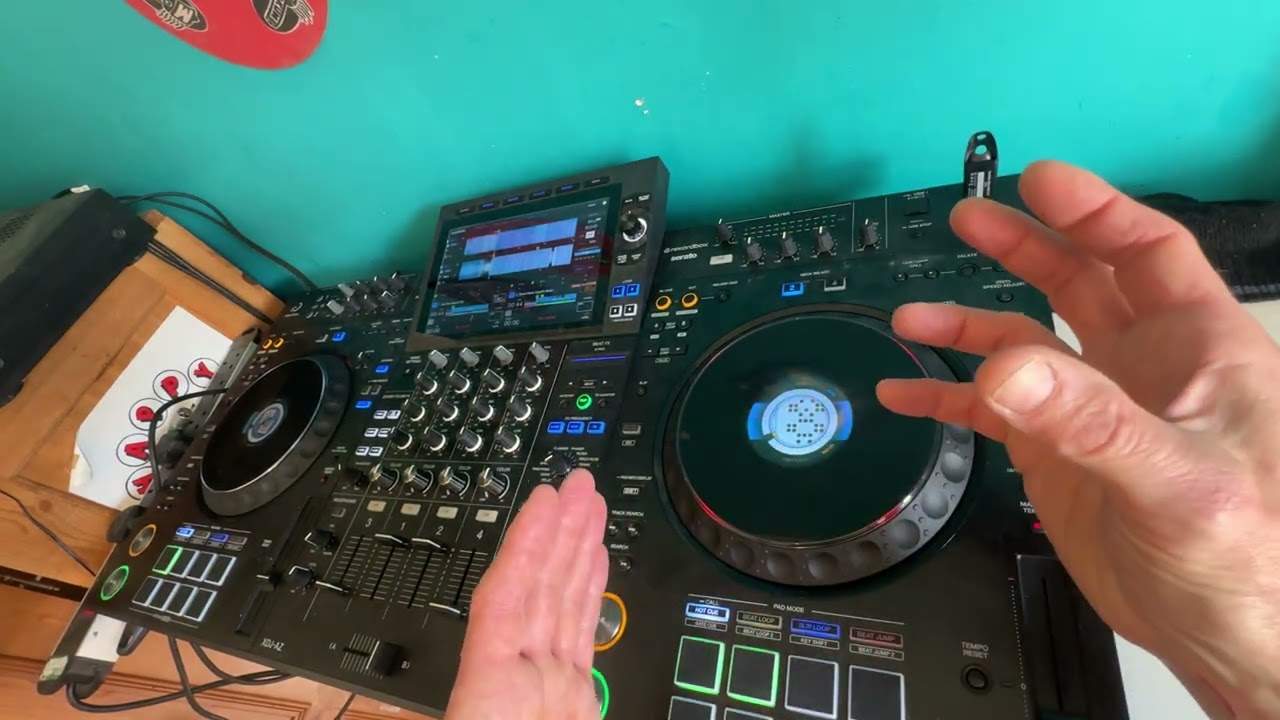
Right guys, Jonathan here, The DJ Tutor. This is a beginner DJ mixing lesson. I'm also going to be using tunes from Karmic Power Records. On my left we have a track entitled Disco Zen and on my right a track entitled Praising by the Soul Architect and the one on the left is by Carmelo Caron. Okay, so what are we going to do? Very simple kind of transition using the up-faders. That is it. Now, people are saying all the time you need to take the bass out, you need to move the mid, the treble, etc, etc. Well, not all the time. It depends on the tracks you're mixing. For example, if you have two bass lines rolling over each other and they fit nice and snugly together. In other words, an analogy like that. There are my hands, I've got my two hands in front of me and my fingers are fitting sort of snugly in between one another-ish snugly.
But it works. But if I sort of try to put them in awkward positions, in other words had some facing down and some across, then they're not going to fit. So if you've got bass lines that are cut quite nice and rolling but they just don't work, they don't either sound well together or they're too full. Then, of course. That's when you do consider taking the bass out from one side and then transferring the bass from one to the other. So in other words, the low on your EQ would be, let's say, for example, the track that's coming in would be turned down to the minimum, leaving the track on the other side with the bass playing as you're doing a transition. You may want to slowly bring the bass in on the right, slowly take the bass out on the left.
2:15 Its baseline, but there's a nice
Alternatively, if you do have, let's say the bass on the left hand side stop straight away and the bass on the right stop start straight away and the stop and start is at exactly the same point, then you may not even want to move the bass on the right hand side below. Because of course that's going to start when the other one stops so you can. If you want to, you can use the bass dials. It's all about listening to the track. There is no God given rule. The tracks will tell you what they want you to do in this case, though, pretty much as soon as the track on the left finishes the disco Zen, the track on the right will start with its baseline, but there's a nice kind of chugging feel to the beginning of the praising track.
It's the original mix, by the way, it's have a listen very simple kind of tune these tracks sort of tracks are very, very good for beginner DJs because they're very simple to understand. It's wonderful. Good structure, they're not full on. They're not sort of big room with loads of energy and piano and breaks and God knows what going on. It's just very simple and nice kind of mellow vibe to get you used to forming good transitions. Okay, so I have set a cue point a little bit before the point where I need to bring the right hand deck in. I am going to put my headphones on and I'm going to slowly bring up the volume on the right hand side. Now. If I wanted to be crossfades just out of camera vision there, I could if I wanted to use the crossfade.
4:34 The job was slightly so simple
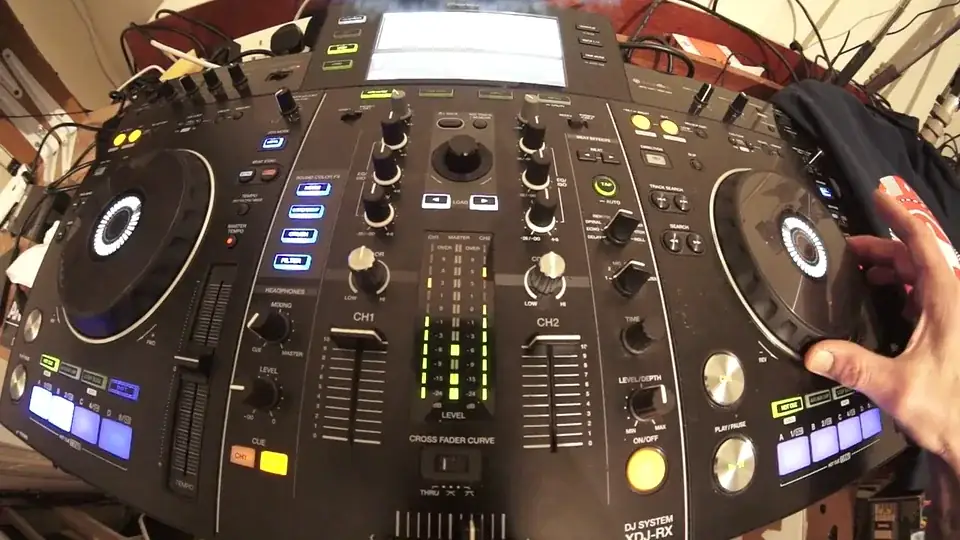
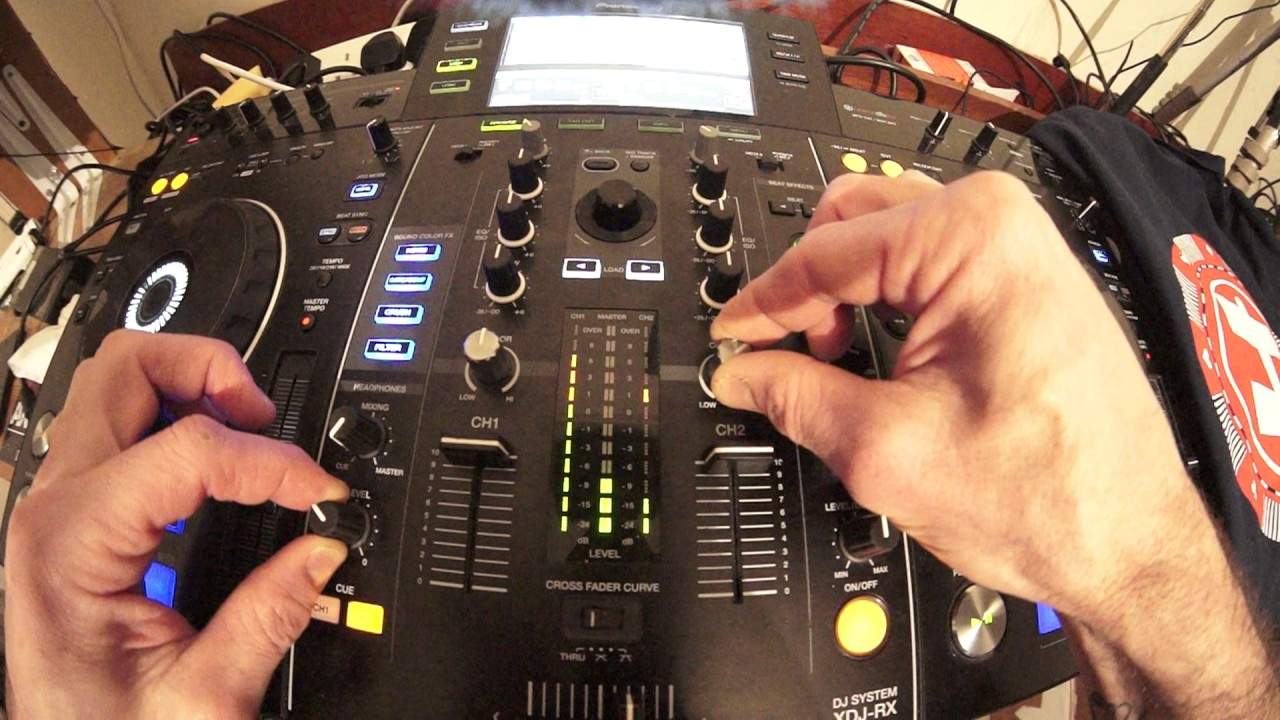
But in this case, I just want to use the up faders. So I'm going to set the crossfade to the through position, which means that now is disengaged and just set my cue point here. Start the track on the left and then begin the mix by bringing my track on the right slowly bringing the volume up moving. The job was slightly so simple. So very, very simple. Let's do exactly the same transition. But this time let's add a little bit of an effect. I'm using the X DJ RX which still to this day. I personally feel this is my own personal opinion. No one saw it as it is is one of pioneers best ever bits of kit because no moving parts SD you can use it. There's a controller. You can use it with software and also you can plug in believe it or not vinyl turntables or CD players because you've got auxiliary in that you can turn from line to phono genius.
6:40 Not such a good transition there but it's experimenting isn't it?
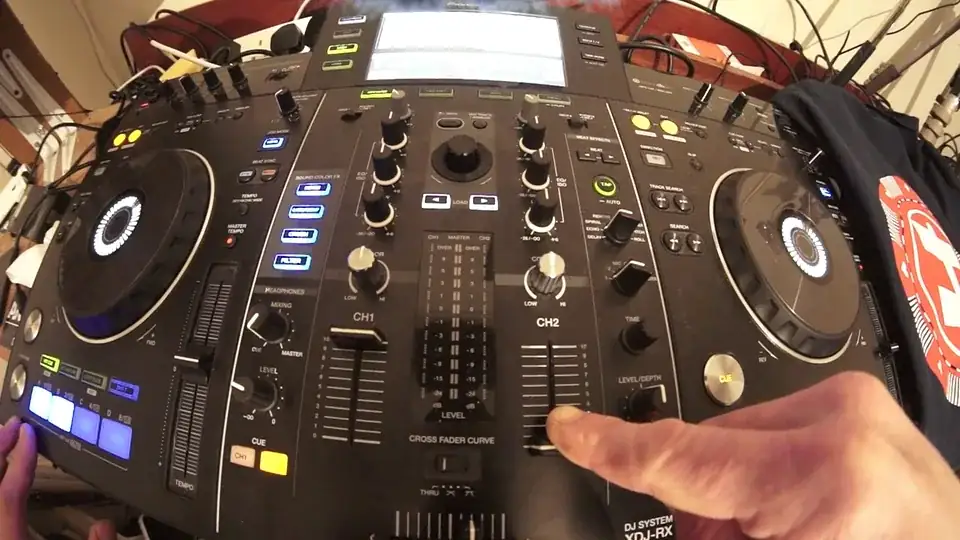
So let's do that mix again volume down on the left hand side press play and this time let's use a bit of filter. Here we go filtering in the track on the right filtering the track out on the left. Okay, let's try one more time. Maybe use some crush. Okay volume down and we'll start again the track on the left moving the one that are right anti-clockwise left clockwise. Not so good this one. Okay, not such a good transition there but it's experimenting isn't it? You know sometimes when you have a good transition point maybe try different ways of using the effects to enlighten it to make it sound that a little bit more on edge. It depends on what you use for example in this case some of the effects or earlier on.
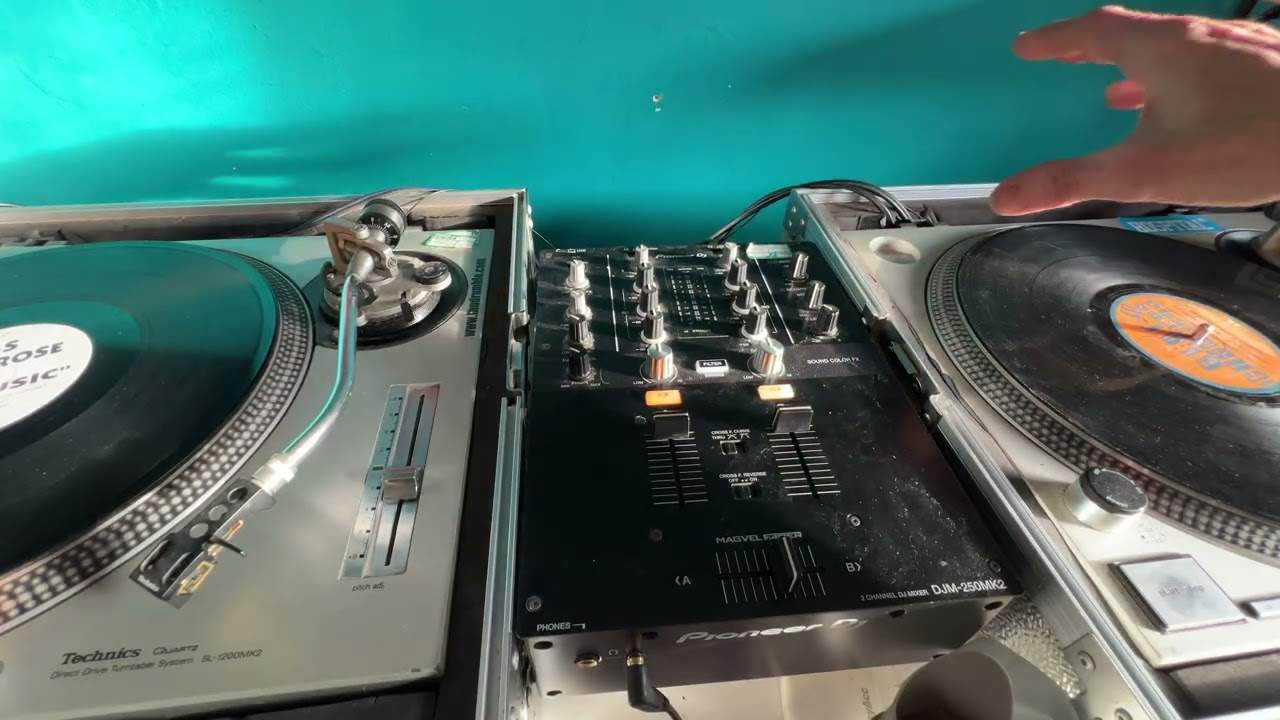
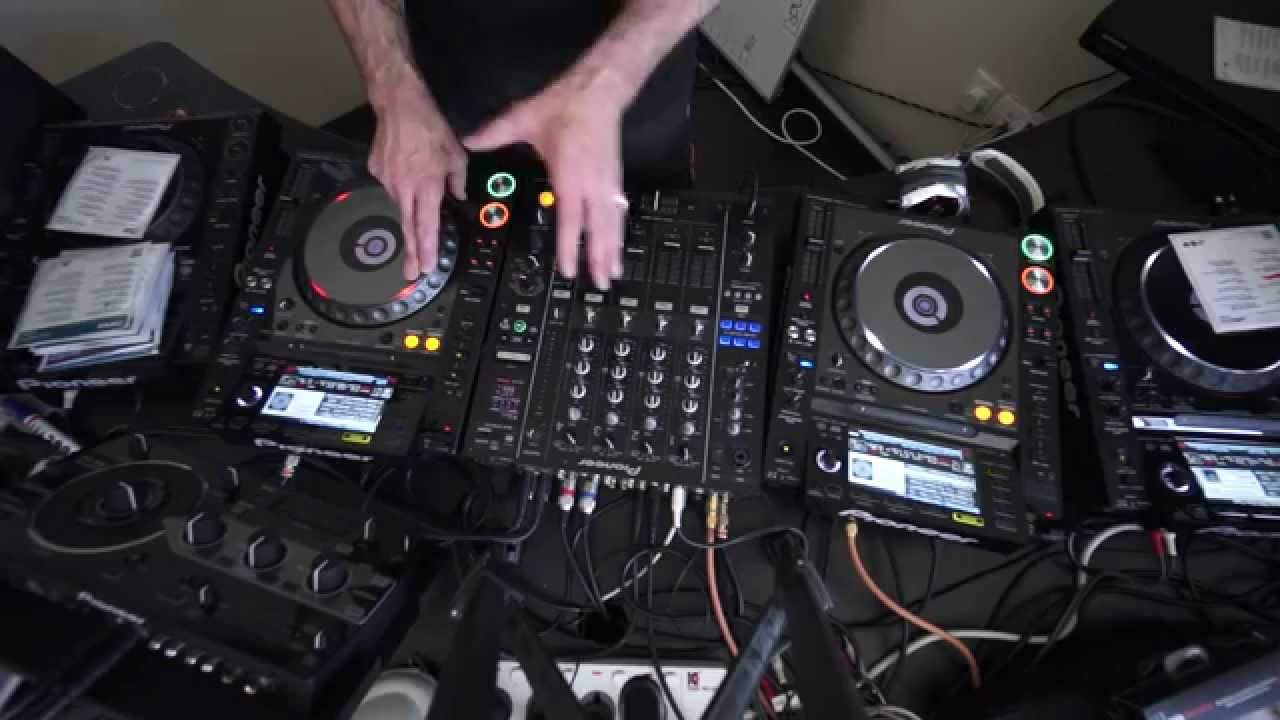
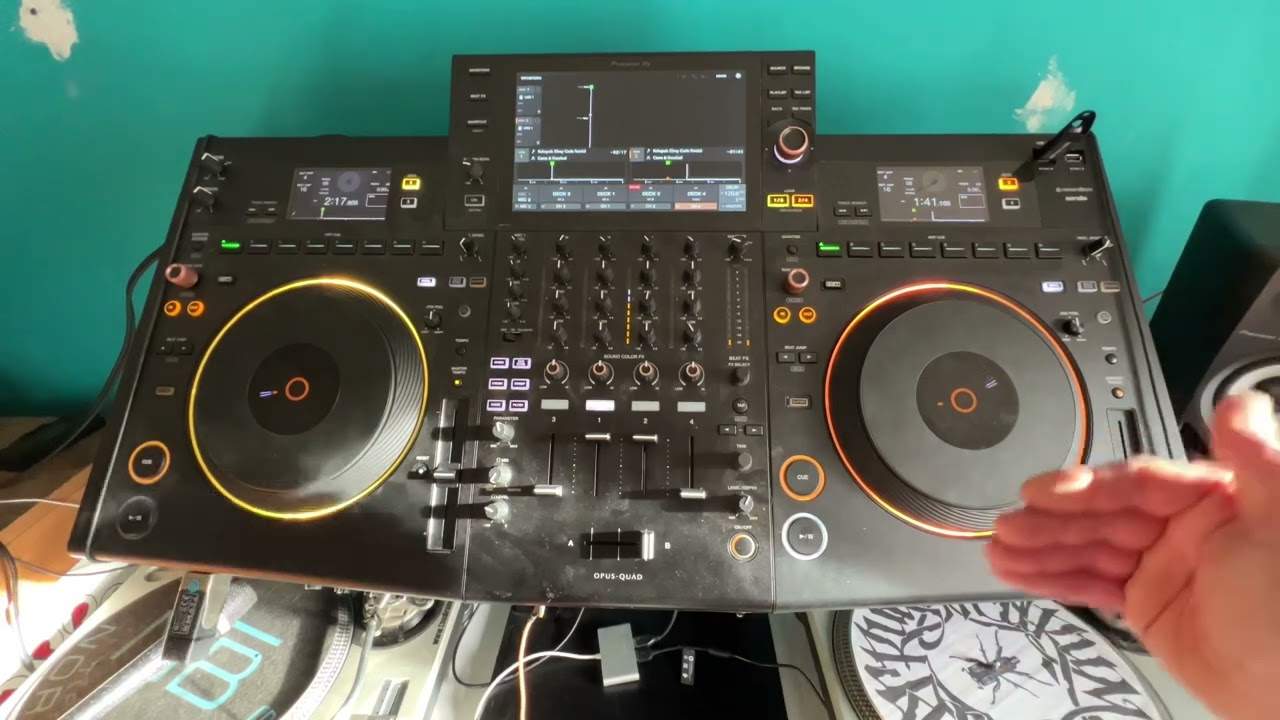
It was just fader up and fader down as simple as that. Well, I hope that's been a help check out the link in the description to karmic power records. Also if you are interested, I do give personal one-to-one DJ lessons via Skype. There is a charge there will be an email. In an email address in the description of this video. So by all means contact me via my personal email and we can have a chat and I can explain to you in greater detail how you and I can get connected and I can start you how to become a DJ. We can use the likes of controllers like this or the high-end CDJs even controllers that will only work on the laptop alternatively vinyl turntables as well. All right, so give us a shout practice and enjoy.
Thank you.
This transcript was produced automatically from the audio of the video and may contain mistakes.