 17:17
DJ Information on How to Produce on the FLY Music Production
Contents of the video
0:00 My first video of 2018
Alright, and a warm welcome to 2018. My first video of 2018. It is going to be a couple of tunes from CDPool. I've got the underground releases for January 2018, so there's a bit of a demonstration tutorial first, and then we'll go into listening to some of the cuts. So what's going to happen in 2018? Well, hopefully I'll be able to go on holiday somewhere with the family. Also, it's not going to rain, the sun will be out, I'll be able to go on my bicycle, still try and keep fit, and of course, just do stuff. I'm going to be going to Greece this year. I will be telling you a little bit more about that in the near future, but it's very exciting, and I'm going to wait until I get all the relevant information before I tell you exactly what's going to happen.
So, all being well as well, I'll be going to the Frankfurt Music Messe this year as well, and DJing for the Laser World booth. Now that is going to be mental. If it was anything like last year, it was fun, exciting, but also to see the new technology that Laser World have got is just insane. So, I have here some new releases from CDPool from the underground releases. Now, I will be going through a lot of the tracks, and you know, having said that, I'm going to be doing a little bit more of the underground releases. So, I'm going to be doing a kind of a random just like glimpse at some of the tunes you can expect to get. But what I'd like to do first is almost like a demonstration. It's not really a tutorial. It's more of a demonstration.
Now, we have hip-hop, we have R&B, we have soul, we have reggae, we have different kinds of styles of music. And a lot of those styles have different drum patterns. For example, drum and bass is completely different to house. Hip-hop is completely different to techno. And techno is nothing like dubstep. But, what they do have in common is that they will have a definite BPM, beats per minute. So, you see, because these tracks are made, most of them nowadays, practically every single one is made by a computer. And if that computer starts the track at 102 BPM, it will finish at 102 BPM if it's, say, hip-hop. On the other hand, if it's like a techno track, it will finish at 102 BPM. On the other hand, if it's like a techno track, it will start at, say, about 130 BPM, and it will finish at 130 BPM.
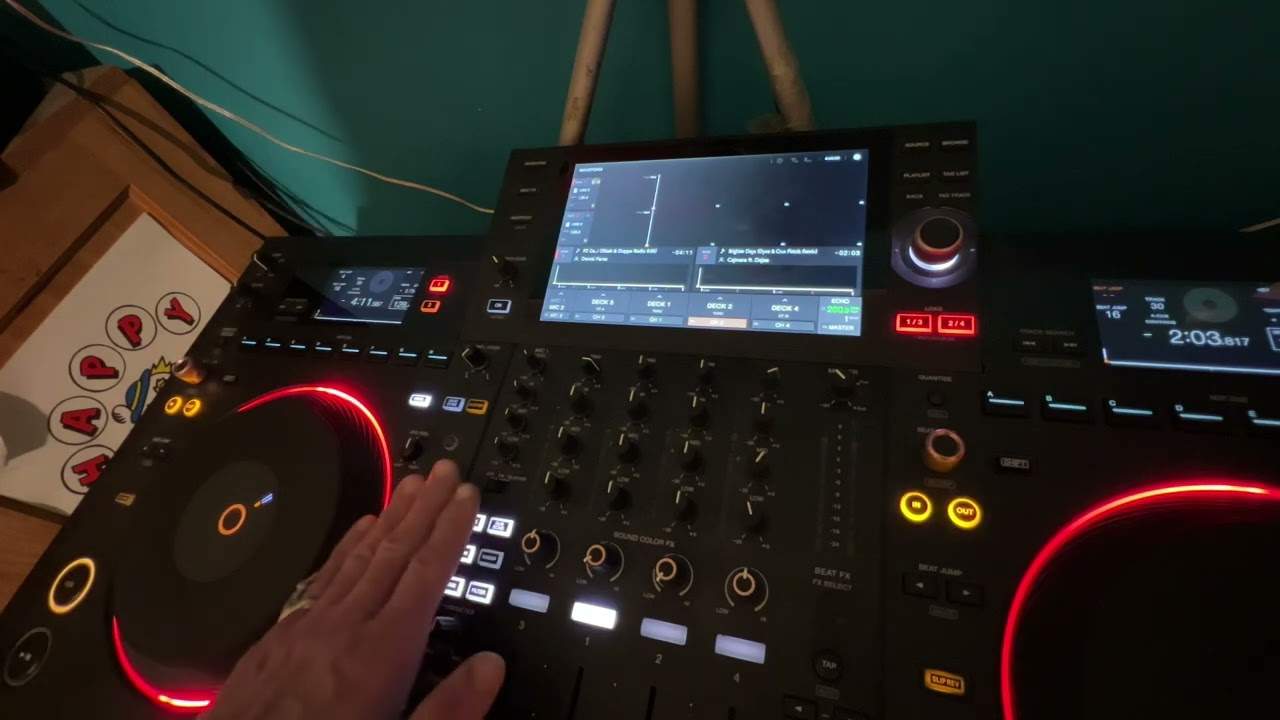
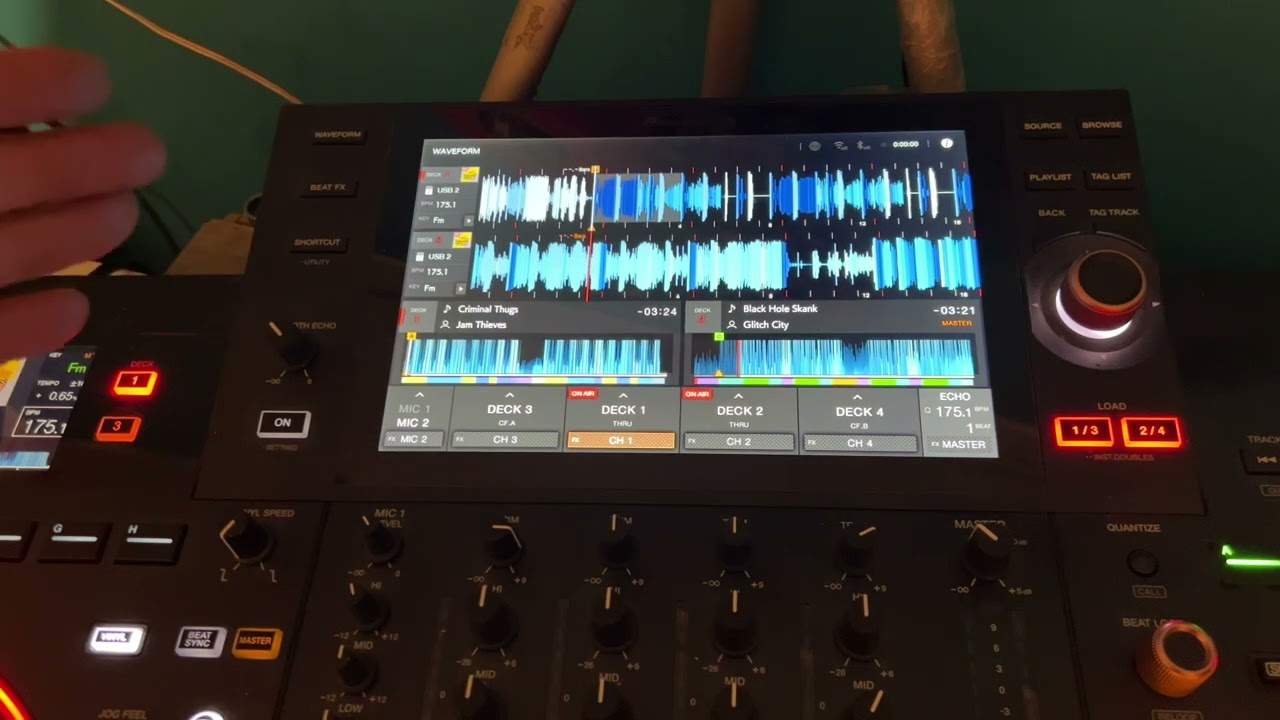
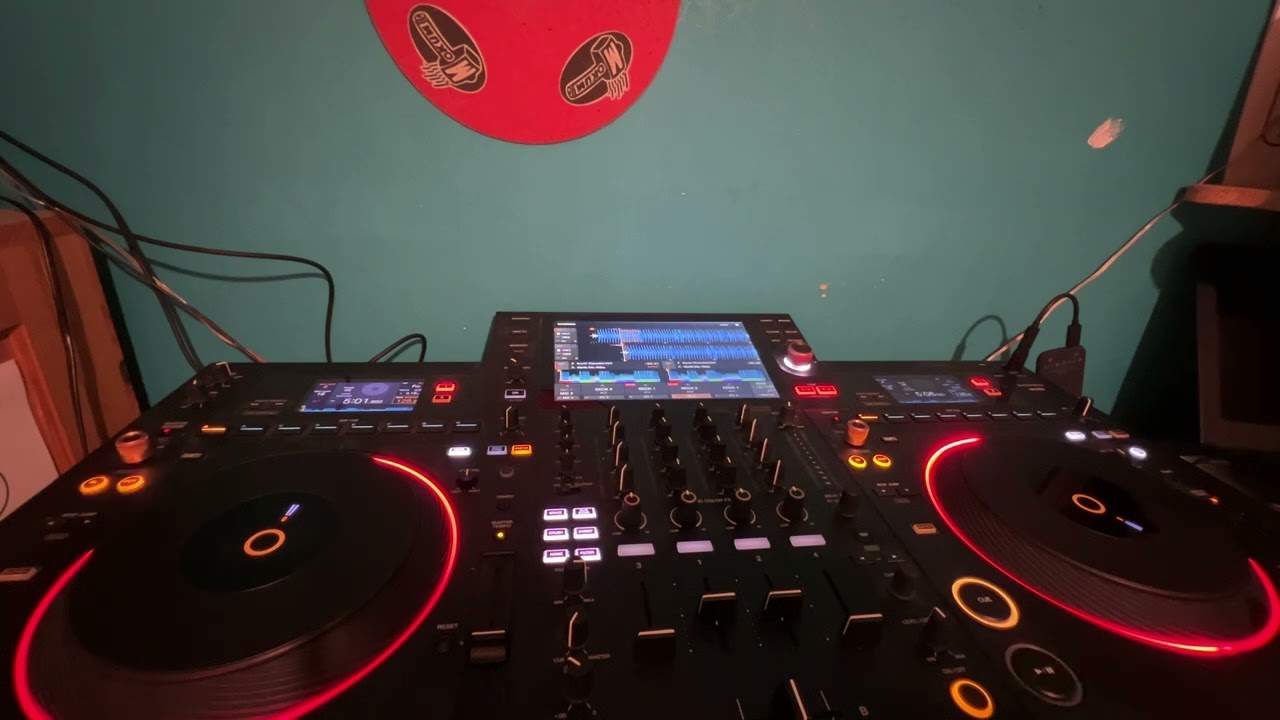
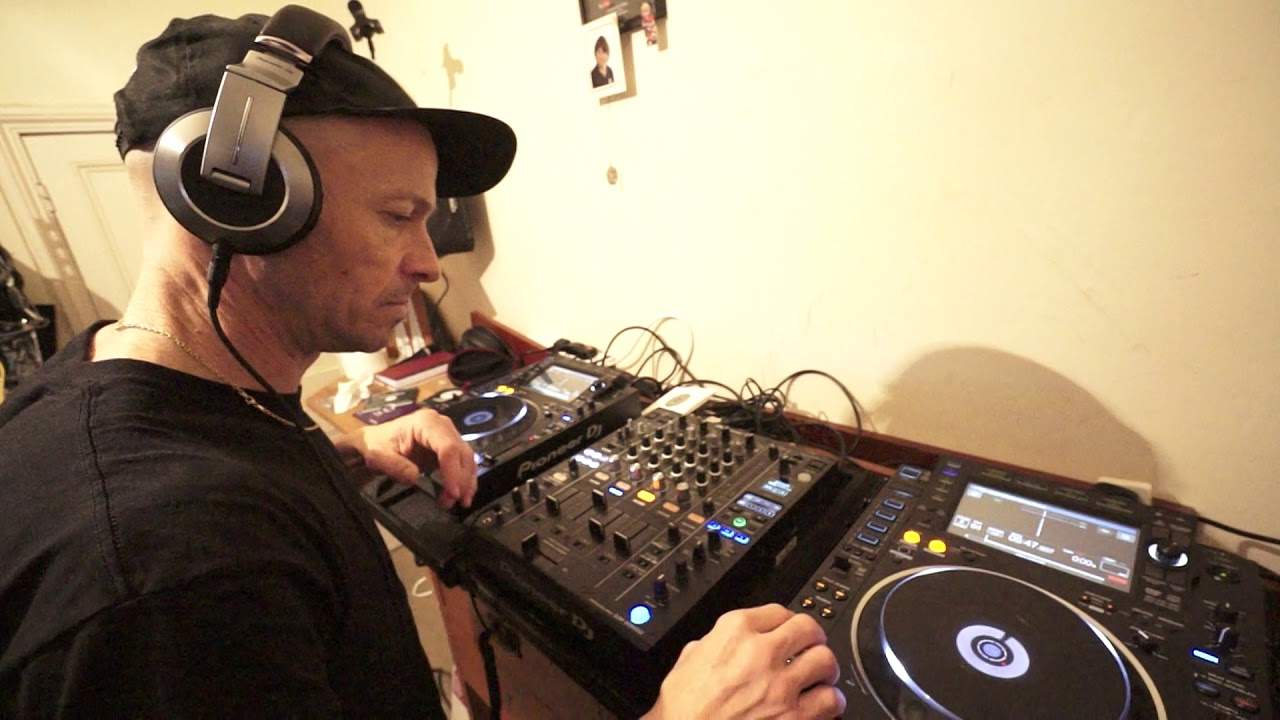
Very, very rarely will a track slow down and speed up. Unless, of course, the producer has made it so. So in other words, like, if we go back to something like Little Louis French Kiss, that was a classic track that just had this rolling kind of bassline. And it slowed down and started to speed back up again. So what I'm going to show you here... This isn't a tutorial, this is a demonstration. I'd like you to try it. I've got a couple of tunes. They're both from the Underground releases. In fact, we have track 1, disc 1 on the left-hand side, track 1, disc 2 on the right-hand side. And don't forget, if you want any info on the tracks that I'm playing, go and check out the link in the description. All I've done, I have formed a loop on the right-hand side. Check this out. Have a listen.
By the way, I'm just going to blow my nose. Excuse me.
3:25 Let's have a listen to the other side
That's it. Just a loop. A breakbeat loop. Now let's have a listen to the other side.
OK, so what we've got here, we've got a nice kind of rolling house vibe.
Could be classed as progressive house. It's got that techie kind of feel with that high energy... It is, I suppose, like a techie house kind of tune. OK, so what I want to try and do, I want to try and just give the beginning of this track a little bit more depth. Now this is where the DJ can become the producer. So, if we go back many years, you know, you had a DJ and you had the producer. There was no one in between because you either were a DJ or you did production. OK, yes, some producers DJed and vice versa. But when you were DJing, there was very few, possibly a handful of people who would almost be able to start mashing up tunes. Mashing up tunes continually while they were DJing. Now I'm talking about the 80s, OK?
4:50 You can do whatever you want, just open your mind and have some fun
Slowly as we progressed through the 90s into the 2000s, yes, the gap did start to vanish. Because nowadays, even if you do not produce music, you can produce your own sounds while you're playing your set by overlapping tracks, by adding effects. So, you know, you don't have to just be a DJ. Doing a transition. You can do whatever you want, just open your mind and have some fun. And maybe take a few tips and tricks from my videos along with a lot of the other DJs out there who give tips and tricks. Because there's a lot of people out there like me, some a lot better, who can give you good information. So don't just watch my stuff, watch other people as well. Right, so, I have formed a two-bar loop. Now just let them play together.
6:45 For example, now again, I'm not going to be using my headphones here
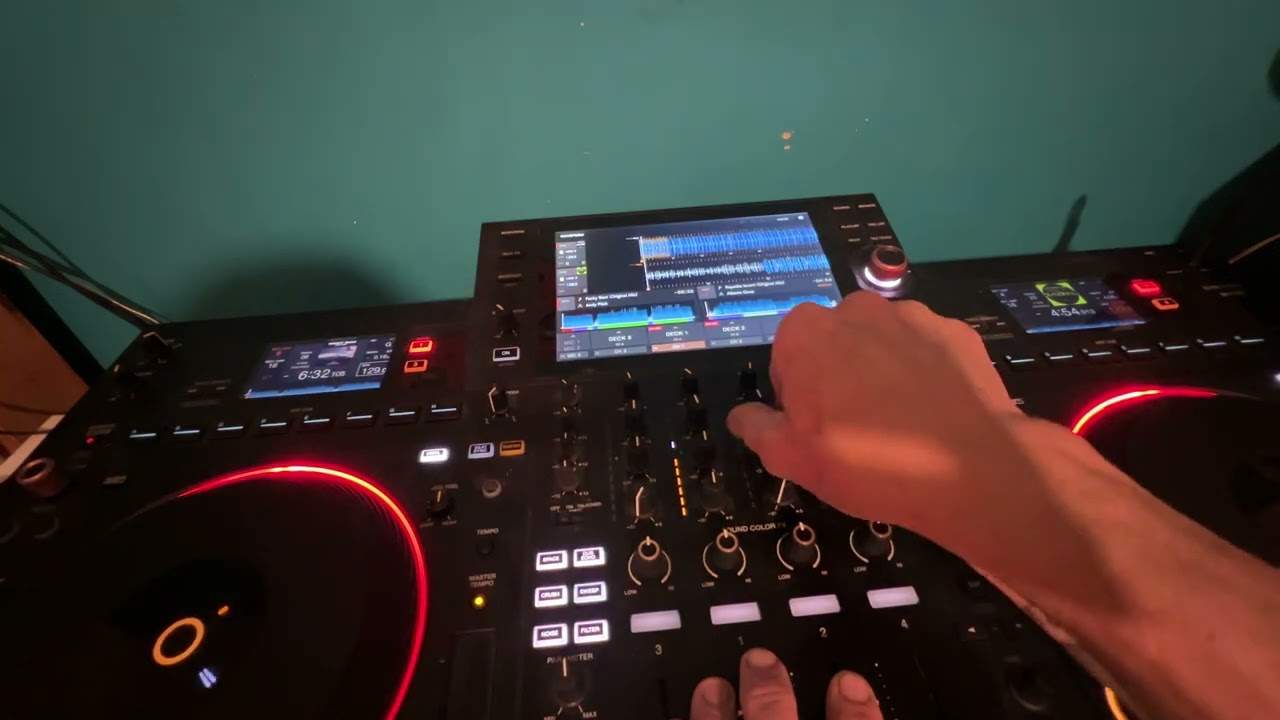
You see, I've got... I've got both the volumes at the same height here. Now it works, but make it slightly better. Let me show you. Slow that down a bit. OK, so what I'm going to do now, I'm going to be the producer. So instead of having a rough kind of mix where it's just like, yeah, both volumes up, get them all in and just let the buggers play together. Now, if we listen to the elements of the breakbeat track... You know, there are parts in that where we can just like, bring it in, take it out, bring it in, take it out. But at different parts of the loop, not just the same part of the loop. So for example, now again, I'm not going to be using my headphones here. It's very rough, so I'm going to talk while I'm giving the demonstration.
So, now using the sweep, it sort of cuts out some parts drum loop. Tunes going together and I'm forming a remix. I'm now becoming a producer. In a way. OK, so let's go back to, that was track, you heard a little bit of track one from disc one. This is track one from disc number two. Bring it forward a bit.
Different styles of music completely, but finding just that small little place, that tiny little place in a track that's got nothing to do with the other track. You can sort of think, well, that bit doesn't go with that track. But then that bit might, but that bit, it probably will. OK, it's about opening your mind and just thinking. Thinking outside the bloody box. Do it. OK, so let's find something else from disc number one.
9:27 Here's track two from disc number one
Here's track two from disc number one. This is track entitled The Sound. It's the original mix. No doubt there'll be a remix soon. A nice kind of, straight away. It's very, it's not, there's not much to it. It's very uplifting. Sometimes a tune can have very little to it, but there could be like that. It just gives it that euphoric kind of just wonderful vibe. Love it. Let's have a look. What can we put on there? OK, now these two might work well together because they both got that kind of skippy sort of minimal feel.
Let me start with the right phrasing.
Just wait for the next phrase and bring that four, disc two in. Here we go. Ah, there. That was quite clever actually. Let's go back a bit. There.
12:06 This is Tiga, track entitled Woke
Disc number two. This is Tiga, track entitled Woke. It's the Martin Sloveg remix. Oh, I'm going to stop that because no doubt YouTube will say, oh, you're using some really amazing producer's music and we're going to come around your house and slap your face. So I'm going to stop that and I'm going to find something over here. The only reason I'm doing that is because, A, I don't want to get a strike on my video. B, I don't want it blocked and C, I want you to be able to watch this video and get some good information. Right. So let's tell you what, I'm going to do a random thing. I can close my eyes. I'm going to do that. Turn that press down. And no, we're on hold on. What am I doing? Sorry, forget that. I'm going to do this.
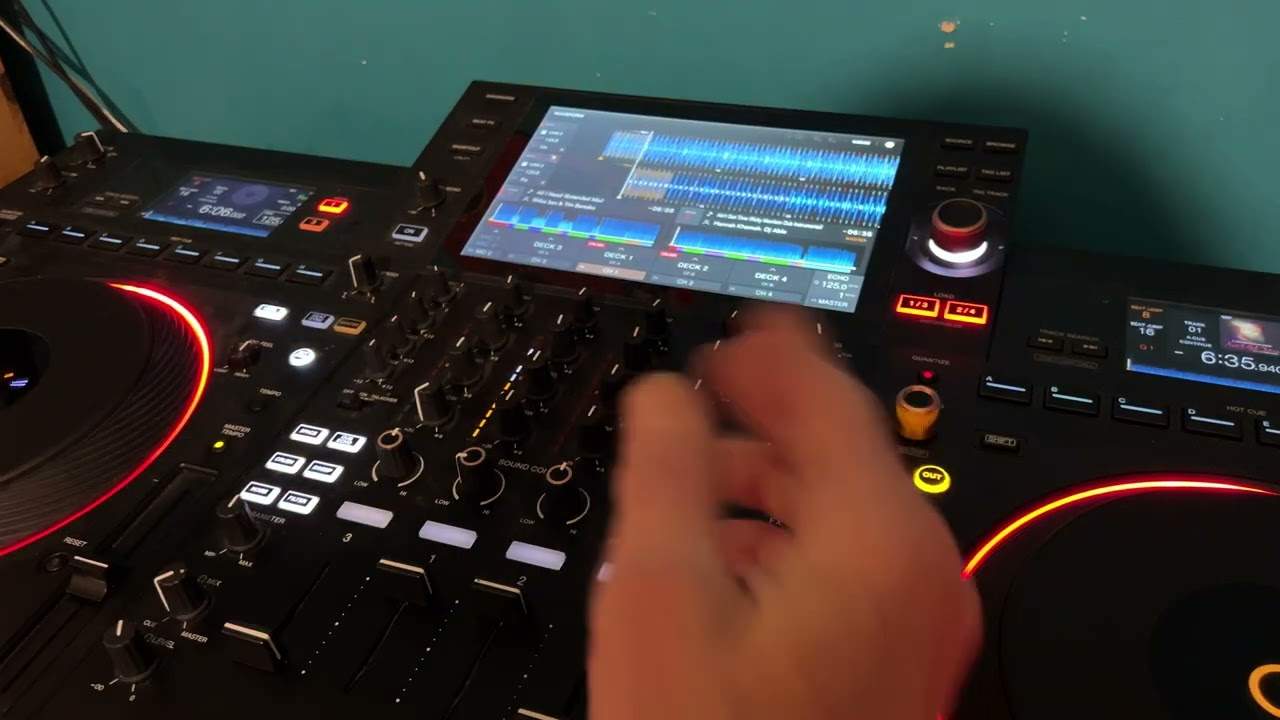
Go to there. I'm just pressing buttons there and we'll do that one there. What is it? Track two. We've already done that one. Oh, God, it's going to track eight. Sorry. Right here we go. Just wanted to do like a random kind of thing. Okay. Like if this is 4XXX Garage Land. It's not tuned Sean Pugh-ed like. It's not that. I get it. Okay, let's see if we can find something that will go in. This is track eight from disc number one. Let's see if we can find something from disc number two that'll go in with this one. Let's see. Yeah, that's quite good. Track five. It's a lot slower so I'm going to have to speed that up. So I'm going to go two. If you do, by the way, if you want to, you know, let me just pause this again.
These videos sometimes hopefully all the time. Most of the time never about giving information. So let's say for example, you've got a track on this side and you find a track on the other side. And yeah, work really well together. But the track on the other side, just you can't get the pitch. You can't pitch it up enough. Of course you can. All you got to do is change the percentage of pitch. So I was on plus or minus ten, I just put it to 16. So now I can increase the speed on that side by 16%, not just 10%. And again, if you're not familiar with the percentage, for example, if your track is 100 BPM and you're at 10%, you can slow it down to 90 or speed up to 110 BPM. If you're at 16, you can speed it up to 116 BPM or slow it down to 84.
Makes sense. Hopefully. Right. Let's go back again to there.
Let's go just past the break actually. Like it.
15:27 The knocks and cuts and cuts
The knocks and cuts and cuts. That's party. On that side now. Swing. See a DJ. He's playing tag though. He's playing disco. He's playing all that. He's playing tag though. He's playing tag though. He's playing mid. He's playing tag though. A bit of his style. Bum bum bum. Bum bum bum. See a DJ.
OK, once again, Happy New Year. Thank you very much for watching. And as I always say, practice. Practice and practice and at the same time enjoy. Even your mistakes, enjoy because if you don't enjoy your mistakes, you're going to go on a downer. Enjoy your mistakes and learn from your mistakes so you can only get better. That's why I say practice and enjoy. Thank you. That's a good tune, it's track five, just two. Yeah.
This transcript was produced automatically from the audio of the video and may contain mistakes.