 17:29
DJ LESSON and New releases CDPOOL GLOBAL FEB 2013
Contents of the video
0:01 Another new release for you this time
Alright ladies and gentlemen, another new release for you this time. CDPool UK February 2013. We're looking at the global releases. Now what I'm trying to do with these videos is also put some tutorials in it as well. So it's not only just showing the new releases from CDPool, it's also giving you a few tips as well. At the moment we're playing track one on disc one. It's Todd Terry, The House of Gypsies. If you want any information on any of the tracks, follow the link and then just type in February 2013 Global and you'll have a full track listing of the tracks I'm about to play or some of them anyway. Track 1, disc 1. Let's try and find a tune that will go well with this. Okay. Alright, now again, this is the tutorial as well. Right, we've got track 1 going there. I've got track 3 from disc number 2.
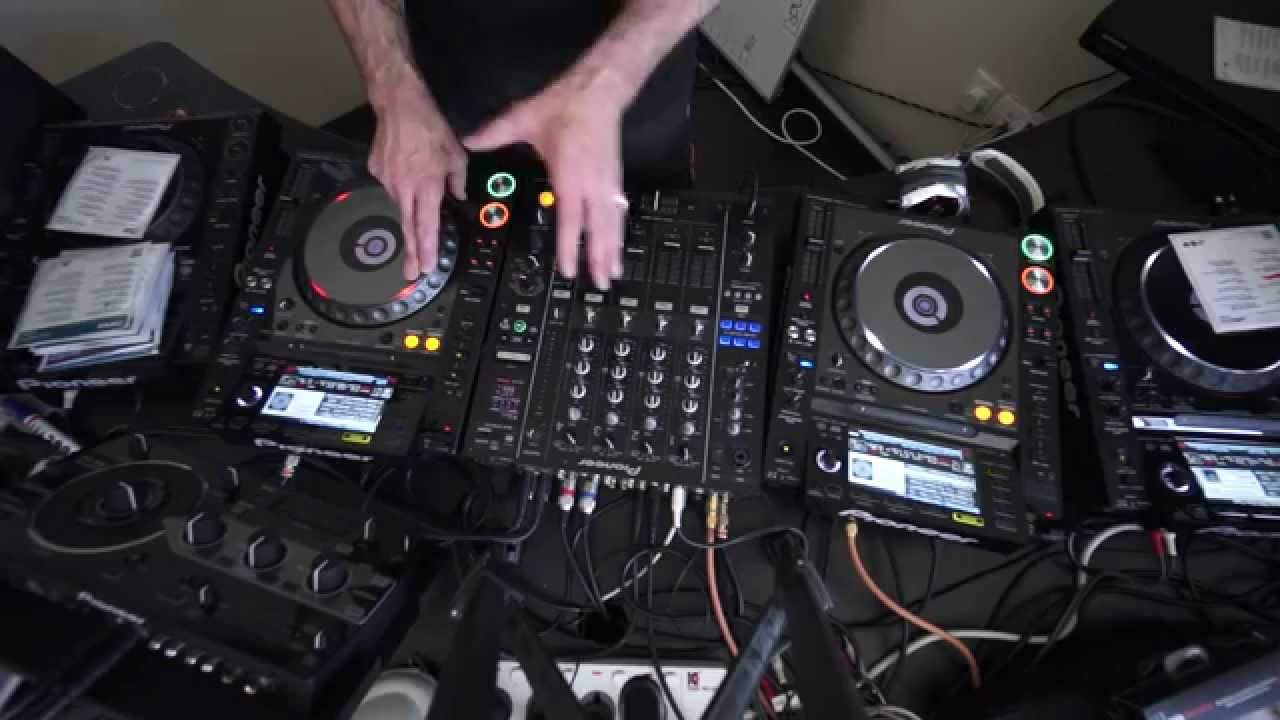
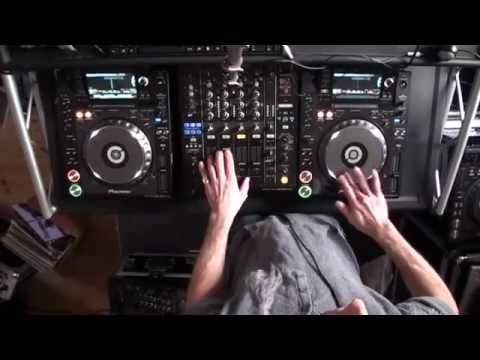
Which is a track entitled Can I, it's the original mix. Let's have a listen to the beginning of the track first. Alright, we've got quite a few bars of just a beat, but then after about, I haven't counted it exactly, I'd say, you know, 8-16 bars, you've got some form of melody coming in. I'm going to get to that point. That's my counting. And 1, 2, 3, 4. Now what I'm going to do, I'm going to bring this track in there. I've got two options, many options of bringing or where I can, sorry start again, how I can bring that in. Two I'm going to do is one, I'm going to chop it straight in, the other one is I'm going to start the track from that point and slowly mix it in. You'll notice hopefully we've got, I do beg your pardon, we've got that tripod and I've got camera stand behind me so there you go that's a little bit better. There you go you can see the faders now or the pots should I say.
2:31 High, mid and low
High, mid and low. Above there we have the trim. Press play there. So the first one, let's bring this forward a bit. Okay, the first thing I'm going to do is just chop this next one in using the crossfade. So I'll set the crossfader side B to the right hand side, A to the left hand side. Both of the volumes are up and we'll do something like this. Simple, very simple transition but works. Next one I'm going to do here is I'm going to beatmatch it in and slowly increase the volume on the one on the right. I'm going to take out the bass, the one on the right. As I bring the track in, I'm going to increase the bass on the one I'm bringing in and as I'm doing the mix, the transition, I'm going to take the bass out on the other side. Here we go. Always bearing in mind I'm listening to the bars and the phrases. More of a flow with this mix. Not quick enough there. Flip and bring it back down. Again, that was me just missing bringing the volume down. Quick flip and bring it down. Not even a spin back, more just like a flip of one or two beats and bring the volume down.
Alright, this one's track five from disc number two. Let's have a look and see what else we can find on disc number one. Okay, we're going to try track number seven. I'm going to do quite a smooth transition from the beginning of track seven into track three, but we're going to go into the latter part of track three. We've got a beat going there by itself. There's a break before that beat. We've got the melody in the background. I can see the break and presumably right after that break we just go into the beat. There it is.
4:56 This kind of music is
About sort of eight or so bars and then get ready to bring the track in from disc one, which is, what's it called? All Night, I think. Yeah, All Night. This kind of music is... I should have really brought this one in sooner. We're going to do it again. What you find with this kind of music is it's very good to do very slow, smooth transitions instead of chopping. Chopping is really more associated, let's say, with hip-hop, funk. Electro jazz kind of stuff, not electro house but more like the very slow kinds of music. So we'll do the same thing, we'll go back to the track. I'm going to bring this one in a bit sooner. Let's see if I can hear something that's happening slightly, there's something different happening during the course of the latter part of the track that will make me think yeah that's a point at which I can now bring this track in. If I want to do this really correctly I need to count
How many bars there are and phrases from the end of this track count backwards and then count forwards with this one. So by counting backwards and say getting 1632 bars, counting forward 1632 bars and maybe after 16 or 32 we have a big change. Maybe as I count back 16 or 32 and at the point here at 32 the track finishes... The time the track finishes on this track will be at the point where something big and bold happens on this one, which will give me that smooth transition. I hope you're following. Right. Let's have a listen. We've got that bass line in the back. Great. Right. Now that bass line, very subtle change in the bass line. I'm going to bring that track in at that point. There you go. So instead of that track finishing and we're having still more going on with this one, we had a perfect synchronised mix. Oh look, everything's shaking.
8:03 This one here is track 7 from disc number 1
Sorry. And that's how it should be. Alright, this one here is track 7 from disc number 1. Let's try and find something else that will go over this from disc number 2. A bass line going on here which is quite nice. This one here is track number 11 from disc number 2. Also I can see a break. On the wave format we've got quite a bit of a break there. I'm going to listen to that break and see if the break there will work with the bass line of this one. A couple of things I could do, I could just try... And bring the bassline in straight away over that one. If I wanted to though, I could work out from at the point which the bassline starts, I could maybe count back 4, maybe 8, 16 bars, maybe even start at the beginning. Let's say from the beginning to that break there is 16 bars. From the point at which that break starts, I then need to count back 16 bars. So at that point, 16 bars, I can bring this one in, which means as soon as that break comes in,
12:27 ...finishes and whereabouts it finishes
The bassline starts and they work together. Alright, I'm not going to do that. I'm just going to bring the bassline in over that break. Disc number one. Track number eight from disc one. I'm going to mix it with the latter part of this track. Track eleven from disc two. Swing with the beginning of this one as well. Very good uplifting kind of beat. Again, let's have a listen if we can hear any subtle change at the end of this track. We've got that doodly sort of sound. Let's see how that... ...finishes and whereabouts it finishes. That could be a good starting point for the next track. Actually, was a good point. That's our starting point. Again, a spin back isn't just whiz. That one was like... Track number 8 here from disc number 1. Donnie Passcode here. Don't forget, go and check out the website for the entire track listing. Okay, we'll try one more from disc number 2. This one's track 8 from disc number 1.
14:47 You're not going to do anything with bass mood or treble
Let's just pause it there. This is a very good effect. What I'm going to do, I'm going to do what I call dropping in the beat. It's where we have a break on one track and we sort of very, it's not actually subtly, you're just like slamming in that beat of the next track which is sort of almost overdubbing the track that's playing. You're not going to do anything with bass mood or treble. It's a bit like going bam, bam, bam. You'll see. Right, so bring it back a bit. The one I'm bringing in next, the last one is track number six from disc number two. It's called In My Head. It's the original mix. Here we go. Let's bring it in as soon as the break finishes. Wacky one there. I tried to add a little bit of an effect, a bit of an echo. It sort of did, but it didn't really work. But it just proves it's about experimentation that will get you better. Finishing off with track number six here from disc number two. Don't forget, check out the link in the description. I will say practice and enjoy. I always have some fun. That's what music's about. Thank you. Yeah! Come on!
I won't get forward about it.
This transcript was produced automatically from the audio of the video and may contain mistakes.