 16:07
DJ Lesson Complete Break Down on Constructing a Mix BY DJ Tutor Aka Ellaskins
Contents of the video
0:01 This is a bit of a demonstration and a tutorial on phrase mixing
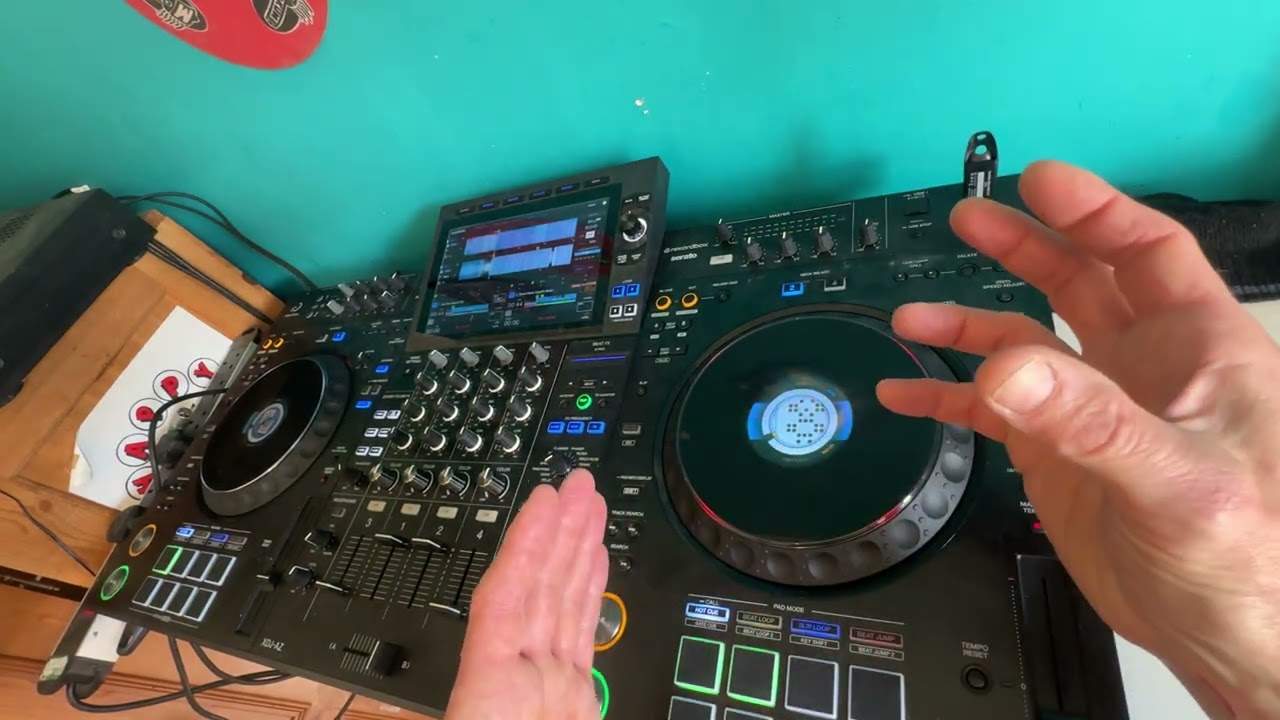
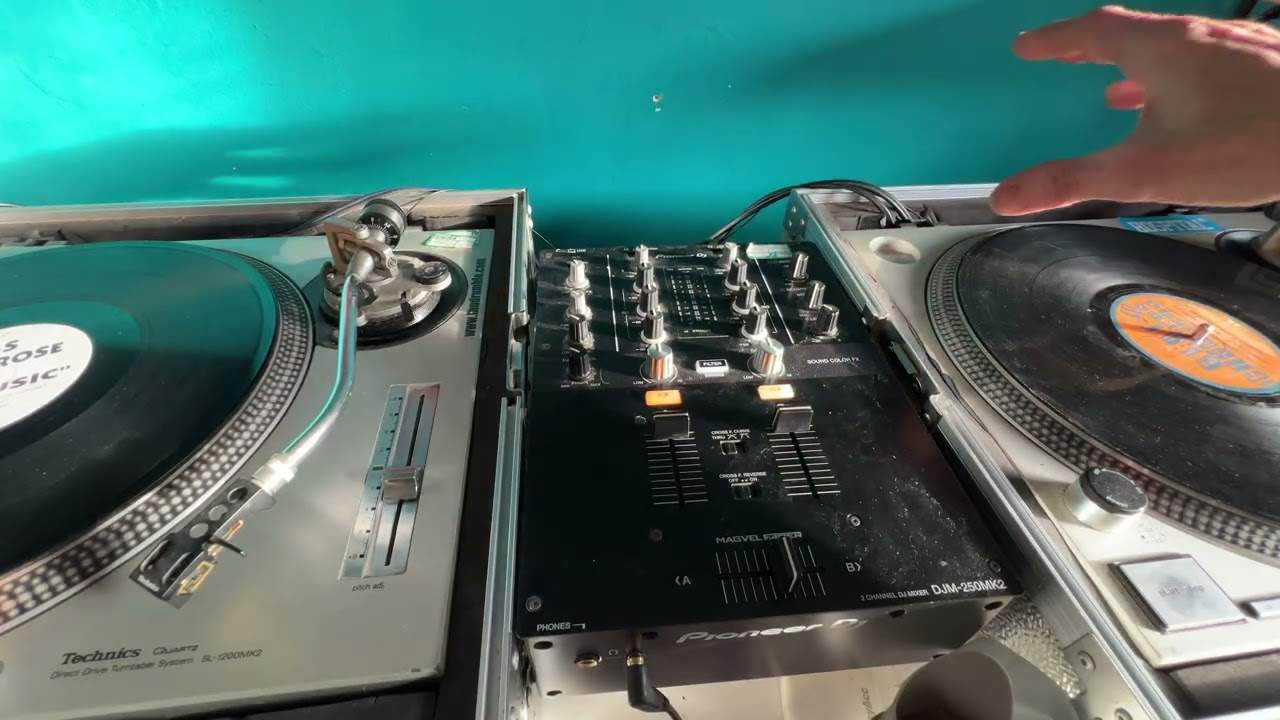
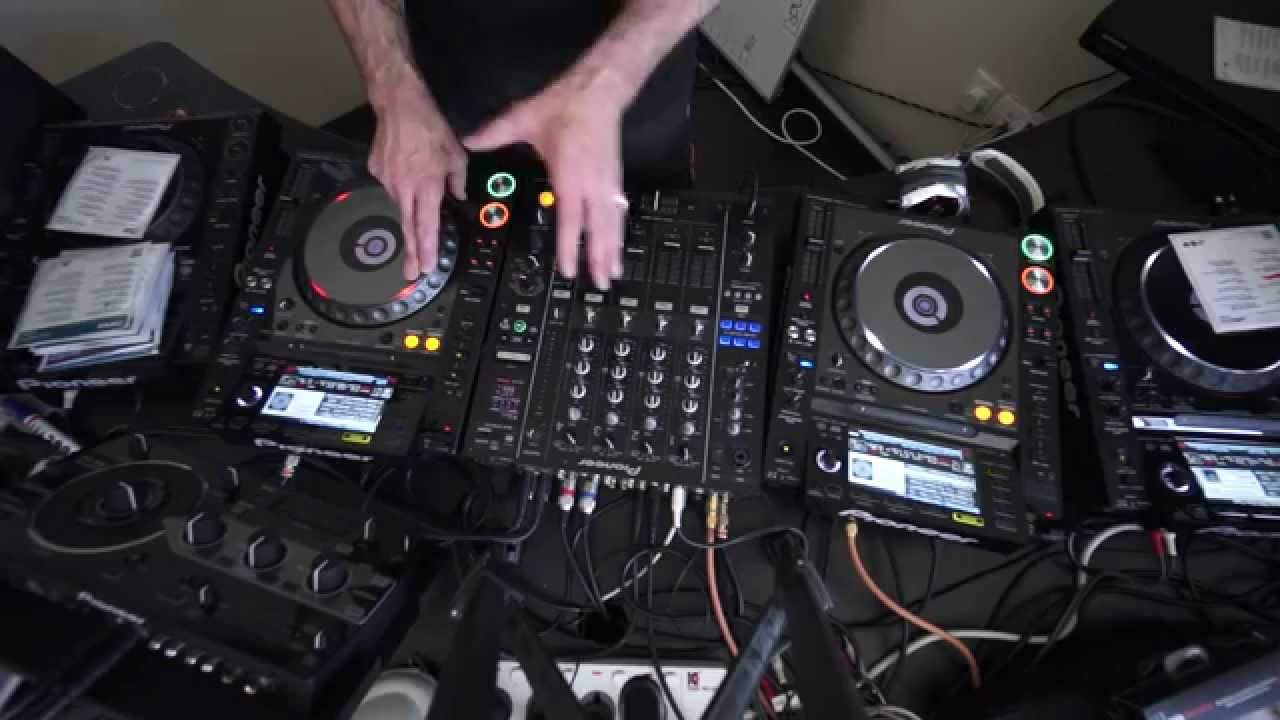
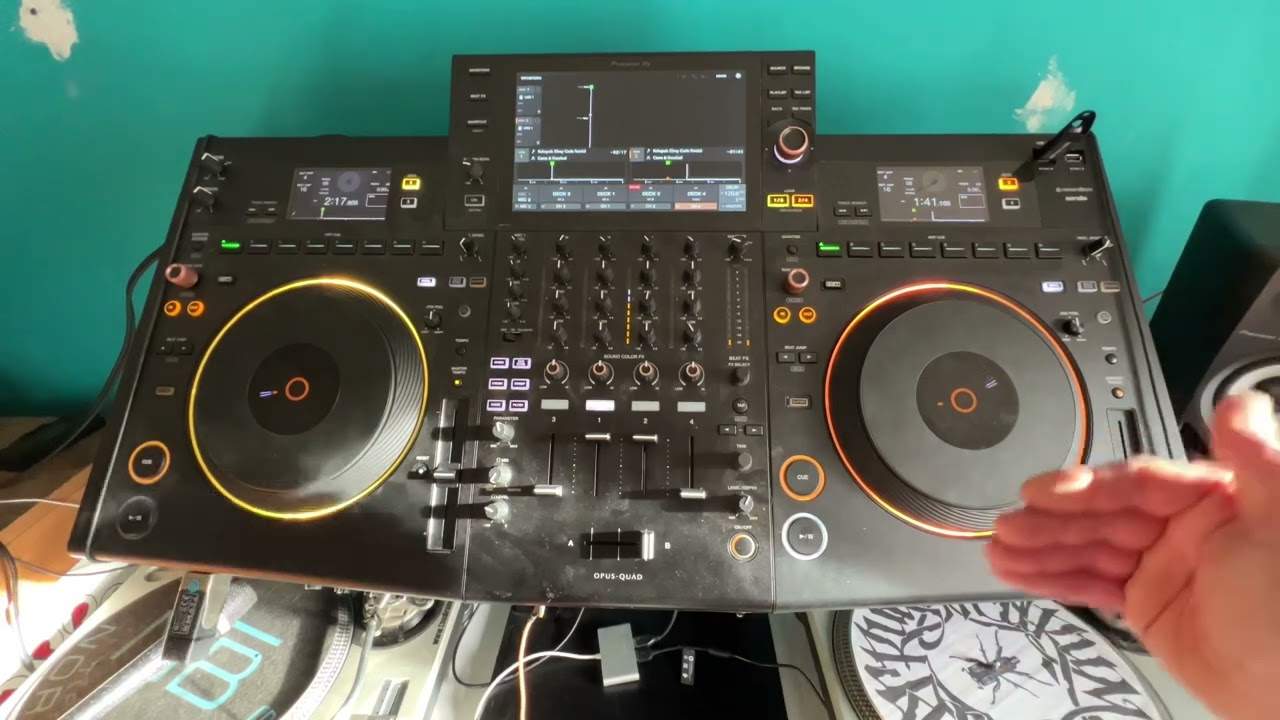
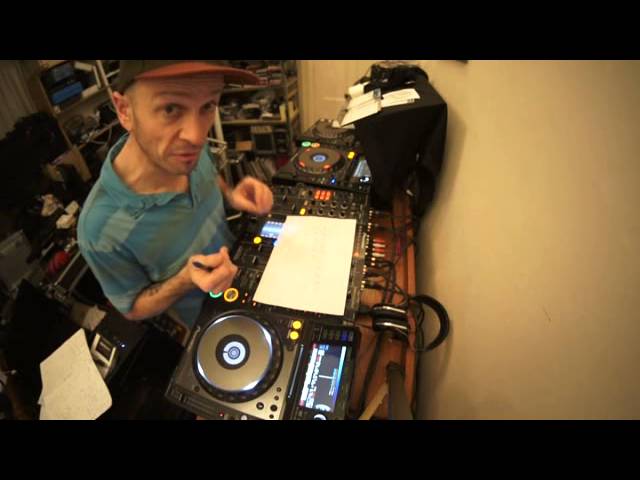
Alright guys, this is a bit of a demonstration and a tutorial on phrase mixing. What we're going to do, we're going to construct a mix where it's perfectly matched, it's just in time. Now the two tunes I'm using are from CDPool, they're from the dance releases from March 2014. On this side here I'm using track 2 from disc 2, on this side here I'm using track 10 from disc 1. is formulate some sort of mix that isn't just a beatmix. So you have outro and intro. The two tracks are almost intertwined so they become one. When you make a mix, you can mix it pretty much anywhere, it doesn't matter. But it does matter because it's got to be in time, it's got to be in key or keys that match. And there has to be some form of construction. There's got to be some amount of gelling of the two tracks so they work well together, not only in time, but as though the phrasing is correct. This is the key, this is the important factor. So what I'm going to do, and again, now I've got loads of scribbles here, if you can see that, just loads of scribbles.
2:45 This track here, and I want to start the mix at that point
Thank you for watching. See you next time. First of all, I want to mix track 10 in at this point here, so have a listen. This is around about into the track, 4 minutes and 4 seconds. So this isn't the beginning of the track, it's not the end, it's the middle of the track. Now there's a lot going on here as well. Now just before that track, there's a bit of a break. This track here, and I want to start the mix at that point. And I want to actually start the mix at this point in track number 10 on disc number 1. Go back. So I'm going to set a cue point there on that beat. So if you haven't listened to this track, what I'm going to do as well now, I'm going to... Shut up. I'm going to start to count how many bars we have before the vocals come in on that track.
And from that point as well. So, there. So, instead of counting and hoping for the best, what I'm going to do, I'm going to get a piece of paper and a pen and I'm going to now count the bars. It's already a top on that. Now this may seem like hard work and like, why are you doing, why are you making all this effort? Well what I'm trying to do, I'm trying to construct a mix that will not only sound good, it will work well. Bit like putting building blocks together of all the same size or the same style. There's no point having blocks this big and then some that big and trying to make a perfectly matched wall because it's going to be knobbly and all over the place. I want it so it's perfectly flat at the top but all the bricks are neatly put together in order. So from that point I'm going to start counting bars and every time I count one bar which is four beats, 1, 2, 3, 4, I'm going to put a cross on this piece of paper.
5:30 Vocals, bars track, track bars
Everything will be apparent when you see what's going on, so let's just start this and shut up. Right, okay. One. Here. There. One, two, three, four. One, two, three, four. One, two. One, two. Okay, so we have vocals there and I've counted. So if you have a look here, how many bars? We've got one, two, three, four, five, six, seven, eight, nine, ten, eleven, twelve, thirteen, fourteen, fifteen, sixteen. Now, if you're new... If you listen to beatmixing or phrase mixing, you'll find that 16 is quite an important number because it does seem to appear everywhere. Even in between like 15 and 17, it just happens to appear there for some strange reason. So I know now I've got 16 bars to play around with before the vocals come in here. Now let's have a look and have a listen to this track here from 4 minutes and 4 seconds.
And I'm going to do the same, I'm going to count 16 bars and I'm going to have a listen to what happens here. So I'm just going to put a line underneath that and just for my reference I will put track 10, 10. So I know track 10, 16 bars and then if I put B4V, track 10, 16 bars, B4V before vocals. Let's have a listen to this track here. From that point... 1, 2, 3, 4... 1, 2, 3, 4... Okay, so we did have a few vocals before we had the last bar in that phrase but we had the vocals coming in completely after this amount of bars. So let's count them first of all. We'll count them one two three four 5, 6, 7, 8, 9, 10, 11, 12, 13, 14, 15, 16. Now it doesn't take a muppet to work this out. We have 16 bars here, we have 16 bars there. So we have 16 bars on this track and then the vocals come in. We have 16 bars on this track and then we have vocals but this track is finishing so of course we want this one to come out and we want this one to come in.
8:09 Wanging wellies, slowly maybe, point started
I could, if I wanted to, start these two tracks at those points straight away and then slowly maybe bring this one into the mix. Alternatively, if I'd have beatmatched them correctly and I was very quick on the cue, I could press play on there, volume up, and just so long as it was perfectly in time, then they would work together and then I would slowly then maybe take away the bass out of this track Keep the mid on and as soon as the vocals come in on that track, bring this one out. But that's sort of difficult. What I want to do is make it a little bit easier. So I need to count back and what I'm going to do now is track 10, I'm going to count how many bars there are from the beginning of the track before this point here where we started counting 16 bars. So let's go back to the beginning and we're going to do the same. I'm going to turn this over.
And I've put B of T10, beginning of track 10. That's my reference, you could do anything. B of 10. And let's start that. And let's turn the volume up, you idiot. 1, 2, 3, 4. 1, 2, 3, 4. 1, 2, 3, 4. 1, 2, 3, 4. 1, 2, 3, 4. 1, 2, 3, 4. Bang. Guess what? 16 bars before we had 16 bars and then we got to the point where we started counting the original 16 bars. What I'm going to do now, I'm going to go to this track and there is a break in this track. What I will do, I'll take some pictures of the readout on the CD player and I'll put them on my Facebook wall so you can see the construction of the wave format on here as well. Now I can see that there's a bit of a break before we got to that point where I want to start my mix or start my complete mix where
10:53 Rain, we've had loads of rain
The public will be able to hear the two tracks, not maybe my mix where I'll be able to cue this one on the headphones. So I'll listen to that one on the headphones and the crowd will only be able to listen to this one until the point where I want to bring them both in. So I'm just going to wang this one back a little bit. I like wanging, like wanging wellies. Wanging wellies in the warmer. No, wanging wellies in the winter is better. Rain, we've had loads of rain. Right, that's where it's going to be brought in, so I need to bring it back slightly. So there's a break very soon and I'm going to start counting from that break. There's a good reason because that break probably got a construction and I'm pretty sure it's going to be about eight bars. Let's have a listen. Not yet.
Okay, now we have 8 bars here before the original 16 bars I started counting. We have 16 bars here at the beginning of the track Before we got to the original 16 bars I started counting. So, what would I do? This is what I'd do. This track would be playing in the mix. I would then, to make it easier, I could have gone back the whole 16 bars but because there is a break there, I can visually, which you will see in pictures, see the break and the break is 8 bars. I would then, on my headphones, move this track forward 8 bars. When it comes to the break, start this one off Then start to get my mix working. And then as soon as this track comes in on the first part, the first lot of 16 bars that I talked about earlier on in this video, which is like five years ago, I would then bring this one in, volume up and start to bring my mix in. So we'll do just that. So first of all, let's imagine that this track is playing happily in the background.
So that's playing. So what I need to do now with this one is count my eight bars. One, two, three, four. One, two, three, four. One, two, three, four. One, two, three, four. One, two, three, four. And that is my point. I'm going to now bring the volume up. And again, this is still playing, it's carried on playing in the background. Bring the volume down. Now we'll do the mix. Okay. I'm waiting for that break to come in. You can hear that in my headphones. I missed the cue point. You idiot. I missed the cue point.
13:53 Visual interpretation, start minutes, track track
So during that mix, I brought the bass out and the reason for bringing the bass out during the mix is to de-emphasize this track and try and make the track that's coming in be a little more prominent in the mix. Now, this may seem really long winded but if you The DJ Tutor is a great help when you're doing your final mix. You have the visual interpretation of the mix, instead of trying to remember what's the visual interpretation. For example, you could be saying track 1 starts from the beginning, track 2 will start At 4 minutes and 30 seconds into track 1, but track 2 will start at 2 minutes into track 2. Think about it. It works because then you know when you finally do your mix, you'll know where to bring one track in and where to take the other track out. This is a talkover. Practice and enjoy. I like it. Don't forget, pictures on Facebook and check out the Dubai DJ Academy. Thank you.
This transcript was produced automatically from the audio of the video and may contain mistakes.