 5:02
Cutting with two turntables
On YouTube this video is called Dj Lesson,Cutting with two turntables
What this lesson teaches
A step up from the cutting elsewhere in this course: not a transition but a performance technique, where both records are being played as instruments.
What is being described
Most scratch work edits one record while the other plays. This edits both, alternating between them so fast that the two become a single line.
His walk-through, slowed down:
- Deck B is playing, crossfader over on B.
- His hand is on deck A, holding the record still while the platter turns underneath it.
- He releases A for a count of three - the sample he wants - and stops it.
- In the same instant, the crossfader goes over to A.
- A plays. While it does, he pulls B back to its start point.
- Then over again, and repeat.
So at any moment one hand is playing and the other is reloading, and the crossfader is switching between them.
Why the crossfader is doing half the work
Worth noticing, because beginners watch the hands.
The records are being started and stopped by hand, but what the audience hears is decided by when the crossfader moves. Holding a record still while the platter spins means it is ready to go instantly; the fader is what lets it be heard.
That is why turntablists care so much about crossfader feel and curve, and why the sharp curve from the breaks lesson matters here too - with a sharp curve, a millimetre of travel is a complete switch.
It happens in milliseconds
He admits he is not certain he has described it correctly, because so many moves happen at once and it all takes place in an instant.
That honesty is useful. Watching this done at speed, it is genuinely hard to see which hand did what - and the only way to learn it is to slow it down to one move per second and speed up from there.
And his caveat
He says plainly that he is not the world's best turntablist. He is not, and the explanation is still the clearest part - knowing how a thing works and being able to perform it at speed are different achievements, and only the first one can be taught.
Contents of the video
0:00 Moving, side, record
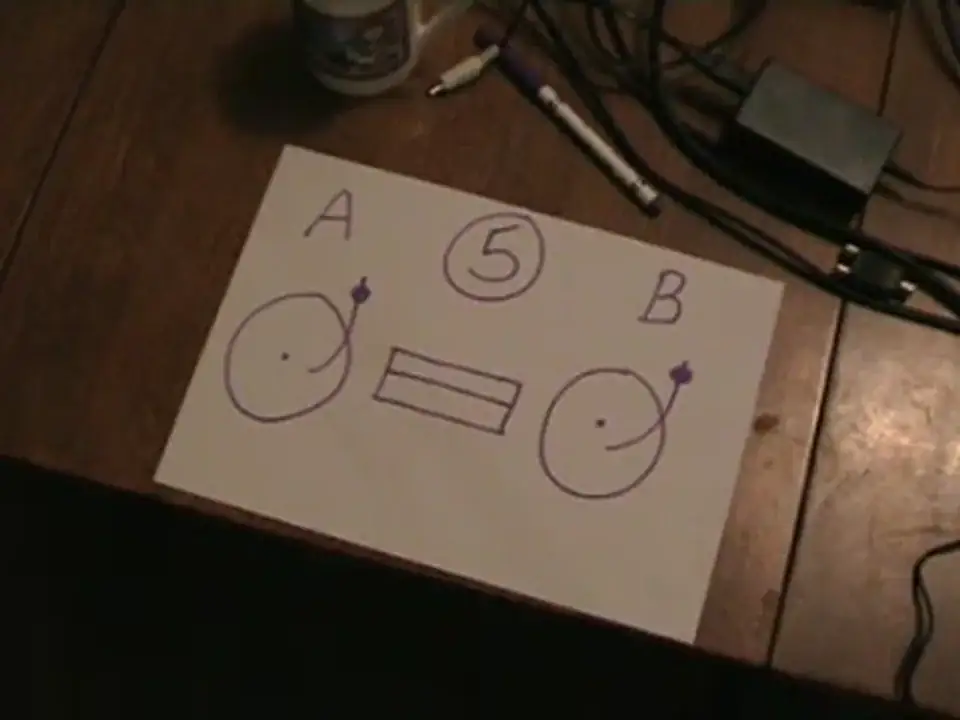
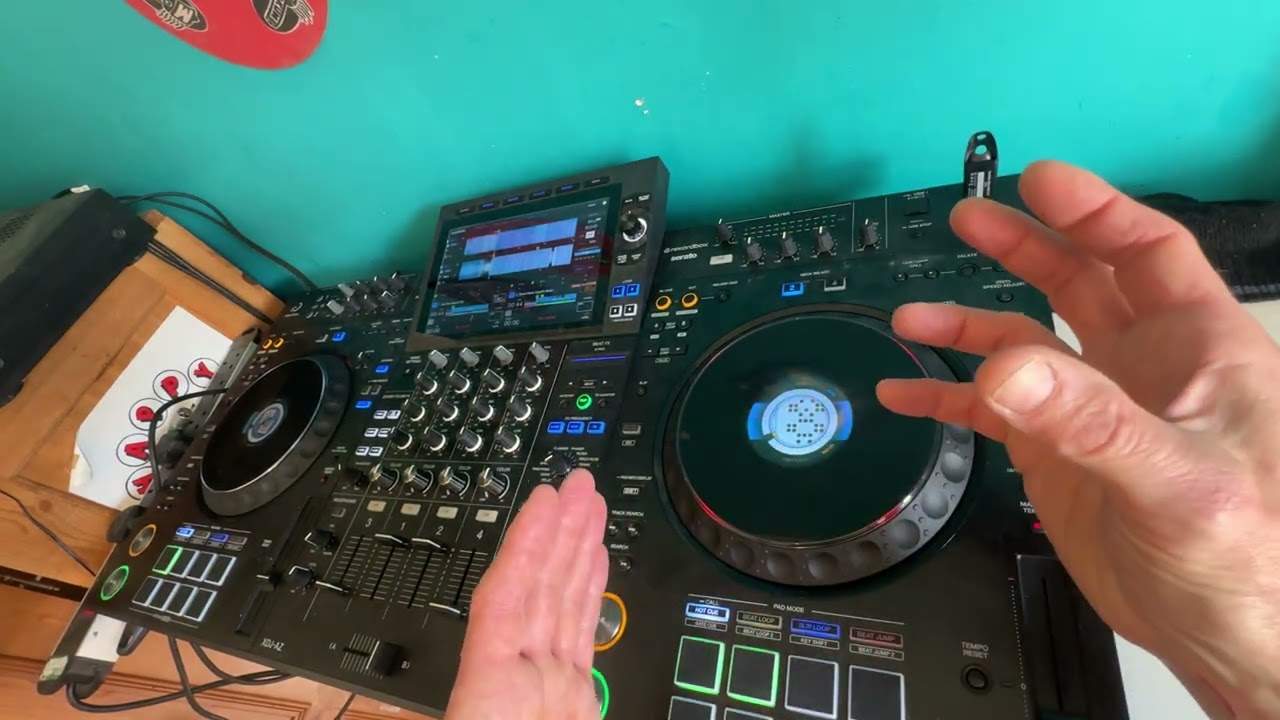
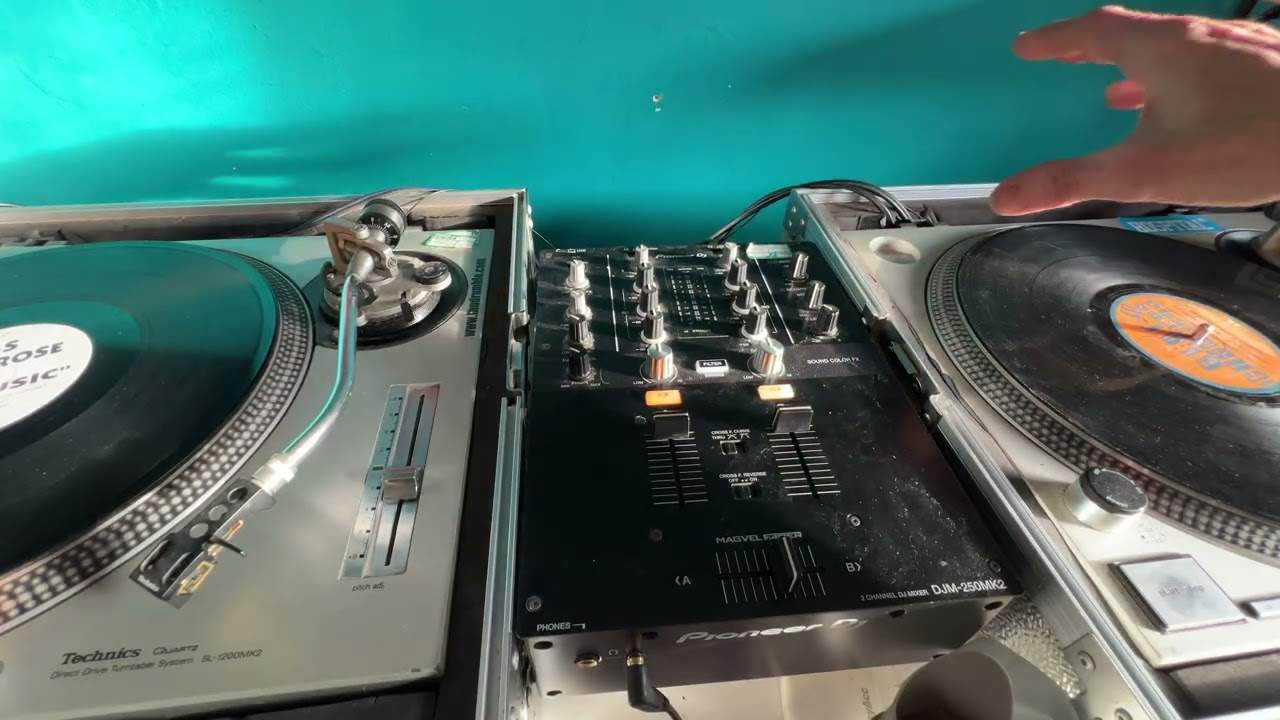
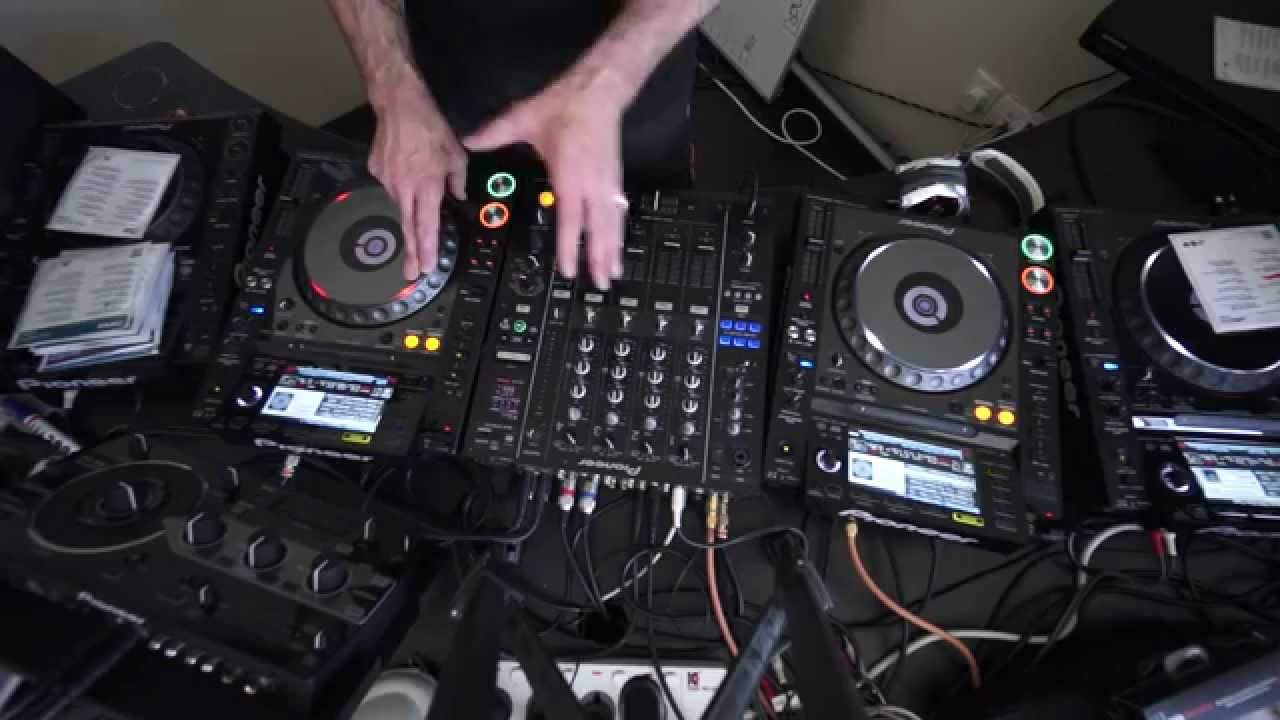
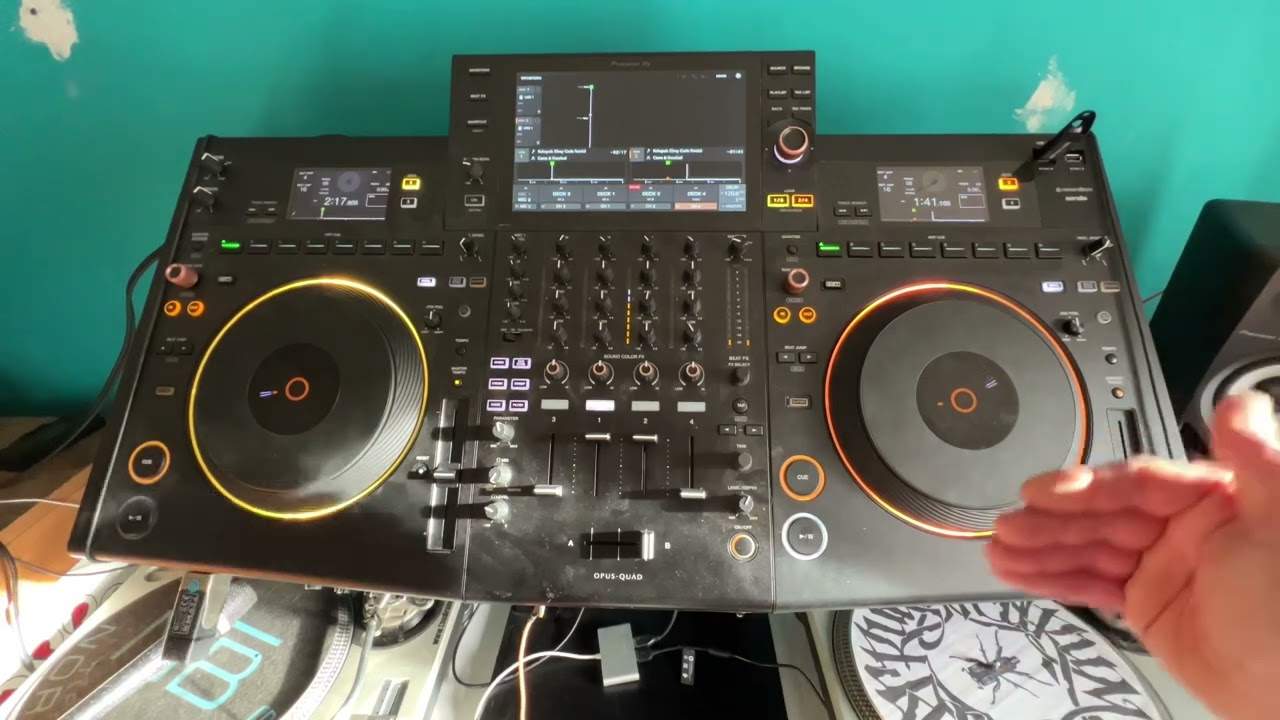
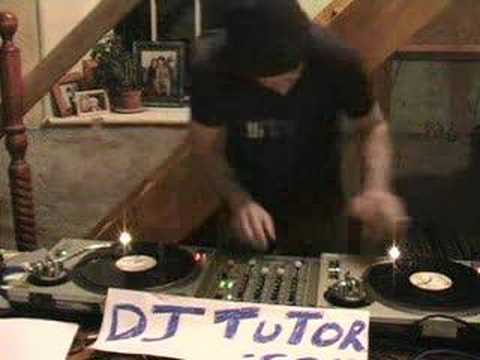
G'day folks, there's another form of cutting and scratching for the turntablist and it's, well I don't know exactly what it's called but it's basically, you may be able to help me there, what the DJ does he actually edits two records not just the one as I have explained in the lessons on turntablism in the past where he's just editing one particular sample or one sound from one turntable while the other one is being played. Now then, hopefully I'll get this right, tell me if I'm wrong, because there's so many quick moves and it all happens in a millisecond. It does get a bit confusing. Now if you imagine here, right, my hands are on the turntables, these could be turntables or these could be CD players, doesn't really matter. Middle is a crossfade. I haven't put the crossfade thingy in simply because it's going to be moving from side to side. Now you imagine, turntable B is moving, that's playing.
The record is playing and also the platter is moving so we're getting sound from side B. I've got my hand here on side A, okay? The platter is moving underneath the turntable, or sorry, the platter is moving underneath the record but I'm keeping my hand on the record, stopping that from moving. The crossfade is at side B. So all of a sudden I will have one, two, three. That's what I want to sample, because I've got my hand here ready at 1. If I do that on the headphones, so all of a sudden this record will go 1, 2, 3. At that point I will stop it. I will then take my hand offside A, very, and this is in a millisecond, move it to the crossfade, wang it over, and then 1, 2, 3. While that's playing, I'm bringing this one back, and then I do exactly the same thing.
1:49 Hopefully I've got that right, and I'll give you a demo
I go across one like that, and then this side plays, and then I pull this one back. Okay? Now hopefully I've got that right, and I'll give you a demo. And don't forget, I'm not the world's best turntablist by far, but we'll see what we come up with, okay? Yes, you can leave your sarky comments if you wish. So there you go folks, bit of turntablism for you. Don't forget, this record's playing. This one here, okay, so it's... Would you like to win a couple of these? Okay, it's Battle Breaks Volume 5 by Cutmaster Swift. Alright, now then, competition is quite simply this. If you go to www.djtutor.com you will see an icon to your left, right, left of the screen, that's right.
Not right, left, of course, left of the screen. It's got competition. Click on that and then you'll go to the competition page. Just answer three very simple questions, OK? But I know someone who thought, oh, I'll mess around. Yes, you know who you are, don't you? I'll mess around and do some silly questions and then I'll try again and do the correct questions. Well, guess what? Tough. You can only enter once, so make sure you've got them correct. Enter once, you can't enter again, I'm afraid. Sad to say, but there you go. One lucky winner on the 27th of January, 12 o'clock, midday, GMT, not G&T, Greenwich Mean Time, the competition finishes. And one lucky person will win these two. Okay, also on here you've got the battle breaks which is what it's all about and you've got the samples. There's one track where you've got just samples, you've got the fresh, the whistle and break and all this sort of stuff, okay? So there's two of those to one lucky person, okay? All I can say ladies and gentlemen is practice and enjoy and thank you for watching. Take it easy.
This transcript was produced automatically from the audio of the video and may contain mistakes.