 9:07
DJ LESSON. How to get the perfect MIX. Part one
Contents of the video
0:00 Are asking continually how to get that perfect mix
Alright ladies and gentlemen, people are asking continually how to get that perfect mix. Of course there are many ways of doing it, but one way of getting a perfect mix is to listen or try and work out what drum machine the producer has used. I'll explain. For a start, to get a perfect mix you need to make sure you haven't got vocals clashing over vocals, or if you have, make sure they work together. The other one is they've got to be in time, same BPM, if one's 120, the other one's got to be 120 BPM, or 60 or 240. Make sure they work well though. Of course they have to be in keys that match. Ideally to get a perfect mix, they need to be of the same key. But how can we make them even more perfecto?
Right, drum machines. Now, virtually every track out there has been made with a drum machine, unless of course it's a real drummer. And different drum machines have different sounds. They have their own signature sounds. So I'm not going to do a tutorial on this yet because I need to find appropriate tracks that have used the same drum machine. But for example you've got 808. Now the 808 drum machine has a certain sound. The certain sound... It has certain sounds for, let's say the beat. Maybe bassline, maybe hand clap. So what you would need to do, you'd need to first of all make sure they're the same key, the same BPM, and then try and make sure that they're used using the same drum machine. Now if you listen to a lot of mixes that DJs do, good quality mixes, okay, they may have been made, for example, using some controller, no not controller, some program so the BPM is locked.
So there's a, just, they're seamless. But also what you'll find, or what you will find is that let's say for example that...
2:01 Nexus djm-, basslines match, tracks
It'll be the same, it's almost as though someone has overlaid that hand clap and that all the way through but you've got different tracks gelling together. What the DJ or the producer might have done, he or she might have chosen out of thousands and thousands of tracks, the 5, 10 or 15, that have that perfect, balanced, matched high end or the bassline, all the basslines match. Not only do the basslines, or would they match in key, they would also match in the sounds that were used to make them. And that can sort of not, it could not only just be done using the drum machine but by the producer or the DJ sorry who's doing the mix trying to listen to the individual sounds of the tracks to make sure those sounds work
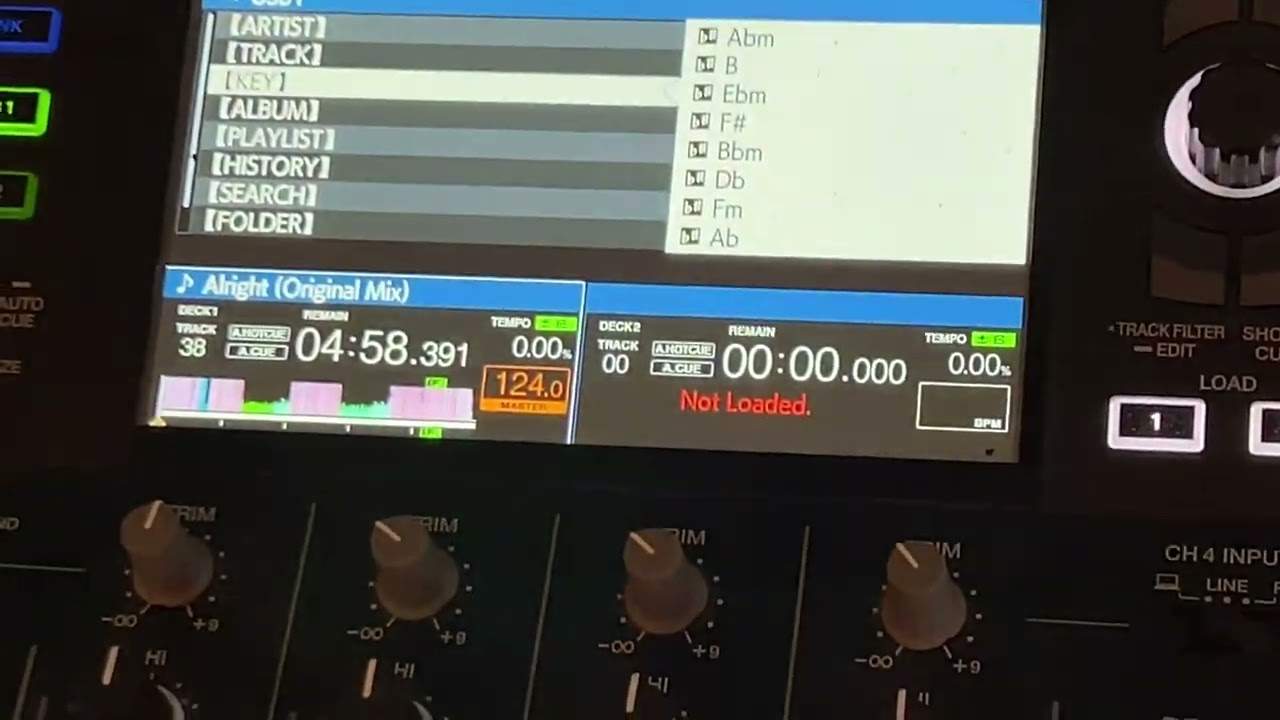
In the one track and also in the other. Right, so in this demonstration I'm going to go completely off subject now I have on the right hand side we have TS7 Heartlight on Polygon Extended Mix So for anyone who keeps on saying what are the names of the tracks there it is there, hope you can see that
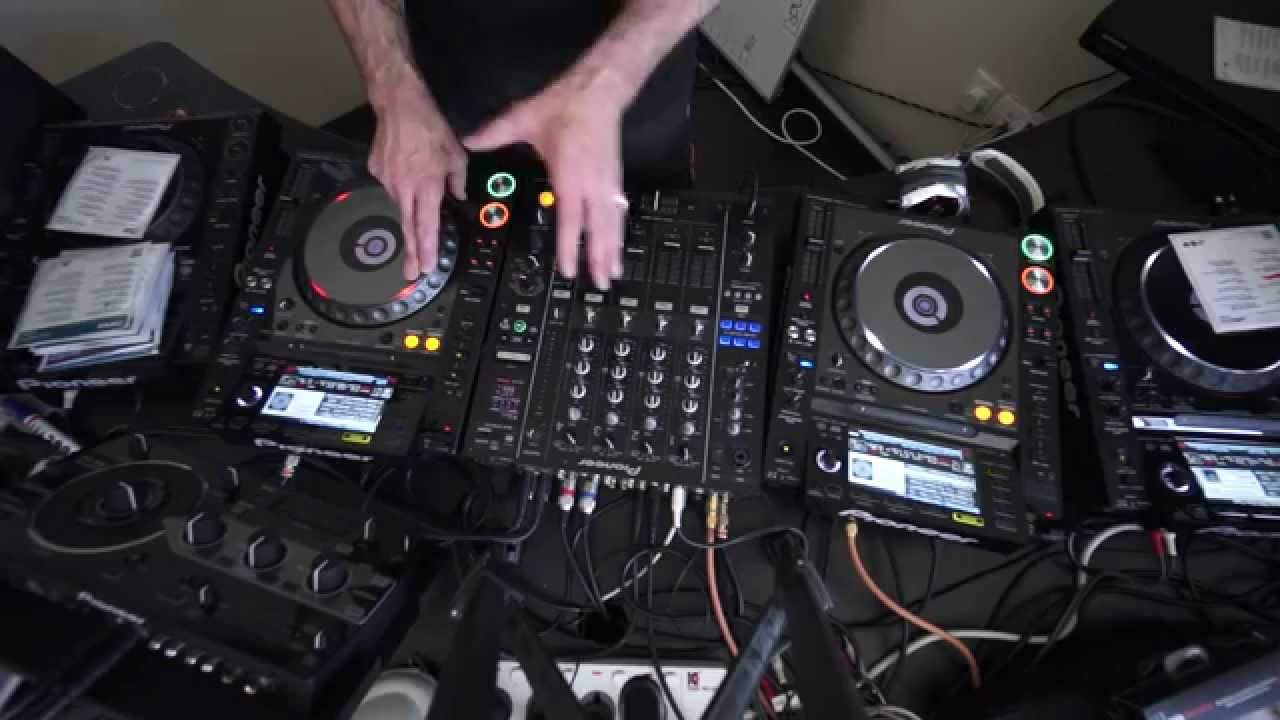
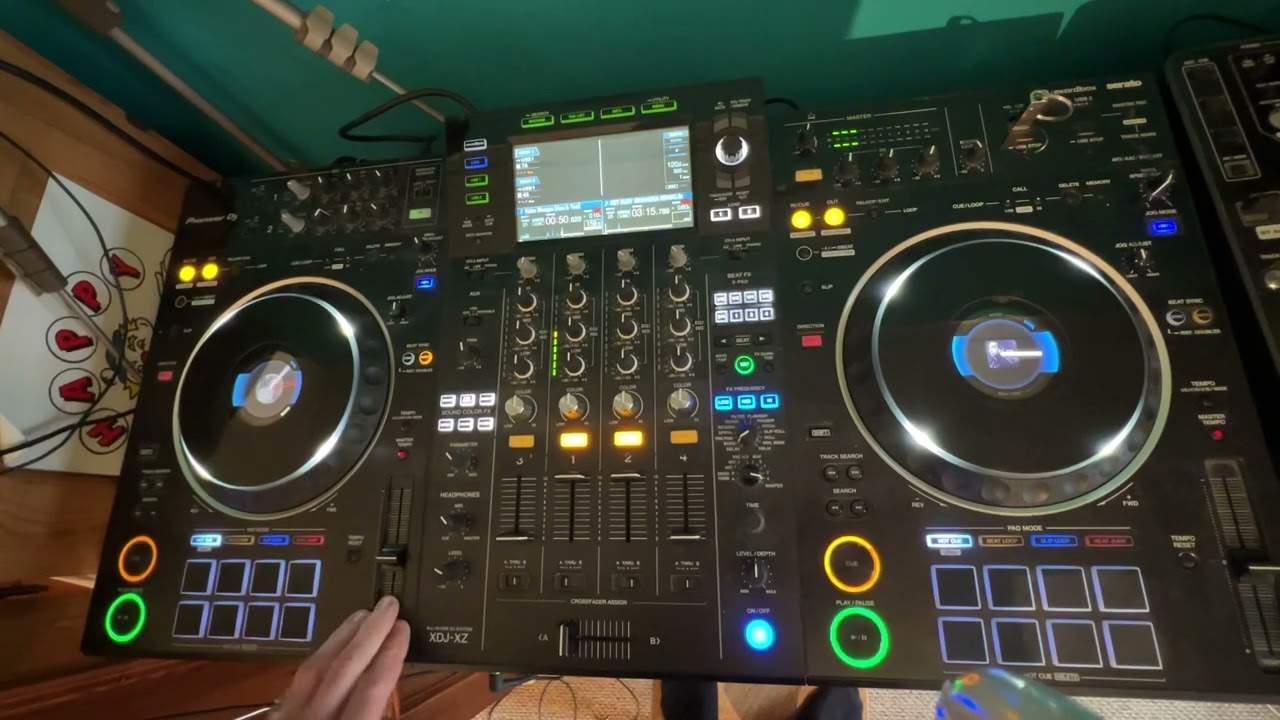
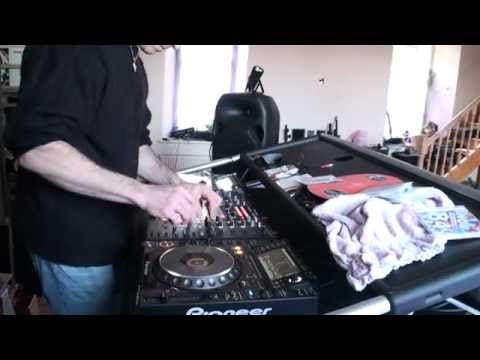
That's that one And then over here I have got Mr Black, an act featuring Steven Err Err Tazerz Tell My Heart Okay Right, fair enough And what I'm going to do here is I have set a cue point and I'm going to use the low pass filter Players are the CDJ-2000 Nexus The mixer's the DJM-2000 Not the Nexus It's just the DJM-2000 I'm going to use filter What I've done though, I set a cue point on this track here if we have a listen
4:03 Hear, bass, away
Now I like that I like that sound I also like the idea anyone who's been to a rave in the middle of nowhere and as you walk up to the rave all you hear is you hear the bass sound You hear the
As you get closer you start hearing the mid and the top And that's because bass is omnidirectional If you face bass away from you You will hear it behind the bass speaker even if you travel quite a great distance But you're less likely to hear the mid and the top unless you are in the line of sight where the speakers are This is where a ray comes in and horn loaded and goodness knows what but we're not going to go into that with this video So what I've done is I've set a cue point bearing in my no headphones to give you a general idea And I'm going to set the filter to about there Wrong point, here we go
Now the other track I'm playing from around about sort of the end
There So what I'm going to do is I want to bring that part of the track in at that point But then what I'm going to do Is I'm going to start the track off at the beginning And then start mixing it in as well So if I just bring this out here Put that about there Hopefully you'll see what's going on So I'm messing around with A very twangly kind of Bloody hell Right this If you can see but This tripod is I won't swear at all I won't swear
Right here we go So if I go about there And Will that do Please stay away from that I promise I won't throw you away I'm pressing, I'm pressing
7:27 Again The idea behind the double
There we go Right so filter there And what I'll do is well I'll talk you through what I'm doing So I'll just wham it back a little bit
Both volumes are up Low mid and high set to 12 o'clock The filter is a great way of doing the mix So you don't have to mess around with bass middle treble Slowly increase the filter On the other side We'll tap on the cue Right back to the beginning The reason for a double tap Is if you only hit it once it'll stop Double tap The first tap is before the counter one The second one is on the counter one
There we go I'm just going to explain again The idea behind the double tap So It's not about shooting someone It's not nice to shoot people because it hurts Right I'm going to Put that there And I have explained this many a time But for the people who've never seen it This is the double tap So if you imagine I've set a cue point here Now you imagine Counting 1, 2, 3, 4 1, 2, 3, 4 1, 2, 3, 4 1, 2, 3, 4 1, 2, 3, 4 1, 2, 3, 4 Stops Double tap Here we go 2, 3, 4 1, 2, 3, 4 1, 2, 3, 4 1, 2, 3, 4 1, 2, 3, 4 1, 2, 3, 4 Carries on going All right So again this video A little bit of an insight Into getting your best mix Is by listening to the drum machines And trying to match The sounds in the tracks And the other one Is again The filter I think the reason I'm showing you the filter
Is because Using this one dial And most programs and mixes Or a lot of mixes But most software Have got the filter effect It's a great Great way Of not having to use Low, mid or high But the DJM2000 Has got of course A low pass filter And a high pass I was using the low pass filter Practice and enjoy I couldn't hide it if I wanted Yup And there's no way they'd keep me on their side
This transcript was produced automatically from the audio of the video and may contain mistakes.