 12:21
One bass line into another, smoothly
On YouTube this video is called DJ LESSON on a Smooth transition from one bass line in to another from the DJ Tutor / ellaskins
What this lesson teaches
The aim is stated plainly at the start and it is a good way to think about every mix in this stage: one bassline finishes, the other starts. Never two.
The simplest execution
There are many ways to do it, and the one he reaches for first is the one to learn:
1. Set a cue point on the incoming track exactly where its bassline begins. 2. Let the outgoing track run to where its bassline ends. 3. Crossfade over and press play, on the one.
Because the cue point sits precisely at the start of the new bassline, pressing play delivers it at full strength at exactly the moment the old one stops. The handover is instant and there is never a moment with two or none.
The part that should change how you practise
Here is the detail worth the whole lesson.
A crossfade transition does not need a perfect beatmatch.
His reasoning is exact: you are not forming a mix and you are not overlapping two beats. Nothing is playing simultaneously, so there is nothing for a tempo difference to spoil. If you were overlapping and the beats were out, it would sound atrocious - but you are not.
What you actually need is much less:
- The BPMs relatively close, so the change of pace is not jarring.
- The keys compatible, or the change deliberate.
- The cut landing on the one.
That last one is not negotiable, and it is where the counting from stage 2 earns its place. A cut on the one sounds like an edit; the same cut a bar later sounds like an accident.
Why this matters
Because it gives a competent counter a complete, professional-sounding transition without requiring a skill they may still be months away from.
And for somebody who can already beatmatch, it is the answer to two records that will never match at any tempo. The crossfade transition does not care.
The other half
He promises later in the video to show that beats which sound off are actually on - the constant-gap diagnostic from stage 3, which is covered properly elsewhere. Worth knowing it is the same idea surfacing again: what sounds wrong and what is wrong are different questions.
Contents of the video
0:01 Bass line, line starts, finishes
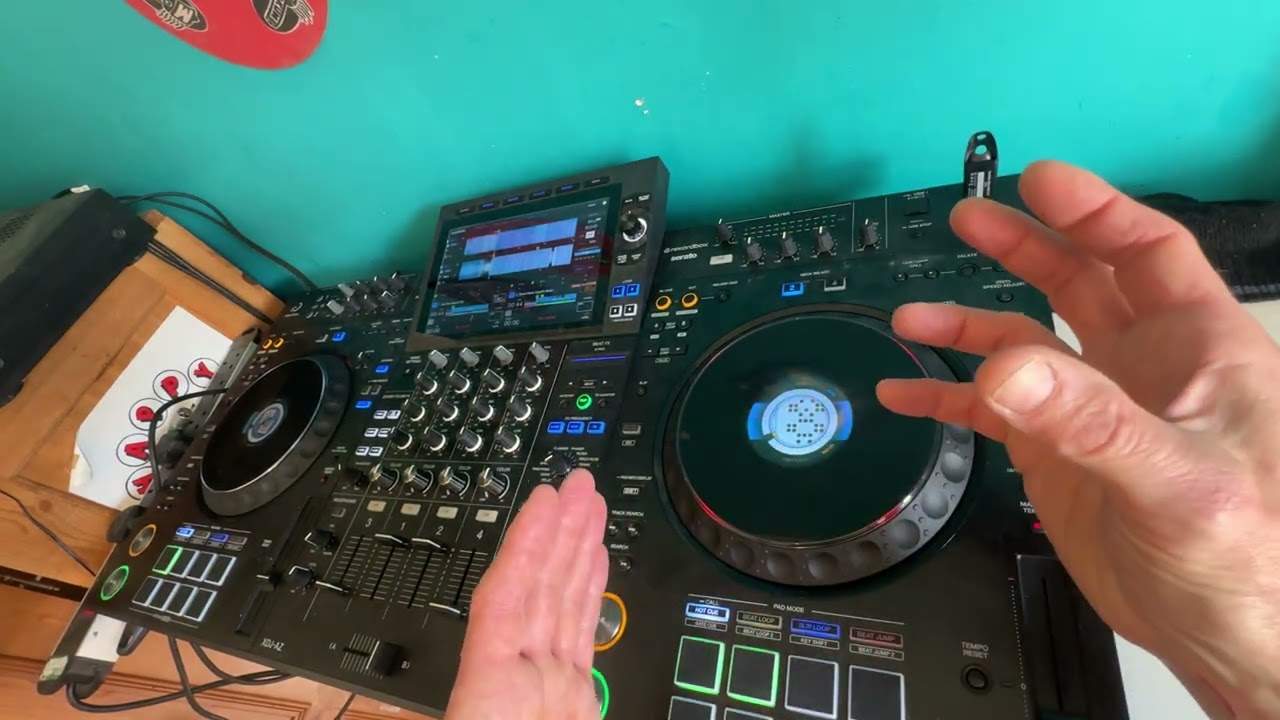
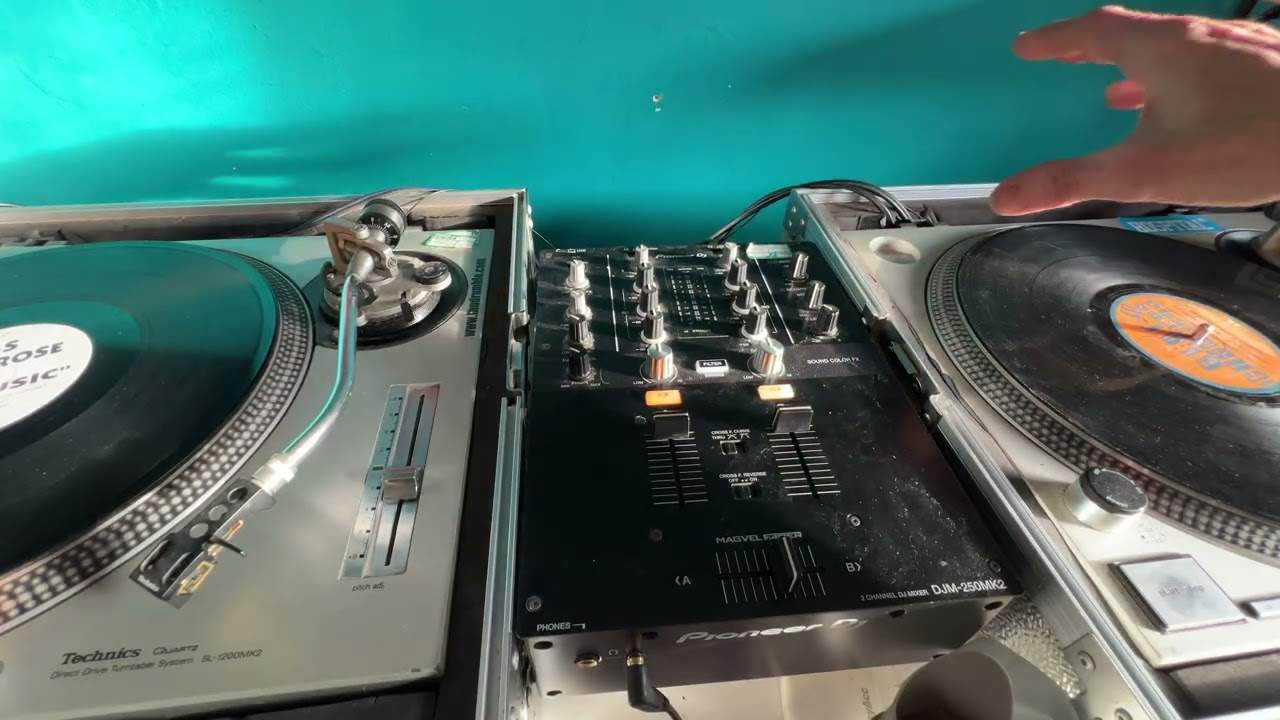
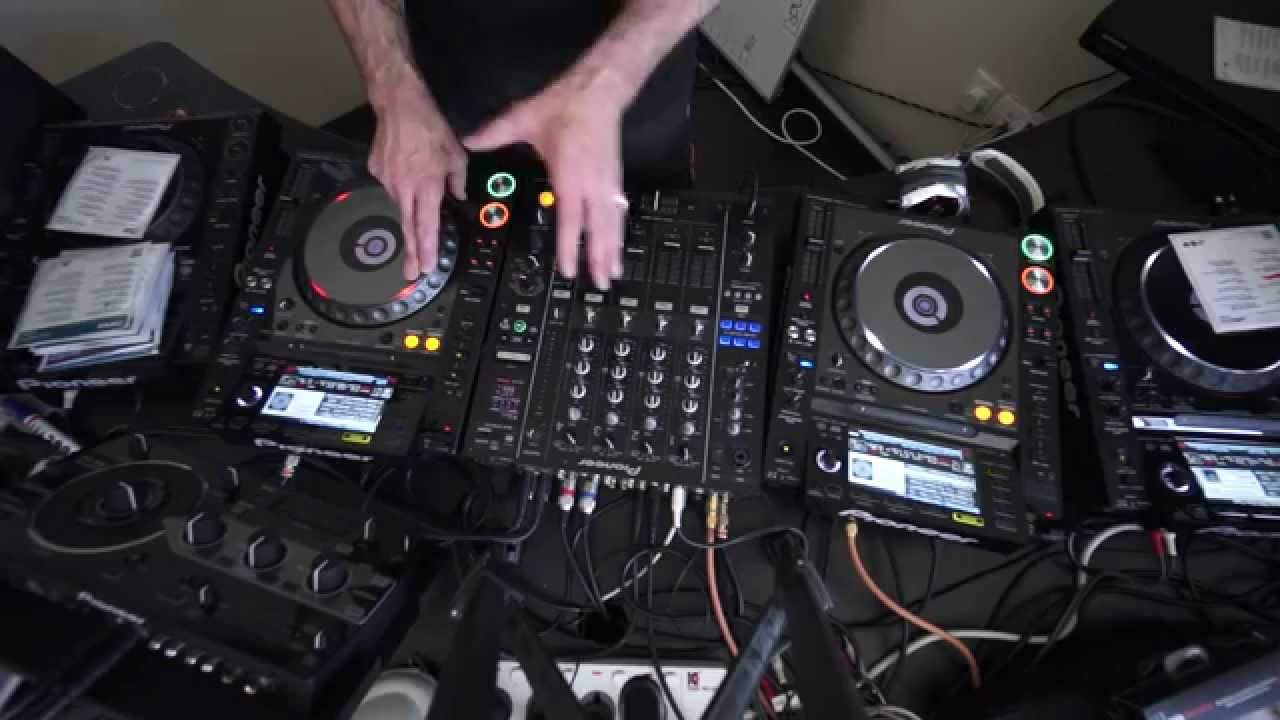
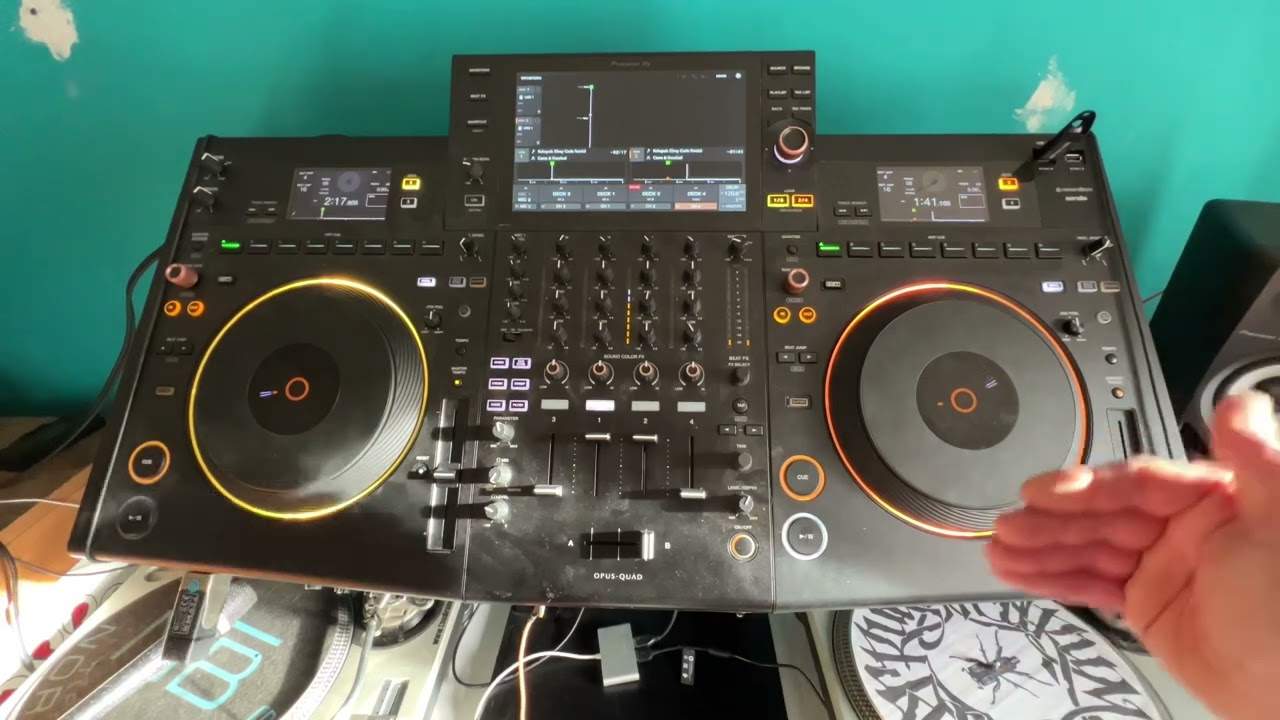
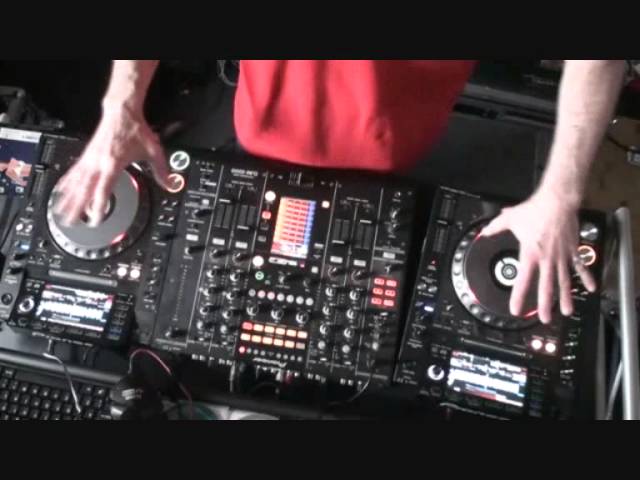
Alright ladies and gentlemen, a demonstration here on how to get a very good transition from one track to the other. So, we have two tracks, on my left hand side we have Dr Moog, it's the club mix, on the right hand side we have Hate Me, it's the Bass Kelv's Dirty Little Secrets remix. I'm going to play you a little bit of each track and then what we're going to do is give you a good way of forming... If you like this tune, I think I did a mix on Soundcloud and this track's on it. If I can remember to put the link in, I'll do it, alright? Right, so transition. What I'm going to do, I'm going to bring in the Hate Me track into the Dr. Moo track. And what I want to do is I want to have the transition so one bassline finishes, the other one starts. Of course there's many ways we could do that. One is as soon as the bassline finishes on that one, we could have the crossfade over and as soon as that finishes we could press play on the other side.
Crossfade straight over, we go straight into the other track. That's sort of the simplest way because it means you know if you've set the track coming in at the precise point where the bass line starts, it's in time, as soon as you put the crossfade over, press play, it will come in. And if you keep in time where bars are concerned, 1, 2, 3, 4, 1, 2, 3, 4, 1 on the other side, then you should have a pretty much seamless transition so long as the BPM is relatively... Relatively the same, more importantly the keys are the same or the keys match. If you do a transition by using the crossfade, believe me, you do not have to have them perfectly beatmatched because you're not forming a mix and you're not overlapping two beats. If you were overlapping two beats and they were out of sync, instead of looking like that, they'd look a little bit like that and it would sound atrocious or even atrocious. But in a bit I'm going to show you how...
If the beats are off, they're actually on. I have said this before, I've mentioned it in a video, but the more we can get it out there, the more you'll find out. But before you do any of that, it's now time for something completely different. No, you look at me! Thank you. Now don't you ever do that again. I don't care! I'll tell your friends as well. You do not do that again. Have you got it? Thank you. Go on, off you go. Ooh, okay. Right, so what we're going to do now is I'm now going to show you the transition. What I've done, I've set two cue points. I've set the cue point on the Dr. Moog track where the bass line finishes and I've set the cue point on the Hate Me track where the bass line starts. So first of all, I will play the point at which the bass line starts and where the bass line finishes on the Dr. Moog track.
3:24 It's not where the bassline stops and then it
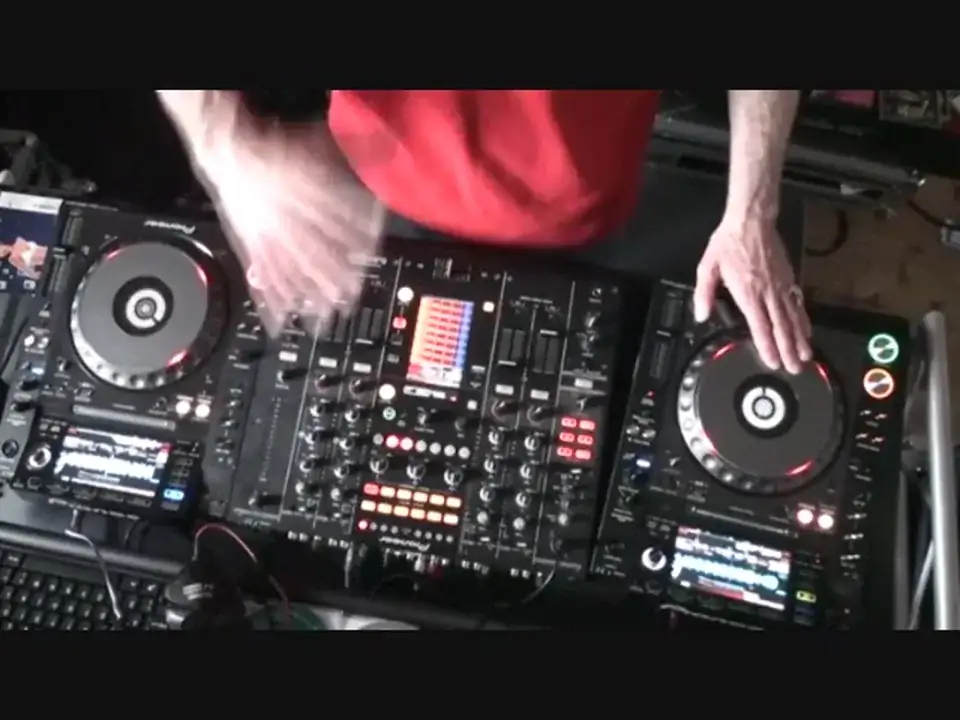
Now there is an underlying sort of wobbly bassline, but that's more associated with the beat. But if we go before that, we can hear the bassline. Now if you heard there, the bassline almost finished on a high note. That is the point of transition. It's not where the bassline stops and then it... And then you can hear it going higher. So at the point where it stops, you think that's where you need to bring the next track in. It isn't because where dance music is concerned, 99.9% of the time, you have to, you've got to listen to the timing and the counting of bars and phrases. It is vitally important. So again, like I said, we could just do a very straightforward cross, but what we're going to do here is we're going to count back. Right, so cue that up again.
4:29 Count 4, 6 or 8 bars
Now what I've done there is that point is at the point at which I'm going to bring this track in. Now what I've done, and this is the sort of thing you would do when you're constructing your mix to get it perfect, you will find the point at which you want the second track to mix in. You'll then count back on the track that's playing, it could be 4, 8 or 16 bars. At that point, you need to do exactly the same with the track you're bringing in. Count 4, 6 or 8 bars. Sorry, 4, 8 or 16 bars. You could do any amount of bars, I'm just giving you an idea. What you need to do then is at those two points, while this track is playing, bearing in mind, for example, in our mix the Dr Moo track is playing and you would have set all of this out prior to making your long mix. You would know...
At a certain point in the Dr Moog is at the point where you start to bring the next track in. But of course, if you're bringing this track in, say 16 bars prior to the bass line coming in, you need to make sure you would have brought it in 16 bars prior to the bass line finishing on the Dr Moog track. So that's exactly what I've done at these two cue points which is... Now you'll notice here on the Hate Me track, there's a little bit of bassline going on there in the background. So what I want to do, I'm going to decrease virtually, I'm going to take it away completely, the low. I'm now going to emphasise the mid slightly. So we'll press play on both of them. Thanks for watching!
6:59 We had a smooth transition
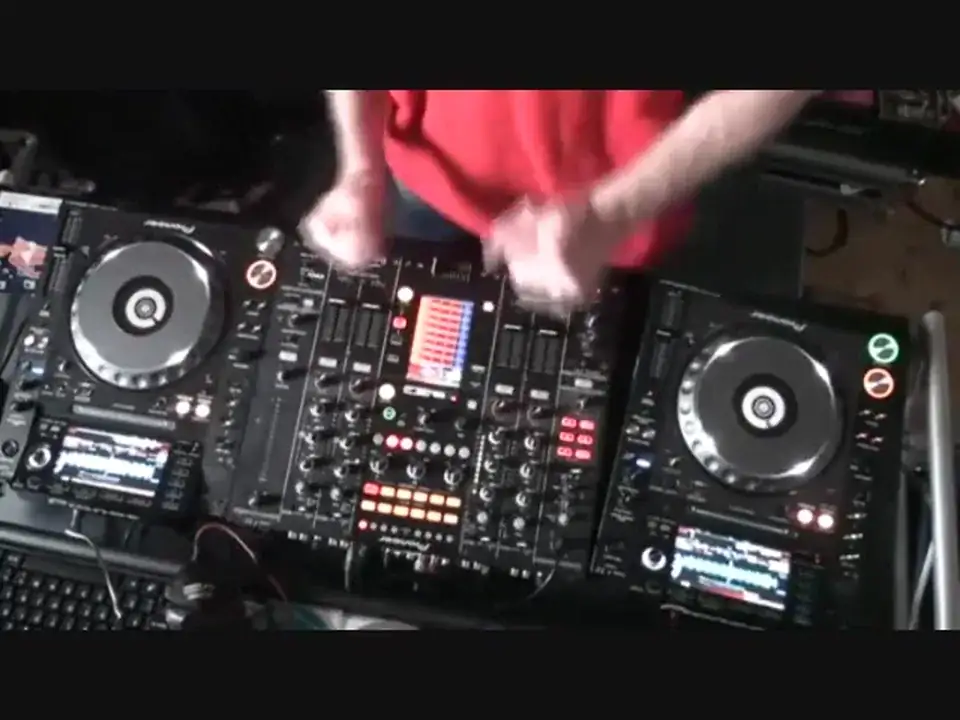
Okay, so we had a smooth transition. Alright, a little bit out of time, not precisely in beat, but then again, this is a demonstration and a tutorial. Alright, so like I said earlier, when is a beat out of time but it's in time? Just have a listen to this, we'll play, I think it's C. Let's see, hold on. Right, yeah. What was I going to do now? Sorry, I have planned this earlier and I'm not going to pause the camera now. So... Yeah, that's it. So... Right, we are going to have two bass lines going over each other. I'm going to give you a demonstration first then I'll explain what went on. So, here we go. So, I did make a slight mistake there and for any of you Trainspotters out there, you would have... Well, not Trainspotting actually, it's the people who go... Slight mistake! Naughty boy. Right.
10:08 Something again which takes practice
So what I was doing, I was actually going offbeat. There was a slight delay in between me hitting these two cue points. Now again, it was offbeat, but this is the big factor here. Let's imagine that the distance between all my fingers here is exactly the same. Alright, it's going to be slightly different. Now let's imagine these are the two beats. Now if I was to mix perfectly, I'd put those over each other and they would be perfectly matched. They're in time, but let's imagine I do something like that. Now they are perfectly in time, but they're not because they're slightly off beat. But here's the factor. They are slightly off beat, but they will always stay at the same time signature.
The beat will never glide away. They'll stay. So in other words, if they're like that, they're not going to slowly start moving or sorry, they're like... Right, something again which takes practice. It's a bit of fun. I'm going to disengage the master tempo. By doing that now, if I reduce or increase the speed, what will happen is not only will the track slow down or speed up but the key of the track will reduce when I slow the track down and the key of the track will increase when I speed the track up. So I'll give you a demonstration. Right, again. Takes a slight of hand and you've got to be pretty good at this, I'm average, but check this out. So we do something like this.
Alright so what was I doing? Again, I took away the master tempo, I then set the tempo to wide, sorry it wasn't on wide, damn it was on plus 10.
Alright, never mind. Alright, I set it to plus 10, but you can do it to wide if you want to. If you do it to wide, you will get slightly more increase or decrease in the pitch sound. Alright, maybe it's a good idea just to have it to 10. Alright, let's try it on wide. Sorry. Let's try. Here we go. Actually, I think that sounded better with plus or minus 10. So! It's plus or minus 10, but it shows you how random these videos are. Okay, I hope that's been a help. I'll put the names of the track, I promise, in the description and I will say practice and enjoy. Thank you.
This transcript was produced automatically from the audio of the video and may contain mistakes.