 13:40
Drum and bass into house
On YouTube this video is called DJ Lesson on How to Mix from One Genre to Another. Drum and bass to House
What this lesson teaches
The hardest case in the course, and the one most likely to come up in an actual booth: you are taking over from somebody playing a different genre at a very different tempo.
The numbers
Drum and bass runs around 170. House runs 125 to 135. That is not a gap you close with a pitch fader.
His two obvious options and what is wrong with each:
Slow the drum and bass down - and you end up in jungle territory, which is a real genre and not what either of you was playing.
Speed the house up - and it sounds like a novelty record.
The three ways that work
Key lock and a big move. If you have it, you can take a track much further than three per cent and keep it musically intact. That extends what is reachable but will not get you from 130 to 170.
Use the half-time relationship. This is the elegant one and it comes from the counting lessons: drum and bass at 170 has the same underlying pulse as a record at 85. So a hip-hop or downtempo track at 85 is already rhythmically compatible with a drum and bass track at 170 - they feel the same, and the fast one simply has twice as many events in it. That is how DJs move between the two without anything changing speed, and it works in both directions.
Do not match at all. Cut on a phrase boundary, use a break, let one end and start the other, or carry the join with an echo. Four options from earlier in this stage, none of which requires the tempos to agree.
Choosing between them
It depends on whether the change should be invisible or announced.
A half-time crossing is invisible - the room feels no change of pace at all, and then the music is different. A clean cut is announced, and for a genre change that is often the right answer: the floor is going to notice anyway, so make it look deliberate.
What does not work is trying to blend across a gap this size and hoping. That is how both records end up sounding wrong.
Contents of the video
0:01 Another demonstration or tutorial for you
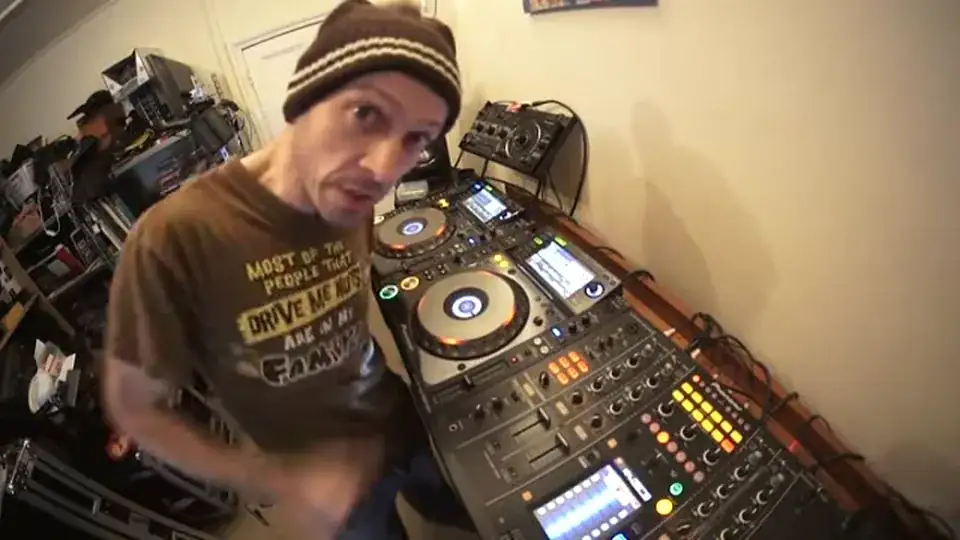
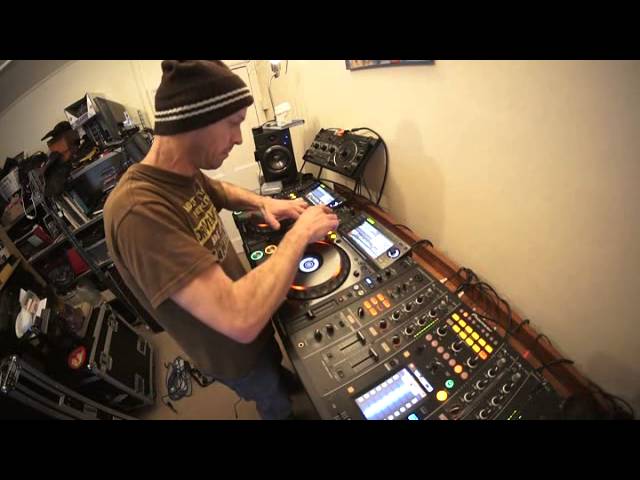
All right guys, another demonstration or tutorial for you. A lesson on how to DJ. Lots of people are always asking, how do I go from one genre to another? How can I actually mix from like house to drum and bass? How can I mix from dubstep to techno, trance to hip hop, maybe old school disco to like hardcore, like full-on gaba techno? The mind boggles! But it can be done. This one here we've got three We've got three different genres. We have house, we have what I would call as almost Eric Floaty music. It's a beautiful, beautiful cut. And also some drum and bass. Now the drum and bass tune is... There you go. If I go back to it. Hold on, let's have a look. Just talk amongst yourself please. Where is it? There we go. There.
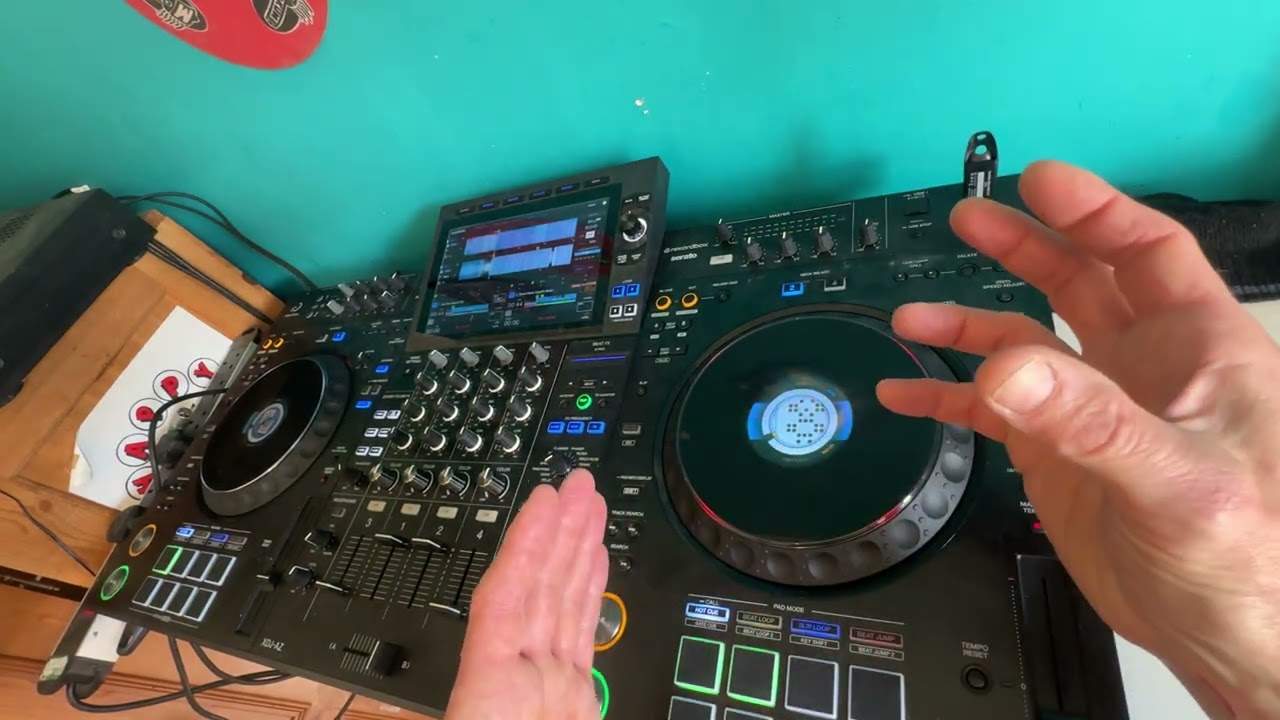
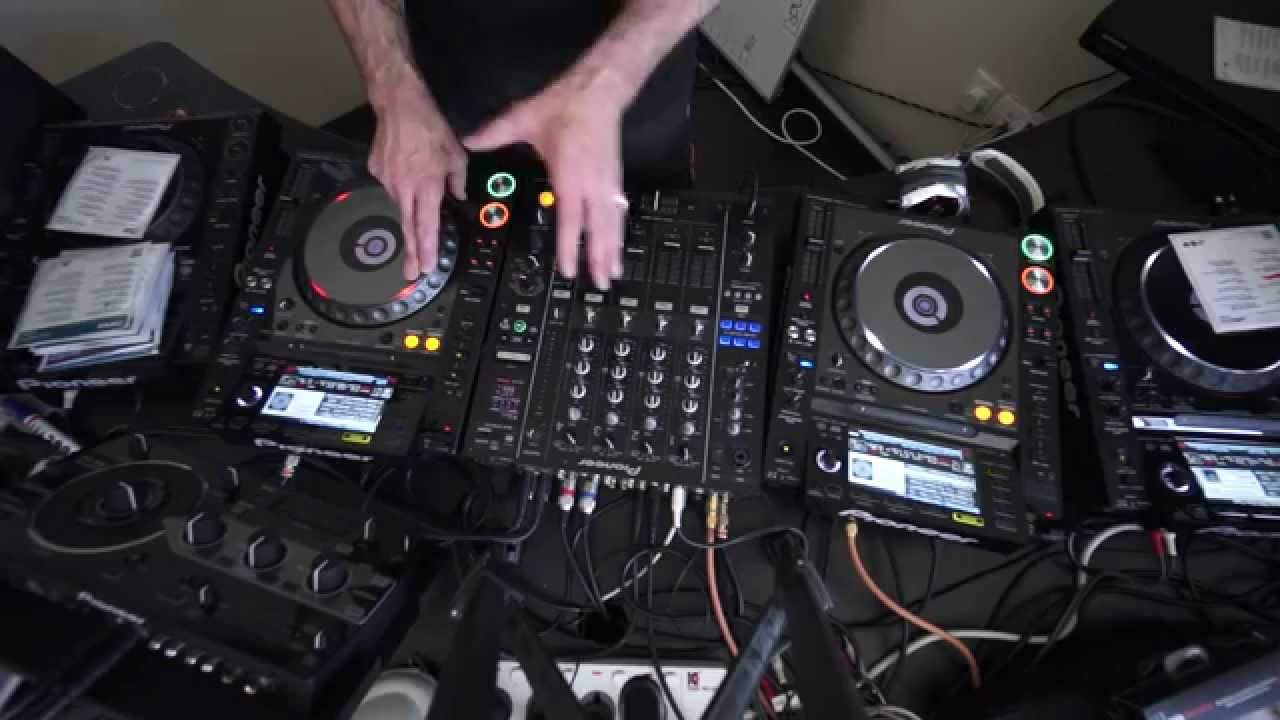
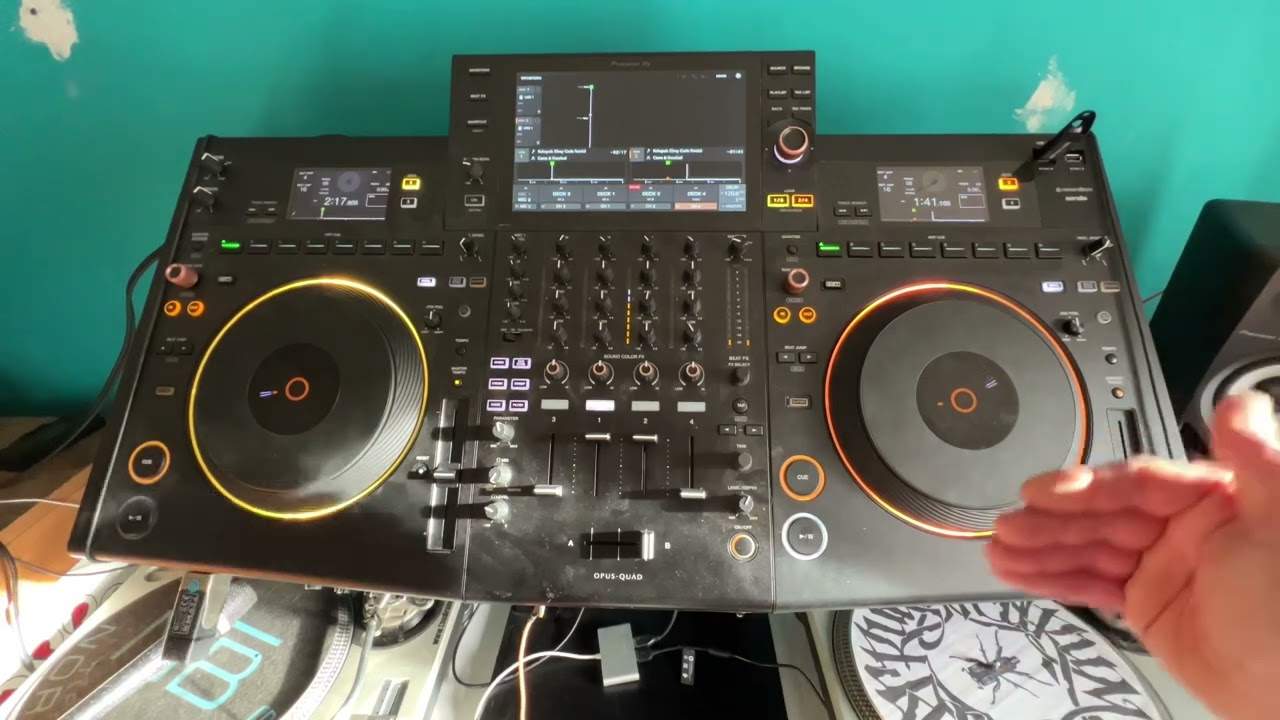
It's by Floem, it's a track entitled Red Sky at Night, birthday freebie. It is a very, very good drummer bass tune and also this one over here is stunning. It's by Simon Luce, L-U-C, La Porte, okay? Ellaskins, The DJ Tutor. What I'm going to try and do here is, let's imagine you are doing a drum and bass set. Oh no, sorry. The DJ before you is doing the drum and bass set. So you need to have some form of transition. Now again, drum and bass run about sort of 170 BPM, house music 130, 20, 35. You could, if you wanted to, you could sort of slow the drum and bass down, but you're getting more into like old school jungle. You could increase the speed of the house tune. So what you would have to do, if you wanted to do that, is if you have the likes of CD players like this, if you're on plus or minus six, it's no good. You want to go to a minimum of plus or minus 16, enabling the pitch to work a lot harder so you get more of a fluctuation in beats. If you're very good, you can do plus or minus 100. Can be done, a lot of practice.
2:46 I wish I could speak
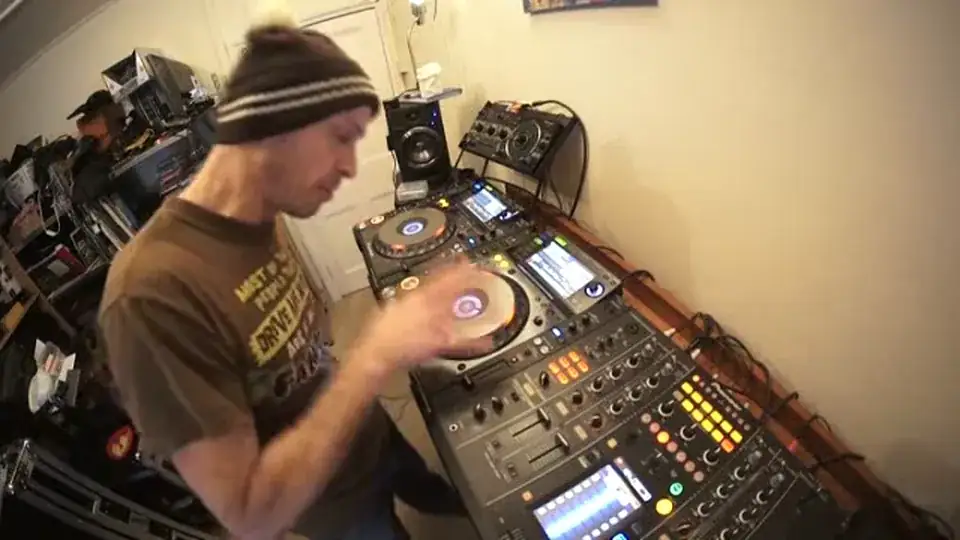
But we're not going to do that today. So, what I'm going to do, I'm going to play a little bit of the drum and bass... I wish I could speak. OK, shh, calm down. Right, I'm watching you. We're going to be playing some of the drum and bass tune and then we're going to incorporate this wonderful floaty tune. I'm going to call it Float. Sorry, just... No, it's not called that! It's called something. It's not called something. Sorry. And then what I'm going to be doing is mixing the house tune into it. So first of all, let's have the drum and bass track. Red sky at night, shepherds do you like? Blue sky in the morning, watch out for a warning. This is the bomb. Okay, very quickly as well, effects. Now if I press low pass filter and I start to move the filter, we get the low pass filter coming in. Have a listen. Bang.
4:49 Listen to this, check it out
Try this for a change. Turn the filter and then press the effect. Bit of a difference. Much better. Instead of the filter coming in slowly, what happens is the filter is like full on and then you reduce it. Have a listen again. There you go. Same with the high pass. High pass on. Now I'm going to turn the filter up and now put the high pass filter on. Okay, that is the drum and bass tune. Now listen to this, check it out. Very very nice cut. What I've done here is I've set cue points but one important cue point is here. What I need to do now is during the course of the drum and bass tune Find a point where I can bring that in. Now because I don't want to beatmatch them, I want to try and match them from a key point of view. I need to maybe have a listen to this. Try and find, try and listen to it. Where can I? Now where can I bring that in? Tomorrow? Yesterday? But of course you need to listen to the tune. You can also maybe add an effect. A great effect to add would be the echo. Not the delay, the echo.
And to try and make it quite a nice long echo, so what I'm going to do, I'm going to increase the level depth on the mixer here. You can just about see it down there because it's a bit of a fisheye here. Stop laughing. Okay, so... No, stop. Oh, shit. Right, so let's have a listen to... Make sure we've got the right channel. That's it. I'll put it about sort of like 2 o'clock. Again, it's experimentation. Don't watch me.
7:10 Quite a nice long echo there
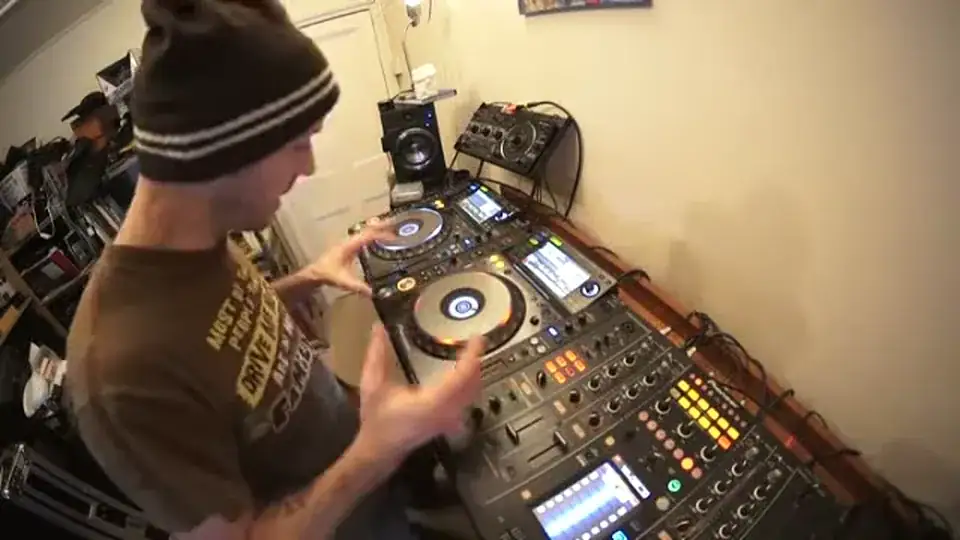
Quite a nice long echo there. So what I'm doing now, I'm trying to think, I'm trying to work out what is best. What sort of time scale is best for the echo and also, more importantly at this point, whereabouts to bring the echo in, to bring that track in. Let's have a listen to that point again. Volume up. Okay, so... Yep, okay, got it. Let's try that again, let's try that again. I brought it, I waited too long, didn't I? Some people would go, oh shit, I made a mistake, I'm going to edit this video. I'm not going to edit it, I'm just going to carry on doing it. This is what practice is about. So let's try it again. Put this one on. So, stop echoing. You see, again, think about it. Right, I'm trying to think out loud here now. So, have a listen. OK. See, I've set a cue point, so if I wanted to I could come back to that cue point. I'll give you a demonstration there. Oops. There, bang.
I've gone back to that cue point, so I could have gone to the end of the track if I wanted to. By now, if you're behind the decks, you should be moving, not just your head or body. Slightly better, very slightly better. Play it forward a little bit so you get a good idea on the track as well. You see, a lot of this is about knowing your tunes, not knowing your set. Knowing your tunes, because if you know your set too well... You don't really know your tunes. You're probably thinking, yeah, well I must do because if I know my set and I know my tunes. Well, the idea behind knowing your tunes is you know all the different facets, the different angles, the different sounds. So you may think, ah, at that point, three quarters of the way through a certain track, maybe, I don't know, three minutes, 40 seconds, you could bring in another track, not the beginning or the end, but another track, say 30 seconds from the beginning of that track.
11:09 Mr Danny, not Danny sorry Lenny
So it's about almost you're chopping up every single track, you're having it in your mind and you're remembering the sounds and how it feels, incorporating those sounds and feels, don't fool yourself now please, with other tracks of the same sounds and the same feel. Okay so we've got this playing, I'm going to go to Mr Danny, not Danny sorry Lenny. So I'll play it for a bit. This, I did actually say to this guy, this track would be so good, we'd like it, not drum and bass. Thanks for watching! And if you do have any tunes, if you're a producer yourself and you've got some good dance tunes, then send them to me. I can't promise I'll use them, but I'll do my best. Practice and enjoy. Thank you very much.
This transcript was produced automatically from the audio of the video and may contain mistakes.