 9:48
Mixing deep house
On YouTube this video is called DJ Lesson on Mixing Deep House BY Ellaskins the DJ Tutor
What this lesson teaches
The aim he sets for this mix is a good phrase: two tracks talking to each other.
The rule
He is unusually absolute here. Never, and he repeats it, have vocals over vocals. Not even in the same key, not even by the same artist on two different songs.
Why
The analogy is the clearest explanation of it anywhere: three people in a room, and you are trying to follow the conversation of the other two while they both talk at once.
It is not that it sounds unpleasant exactly. It is that the listener's attention has nowhere to go. A voice demands to be followed, and two voices demanding it at the same time produce a mush the ear keeps trying and failing to resolve.
Instruments do not do this. Two melodies can coexist because neither is asking to be understood.
The exception
And this is what makes the lesson worth more than a prohibition.
You can mix vocals with vocals if you make them take turns. One track sings for a bar or two, stops; the other answers for a bar; back again.
Done properly that is not a compromise, it is one of the best things a DJ can do - two records appearing to have a conversation that neither of them contains. He remembers a mix like it from the early eighties, done on vinyl with no software, and describes it as seamless.
The requirement is precision. You are cutting between two vocals in the gaps, which means knowing exactly where the gaps are in both records and hitting them. That is phrase mixing at its most demanding.
What he does instead here
For the demonstration he avoids vocals altogether and mixes the melodies, chopping from one to the other.
Which is the sensible intermediate step: the same idea of two tracks answering each other, without needing to land inside gaps measured in beats.
Contents of the video
0:03 Let's first of all talk about this
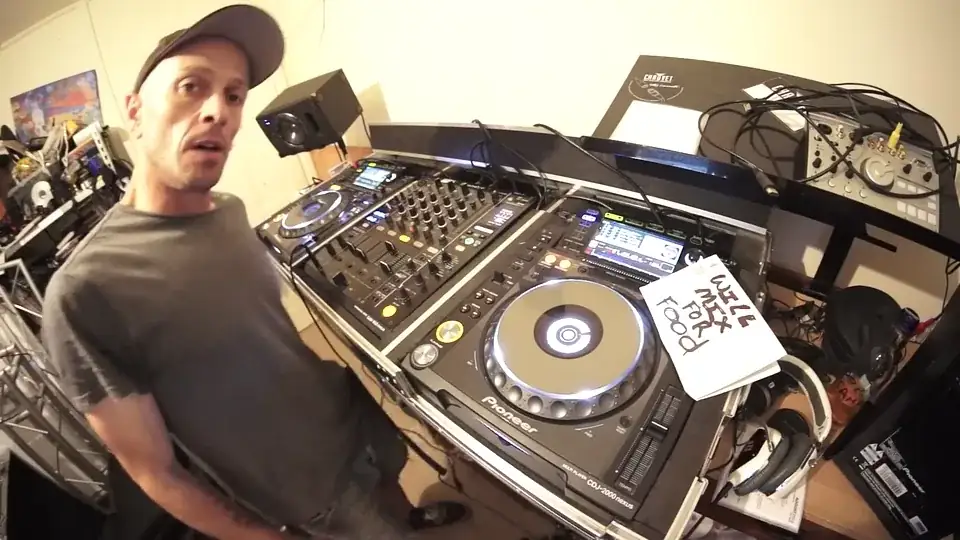
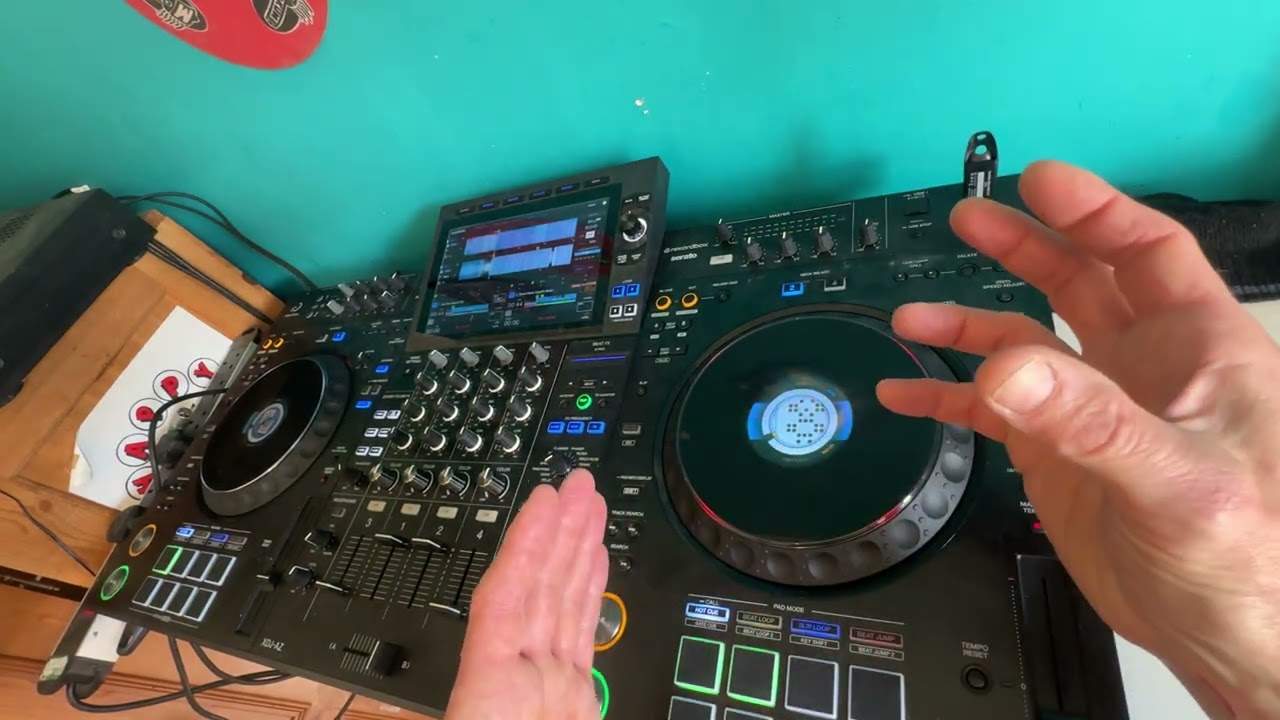
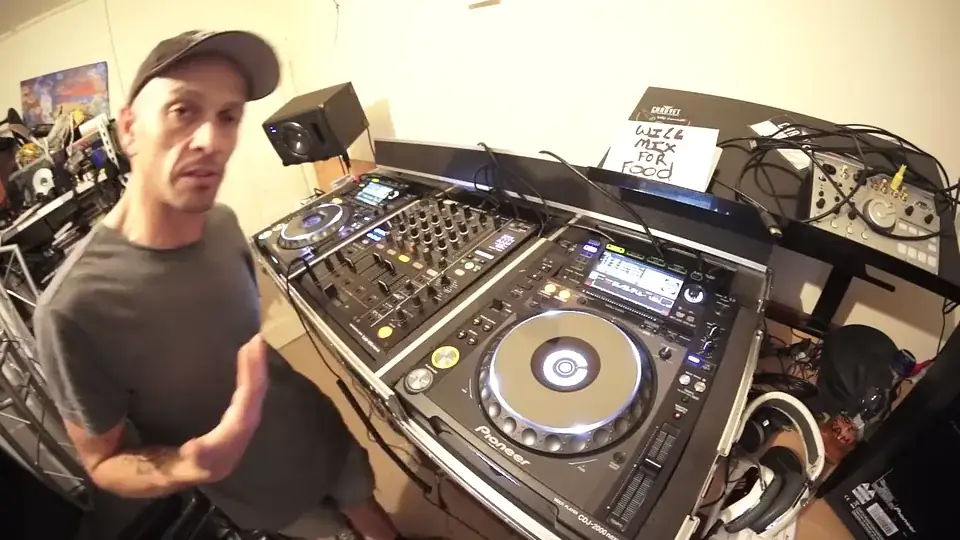
Alright guys, in this demonstration what we're going to do is we're going to be mixing Deep House. So, what I'm going to try and do here is have two tracks talking to each other during the mix. Now, let's first of all talk about this. Bit of a dodgy angle there, isn't it really? Let's just put that up there. Now, many a time I've said, never, and I repeat, just do not do it. Have vocals over vocals. Even if they're in the same key, it's the same artist, happens to be a different song, just don't do it. Because what you're putting over to the public is this mishmash of sort of talking, singing, vocals and you can't understand what's going on. The analogy I'll give you, as I've said before, it's a bit like having three people in a room, one person,
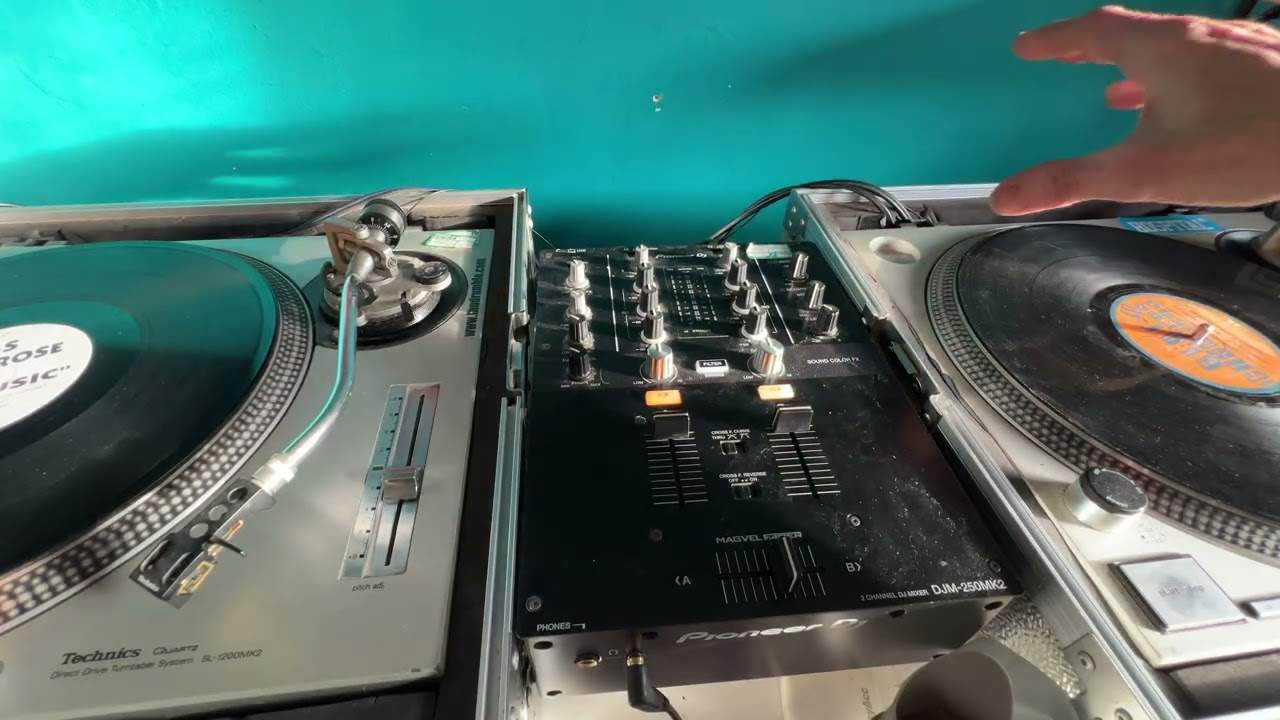
Trying to understand the conversation of the other two while they're both talking at the same time. It just doesn't work. But, what you can do is, if you're going to mix vocals with vocals, is have them so they are almost short phrase mixing together. So, for example, one track says something for say two bars and then there's a break and then the other track says sing something for two bars or one bar on one bar. Now that is actually a really good mix. And I remember listening to a mix like that in the early 80s by, there was Unique, What I've Got Is What You Need, L-U-V-E, Love. I mean, the DJ was really good. Then they used vinyl. There were no programs. You had to do it on vinyl and the mix was seamless.
It worked perfectly. So. So, what I've got here is I've got two very good deep sort of garagey tracks and I'm going to try and give a demonstration of not using vocals but sort of mixing the melodies and chopping from one to the other. Now, track here on the right is Nick Behringer and I'll tell you what it's called now. Hold on. Let's just, if I do that and then do that, it should give me Sub Zero. It's the original. It's the original mix. This one here is Promenova, it's entitled It's Gonna Be. It's the original mix as well. They are both very, very good. So I'm just going to put that there like that. Right now then, I'll play a bit of the Promenova first.
Very nice, very deep, very soulful.
Okay. So you get a general idea.
3:08 Go from a minor sort of minor key to a major key
Right. Also when you are mixing. In key, you may think that if you have, say a track that's in B major and you mix another one that's in B major, it'll work perfectly. But what you have to think of as well, I'm sorry to spoil your party, but quite a few tracks have different keys during the course of the track. So for example, if you're mixing a track in, in, for example, A7 and the other ones in A7 the track, the first track in A7 may jump to A8 or may jump to a, sorry B7. So go from a minor sort of minor key to a major key. So if you are then maybe if you think about it, if you go from the track itself goes from A7 to B7 and at that point you have decided to mix in another track which happens to be 8A.
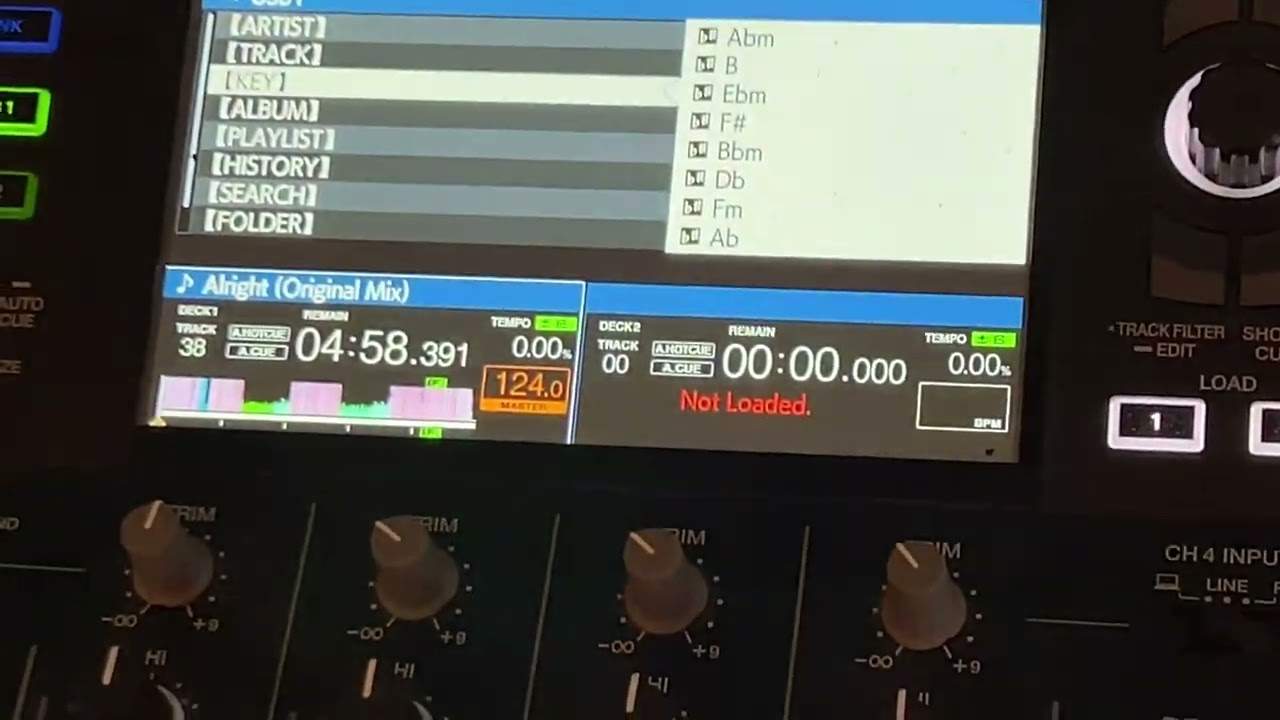
Then it's highly likely there could be a key clash. All right, and you need to look at a track. Sorry, this program called mixed in key Camelot wheel and I'm not going to delve into that the moment, but it's something where your ears start working or should do anyway. Okay, so that you have to be really careful of as well. Now what I've got, I've set a cue point here which is A, A, A, A, R, A, C, A, A, green flag.
4:39 Let's listen to this track here
Now listen, that melody there, there's a break and then the melody comes back in again, break, there, melody comes back in again. All right, let's listen to this track here. Not that one, this one, not even that one, this one here, Nick Behringer Sub Zero. Thank you. 5, 6, 7, 8, 2, 3, 4, 5, 6, 7, 8. All right, so again, this is a bit of a demonstration. If I really studied at this and I had my headphones on and I took a great deal of time, we could get it well, not perfect. Nothing's perfect. Not even computers can get something perfect. Perfection is like me when I'm quiet because people sort of can do stuff then.
Okay, I'm sure there's something funny there.
Nope. Absolutely. Absolutely not at all. Right, so from A is the beginning of a new phrase. So if we go slightly back, you'll see what I mean. This is my A point.
Go back a bit.
It's almost like a small break straight over to beat comes in.
Want to emphasise that because I'm taking away the bass on that track now. Still in the background.
7:37 What exactly happened there?
Okay, so let's break it down. What exactly happened there? Um, not really. What happened was we had that. Um, so what I was doing, I was just adding that a tiny, tiny part of the track and then as the mix progressed, I added a little bit more on a little bit more on a little bit more over that track. And then as soon as the base came in there, I started to reduce the base on the track going out now this is if you think about it okay, we have a cue point here from A which is one minute and 32 seconds. We've got a cue point here from the beginning. Which is at nothing. I've formulated a bit of a mix here and I've moved the cross fade over at certain times. I've moved the base down a little bit in the filter now if you were to do exactly the same mix at exactly
The same points with exactly the same tracks at exactly the same speed, you could yourself move the base a little bit further down. You could maybe move. The filter up slightly. You may want to move the cross fade over slightly longer. So what I'm trying to say here is no matter how many times this mix is put together by no matter how many DJs, it will always be slightly different. It's a bit like having a pot of white and a pot of red and saying to everyone make pink. Everyone will make a tiny different shade off pink unless of course you've got some idiot who just decides to get like a drop of white and just chuck it in with a whole load of red. And then you've just got red with a white dot in it somewhere.
Hmm, thank you. I will put the names of the tracks in the description and practice and enjoy. Thank you. Oh, by the way, if you do want any Skype lessons from me, check out in the description, there'll be an email where you can sort of get hold of me some way. Thank you. Practice and enjoy.
This transcript was produced automatically from the audio of the video and may contain mistakes.